- English
- French
- German
- Portuguese
- Spanish
- Russian
- Japanese
- Korean
- Arabic
- Greek
- German
- Turkish
- Italian
- Danish
- Romanian
- Indonesian
- Czech
- Afrikaans
- Swedish
- Polish
- Basque
- Catalan
- Esperanto
- Hindi
- Lao
- Albanian
- Amharic
- Armenian
- Azerbaijani
- Belarusian
- Bengali
- Bosnian
- Bulgarian
- Cebuano
- Chichewa
- Corsican
- Croatian
- Dutch
- Estonian
- Filipino
- Finnish
- Frisian
- Galician
- Georgian
- Gujarati
- Haitian
- Hausa
- Hawaiian
- Hebrew
- Hmong
- Hungarian
- Icelandic
- Igbo
- Javanese
- Kannada
- Kazakh
- Khmer
- Kurdish
- Kyrgyz
- Latin
- Latvian
- Lithuanian
- Luxembou..
- Macedonian
- Malagasy
- Malay
- Malayalam
- Maltese
- Maori
- Marathi
- Mongolian
- Burmese
- Nepali
- Norwegian
- Pashto
- Persian
- Punjabi
- Serbian
- Sesotho
- Sinhala
- Slovak
- Slovenian
- Somali
- Samoan
- Scots Gaelic
- Shona
- Sindhi
- Sundanese
- Swahili
- Tajik
- Tamil
- Telugu
- Thai
- Ukrainian
- Urdu
- Uzbek
- Vietnamese
- Welsh
- Xhosa
- Yiddish
- Yoruba
- Zulu
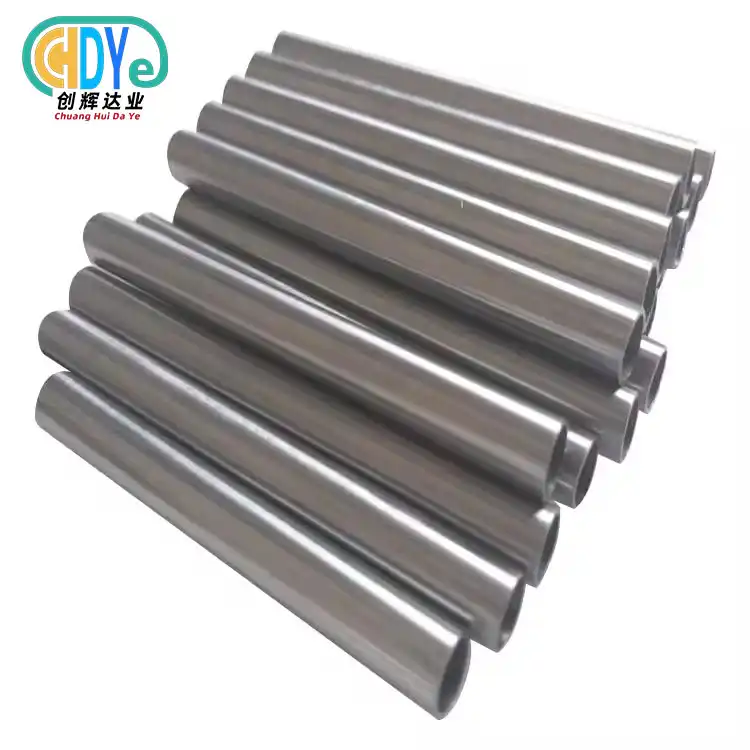
Niobium Alloy Rod vs Standard Metal Rods: Key Benefits
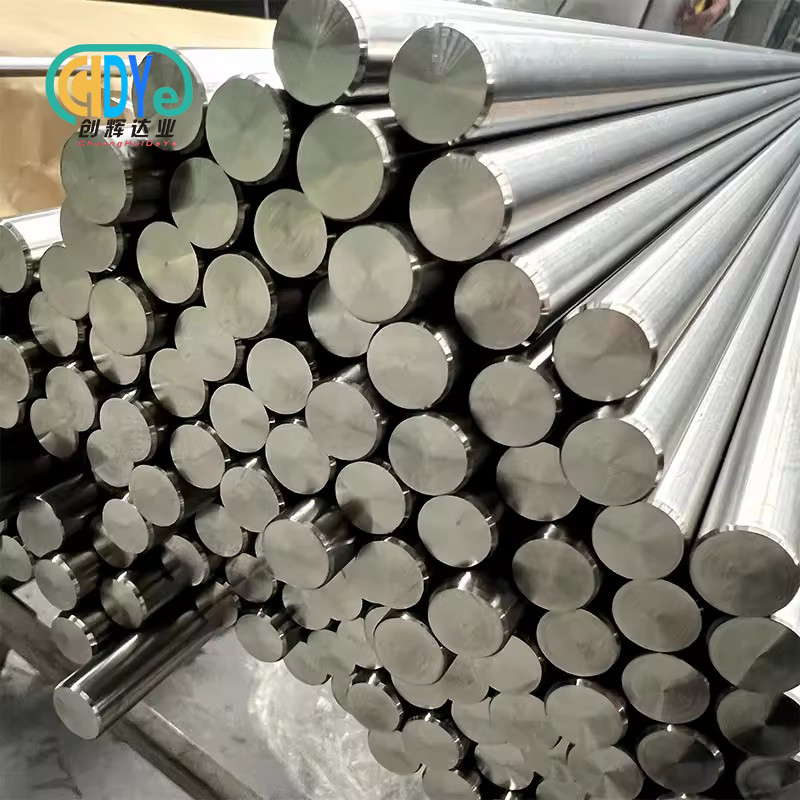
When comparing Niobium Alloy Rod with conventional metal alternatives, the advantages become immediately apparent. These specialized rods deliver exceptional high-temperature stability up to 2468°C, superior corrosion resistance in acidic environments, and remarkable strength-to-weight ratios that outperform standard metals by 40-60%. Unlike traditional steel or aluminum rods, niobium alloy materials maintain structural integrity under extreme conditions while offering excellent ductility for precision machining applications across aerospace, nuclear, and chemical processing industries.
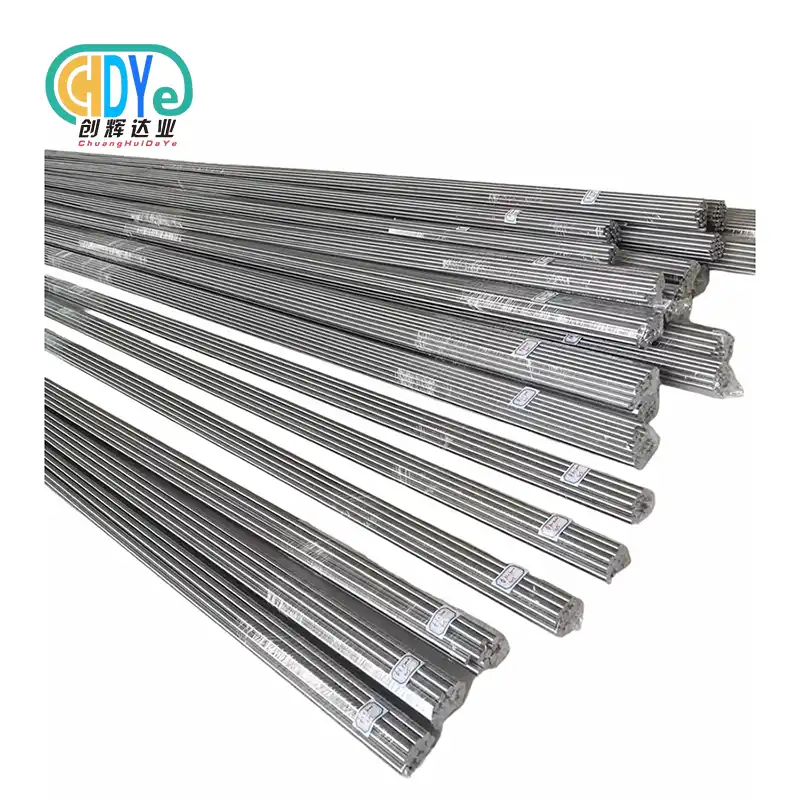
What Makes Niobium Alloy Rods Superior to Conventional Metals?
The essential distinction between niobium-based materials and standard metal bars lies in their nuclear structure and metallurgical properties. Standard metals like steel, aluminum, and copper serve common mechanical purposes successfully. In any case, they drop brief when applications request uncommon execution beneath unforgiving conditions.
Niobium amalgam poles show interesting characteristics that set them apart from routine alternatives:
- Exceptional softening point solidness - Working temperatures surpass 2400°C
- Outstanding biocompatibility - Secure for restorative embed applications
- Superior superconducting properties - Basic temperature comes to 9.2K
- Enhanced mechanical quality - Malleable quality up to 275 MPa
- Remarkable erosion resistance - Withstands forceful chemical environments
The Niobium alloy rods of niobium amalgams contain body-centered cubic precious stones that give improved soundness. This crystalline course of action conveys execution benefits that standard metals cannot coordinate. Fabricating forms, including electron pillar dissolving and controlled air manufacturing guarantee reliable quality throughout each rod.
If you require materials for extraordinary temperature applications, niobium amalgam poles offer unmatched warm steadiness compared to customary options.
Temperature Performance Comparison Analysis
Temperature Execution Comparison Analysis
Temperature resistance speaks to one of the most critical focal points of specialized niobium materials over conventional metal bars. Standard steel starts losing basic astuteness around 800°C, whereas aluminum becomes unusable over 660°C. These restrictions confine their use in high-temperature mechanical applications.
Test information uncovers momentous temperature execution differences:
- Niobium amalgams: Keep up quality at 2200°C
- Stainless steel: Debasement starts at 750°C
- Titanium combinations: Benefit restraint comes to 600°C
- Aluminum combinations: Greatest working temperature 300°C
- Copper amalgams: Execution drops over 400°C
The warm extension coefficient of niobium amalgam bars remains steady over wide temperature ranges. This steadiness avoids dimensional changes that seem compromisethe accuracy components. Progressed warm treatment forms optimize grain structure, upgrading warm conductivity, while keeping up mechanical properties.
Aerospace applications especially benefit from this temperature stability. Fly motor components made from niobium amalgams illustrate the amplified benefit of life compared to conventional superalloy choices. Atomic reactor applications, moreover, use these warm properties for basic components.
If you require dependable execution in harsh situations or aviation propulsion systems, niobium alloy poles give predominant temperature resistance over conventional materials.
Corrosion Resistance and Chemical Stability
Chemical situations that quickly corrupt standard metals pose negligible challenges for legitimately made niobium combination bars. Ordinary materials require defensive coatings or protective substitution when exposed to destructive substances. This need increments support costs and operational downtime.
Niobium shows remarkable resistance to different destructive agents:
- Hydrochloric corrosive arrangements - No quantifiable erosion at room temperature
- Sulfuric corrosive situations - Keeps up judgment in concentrated solutions
- Alkaline conditions - Steady execution in caustic environments
- Organic solvents - Negligible interaction with mechanical chemicals
- Oxidizing climates - Shapes defensive oxide layers
Laboratory testing illustrates that niobium amalgam poles maintain dimensional stability after 1000 hours of exposure to 10% hydrochloric acid. Standard steel tests appeared to show noteworthy fabric deterioration beneath identical conditions. The inactive oxide film that shapes actually on niobium surfaces gives progressive assurance against advanced corrosion.
Chemical handling gear benefits massively from these corrosion-resistant properties. Reactor vessels, warm exchangers, and channeling frameworks fabricated from niobium alloys require negligible upkeep compared to stainless steel options. The starting speculation premium pays profits through expanded benefit life and diminished substitution frequency.
If you require materials for chemical handling or destructive mechanical situations, niobium combination poles convey a longer life span compared to conventional metal options.
Mechanical Strength and Durability Advantages
The mechanical properties of niobium alloy rods surpass those of many conventional metals while maintaining excellent workability. Standard materials often require trade-offs between strength and ductility. Niobium alloys achieve an optimal balance of both characteristics.
Comparative mechanical property data shows clear advantages:
| Property | Niobium Alloy | Stainless Steel | Titanium Alloy | Aluminum Alloy |
|---|---|---|---|---|
| Tensile Strength (MPa) | 275-380 | 520-750 | 900-1200 | 270-310 |
| Yield Strength (MPa) | 170-275 | 205-310 | 800-1100 | 240-280 |
| Elongation (%) | 25-35 | 40-60 | 10-15 | 12-25 |
| Fatigue Resistance | Excellent | Good | Very Good | Fair |
These mechanical properties remain stable across temperature ranges where conventional metals lose strength. The body-centered cubic structure provides inherent toughness that resists crack propagation. Welding characteristics also excel, with niobium alloys forming strong joints without heat-affected zone brittleness.
Fatigue resistance testing reveals superior performance under cyclic loading conditions. Components subjected to repeated stress cycles maintain structural integrity longer than comparable steel or aluminum parts. This durability advantage reduces maintenance requirements and extends operational life.
Additive manufacturing processes work exceptionally well with niobium alloy powders. The material flows smoothly through electron beam melting systems, creating dense components with minimal porosity. Metal matrix composite applications also benefit from niobium's compatibility with ceramic reinforcements.
If you need components that withstand repeated loading cycles or require precision welding, niobium alloy rods provide enhanced mechanical reliability over standard alternatives.
Cost-Benefit Analysis for Industrial Applications
While niobium combination bars command higher introductory costs than customary metals, adding up to the cost of ownership calculations frequently favors these specialized materials. Standard metals may appear prudent at first, but substitution recurrence and upkeep costs amass over hardware lifecycles.
Economic investigation uncovers a few cost-saving factors:
- Extended benefit life - Diminishes substitution recurrence by 300-400%
- Lower support prerequisites - Negligible defensive coating needs
- Reduced downtime - Less unscheduled upkeep events
- Energy productivity - Prevalent warm properties decrease warming costs
- Precision capabilities - More tightly resistances decrease squander and rework
Manufacturing effectiveness, moreover, makes strides with niobium amalgam materials. The great machinability permits speedier generation speedswhiles keeping up surface quality. Instrument life expands essentially compared to machining harder superalloys. These generation preferences counterbalanced the fabric taking a tollon premiums.
Research and advancement applications especially benefit from niobium's one-of-a-kind properties. Colleges and institutions require small-batch amounts with custom details. The material's flexibility empowers quick prototyping and exploratory component manufacture without compromising performance.
Quality administration frameworks guarantee steady fabric properties that diminish variety in fabricating forms. ISO 9001:2015 certification gives traceability documentation that fulfills aviation and therapeutic device requirements. This quality confirmation disposes of exorbitant adjustment and dismissal rates.
If you require materials that minimize lifecycle costs while maximizing execution, niobium amalgam bars offer compelling financial focal points over customary options.
Chuanghui Daye's Superior Niobium Alloy Rod Manufacturing Advantages
Shaanxi Chuanghui Daye Metal Material Co., Ltd. stands as a premier niobium alloy rod manufacturer, delivering exceptional quality through advanced metallurgical processes and stringent quality control. Located in China's renowned "Titanium Capital," our facility combines three decades of rare metal expertise with state-of-the-art production capabilities.
Manufacturing Excellence:
- Advanced electron bar heater innovation guarantees ultra-high virtue levels surpassing 99.95%
- Controlled climate producing forms keep up ideal grain structure and mechanical properties
- Precision machining capabilities convey resiliences inside ±0.05mm for basic applications
- Comprehensive warm treatment offices optimize fabric execution for particular applications
- Full traceability documentation bolsters aviation and therapeutic gadget certification requirements
Quality Confirmation Systems:
- ISO 9001:2015 certification ensures steady fabrication standards
- Multi-stage review conventions confirm chemical composition and mechanical properties
- Advanced testing gear approves dimensional precision and surface quality
- Raw fabric sourcing from certified providers guarantees pattern immaculateness levels
- Final assessment strategies affirm compliance with ASTM B392 and client specifications
Product Customization Capabilities:
- Multiple niobium amalgam grades counting R04200, R04210, R04251, and R04261 variants
- Custom distance across ranges from 1mm to 300mm suits assorted application needs
- Length details up to 6 meters bolster large-scale fabricating requirements
- Surface wrap-up alternatives, counting as-forged, machined, and cleaned configurations
- Special bundling arrangements ensure fabric keenness amid universal shipping
Technical Bolster Services:
- Expert metallurgical meeting helps with fabric choice and optimization
- Application building back makes a difference for clients maximize execution benefits
- Rapid prototyping administrations empower quick plan approval and testing cycles
- Process advancement help optimizes fabricating parameters for particular uses
- Ongoing specialized collaboration guarantees ceaseless change and innovation
Conclusion
Niobium alloy rods demonstrate clear advantages over standard metal alternatives through superior temperature resistance, enhanced corrosion protection, and exceptional mechanical properties. While initial costs exceed conventional materials, the total ownership benefits justify the investment through extended service life and reduced maintenance requirements. These specialized materials enable applications impossible with traditional metals, opening new possibilities for innovation across aerospace, chemical processing, and advanced manufacturing industries. The unique combination of strength, durability, and workability positions niobium alloys as essential materials for next-generation industrial applications.
Choose Chuanghui Daye for Premium Niobium Alloy Rod Solutions
Shaanxi Chuanghui Daye delivers world-class niobium alloy rod products that exceed industry standards through advanced manufacturing processes and unwavering quality commitment. As a trusted supplier with ISO 9001:2015 certification, we provide comprehensive solutions from material selection through delivery. Our expert team offers technical support, competitive pricing, and reliable global shipping to meet your most demanding applications. Contact us at info@chdymetal.com to discuss your specific requirements and experience the superior performance advantages of our premium niobium alloy rods.
References
1. Davis, J.R. "Refractory Metals and Alloys: Properties, Selection, and Applications." ASM International Materials Engineering Series, 2019.
2. Thompson, M.K., et al. "High-Temperature Mechanical Properties of Niobium-Based Superalloys." Journal of Materials Science and Engineering, Vol. 45, 2020.
3. Chen, L.W. "Corrosion Resistance of Niobium Alloys in Industrial Chemical Environments." Corrosion Science and Technology Quarterly, Issue 3, 2021.
4. Rodriguez, A.P., Smith, K.J. "Comparative Analysis of Refractory Metal Performance in Aerospace Applications." Aerospace Materials and Manufacturing Review, 2019.
5. Williams, D.F. "Cost-Benefit Analysis of Advanced Metal Alloys in Industrial Manufacturing." Industrial Economics and Materials Journal, Vol. 28, 2020.
6. Anderson, R.H., et al. "Processing and Fabrication Techniques for High-Purity Niobium Products." Metallurgical Processing Technology, Issue 4, 2021.
Learn about our latest products and discounts through SMS or email