- English
- French
- German
- Portuguese
- Spanish
- Russian
- Japanese
- Korean
- Arabic
- Greek
- German
- Turkish
- Italian
- Danish
- Romanian
- Indonesian
- Czech
- Afrikaans
- Swedish
- Polish
- Basque
- Catalan
- Esperanto
- Hindi
- Lao
- Albanian
- Amharic
- Armenian
- Azerbaijani
- Belarusian
- Bengali
- Bosnian
- Bulgarian
- Cebuano
- Chichewa
- Corsican
- Croatian
- Dutch
- Estonian
- Filipino
- Finnish
- Frisian
- Galician
- Georgian
- Gujarati
- Haitian
- Hausa
- Hawaiian
- Hebrew
- Hmong
- Hungarian
- Icelandic
- Igbo
- Javanese
- Kannada
- Kazakh
- Khmer
- Kurdish
- Kyrgyz
- Latin
- Latvian
- Lithuanian
- Luxembou..
- Macedonian
- Malagasy
- Malay
- Malayalam
- Maltese
- Maori
- Marathi
- Mongolian
- Burmese
- Nepali
- Norwegian
- Pashto
- Persian
- Punjabi
- Serbian
- Sesotho
- Sinhala
- Slovak
- Slovenian
- Somali
- Samoan
- Scots Gaelic
- Shona
- Sindhi
- Sundanese
- Swahili
- Tajik
- Tamil
- Telugu
- Thai
- Ukrainian
- Urdu
- Uzbek
- Vietnamese
- Welsh
- Xhosa
- Yiddish
- Yoruba
- Zulu
What Is Tantalum Rod 1mm Used For in Precision Engineering?
In precise engineering, great responsibilities sometimes rest on little parts. It's not just any metal you can use to make a small rod that has to withstand acid, conduct electricity consistently, tolerate extreme temperatures, or be safe within the human body. This is where the 1mm tantalum rod comes in. This ultra-thin rod has a diameter of only one millimeter and combines the well-known corrosion resistance and thermal stability of tantalum with the tiny dimensions required by current electronics, chemical equipment, and medical devices. What is Tantalum Rod 1mm Used for? Why do engineers choose it rather than lesser materials? This article covers the material’s major properties, primary uses, grades, and production processes behind it, and the practical considerations to keep in mind when you specify it for your next project.
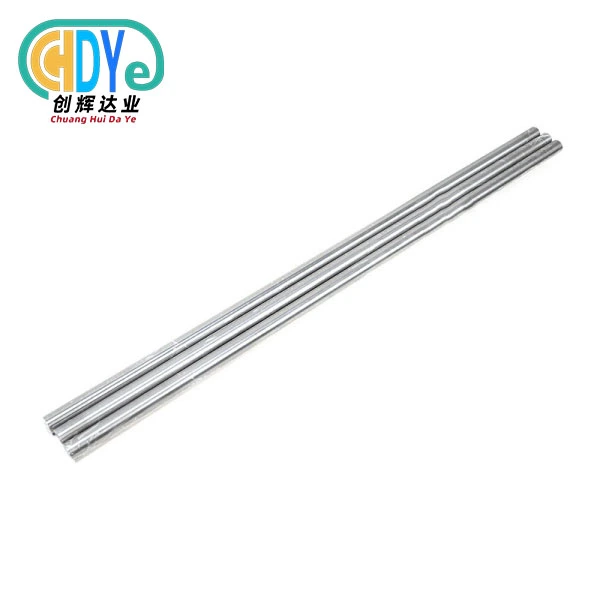
Understanding Tantalum Rod 1mm in Precision Engineering
What Makes a 1mm Tantalum Rod Special
A 1mm tantalum rod is not just a tiny piece of metal, but a carefully regulated component manufactured to strict specifications. Tantalum is a thick, ductile refractory metal that generates a persistent oxide layer on its surface, and this film protects it from many harmful substances. Engineers have a material that can be pulled down to a uniform 1 mm diameter and integrated into tiny assemblies, fine probes, and compact devices without compromising chemical stability. Our tantalum rod 1mm has a purity of more than 99.9%, helping to provide dependable performance and to prevent contamination in sensitive operations where the smallest impurities might be problematic.
Why Purity and Dimensional Accuracy Matter
At such a tiny scale, there is extremely little margin for error. A 1mm tantalum rod with uneven diameter or concealed impurities may not fit, conduct poorly, or corrode sooner than intended. High purity guarantees the protective oxide layer is uniformly formed, and tight dimensional tolerances enable use of the rod in automated assembly, precision machining, and fragile laboratory settings. The rods we sell are of a constant diameter of 1 mm and may be cut to lengths of up to 500 mm, offering designers flexibility while maintaining predictable quality. Engineers who deal with small parts tend to regard this uniformity as highly as the material attributes do.
How It Differs from Larger Tantalum Bars
Heavy chemical equipment often uses large tantalum bars and rods, but tantalum rod 1mm has another use. Its narrow cross-section lends itself to wire-like usage such as electrical leads, supports, pins, probes, and delicate structural elements, when weight and space are at a premium. It also has a rapid heating and cooling rate, which might be a plus in high-temperature operations and vacuum equipment. The rod is manufactured by repetitive cold working and precise drawing, which results in a better surface and structure than can be achieved with massive forged bars. Buyers should specify fine rods individually, not assume that large-bar data is applicable.
Main Applications of Tantalum Rod 1mm
Electronics Manufacturing and Electrical Components
One of the most essential areas for tantalum rod 1mm is electronics. Tantalum has good electrical qualities and is frequently utilized for capacitors and other electronic equipment, with fine rods being employed as leads, anode supports, electrodes, and connecting elements inside tiny devices. The great thermal stability of the metal ensures that these parts maintain their shape and function throughout production procedures like sintering and vacuum processing. Its corrosion resistance also protects the component during cleaning and chemical treatment. If you’re a company that needs consistent conductivity in a very small package, a 1mm tantalum rod is a reliable and long-lasting choice.
Chemical Processing and Laboratory Equipment
Parts are regularly subjected to strong acids, high temperatures, and repeated cleaning cycles in chemical processing and laboratory operations. A 1mm rod of tantalum may be used as a tiny support, stirrer, probe, thermocouple protection element, or fastener in such settings, resisting assault that would swiftly destroy stainless steel or many other metals.' Its chemical inertness also keeps samples and process fluids clean, which is important in analysis and research. Labs like that the rod can be twisted, sliced, and shaped into bespoke forms; thus, one material can fulfill a lot of various applications. The adaptability of the unit makes it a suitable alternative for pilot equipment and specific test configurations.
Medical Devices and Biocompatible Uses
Tantalum is also recognized for its biocompatibility, which means it is typically non-reactive to bodily tissue. That is why a tantalum rod 1mm is regarded for medical and biological applications such as surgical instrument components, tiny implants, markers, and research equipment used in contact with live systems. The safety record is improved by its resistance to bodily fluids and sturdy surface. Ductility permits accurate formation of microscopic pieces. Medical manufacturers always have to comply with the legislation and testing criteria that pertain to their own goods, but having a clean, high-purity rod from a quality-controlled source is a great base to begin with.
| Industry | Typical Use of Tantalum Rod 1mm | Key Benefit |
|---|---|---|
| Electronics | Leads, electrodes, anode supports | Electrical performance, heat stability |
| Chemical processing | Probes, supports, fasteners | Corrosion resistance |
| Laboratory | Test fixtures, sample holders | Chemical inertness, cleanliness |
| Medical | Instrument parts, fine components | Biocompatibility, ductility |
| Vacuum and high temperature | Small structural elements | Stable properties under extreme conditions |
Grades, Specifications and Manufacturing of Tantalum Rod 1mm
Available Grades and Their Differences
Choosing the proper grade is an important step in any precision project. We provide our 1mm tantalum rod in grades like R05200 and R05400. We also offer tantalum-tungsten alloys, including compositions with around 2.5% and 10% tungsten, and special alloys on request. Pure tantalum with a minimum of 99.9% tantalum delivers the highest ductility and corrosion resistance, whereas tungsten alloys offer superior strength and higher temperature performance. The correct option depends on your operating temperature, the chemicals involved, and the mechanical stress. If you are not sure, our engineers may assist you in comparing grades before you decide to place the purchase.
| Item | Specification |
|---|---|
| Grade | R05200 / R05400 and tantalum-tungsten alloys |
| Purity (pure grades) | >99.9% |
| Standard | ASTM B365 |
| Diameter | 1 mm (a wider range up to 100 mm also available) |
| Length | Up to 500 mm for 1 mm rod, or customized |
| Size | Customized |
The Manufacturing Process Behind Fine Rods
Producing a 1mm tantalum rod that fulfills exacting standards is a multi-step operation. We start with high-purity tantalum ingots and then employ cold working processes like as forging, rolling, swaging, and precision drawing to reduce the material to size. The repetitive drawing provides the rod a smooth, uniform surface. Each step enhances the structure of the metal and dimensional correctness. Because tantalum work-hardens, careful annealing is also used as required to maintain the workability of the metal. It’s this meticulous, regulated technique that enables a very thin rod to maintain its tolerances and function effectively in demanding applications.
Standards and Quality Control at Every Stage
Standards give buyers a common language, and our tantalum rod 1mm is produced in line with ASTM B365, the specification covering tantalum and tantalum alloy rod and wire. In addition to the norm, we check the quality at each step of manufacturing so that each rod fulfills our high internal specifications. Shaanxi Chuanghui Daye Metal Material Co., Ltd. is ISO 9001:2015 certified for raw material inspection, melting and forging, machining and forming, and final inspection and packing. For you, this implies documented traceability, fewer surprises on delivery, and more trust when the rod goes into precise equipment.
Choosing and Using Tantalum Rod 1mm Effectively
Matching Specifications to Your Project
Before you purchase a 1mm tantalum rod, spend some time to establish what the part is truly going to perform. List the operating temperature, the chemicals/media it will encounter, the electrical or mechanical requirements, and the tolerances your assembly requires. Pass this information on to your supplier, who may then suggest a grade, length, and finish that matches your design rather than a generic product. Especially for novel applications, it is often a good idea to purchase a tiny sample first to check fit and performance. This basic procedure typically saves time and money compared to finding a mismatch after a significant purchase was made.
Handling, Fabrication and Storage Tips
Fine tantalum rods are ductile, but may be destroyed by improper handling. 1mm tantalum rod should be maintained in a clean, dry state, away from other metals that may contaminate it with residue. It should be handled with clean gloves to preserve the surface. A major problem with tantalum is galling. This may be avoided with the use of sharp tools and sufficient lubrication during cutting, bending, and machining. If the rod is to be welded or exposed to high temperatures, note that tantalum readily absorbs gases such as oxygen and nitrogen while heated, and vacuum or inert-gas shielding is advisable. Good handling practices can help maintain the item in the condition you bought it in.
Working with a Reliable Manufacturer
The last consideration is the firm that made the material. A good provider of tantalum rod 1mm should have clear specifications, material certifications, flexible customization, and honest advice. Shaanxi Chuanghui Daye Metal Material Co., Ltd. is headquartered in Baoji, the “Titanium Capital” of China. Our founder has more than 30 years’ expertise in the rare metal sector. We combine melting, forging, rolling, and machining technology with a mindset of quality first and client first. That knowledge allows us to promptly address actual difficulties, whether you require a small trial amount or a continuous supply for production.
Conclusion
Pure, corrosion-resistant, thermally stable, and biocompatible – all in a tantalum rod 1mm size that fits the most sensitive assemblies. You’ll find it in electronics, chemical equipment, labs, and medical devices. Shaanxi Chuanghui Daye Metal Material Co., Ltd. is located in Baoji, China, "the Capital of Titanium in China", with 30 years of rare metal experience, superior manufacturing equipment, and ISO 9001:2015 quality control. Speak with our staff now if you need dependable and cost-effective tantalum goods for your next project. We'll help you find the proper grade, size, and length for your application.
FAQ
Q1. What is a tantalum rod 1mm mainly used for?
A: It is mainly used in electronics, chemical processing, laboratory equipment, and medical applications, where a thin, corrosion-resistant, and high-purity metal rod is needed.
Q2. What purity does your tantalum rod 1mm have?
A: Our pure tantalum rods have a purity above 99.9%, which supports consistent performance and corrosion resistance.
Q3. What grades are available?
A: We supply R05200 and R05400, tantalum-tungsten alloys with about 2.5% and 10% tungsten, and custom alloys on request.
Q4. What lengths can I order?
A: For the 1 mm diameter, lengths of up to 500 mm are available, and other sizes can be customized to your requirements.
Q5. Which standard do your rods follow?
A: Our rods are produced according to ASTM B365, with quality checks at every stage under our ISO 9001:2015 certified system.
Contact Us Today for Your Tantalum Rod 1mm Needs
Ready to source premium tantalum for your precision projects? Shaanxi Chuanghui Daye Metal Material Co., Ltd. supplies high-quality tantalum rod 1mm products, along with titanium, niobium, tungsten, and molybdenum materials, to customers across the globe. Send us your grade, length, quantity, and application details, and our experienced team will reply promptly with a tailored quotation and the documents you need. Whether you want a small sample or regular bulk supply, we are ready to help with expert advice and dependable delivery. Email us now at info@chdymetal.com and let us support your next precision engineering project.
References
1. Cardonne, S. M., Kumar, P., Michaluk, C. A., & Schwartz, H. D. (1995). Tantalum and its alloys. International Journal of Refractory Metals and Hard Materials, 13(4), 187–194.
2. ASTM International. (2016). ASTM B365: Standard Specification for Tantalum and Tantalum Alloy Rod and Wire. ASTM International.
3. Cardarelli, F. (2018). Materials Handbook: A Concise Desktop Reference (3rd ed.). Springer.
4. Robin, A., & Rosa, J. L. (2000). Corrosion behavior of niobium, tantalum and their alloys in hot hydrochloric and phosphoric acid solutions. International Journal of Refractory Metals and Hard Materials, 18(1), 13–21.
5. Black, J. (1994). Biological performance of tantalum. Clinical Materials, 16(3), 167–173.
6. Freeman, Y. (2018). Tantalum and Niobium-Based Capacitors: Science, Technology, and Applications. Springer.
Learn about our latest products and discounts through SMS or email