- English
- French
- German
- Portuguese
- Spanish
- Russian
- Japanese
- Korean
- Arabic
- Greek
- German
- Turkish
- Italian
- Danish
- Romanian
- Indonesian
- Czech
- Afrikaans
- Swedish
- Polish
- Basque
- Catalan
- Esperanto
- Hindi
- Lao
- Albanian
- Amharic
- Armenian
- Azerbaijani
- Belarusian
- Bengali
- Bosnian
- Bulgarian
- Cebuano
- Chichewa
- Corsican
- Croatian
- Dutch
- Estonian
- Filipino
- Finnish
- Frisian
- Galician
- Georgian
- Gujarati
- Haitian
- Hausa
- Hawaiian
- Hebrew
- Hmong
- Hungarian
- Icelandic
- Igbo
- Javanese
- Kannada
- Kazakh
- Khmer
- Kurdish
- Kyrgyz
- Latin
- Latvian
- Lithuanian
- Luxembou..
- Macedonian
- Malagasy
- Malay
- Malayalam
- Maltese
- Maori
- Marathi
- Mongolian
- Burmese
- Nepali
- Norwegian
- Pashto
- Persian
- Punjabi
- Serbian
- Sesotho
- Sinhala
- Slovak
- Slovenian
- Somali
- Samoan
- Scots Gaelic
- Shona
- Sindhi
- Sundanese
- Swahili
- Tajik
- Tamil
- Telugu
- Thai
- Ukrainian
- Urdu
- Uzbek
- Vietnamese
- Welsh
- Xhosa
- Yiddish
- Yoruba
- Zulu
What Should You Check Before Ordering pure niobium rod?
You can't just purchase a regular steel bar if you want to get niobium. The metal is scarce, the cost is greater, lead times may be longer, and a mistake in specification may not be revealed until the rod has been machined, mounted, or melted. That’s why it’s crucial that every customer knows what to look for when buying pure niobium rod. A little effort spent reviewing purity, standard, dimensions, surface condition, intended use, and supplier quality may avoid rejected shipments, lost material, and delayed projects. In this article, we walk you through the important checks in a practical sequence, explain why each one is important, and show you what a reputable manufacturer should be able to confirm before you place a purchase order.
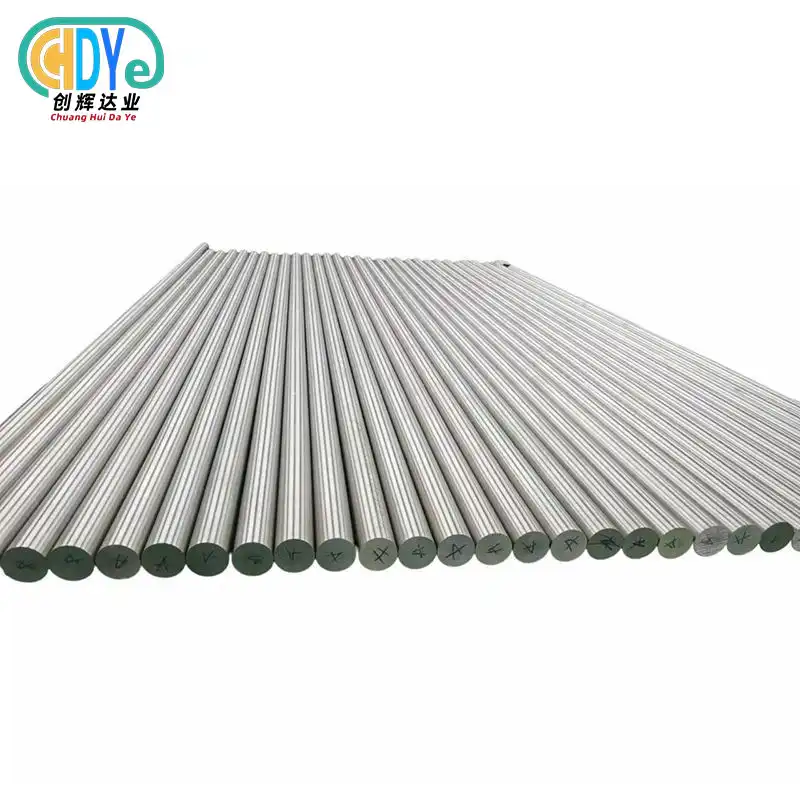
Confirm Purity, Standard, and Grade Before You Order Pure Niobium Rod
Why Purity Is the First Number to Check
First, you have to determine the purity of any pure niobium rod, from which everything else follows. Our rod is sold in 99.95% purity for use in chemical equipment, vacuum furnace components, and a variety of alloying and melting applications. Higher purity is less likely to include oxygen, nitrogen, carbon, or other metals, which can harden the rod, diminish ductility, and lower corrosion resistance. For demanding applications, request the overall purity and limitations on specific aspects as well. A provider that can give you precise statistics and back them up with a chemical analysis report shows that the product is managed and understood.
Matching the Rod to ASTM B392
A recognized standard provides a common language to buyers and sellers. Our pure niobium rod is produced to ASTM B392, the standard specification for niobium and niobium alloy bar, rod, and wire, which covers chemistry, mechanical requirements, dimensions, and tolerances. When ordering, state the standard on your purchase order and ask the provider to ensure that it applies to the specific grade you want. Without a benchmark, phrases like “pure” or “high quality” might imply quite different things to various suppliers. Mentioning ASTM B392 also helps with incoming inspection, since your quality team knows precisely what the supplied rod should look like.
Material Certificates and Traceability
Documentation is the way you turn a promise into evidence. Prior to buying pure niobium rod, inquire about the documentation that will accompany the shipment: a material test certificate with chemical composition, dimensional inspection records, and, if applicable, traceability to a manufacturing batch. This documentation becomes critical if the rod is going into regulated equipment such as medical or nuclear systems or if your own customers audit your supply chain. Our manufacturing is managed under an ISO 9001:2015 Quality Management System, and hence we maintain records from inspection of raw materials through to final inspection and packing. If a provider is unwilling or unable to produce documentation, then this should be a severe red flag.
Check Dimensions, Length and Surface Condition
Diameter Range and Tolerance
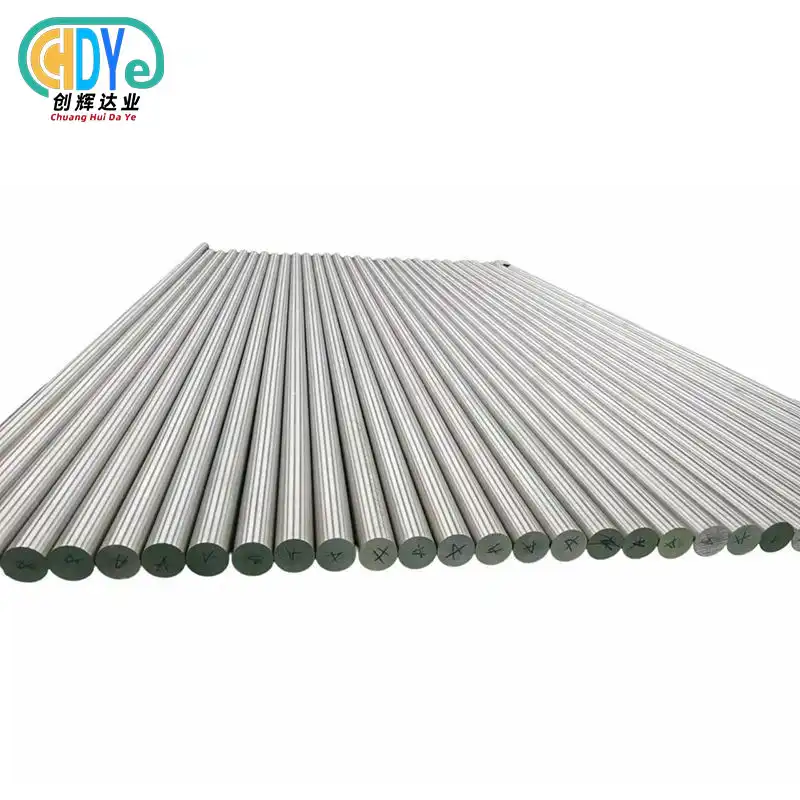
The size determines how much of the rod will become the completed piece, and how much will be wasted as chips. We provide pure niobium rods in sizes ranging from 3 mm to 120 mm, including tiny fasteners and pins as well as big shafts and structural supports. Tell your supplier the diameter you need and the tolerance you need, and ask them to confirm what they can handle consistently. Niobium is costly to trash. One of the best methods to save cost is to choose a diameter close to the final part size. If you are not sure, give us a sketch, and our experts will recommend an effective stock size before manufacturing.
| Item | Specification |
|---|---|
| Material | Pure niobium |
| Purity | 99.95% |
| Standard | ASTM B392 |
| Diameter | 3–120 mm |
| Length | Less than 2 m, customized |
Length and Customization Options
The next thing to look at is length. Our firm supplies pure niobium rods in lengths less than 2 meters. Cutting to your necessary length is possible. Be specific whether you require precise cut lengths or random lengths of lengths suitable for a certain machine since this influences both pricing and delivery. Packaging for long, ductile rods also must avoid bending during transport, so inquire how the supplier safeguards the material. Rare metals are often customized, but always clarify this in writing, including tolerances, amount, and delivery date, so that both parties are in agreement when manufacturing begins.
Surface Finish and Defect Inspection
A good pure niobium rod will have a smooth, clean surface devoid of fractures, laps, scratches, and embedded contaminants. These imperfections may not be important in many applications, but may be a problem in corrosion-resistant equipment where surface defects become targets of attack, or in electronic devices where cleanliness is vital. The procedure concludes with a surface inspection and finishing to provide you with a defect-free rod ready for machining. If you receive a cargo, inspect the surface in excellent light and compare it with the sample or certificate. Before ordering, consult with the provider since the same rod may be provided with a varied surface condition.
Match Pure Niobium Rod to Your Application
Chemical and Oil Industry Equipment
One of the most popular applications for pure niobium rod is in the chemical and oil sectors where corrosion-resistant equipment is a must. The rod is used in the manufacture of reaction vessels and parts for equipment that must withstand nitric acid, sulfuric acid, and hydrochloric acid. It is also used in storage tanks, pipes, and supports. Niobium resists many acids, but not all concentrations, temperatures, or mixtures. It may be attacked by hydrofluoric acid and hot strong alkalis. Share your process medium and temperatures with the provider before purchasing. A simple compatibility check at this point costs nearly nothing, whereas a faulty material choice might result in equipment failure.
Vacuum Furnaces, Superalloys and Electron-Beam Melting
Pure niobium rod is also utilized for fixtures and high-temperature supports in vacuum furnaces where its high melting point and strength at high temperatures are beneficial. In metallurgy, it is utilized in the creation of superalloys and in electron-beam melting, including the production of high-temperature alloys such as Ta-Nb alloys and corrosion-resistant alloy additives. Chemical purity and minimal levels of impurities are particularly crucial for these applications, as everything in the rod may be introduced into the melt. If you are ordering for melting or alloying, let the provider know your intended alloy composition and ask for restrictions on the elements that are most important to your requirements.
Aerospace, Electronics, Medical and Energy Uses
Pure niobium rod also finds its way into a wide range of innovative applications in addition to heavy industries. Aerospace and military customers utilize it in components for high-temperature service, superconducting magnets, and structural parts. Electronics and semiconductor makers use it for electrodes, conductive elements, and connections. Medical equipment producers are using niobium for biocompatible surgical instruments and implants, while energy and environmental engineers utilize it in heat exchangers, renewable energy systems, and specialized machinery. Please specify the end use when placing an order, since each area has different standards in documentation and hygiene. Then the provider may propose the proper grade, finish, and documentation instead of guessing.
| Application Field | Typical Use of Pure Niobium Rod |
|---|---|
| Chemical and oil industry | Reaction vessels, acid-resistant equipment, storage tanks |
| Vacuum furnaces | Attachments and high-temperature supports |
| Metallurgy | Superalloys, electron-beam melting, alloy additives |
| Aerospace and defense | High-temperature components, superconducting magnets |
| Electronics | Electrodes, conductive elements, connectors |
| Medical | Surgical tools, implants, biocompatible devices |
Verify Manufacturing Process, Quality Control and Supplier
The Production Route Behind the Rod
The way a pure niobium rod is manufactured reveals a lot about how it will function. We start with premium-grade niobium ingots, then employ vacuum melting to remove impurities and guarantee homogeneity. The ingots are forged and rolled into bars and rods. Precision machining is used to obtain accurate diameters and flawless finishes. Annealing is used to improve ductility and mechanical properties. And lastly,t surface inspection and finishing are used to ensure a fault-free rod. So when you examine a supplier, ask them to explain their own process in the same level of detail. You’re much more likely to get consistent results from a manufacturer who can guide you through each process than from a dealer who can’t even tell you where the material is coming from.
Equipment, Certification and Inspection Records
Facilities and accreditation are additional proof that a provider can satisfy your expectations. Shaanxi Chuanghui Daye Metal Material Co., Ltd. has annealing furnaces, an electron beam furnace, smelting equipment, rolling machines, lathes, sawing machines, and shearing machines. It has ISO 9001:2015 certification, which covers raw material inspection, melting and forging, machining and forming, and final inspection and packaging. For a pure niobium rod order, it requires inspections at each step, not just at the end. When comparing vendors, ask for a copy of the quality certificate, inquire how the inspection findings are documented, and check that the certificate is up to date. Good vendors will answer these questions promptly and without hesitation.
Supplier Experience, Delivery and Support
The last inspection is the source itself. Our firm is situated in the Baoji High-tech Development Zone, regarded as the "Titanium Capital" of China, with convenient transportation and a well-established industrial base. We were founded by an expert with over 30 years’ expertise and believe in the principle of quality first and client first. For purchasers of pure niobium rods, this implies clear guidance, dependable communication, and the capacity to deliver tantalum, titanium, tungsten, and molybdenum goods in addition to niobium. Before ordering, check the lead time, packing method, and after-sales service. Below is a summary of the entire pre-order checklist in tabular format.
| Check | What to Confirm |
|---|---|
| Purity | 99.95%, with impurity limits if needed |
| Standard | ASTM B392 written on the order |
| Dimensions | Diameter 3–120 mm, length under 2 m |
| Surface | Smooth, defect-free, inspected |
| Documents | Material test certificate, inspection records |
| Certification | Current ISO 9001:2015 |
| Application fit | Media, temperature, and end use shared with supplier |
Conclusion
Before obtaining a pure niobium rod, you should examine its purity, governing standard, diameter, length, surface condition, application fit, and the quality of the source behind it. Each of these checks is easy, but collectively they safeguard your budget and your project. Shaanxi Chuanghui Daye Metal Material Co., Ltd. is based in Baoji, China’s “Titanium Capital.” With more than 30 years of expertise in rare metals, they use modern melting and machining equipment and ISO 9001:2015-certified quality control for every shipment. Contact our staff now for reliable, affordable niobium and let us verify your requirements before you purchase.
FAQ
Q1. What purity does your pure niobium rod have?
A: Our pure niobium rod has a purity of 99.95% and is made to ASTM B392, with chemical analysis available to confirm each batch.
Q2. What sizes can I order?
A: Diameters range from 3 to 120 mm, and lengths of less than 2 meters can be customized to your requirements.
Q3. What is pure niobium rod used for?
A: It is used for vacuum furnace supports, reaction vessels, acid-resistant equipment, superalloy and electron-beam melting work, and parts for the chemical, oil, aerospace, electronics, medical, and energy industries.
Q4. Can pure niobium rod be used with strong acids?
A: It resists many conditions involving nitric, sulfuric, and hydrochloric acid, but hydrofluoric acid and hot strong alkalis can attack it, so please share your process details before ordering.
Q5. How is quality controlled?
A: We use vacuum melting, hot forging and rolling, precision machining, annealing, and final surface inspection under an ISO 9001:2015 certified system.
Contact Us Today Before You Order Pure Niobium Rod
Ready to place your order with confidence? Shaanxi Chuanghui Daye Metal Material Co., Ltd. supplies pure niobium rods, together with tantalum, titanium, tungsten, and molybdenum materials, to customers around the world. Send us your purity requirements, standard, diameter, length, quantity, and application, and our experienced team will reply promptly with a tailored quotation and supporting documents. Whether you need one sample rod or regular bulk supply, we are ready to help with expert advice and dependable delivery. Email us now at info@chdymetal.com and let us make your next niobium purchase simple and worry-free.
References
1. Cardarelli, F. (2018). Materials Handbook: A Concise Desktop Reference (3rd ed.). Springer.
2. ASTM International. (2016). ASTM B392: Standard Specification for Niobium and Niobium Alloy Bar, Rod, and Wire. ASTM International.
3. Robin, A., & Rosa, J. L. (2000). Corrosion behavior of niobium, tantalum, and their alloys in hot hydrochloric and phosphoric acid solutions. International Journal of Refractory Metals and Hard Materials, 18(1), 13–21.
4. Nico, C., Monteiro, T., & Graça, M. P. F. (2016). Niobium oxides and niobates physical properties: Review and prospects. Progress in Materials Science, 80, 1–37.
5. Donachie, M. J., & Donachie, S. J. (2002). Superalloys: A Technical Guide (2nd ed.). ASM International.
6. International Organization for Standardization. (2015). ISO 9001:2015 Quality Management Systems – Requirements. ISO.
Learn about our latest products and discounts through SMS or email