- English
- French
- German
- Portuguese
- Spanish
- Russian
- Japanese
- Korean
- Arabic
- Greek
- German
- Turkish
- Italian
- Danish
- Romanian
- Indonesian
- Czech
- Afrikaans
- Swedish
- Polish
- Basque
- Catalan
- Esperanto
- Hindi
- Lao
- Albanian
- Amharic
- Armenian
- Azerbaijani
- Belarusian
- Bengali
- Bosnian
- Bulgarian
- Cebuano
- Chichewa
- Corsican
- Croatian
- Dutch
- Estonian
- Filipino
- Finnish
- Frisian
- Galician
- Georgian
- Gujarati
- Haitian
- Hausa
- Hawaiian
- Hebrew
- Hmong
- Hungarian
- Icelandic
- Igbo
- Javanese
- Kannada
- Kazakh
- Khmer
- Kurdish
- Kyrgyz
- Latin
- Latvian
- Lithuanian
- Luxembou..
- Macedonian
- Malagasy
- Malay
- Malayalam
- Maltese
- Maori
- Marathi
- Mongolian
- Burmese
- Nepali
- Norwegian
- Pashto
- Persian
- Punjabi
- Serbian
- Sesotho
- Sinhala
- Slovak
- Slovenian
- Somali
- Samoan
- Scots Gaelic
- Shona
- Sindhi
- Sundanese
- Swahili
- Tajik
- Tamil
- Telugu
- Thai
- Ukrainian
- Urdu
- Uzbek
- Vietnamese
- Welsh
- Xhosa
- Yiddish
- Yoruba
- Zulu
Why Choose Niobium Round Bar for Corrosion Resistance?
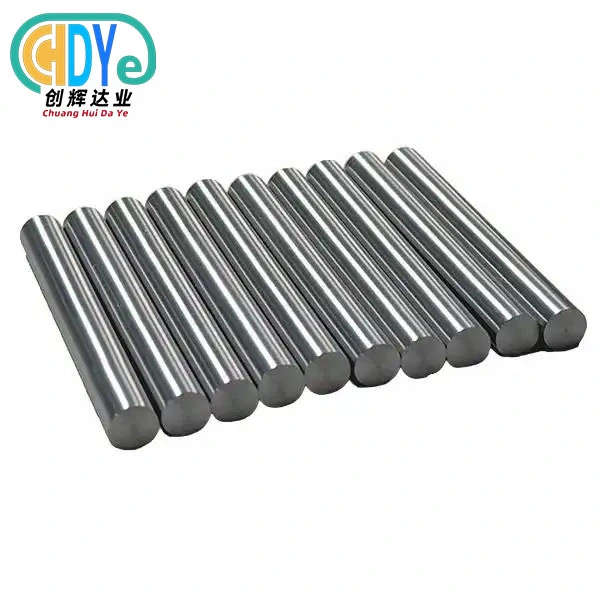
When the equipment is exposed to acids, heat, and frequent wear, the metal you pick is one of the most significant considerations in the project. Stainless steel is well known and inexpensive but may pit, split, or corrode in severe chemical use. Exotic metals can blow the budget. Niobium round bar occupies a vital intermediate ground. It is a soft, ductile, silver-grey refractory metal with exceptional corrosion resistance, a very high melting point, good formability, and fair weight. Why pick niobium round bar for corrosion resistance? In this article, we describe how it protects itself, what its primary qualities and requirements are, where it is used, and how meticulous manufacture makes every bar uniform and reliable.
Why Niobium Round Bar Resists Corrosion So Well
A Self-Healing Oxide Film on the Surface
The corrosion resistance of niobium round bar starts with its surface. When niobium comes into contact with oxygen, it develops a thin, stable oxide coating that prevents the metal from coming into direct contact with its surroundings. That layer, however, reforms fast if damaged, so the bar continues to defend itself throughout everyday service. This is the same underlying principle that makes tantalum so robust and is why niobium round bar does well in many acidic and chemical environments when common steels break down. The protective film is part of the metal, not a coating, so it doesn’t peel or split away, providing engineers with a more reliable kind of corrosion protection.
Performance in Acids and Chemical Environments
Buyers most often select niobium round bar for its chemical resistance. It has resistance to various mineral and organic acids and to a wide variety of process media and so is a strong choice for reactors, pipework and containers in chemical processing. Niobium, like other metals, has its limits: it may be attacked by hydrofluoric acid and by hot, strong alkaline solutions and, at raised temperatures, requires protection from air and hydrogen pick-up. Therefore, it makes sense to discuss your process conditions with the provider before purchase. When properly alloyed, niobium round bar also provides a longer service life and reduced maintenance costs than many less expensive materials.
High Melting Point and Thermal Stability
Thermal stability is an essential companion property to chemical resistance, since corrosion is typically accelerated at elevated temperatures. Niobium certainly belongs to the refractory metals with a melting point of 2477°C and a boiling temperature of 4744°C. A niobium round bar maintains its structure and strength at heat that would soften most common alloys, which is why it is used in aeronautical equipment, furnaces, and other high-temperature systems. Because it is both heat- and corrosion-resistant, one material may meet numerous requirements simultaneously, eliminating the need for complex multi-material designs. This also makes design, testing, and procurement easier for the engineers at the same time.
Niobium Round Bar Properties and Specifications
Physical and Mechanical Characteristics
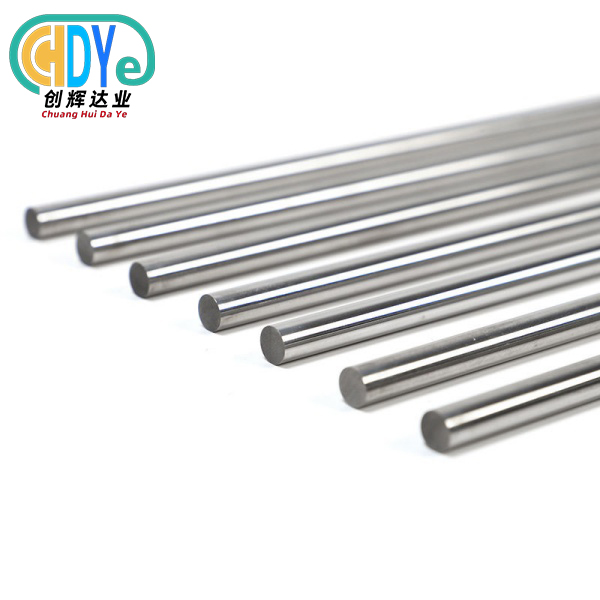
When you know the fundamental qualities of niobium round bar, you can determine whether it is right for your design. It has a density of 8.57 g/cm³, substantially lower than tantalum and tungsten; hence, pieces are lighter for the same size. It is soft and ductile, which makes it simple to be machined, drawn, and formed, and it also demonstrates good superconductivity, wear resistance, and great corrosion resistance. These qualities have led to its broad application in steel additives, superconducting materials, aircraft, and atomic energy. Specific mechanical values depend on the grade, the condition after annealing, and the diameter of the bar. We propose you get a test certificate corresponding to your order.
| Property | Niobium Value |
|---|---|
| Appearance | Silver-gray metal |
| Density | 8.57 g/cm³ |
| Melting point | 2477°C |
| Boiling point | 4744°C |
| Character | Soft, ductile, high-melting-point rare metal |
Standards, Grades and Purity
A smart buy of a niobium round bar begins with a precise specification. Our bars are manufactured to ASTM B392, the standard specification for niobium and niobium alloy bar, rod, and wire, and are available in grades R04200 and R04210. Purity is available at the high levels needed for demanding service, with material up to 99.95% and higher as per your demands, and length cut to your specifications. When sending an inquiry, please specify the standard, grade, purity, diameter, and quantity, and ask the provider to confirm in writing. This easy practice will help to avoid mix-ups and make it simpler to verify the delivered bar against your purchase order.
Dimensions, Length and Customization
Equipment projects vary in size; thus, flexibility is key. Niobium round bars are available in various diameters and in lengths cut to your needs. Custom requirements may be negotiated with our staff before starting production. Precision forging and machining result in a uniform diameter and excellent surface finish on each bar, reducing machining waste when producing final products. Ordering a bar size near to the final size saves material and time, which is a particular benefit with a precious metal. If you are in doubt as to the most inexpensive diameter, give us a sketch, and we will recommend an economical size.
| Item | Specification |
|---|---|
| Product | Niobium round bar |
| Standard | ASTM B392 |
| Grade | R04200, R04210 |
| Purity | Up to 99.95% and above, depending on order |
| Length | According to your requirements |
| Surface | Smooth, precision-machined |
Industries That Use Niobium Round Bar for Corrosion Resistance
Chemical Processing and Energy Equipment
Niobium round bar is most obviously seen in chemical processes. Niobium's stability in aggressive media is a boon to corrosion-resistant piping, reactors, vessels, and supporting parts. The same advantage applies in energy and environmental engineering, where heat exchangers, renewable energy equipment, and specialized industrial machinery are working under harsh conditions. In these environments, every corroded component results in lost output and possible contamination; therefore, a more robust material pays for itself. Cutting niobium round bar into shafts, fasteners, and supports provides plant managers with a means to secure key spots without the cost of replacing a complete system in costly metal.
Aerospace, Defense and Superconducting Uses
Aerospace and military customers prefer niobium round bar for structural components and high-temperature equipment where strength, heat resistance, and lightness relative to other refractory metals are important. Niobium is of key importance in superconducting technology because it becomes superconducting at low temperatures and is used extensively in superconducting magnets and associated components. Corrosion resistance protects the surface during cleaning and handling; purity preserves performance in these applications. These industries have high costs of failure; therefore, customers need traceability of material, accurate documentation, and consistent quality from lot to lot — just what a quality-controlled manufacturer should provide.
Electronics, Semiconductors and Medical Equipment
Electronics and semiconductor manufacturers utilize niobium round bar for electrodes, connections, and conductive components based on its electrical performance and chemical stability. Niobium’s superior safety profile and resistance to bodily fluids are used in the medical field for surgical equipment, implants, and other biocompatible devices. Both of these areas demand clean material and excellent dimensional control, as there is minimal leeway for tiny pieces. Medical manufacturers also have their own rules and tests to follow, but beginning with a well-documented bar from a qualified maker makes the process that much simpler. Niobium round bar therefore bridges heavy industrial and fine precision work in one material family.
| Industry | Typical Uses of Niobium Round Bar |
|---|---|
| Chemical processing | Piping, reactors, vessels |
| Energy and environmental | Heat exchangers, renewable energy equipment |
| Aerospace and defense | Structural parts, superconducting magnets, high-temperature equipment |
| Electronics and semiconductors | Electrodes, connectors, conductive components |
| Medical equipment | Surgical tools, implants, biocompatible devices |
How Quality Manufacturing Supports the Corrosion Resistance of Niobium Round Bar
Raw Material Selection and Vacuum Melting
Corrosion performance is designed in from the ground up. For every niobium round bar, we choose only high-purity niobium ingots, since imperfections may damage the protective oxide coating and decrease ductility. The metal is then vacuum melted to enhance homogeneity and eliminate undesired impurities, by shielding the melt from the gases that niobium readily absorbs while heated. This painstaking approach results in a completed bar that is clean and uniform in structure from end to end. Generally, manufacturers that own these early stages create fewer surprises down the road for the buyer since the base of the material has already been tested.
Forging, Rolling, Machining and Annealing
The ingot is melted, then forged and rolled into bars and machined to precise diameters and strict tolerances. It is then annealed. This improves its ductility and mechanical qualities and removes stresses introduced while processing. Each stage increases the quality of the niobium round bar, and our facilities, including annealing furnaces, electron beam furnace, smelting equipment, rolling machines, lathes, sawing machines, and shearing machines, enable us to maintain the full route under one roof. "This combination allows for greater dimension control and reduces delivery time, which is appreciated by the clients when projects are running on tight timeframes.
Surface Finishing, Inspection and ISO 9001:2015
Finally, surface treatment and inspection are carried out to make sure each niobium round bar is free of defects and has a smooth surface. A clean surface will promote consistent oxide film development and make issues simpler to find before shipping. Shaanxi Chuanghui Daye Metal Material Co., Ltd. is ISO 9001:2015 Quality Management System certified, which includes raw material inspection, melting and forging, machining and forming, final inspection, and packing. Documented control implies traceable records for customers, fewer rejected parts, and more trust when a bar is fitted in important equipment. The key process stages are shown in the table below.
| Process Step | Purpose |
|---|---|
| Raw material selection | Use only high-purity niobium ingots |
| Vacuum melting | Improve uniformity and remove impurities |
| Hot forging and rolling | Convert ingots into preliminary bar shapes |
| Precision machining | Achieve exact diameters and tight tolerances |
| Annealing | Enhance ductility and mechanical properties |
| Surface finishing and inspection | Ensure smooth, defect-free surfaces |
Conclusion
Niobium round bar provides a suitable combination of corrosion resistance, high-temperature stability, ductility, and light weight that is used in chemical processing, aerospace, electronics, energy, and medical areas. Its performance is dependent upon purity, proper grade, and careful manufacture. Located in Baoji, the "Titanium Capital" of China, Shaanxi Chuanghui Daye Metal Material Co., Ltd. provides over 30 years of rare metal expertise, superior melting and machining equipment, and ISO 9001:2015 certified quality control to each and every order. If you need a dependable and cost-effective corrosion-resistant metal, get in touch with our staff immediately and let us assist you in finding the perfect bar.
FAQ
Q1. Why is niobium round bar good for corrosion resistance?
A: It forms a stable, self-healing oxide film that protects the metal in many acids and chemical environments, which extends service life and reduces maintenance.
Q2. What standards and grades do you supply?
A: Our niobium round bar follows ASTM B392 and is supplied in grades R04200 and R04210, with lengths cut to your requirements.
Q3. What are the main properties of niobium?
A: Niobium has a density of 8.57 g/cm³, a melting point of 2477°C, and a boiling point of 4744°C, and it is soft, ductile, and superconducting at low temperatures.
Q4. Which industries use niobium round bar?
A: Chemical processing, energy, aerospace and defense, electronics and semiconductors, and medical equipment are the main users.
Q5. Is niobium suitable for every chemical environment?
A: No. It resists many acids, but hydrofluoric acid and hot strong alkalis can attack it, so please share your process conditions with us before ordering.
Contact Us Today for Your Niobium Round Bar Needs
Looking for a trustworthy supplier of corrosion-resistant metal? Shaanxi Chuanghui Daye Metal Material Co., Ltd. supplies niobium round bar, together with tantalum, titanium, tungsten, and molybdenum materials, to customers in the chemical, aerospace, electronic, and medical industries worldwide. Send us your standard, grade, purity, diameter, length, and quantity, and our experienced team will respond quickly with a tailored quotation and the documents you need. Whether you need a trial piece or regular bulk supply, we are ready to help with expert advice and dependable delivery. Email us now at info@chdymetal.com and give your equipment the protection it deserves.
References
1. Cardarelli, F. (2018). Materials Handbook: A Concise Desktop Reference (3rd ed.). Springer.
2. ASTM International. (2016). ASTM B392: Standard Specification for Niobium and Niobium Alloy Bar, Rod, and Wire. ASTM International.
3. Robin, A., & Rosa, J. L. (2000). Corrosion behavior of niobium, tantalum, and their alloys in hot hydrochloric and phosphoric acid solutions. International Journal of Refractory Metals and Hard Materials, 18(1), 13–21.
4. Nico, C., Monteiro, T., & Graça, M. P. F. (2016). Niobium oxides and niobates physical properties: Review and prospects. Progress in Materials Science, 80, 1–37.
5. Schweitzer, P. A. (2010). Fundamentals of Corrosion: Mechanisms, Causes, and Preventative Methods. CRC Press.
6. International Organization for Standardization. (2015). ISO 9001:2015 Quality Management Systems – Requirements. ISO.
Learn about our latest products and discounts through SMS or email