- English
- French
- German
- Portuguese
- Spanish
- Russian
- Japanese
- Korean
- Arabic
- Greek
- German
- Turkish
- Italian
- Danish
- Romanian
- Indonesian
- Czech
- Afrikaans
- Swedish
- Polish
- Basque
- Catalan
- Esperanto
- Hindi
- Lao
- Albanian
- Amharic
- Armenian
- Azerbaijani
- Belarusian
- Bengali
- Bosnian
- Bulgarian
- Cebuano
- Chichewa
- Corsican
- Croatian
- Dutch
- Estonian
- Filipino
- Finnish
- Frisian
- Galician
- Georgian
- Gujarati
- Haitian
- Hausa
- Hawaiian
- Hebrew
- Hmong
- Hungarian
- Icelandic
- Igbo
- Javanese
- Kannada
- Kazakh
- Khmer
- Kurdish
- Kyrgyz
- Latin
- Latvian
- Lithuanian
- Luxembou..
- Macedonian
- Malagasy
- Malay
- Malayalam
- Maltese
- Maori
- Marathi
- Mongolian
- Burmese
- Nepali
- Norwegian
- Pashto
- Persian
- Punjabi
- Serbian
- Sesotho
- Sinhala
- Slovak
- Slovenian
- Somali
- Samoan
- Scots Gaelic
- Shona
- Sindhi
- Sundanese
- Swahili
- Tajik
- Tamil
- Telugu
- Thai
- Ukrainian
- Urdu
- Uzbek
- Vietnamese
- Welsh
- Xhosa
- Yiddish
- Yoruba
- Zulu
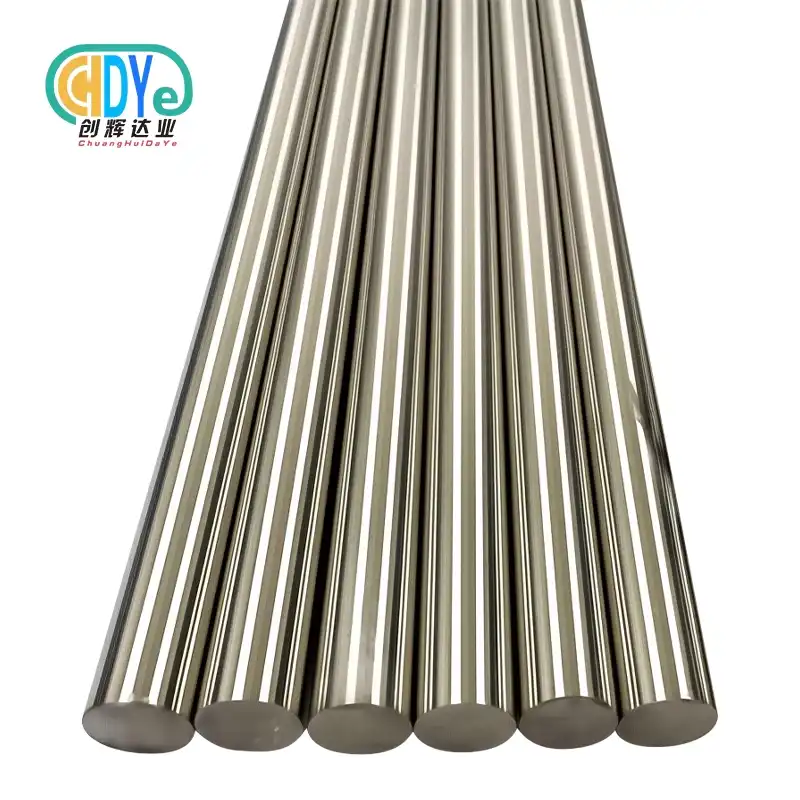
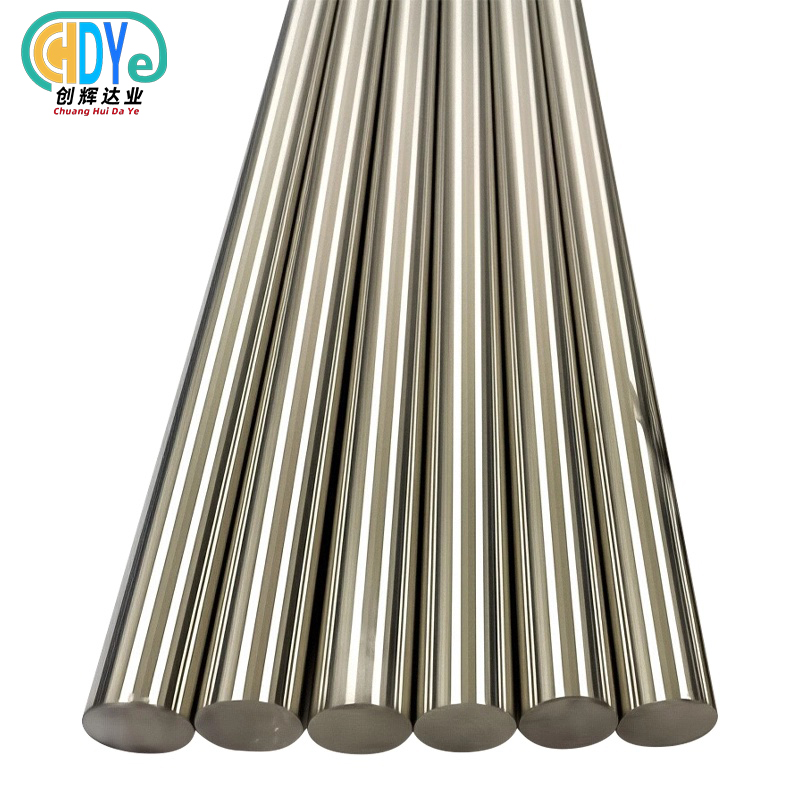
Where Are Titanium Rods Commonly Used Today?
Titanium rod applications have expanded dramatically across modern industries, driven by their exceptional strength-to-weight ratio and outstanding corrosion resistance. Today, these cylindrical mill products manufactured from commercially pure titanium or advanced alloys serve critical functions in aerospace structures, medical implants, chemical processing equipment, and marine components. The unique combination of properties—approximately 55% the density of steel while maintaining comparable tensile strength—makes titanium rods indispensable for applications where traditional materials fail. Industries ranging from semiconductor manufacturing to offshore energy production increasingly rely on these materials to solve persistent challenges related to weight reduction, environmental degradation, and biocompatibility requirements.
Understanding Titanium Rods and Their Core Properties
Manufacturing Processes and Material Grades
The production steps for titanium rods are very strict. They start as raw titanium sponge and end up as precision-engineered parts. Usually, the first step in the production process is vacuum arc remelting, which heats up the raw materials to over 1,650°C to get rid of impurities and create a uniform microstructure that is needed for consistent mechanical properties. After the first melting stage, the material goes through hot forging or rotary piercing, which smooths out the grain structure and sets the rod's basic measurements. At Chuanghui Daye, our advanced melting and forging facilities keep strict temperature controls on these important stages to make sure the material develops the crystalline structure it needs to work well in harsh environments. The grade choice has a big impact on how well it works in the short and long term. Grade 2 commercially pure titanium is the workhorse of the industry. It has the perfect mix of moderate strength (a minimum tensile strength of 345 MPa) and exceptional ductility, which makes it perfect for cold-forming in chemical processing equipment. This type of stainless steel is made to stop the high-frequency equipment failure that happens in chloride-rich environments, where normal stainless steels rust faster because of pitting and crevice corrosion. Grade 1 titanium is the most malleable of the commercially pure types. Its lower content of interstitial elements makes it possible to work with extreme cold, which is needed for making complex building parts. Grade 5 titanium alloy (Ti-6Al-4V) is most commonly used in aerospace applications because it has tensile strengths greater than 895 MPa and a low density that lets flight-critical structures save a lot of weight.
Material Properties Compared to Alternatives
When purchasing managers look at different types of materials, the performance difference between titanium rods and other options is quickly clear when they compare numbers. Titanium has a density of 4.51 g/cm³, which is much lower than stainless steel's 8.0 g/cm³ and even lower than aluminium's 2.7 g/cm³. However, the strength-to-weight ratio measurement shows that titanium is actually stronger than these other materials. A Grade 5 titanium rod has a specific strength (strength split by density) that is higher than both 316 stainless steel and 7075 aluminium alloy. This is especially true at high temperatures, above 150°C, when titanium rod aluminium alloys lose a lot of their strength. Titanium is different from other materials because it naturally forms a strong titanium dioxide (TiO₂) passive film. This film protects titanium from erosion. This oxide layer is only a few nanometres thick, and it heals itself right away when it gets damaged in oxygen or water. This protects it against chloride attack, oxidising acids, and marine conditions for a very long time. In tests for accelerated corrosion that follow ASTM G48 guidelines, titanium bars show corrosion rates below 0.025 mm per year in concentrated chloride solutions. These rates are much faster than the rates at which austenitic stainless steels are destroyed within weeks. This performance directly leads to lower lifecycle costs, since parts made from titanium rods don't need to be replaced as often and don't have to be taken apart for maintenance when they break down due to corrosion in harsh service settings.
Common Industry Applications of Titanium Rods Today
Aerospace and Defense Manufacturing
About 46% of the world's titanium is used in the aircraft industry. Titanium rods are an important raw material for landing gear parts, hydraulic actuator shafts, engine mounts, and airframe structural members. Aircraft manufacturers use Grade 5 titanium rods in situations where the reduced weight directly leads to more cargo space, a longer range, or better fuel economy. About 12 to 18 metric tonnes of titanium are used in a single wide-body commercial aeroplane. Rod-derived components make up a big part of this total. Titanium's endurance limit is close to 50% of its ultimate tensile strength, while steel's limit is 35–40%. This means that the material will keep working well for the 25–30 years that commercial airframes are usually used, even when they are loaded and unloaded repeatedly due to aerodynamic forces and changes in pressure. For defence purposes, even higher performance standards are needed. Titanium rod-fabricated parts must be able to resist extreme operational envelopes, such as supersonic flight, corrosive maritime environments, and ballistic impact scenarios. Titanium is used a lot in the building of naval ships for parts like propeller shafts, pump shafts, valve stems, and hull penetration fittings that would break down quickly in salt water. Titanium rods are used to make submarine pressure hull penetrations that keep the structure strong at operating depths greater than 300 meters and don't cause galvanic corrosion problems when combined with steel or aluminium structures. Titanium is very useful in mine countermeasure boats and sensor systems that need to keep their magnetic signatures as low as possible. This is because titanium is not magnetic.
Medical Device Manufacturing and Surgical Instruments
One of the most important areas where titanium is used is in medicine. Grade 23 titanium rods (extra-low interstitial Ti-6Al-4V ELI) are the best material for orthopaedic implants, dental fixtures, and surgical tools. Titanium is biocompatible because it has a chemically inert TiO₂ surface layer that stops immune system reactions and the release of charged particles. This lets the bone adhere directly to the implant surface through osseointegration, which is the direct link between living bone and the implant surface in terms of structure and function. Medical-grade titanium is used to make hip replacement stems, spinal fusion cages, bone screws, and intramedullary rods. These materials have long-term fixation success rates of over 95% over 15-year follow-up times, which is better than cobalt-chromium or stainless steel alternatives. Titanium's modulus of elasticity (about 110 GPa) is more like that of cortical bone (10–30 GPa) than stainless steel's (200 GPa), which means that titanium doesn't protect against stress as well as stainless steel does, and bone loss and implant release happen less often in load-bearing situations. Surgical instrument makers like titanium rods because they can be used to make lightweight, corrosion-resistant tools that don't break down after being sterilised with steam many times. Titanium is very strong, so microsurgical tools, arthroscopic shavers, and retractor systems can have smaller cross-sections that make surgery easier and more visible. Medical device makers are looking for titanium rod suppliers that have ISO 13485 certification and full traceability paperwork. Chuanghui Daye meets these requirements with its thorough quality management systems and batch-specific material test reports.
How to Choose the Right Titanium Rod for Your Procurement Needs
Grade Specifications Aligned with Application Requirements
To choose the right Titanium rod grade, you need to carefully look at the mechanical, chemical, and physical qualities that the application requires. It is possible to make commercially pure grades (Grades 1-4) that get stronger by adding intermediate elements like oxygen, nitrogen, and carbon in controlled amounts. Grade 1 is the most workable for cold-working, and Grade 4 is the strongest among unalloyed types. For uses with moderate temperatures (below 300°C), environments with water-based corrosion, and forming processes, Grade 2 is usually the best choice. It has the right amount of strength (minimum 345 MPa tensile) and is also very flexible (minimum 20% elongation) and easy to weld. For high-strength uses that need tensile strengths of more than 900 MPa, titanium alloys are needed. Grade 5 (Ti-6Al-4V) is by far the most common alloy grade, making up about half of all titanium used in the world. The controlled heat treatment that creates the alpha-beta microstructure makes it possible for strength and ductility combinations that aren't possible with commercially pure grades. The corrosion protection is still good enough for most non-reducing acid environments. Different alloys may be needed for specific tasks. Grade 9 (Ti-3Al-2.5V) is better for cold-forming tubular parts, Grade 12 (Ti-0.3Mo-0.8Ni) is better at resisting reducing acids, and Grade 23 (Ti-6Al-4V ELI) meets strict standards for medical implant purity. As a way to make sure that suppliers meet widely recognised quality standards, procurement specifications should include ASTM B348 for titanium rod dimensions and composition.
Cost Considerations and Lifecycle Value Analysis
Titanium rod procurement decisions frequently encounter resistance based on initial material cost comparisons that overlook total lifecycle economics. Raw material prices for Grade 2 titanium rod typically range from $18-35 per kilogram, depending on order quantity, diameter, and market conditions, representing a 3-5x premium over equivalent 316 stainless steel rod and an 8-12x premium compared to carbon steel. This initial cost differential obscures the compelling economic case for titanium in applications where corrosion, weight, or biocompatibility drive requirements. Lifecycle cost analysis, incorporating installation, maintenance, replacement, and downtime costs consistently demonstrates favourable economics for titanium in aggressive service environments. A representative chemical processing application involving a titanium pump shaft operating in chloride service illustrates this economic reality. The titanium component costs approximately $2,800 versus $900 for a 316 stainless steel equivalent, seemingly a $1,900 cost penalty. The stainless steel shaft requires replacement every 18-24 months due to pitting corrosion, incurring $3,200 in labour and downtime costs per replacement cycle, while the titanium shaft operates maintenance-free for 10+ years. Over a 10-year analysis period, the stainless steel option accumulates $19,200 in total costs ($900 + 5 replacements × $3,200 + 5 replacement shafts × $900) versus $2,800 for titanium, yielding 85% lifecycle cost savings despite the higher initial material investment. Procurement professionals maximising shareholder value increasingly adopt lifecycle costing methodologies that reveal titanium's true economic advantage in appropriate applications.
Best Practices for Working with Titanium Rods in Industry
Machining Strategies for Optimal Results
Achieving precise dimensions and a superior surface finish when machining titanium rods requires deliberate deviation from standard steel cutting practices. The low thermal conductivity characteristic of titanium concentrates cuts heat at the tool-work interface rather than dissipating into the bulk material, creating conditions that accelerate crater wear and edge breakdown on cutting tools. Successful machining operations maintain rigid workholding with minimal overhang, employ sharp cutting edges with positive rake geometry (typically 5-10° positive), and utilise generous flood coolant application at flow rates of 40-80 litres per minute to evacuate heat and prevent chip rewelding. Cutting speed selection profoundly influences tool life and machining economics, with optimal Titanium rod surface speeds for titanium typically ranging 40-60 meters per minute for carbide tooling compared to 120-180 m/min for equivalent steel operations. Maintaining constant feed rates without dwell periods prevents work hardening effects that dramatically increase cutting forces on subsequent passes. Sharp tools prove essential—dull cutting edges generate excessive heat and rubbing that work-harden the titanium surface, creating a self-reinforcing cycle of deteriorating cutting conditions. Tool materials should be selected based on operation specifics: uncoated carbide performs adequately for roughing operations, TiAlN-coated carbide extends tool life in finishing cuts, and polycrystalline diamond (PCD) tooling provides optimal economics for high-volume production despite higher initial tool investment.
Heat Treatment Effects on Performance Characteristics
When heat treatment methods are used strategically, the mechanical properties can be changed to fit the needs of the application. This is especially true for grades of titanium alloy that change microstructurally when heated and cooled. Solution treating and ageing (STA) protocols for Grade 5 titanium give the strongest condition. Tensile strengths of around 1100 MPa are reached after solution treatment at 955°C, cooling in air, and then ageing at 540°C for 4 to 8 hours. This increase in strength comes at the cost of less flexibility, making the material more brittle and more likely to crack. This is a trade-off that is fine for static load uses but not so good for fatigue-critical parts. Stress relief annealing is the most common type of heat treatment used on titanium rod-based parts. It gets rid of leftover stresses caused by machining that can lead to dimensional instability or early fatigue failure. The process starts with heating the material to 595°C for commercially pure grades or 730°C for Grade 5 metal. It is then held at that temperature for a length of time equal to the thickness of the section (usually one hour for every 25 mm of thickness), and then it is cooled by air. Components lose very little power (less than 5%), but they get a lot of residual stress relief (more than 85%). Full annealing processes make the most flexible materials by recrystallising microstructures that have been worked, but they also lose a lot of strength, by about 20 to 30 per cent. Properly controlling the atmosphere in a furnace keeps oxygen from soaking in and weakening the surface layer. Vacuum or inert gas atmospheres are best for protection, while air furnaces need to have the surface removed later using chemical milling or mechanical methods.
Conclusion
Titanium rods have established themselves as indispensable materials across industries demanding exceptional performance in challenging environments. The unique combination of high strength-to-weight ratio, outstanding corrosion resistance, and biocompatibility enables applications ranging from aerospace structural components to medical implants and chemical processing equipment. Successful procurement requires understanding grade specifications, lifecycle cost economics, and supplier quality systems. Organisations seeking reliable titanium rod supply benefit from partnering with established manufacturers offering technical expertise, comprehensive certifications, and consistent quality control throughout the production process.
FAQ
1. Which titanium grade suits aerospace structural applications?
Grade 5 (Ti-6Al-4V) dominates aerospace structural applications due to its exceptional combination of high tensile strength exceeding 895 MPa, excellent fatigue resistance, and proven service history across commercial and military aircraft. This alpha-beta alloy provides the strength-to-weight ratio essential for airframe components, landing gear elements, and engine mounts where weight reduction directly impacts payload capacity and fuel efficiency. Grade 23 (Ti-6Al-4V ELI) serves applications demanding enhanced damage tolerance and fracture toughness.
2. How does titanium performance compare to 316 stainless steel?
Titanium outperforms 316 stainless steel in corrosion resistance, particularly in chloride environments where stainless steel suffers pitting and stress corrosion cracking while titanium remains essentially unaffected. The strength-to-weight ratio of Grade 5 titanium exceeds that of 316 stainless by approximately 60%, enabling significant weight reduction in structural applications. Stainless steel offers advantages in lower material cost, higher modulus of elasticity for stiffness-critical applications, and simpler machining. Lifecycle cost analysis frequently favours titanium despite higher initial investment due to extended service life and eliminated replacement cycles.
3. Where can we source certified titanium rods with fast delivery?
Reputable titanium rod suppliers maintain ISO 9001:2015 certification and provide complete material test reports documenting chemical composition, mechanical properties, and heat treatment records. Chuanghui Daye specialises in supplying certified titanium rods with expedited production capabilities for urgent project requirements. Our manufacturing facility in Baoji provides direct access to titanium raw materials and specialised processing equipment, enabling rapid prototyping and flexible batch production ranging from research quantities to production volumes.
Partner with Chuanghui Daye for Your Titanium Rod Requirements
Shaanxi Chuanghui Daye delivers certified titanium rods engineered for demanding applications across aerospace, medical, chemical processing, and marine industries. Our ISO 9001:2015 certified manufacturing facility combines advanced melting, forging, and machining capabilities with over 30 years of rare metal expertise. We provide comprehensive material grades, including commercially pure Grade 1 and Grade 2, along with high-strength Grade 5 titanium alloy rods in custom dimensions tailored to your specifications. As a trusted titanium rod supplier, we offer competitive factory-direct pricing, complete traceability Titanium rod documentation, and expedited delivery for time-sensitive projects. Contact our technical team at info@chdymetal.com to discuss your specific requirements and receive detailed quotations backed by material certifications and engineering support.
References
1. Boyer, R., Welsch, G., & Collings, E.W. (1994). Materials Properties Handbook: Titanium Alloys. ASM International, Materials Park, Ohio.
2. Donachie, M.J. (2000). Titanium: A Technical Guide, 2nd Edition. ASM International, Materials Park, Ohio.
3. Lutjering, G. & Williams, J.C. (2007). Titanium, 2nd Edition. Springer-Verlag, Berlin, Heidelberg.
4. Schutz, R.W. & Thomas, D.E. (1987). Corrosion of Titanium and Titanium Alloys. In ASM Handbook Volume 13: Corrosion. ASM International.
5. Peters, M., Kumpfert, J., Ward, C.H., & Leyens, C. (2003). Titanium Alloys for Aerospace Applications. Advanced Engineering Materials, Volume 5, Issue 6.
6. American Society for Testing and Materials. (2021). ASTM B348: Standard Specification for Titanium and Titanium Alloy Bars and Billets. ASTM International, West Conshohocken, Pennsylvania.
Learn about our latest products and discounts through SMS or email