- English
- French
- German
- Portuguese
- Spanish
- Russian
- Japanese
- Korean
- Arabic
- Greek
- German
- Turkish
- Italian
- Danish
- Romanian
- Indonesian
- Czech
- Afrikaans
- Swedish
- Polish
- Basque
- Catalan
- Esperanto
- Hindi
- Lao
- Albanian
- Amharic
- Armenian
- Azerbaijani
- Belarusian
- Bengali
- Bosnian
- Bulgarian
- Cebuano
- Chichewa
- Corsican
- Croatian
- Dutch
- Estonian
- Filipino
- Finnish
- Frisian
- Galician
- Georgian
- Gujarati
- Haitian
- Hausa
- Hawaiian
- Hebrew
- Hmong
- Hungarian
- Icelandic
- Igbo
- Javanese
- Kannada
- Kazakh
- Khmer
- Kurdish
- Kyrgyz
- Latin
- Latvian
- Lithuanian
- Luxembou..
- Macedonian
- Malagasy
- Malay
- Malayalam
- Maltese
- Maori
- Marathi
- Mongolian
- Burmese
- Nepali
- Norwegian
- Pashto
- Persian
- Punjabi
- Serbian
- Sesotho
- Sinhala
- Slovak
- Slovenian
- Somali
- Samoan
- Scots Gaelic
- Shona
- Sindhi
- Sundanese
- Swahili
- Tajik
- Tamil
- Telugu
- Thai
- Ukrainian
- Urdu
- Uzbek
- Vietnamese
- Welsh
- Xhosa
- Yiddish
- Yoruba
- Zulu
Where to Buy High-Quality Titanium Alloy Plates for Your Business?
When sourcing high-quality titanium alloy plates for your business, selecting the right supplier becomes crucial for project success. Whether you need Grade 2, Grade 5 (Ti-6Al-4V), or specialized grades for aerospace, medical, or chemical processing applications, reliable suppliers offer certified materials that meet ASTM B265 standards. The best procurement strategy involves evaluating manufacturers based on their quality certifications, production capabilities, and ability to provide complete traceability documentation while maintaining competitive factory-direct pricing for both prototyping and volume orders.
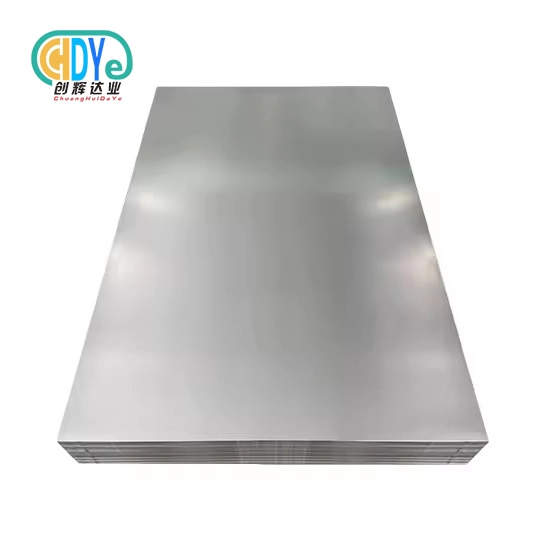
Why Titanium Alloy Plates Are Essential for Modern Industries?
Unique Properties That Drive Demand
Titanium metal plates convey remarkable execution characteristics that make them crucial over different businesses. Their exceptional strength-to-weight proportion surpasses most ordinary metals, whereas their prevalent erosion resistance guarantees life span in unforgiving situations. These materials keep up basic keenness at both cryogenic temperatures and elevated warm conditions, making them perfect for extraordinary applications.
The titanium alloy plates of certain titanium grades position them as the favored choice for restorative inserts and surgical implants. Also, their non-magnetic properties and fabulous warm steadiness support basic applications in gadgets and semiconductor manufacturing.
Applications Across Key Industries
Aerospace producers depend intensely on the quality of airplane components, motor parts, and basic components. The aviation division requests materials that can withstand extraordinary stretch while minimizing weight, making titanium sheets and plates important for advanced airship design.
Chemical handling offices utilize titanium's uncommon erosion resistance for tanks, warm exchangers, and piping systems. The material's capacity to stand up to forceful chemicals and keep up execution beneath weight makes it fundamental for petrochemical operations.
Medical gadget companies depend on titanium's biocompatibility for inserts, prosthetics, and surgical devices. The material's capacity to coordinate with human tissue without antagonistic responses has revolutionized present-day medicine.
Global Supply and Demand Analysis for Titanium Materials
Market Dynamics and Regional Distribution
Around the world, titanium advertising encounters relentless development driven by expanding demand from aviation, restorative, and mechanical industries. Asia-Pacific districts, especially China, overwhelm generation capacity due to inexhaustible crude materials and built up fabricating foundation. North America and Europe keep up solid demand centers, whereas centering on high-value applications and innovation.
Supply chain contemplations incorporate crude fabric accessibility, processing capabilities, and transportation logistics. Driving the creation of districts' advantage from vicinity to titanium metal stores and advanced metallurgical offices, empowering cost-effective generation of different titanium review specifications.
Industry-Specific Demand Patterns
Aerospace applications expend the biggest parcel of high-grade titanium materials, with Boeing and Airbus driving noteworthy demand for certified aerospace-grade plates. These producers require strict adherence to details and broad quality documentation.
Medical titanium alloy plates are reliable for development, especially for titanium combination applications in orthopedic inserts and dental components. This division emphasizes biocompatibility certifications and ultra-high immaculateness requirements.
Chemical handling businesses illustrate unfaltering demand for corrosion-resistant grades, with crest requirements amid plant extensions and gear updates. These applications prioritize long-term unwavering quality over introductory fetched considerations.
Comparing Different Sourcing Channels
Direct Manufacturer Partnerships
Working specifically with titanium plate producers offers a few advantages for businesses with steady volume necessities. Coordinate organizations ordinarily give superior estimating, customization capabilities, and specialized support. Producers can offer total traceability from crude materials through the last handling, guaranteeing quality control throughout the production chain.
However, coordinate sourcing frequently requires higher least arranged amounts and longer lead times. Businesses must assess whether their volume prerequisites legitimize direct producer connections versus elective sourcing methods.
B2B Platforms and Online Marketplaces
Digital procurement stages have changed titanium sourcing by interfacing buyers with confirmed providers around the world. These stages offer cost comparison devices, provider appraisals, and streamlined communication channels. Numerous B2B locales give secure installment handling and debate determination services.
The challenge with online platforms lies in confirming provider accreditations and guaranteeing fabric quality meets determinations. Buyers ought to ask nitty gritty certifications and consider third-party reviews for basic applications.
Local Distributors and Service Centers
Regional wholesalers keep up a stock of common titanium sheet determinations, empowering quicker conveyance for pressing ventures. They regularly give value-added services such as cutting, surface treatment, and small-batch handling. Neighborhood organizations can also disentangle coordination and diminish transportation costs.
Distributors may have constrained stock of specialized grades or custom measurements. Their estimating ordinarily incorporates markup over producer rates, although this premium frequently legitimizes the comfort and diminished lead times.
Trading Companies and Import Specialists
International exchange companies specialize in bridging topographical crevices between producers and conclusion clients. They handle complex coordinations, traditional methods, and money trades, while frequently keeping up connections with different suppliers.
Quality confirmation gets to be more challenging when working through mediators. Buyers ought to set up clear quality standards and review conventions to guarantee materials meet their specifications.
Practical Guidance for Supplier Selection and Verification
Key Evaluation Criteria
Successful titanium alloy plates with ISO 9001:2015 certification and pertinent industry-specific capabilities. Providers ought to illustrate reliable quality control forms, from crude fabric review through last bundling. Ask for point-by-point data on their dissolving, fashioning, and machining capabilities to guarantee they can meet your specialized requirements.
Financial steadiness and generation capacity assessment make a difference in guaranteeing dependable long-term organizations. Audit provider references from comparable businesses and applications to gauge their track record with comparable projects.
Quality Control and Testing Requirements
Comprehensive fabric testing ought to incorporate chemical composition analysis, mechanical property confirmation, and dimensional assessment. Providers ought to give Process Test Reports enumerating these events along with warm treatment records and surface wrap-up specifications.
Consider requiring ultrasonic testing for basic applications to identify inside absconds. Build up clear acknowledgment criteria and review conventions, sometimes recently setting orders to dodge debate later.
Minimum Order Quantities and Payment Terms
Titanium plate MOQs change altogether based on review, measurements, and handling necessities. Standard grades like Review 2 and Review 5 regularly have lower MOQs compared to specialized combinations. Custom measurements or surface medicines may require lower amounts due to setup costs.
Payment terms extend from conventional letters of credit for worldwide exchanges to adaptable terms for built up connections. Numerous providers offer advance installments for huge orders or expanded projects.
Common Pitfalls to Avoid
Avoid suppliers who cannot provide complete material certifications or traceability documentation. Verify that proposed delivery schedules align with realistic production timelines, particularly for custom specifications or specialized grades.
Be cautious of significantly below-market pricing, which may indicate quality compromises or hidden costs. Establish clear communication protocols and technical support availability to prevent misunderstandings during order execution.
Conclusion
Sourcing high-quality titanium alloy plates requires careful evaluation of suppliers, understanding of market dynamics, and clear specification of technical requirements. Success depends on balancing cost considerations with quality assurance, delivery reliability, and technical support capabilities. The optimal sourcing strategy varies based on volume requirements, application criticality, and timeline constraints. By following systematic evaluation procedures and establishing strong supplier relationships, businesses can secure reliable access to the titanium materials essential for their operations.
FAQ
Q: What are the most common titanium grades available globally?
A: Grade 1 and Grade 2 represent commercially pure titanium with excellent corrosion resistance and formability. Grade 5 (Ti-6Al-4V) provides the highest strength among common grades, making it popular for aerospace and medical applications. Grade 7 offers enhanced corrosion resistance through palladium additions, while Grade 12 provides moderate strength with excellent weldability.
Q: How do I verify titanium plate quality and authenticity?
A: Request Mill Test Reports containing chemical composition analysis, mechanical property test results, and processing parameters. Verify supplier ISO 9001:2015 certification and industry-specific qualifications. Consider third-party inspection services for critical applications, and ensure materials meet relevant ASTM or international standards.
Q: What factors influence titanium plate pricing?
A: Raw material costs, alloy complexity, processing requirements, and order quantities significantly impact pricing. Custom dimensions, special surface treatments, and expedited delivery add premium costs. Market conditions, supplier location, and transportation expenses also affect final pricing.
Q: How long are typical lead times for titanium plates?
A: Standard grades in common dimensions typically require 2-4 weeks from stock. Custom specifications or specialized alloys may need 6-12 weeks, depending on processing requirements. Expedited production is often possible with premium pricing for urgent projects.
Q: What documentation should I expect with my order?
A: Comprehensive packages include Mill Test Reports, material certifications, dimensional inspection records, and compliance statements. ISO-certified suppliers provide complete traceability documentation from raw materials through final inspection. Export documentation and shipping certificates for complete international orders.
Partner with Chuanghui Daye for Your Titanium Alloy Plate Supply Needs
Shaanxi Chuanghui Daye Metal Material Co., Ltd. stands ready to serve as your trusted titanium alloy plate supplier, offering ISO 9001:2015 certified materials from China's renowned "Titanium Capital." Our comprehensive inventory includes Grades 1, 2, 5, 7, and 12 in thicknesses from 0.5mm to 50mm, backed by complete Mill Test Reports and competitive factory-direct pricing. Contact our technical experts at info@chdymetal.com to discuss your specific requirements and experience our commitment to quality, reliability, and customer satisfaction.
References
1. Boyer, R., Welsch, G., & Collings, E.W. (2007). Materials Properties Handbook: Titanium Alloys. ASM International.
2. Donachie, M.J. (2000). Titanium: A Technical Guide, Second Edition. ASM International.
3. Peters, M., Kumpfert, J., Ward, C.H., & Leyens, C. (2003). Titanium Alloys for Aerospace Applications. Advanced Engineering Materials, 5(6), 419-427.
4. Rack, H.J. & Qazi, J.I. (2006). Titanium alloys for biomedical applications. Materials Science and Engineering: C, 26(8), 1269-1277.
5. Veiga, C., Davim, J.P., & Loureiro, A.J.R. (2012). Properties and applications of titanium alloys: A brief review. Reviews on Advanced Materials Science, 32(2), 133-148.
6. ASTM International. (2019). ASTM B265-15 Standard Specification for Titanium and Titanium Alloy Strip, Sheet, and Plate. ASTM International.

Learn about our latest products and discounts through SMS or email