- English
- French
- German
- Portuguese
- Spanish
- Russian
- Japanese
- Korean
- Arabic
- Greek
- German
- Turkish
- Italian
- Danish
- Romanian
- Indonesian
- Czech
- Afrikaans
- Swedish
- Polish
- Basque
- Catalan
- Esperanto
- Hindi
- Lao
- Albanian
- Amharic
- Armenian
- Azerbaijani
- Belarusian
- Bengali
- Bosnian
- Bulgarian
- Cebuano
- Chichewa
- Corsican
- Croatian
- Dutch
- Estonian
- Filipino
- Finnish
- Frisian
- Galician
- Georgian
- Gujarati
- Haitian
- Hausa
- Hawaiian
- Hebrew
- Hmong
- Hungarian
- Icelandic
- Igbo
- Javanese
- Kannada
- Kazakh
- Khmer
- Kurdish
- Kyrgyz
- Latin
- Latvian
- Lithuanian
- Luxembou..
- Macedonian
- Malagasy
- Malay
- Malayalam
- Maltese
- Maori
- Marathi
- Mongolian
- Burmese
- Nepali
- Norwegian
- Pashto
- Persian
- Punjabi
- Serbian
- Sesotho
- Sinhala
- Slovak
- Slovenian
- Somali
- Samoan
- Scots Gaelic
- Shona
- Sindhi
- Sundanese
- Swahili
- Tajik
- Tamil
- Telugu
- Thai
- Ukrainian
- Urdu
- Uzbek
- Vietnamese
- Welsh
- Xhosa
- Yiddish
- Yoruba
- Zulu
Where to Buy Reliable Pure Tantalum Tubes
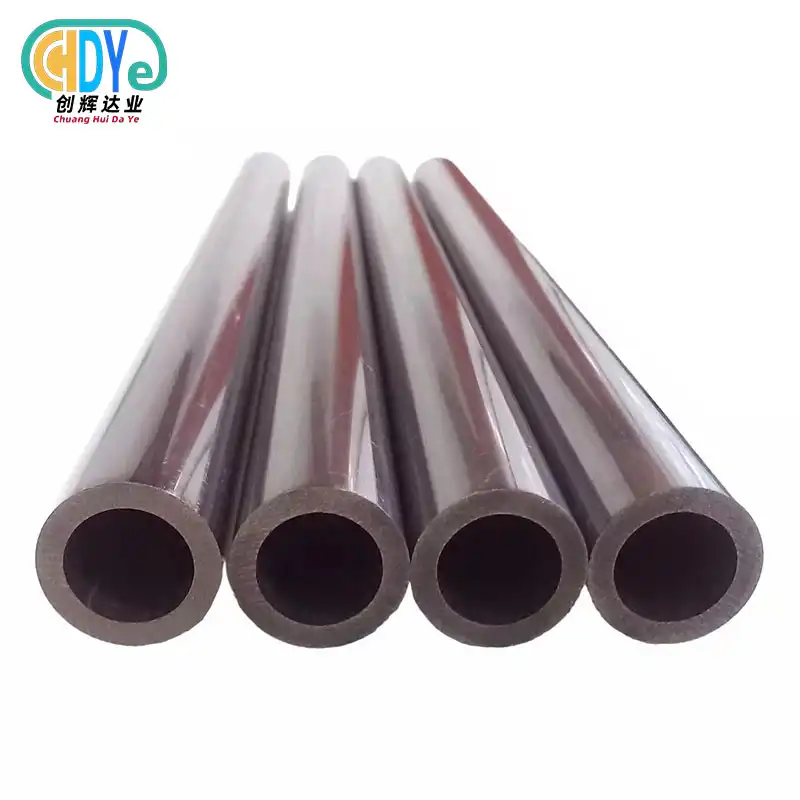
If you are looking for pure tantalum tubes for industrial applications, choosing the right supplier is important. Not all suppliers offer the same level of quality and service. Reliable suppliers are typically ISO-certified manufacturers with their own production facilities, full material traceability, and experience in producing high-purity tantalum products.
Whether the tubes are used in chemical processing, aerospace, or semiconductor manufacturing, working with an established tantalum tube manufacturer rather than a broker can provide better quality control, shorter lead times, and more competitive factory-direct prices.
Understanding Pure Tantalum Tubes and Their Key Properties
Tantalum is a refractory metal, melting at 2,996°C, one of the most thermally stable materials known for use in industry. Pure tantalum tubes are precision manufactured parts constructed from high purity tantalum, generally R05200 or R05400 grade, sealed to prevent contamination and to maintain chemical integrity during the service life.
Key Technical Specifications
Standard tantalum tubing is according to ASTM B521-98 which encompasses seamless and welded. Seamless tubes provide consistent wall thickness and improved pressure resistance. Welded tantalum tubes allow for thin walls and greater outside diameters and are made from flat rolled strip or foil. Usual size ranges include outer diameters from 1.0 mm to 150 mm, wall thicknesses from 0.2 mm to 5.0 mm and lengths up to 12,000 mm. Components with sizes ≤ 5 mm are classed as tantalum capillaries.
Comparing Pure Tantalum Tubes with Alternative Materials
Procurement teams commonly compare tantalum tubing against stainless steel, titanium, zirconium or ceramics. Every material has an envelope of performance and knowing where the boundary is, is what makes a sensible procurement choice vs an expensive one.Tantalum is chemically inert to most acids except hydrofluoric acid and highly concentrated alkaline solutions. It is inert unlike stainless steel which rapidly corrodes in chloride rich or extremely acidic media , or even titanium which has difficulty in hot reducing acid conditions. Here’s how the materials compare on key performance dimensions:
- Tantalum versus Stainless Steel – Tantalum has far better chemical resistance in harsh acid conditions. Stainless steel is economical in moderate settings but its service life falls off dramatically in high chloride concentration or low pH situations where tantalum tubing is always superior.
- Tantalum vs. Titanium: Titanium is lighter and cheaper making it a good option for oxidizing acid conditions. But tantalum is very good at reducing acids like sulfuric and hydrochloric and its greater melting point makes it better for severe temperature duty.
- Tantalum and Zirconium Both of these metals are very resistant to general chemical assault, although tantalum exhibits more uniform behavior across a larger variety of chemical media. Tantalum also has a better track record of biocompatibility for medicinal use.
- Tantalum vs. Ceramics: Ceramics are chemically pure yet brittle and difficult to process or seal properly. Tantalum offers chemical resistance and mechanical ductility, allowing intricate production and dependable sealing.
“These differences are important in defining materials for heat exchangers, reaction vessels, piping systems or high vacuum electronic components. Choose the incorrect material and failure is just around the corner. Choose tantalum, including sealed tantalum tubes where it makes sense, and you’ll have years of dependable service.”
Where and How to Buy Reliable Pure Tantalum Tubes
The worldwide tantalum tube supply chain comprises manufacturers, distributors and trading businesses. Partnering directly with an experienced pure tantalum tubes manufacturer avoids middleman markups and guaranties traceability from raw material to finished product and speeds up turnaround times for special orders for B2B clients.
What to Evaluate in a Supplier
There are several variables that separate a reliable long-term provider from a short-term vendor. Obtain ISO 9001:2015 certification to ensure that quality management systems are rigorously regulated at each step of manufacturing, from the inspection of raw materials to final packing. Request material certificates and chemical composition reports for each batch. Verify that the supplier can manufacture to ASTM B521-98 or similar international standards.Production capacity counts, too. A supplier that has in-house melting, rolling, annealing and machining skills may provide tighter tolerances, quicker turnaround and better customisation than a provider whose operations are outsourced.
Sourcing Channels Worth Considering
We buy directly from long established producers in Baoji, China, the world capital of titanium and refractory metals. This allows us to be competitive without sacrificing quality. Baoji-based companies provide aerospace manufacturers, chemical plant operators and research institutes across North America, Europe and Asia. Online industrial platforms like Alibaba or Thomas Net may expose choices, but it is important to verify with factory audits, third-party inspection reports, and sample testing before placing bulk purchases.
Ensuring Quality and Reliability in Your Pure Tantalum Tube Purchase
When buying tantalum tubes, quality assurance is more than the product specification sheet. A good supplier displays quality with established methods and verified results for pure tantalum tubes.
Every run is subjected to dimensional testing, visual inspection, and chemical composition analysis by reputable providers. Corrosion resistance and hydrostatic pressure tests confirm performance prior to shipping. Ask explicitly whether the supplier does eddy current or ultrasonic testing for wall integrity, which is especially important for sealed tube applications in chemical reactors or high pressure systems.
Pilot orders and sample requests provide the opportunity to assess dimensional correctness, surface finish and weld integrity first hand before committing to large volume purchase. The provider that is sure of his product’s quality would not hesitate to send samples.After-sales technical support – helping customers choose out material, giving advice on installation, or analyzing failures, for example – is a sign of a supplier that is in it for the long haul, not a one-and-done transaction.
Making an Informed Procurement Decision: Key Takeaways and Recommendations
Selecting the correct tantalum tubing supplier involves three interrelated considerations: material integrity, process certification, and supply chain dependability. Procurement teams that put these characteristics ahead of price alone regularly report reduced total cost of ownership and fewer supply interruptions.
Match the tube specification to the actual application environment. For acid service, the chemical processing equipment requires tantalum of high purity R05200 or R05400 grade and documented corrosion resistance data. Aerospace components need dimensional accuracy and thorough documentation of mechanical properties. Research organizations often need modest quantities of custom-sized tubes with quick turnaround.
Develop supplier connections before you have an emergency need. A pre-qualified supplier of tantalum tubes who already has tooling for your requirements may react to essential orders in days, not weeks—an important benefit in high-stakes production situations.
Conclusion
Pure tantalum tubes are necessary in cases of chemical aggressiveness, severe temperatures and contamination threats. Reliable sourcing involves dealing with recognized manufacturers who provide clear material traceability, consistent quality control, and prompt technical assistance. If you invest in a certified supplier, you enjoy benefits throughout the product lifespan, including fewer failures, reduced maintenance costs and more trust in your operations.
FAQ
Q: Why are pure tantalum tubes preferred over other metals in chemical processing?
A: Tantalum remains chemically inert against most mineral acids at temperatures below 150°C, making it uniquely suited for heat exchangers, reaction tanks, and corrosion-resistant piping. Stainless steel and even titanium degrade under similar conditions, while tantalum maintains structural integrity and extends equipment service life considerably.
Q: How do I verify a tantalum tube supplier's credibility?
A: Request ISO 9001:2015 certification documentation, material test reports, and batch-specific chemical composition analysis. Ask for references from comparable industries, and conduct a pilot order with third-party dimensional and chemical inspection before committing to bulk purchasing. Factory audit capabilities are an additional credibility indicator.
Q: Can pure tantalum tubes be custom-sized for specific applications?
A: Yes. Reputable manufacturers can produce custom outer diameters, wall thicknesses, and lengths within standard ASTM B521-98 tolerances. Alloy compositions—such as Ta-2.5W (R05252) or Ta-10W (R05255)—can also be specified based on application requirements.
Q: What purity levels are available for tantalum tubes?
A: High-quality suppliers guarantee metallic purity of 99.95% or greater for both melted (R05200) and sintered (R05400) grades. Purity documentation should accompany every shipment.
Partner with Chuanghui Daye for Your Pure Tantalum Tube Needs
Shaanxi Chuanghui Daye—an ISO 9001:2015 certified pure tantalum tubes supplier based in Baoji, China—delivers factory-direct tantalum tubing with full material traceability, flexible custom dimensions, and responsive technical support for U.S. and global buyers. With over 30 years of rare metal expertise, we support chemical processors, aerospace manufacturers, electronics companies, and research institutions. Contact us at info@chdymetal.com or visit www.chdymetal.com to request a quote or discuss your specifications today.
References
1. ASTM International. ASTM B521-98: Standard Specification for Tantalum and Tantalum Alloy Seamless and Welded Tubes. ASTM International, 2009.
2. Cardarelli, François. Materials Handbook: A Concise Desktop Reference. Springer, 2008.
3. Savitzky, B. H., et al. "Refractory Metals in Industrial Applications." Journal of Materials Engineering and Performance, ASM International, 2015.
4. European Commission. Critical Raw Materials for the EU: Report of the Ad-hoc Working Group on Defining Critical Raw Materials. Publications Office of the European Union, 2010.
5. Hampel, Clifford A. Rare Metals Handbook. Reinhold Publishing Corporation, 1961.
6. Sibum, Heinz, et al. "Tantalum and Tantalum Compounds." Ullmann's Encyclopedia of Industrial Chemistry. Wiley-VCH, 2017.
Learn about our latest products and discounts through SMS or email