- English
- French
- German
- Portuguese
- Spanish
- Russian
- Japanese
- Korean
- Arabic
- Greek
- German
- Turkish
- Italian
- Danish
- Romanian
- Indonesian
- Czech
- Afrikaans
- Swedish
- Polish
- Basque
- Catalan
- Esperanto
- Hindi
- Lao
- Albanian
- Amharic
- Armenian
- Azerbaijani
- Belarusian
- Bengali
- Bosnian
- Bulgarian
- Cebuano
- Chichewa
- Corsican
- Croatian
- Dutch
- Estonian
- Filipino
- Finnish
- Frisian
- Galician
- Georgian
- Gujarati
- Haitian
- Hausa
- Hawaiian
- Hebrew
- Hmong
- Hungarian
- Icelandic
- Igbo
- Javanese
- Kannada
- Kazakh
- Khmer
- Kurdish
- Kyrgyz
- Latin
- Latvian
- Lithuanian
- Luxembou..
- Macedonian
- Malagasy
- Malay
- Malayalam
- Maltese
- Maori
- Marathi
- Mongolian
- Burmese
- Nepali
- Norwegian
- Pashto
- Persian
- Punjabi
- Serbian
- Sesotho
- Sinhala
- Slovak
- Slovenian
- Somali
- Samoan
- Scots Gaelic
- Shona
- Sindhi
- Sundanese
- Swahili
- Tajik
- Tamil
- Telugu
- Thai
- Ukrainian
- Urdu
- Uzbek
- Vietnamese
- Welsh
- Xhosa
- Yiddish
- Yoruba
- Zulu
How to Choose the Best Pure Niobium Bar Supplier
The success of your project – whether you are making aircraft components, producing chemical reactor vessels or creating medical implants – will be directly impacted by choosing the proper pure niobium bar supplier. We get our niobium rod stock from a competent source with confirmed purity (Nb ≥99.9%), tight dimensional specifications and complete batch traceability. The certifications, production depth and responsiveness of the provider are more important than the matter for the dependability of your supply chain. This book leads your procurement team through every aspect of that choice, so you can go ahead with confidence.
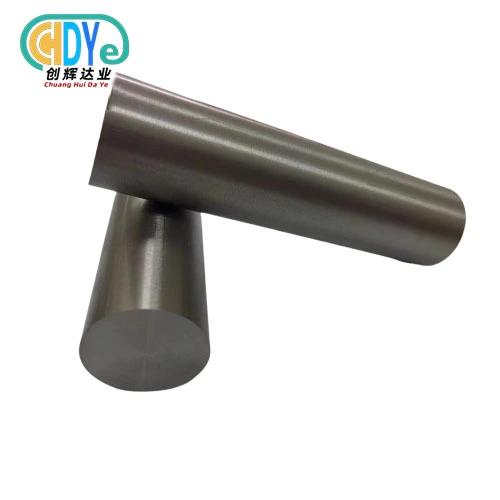
Understanding Pure Niobium Bars and Their Key Specifications
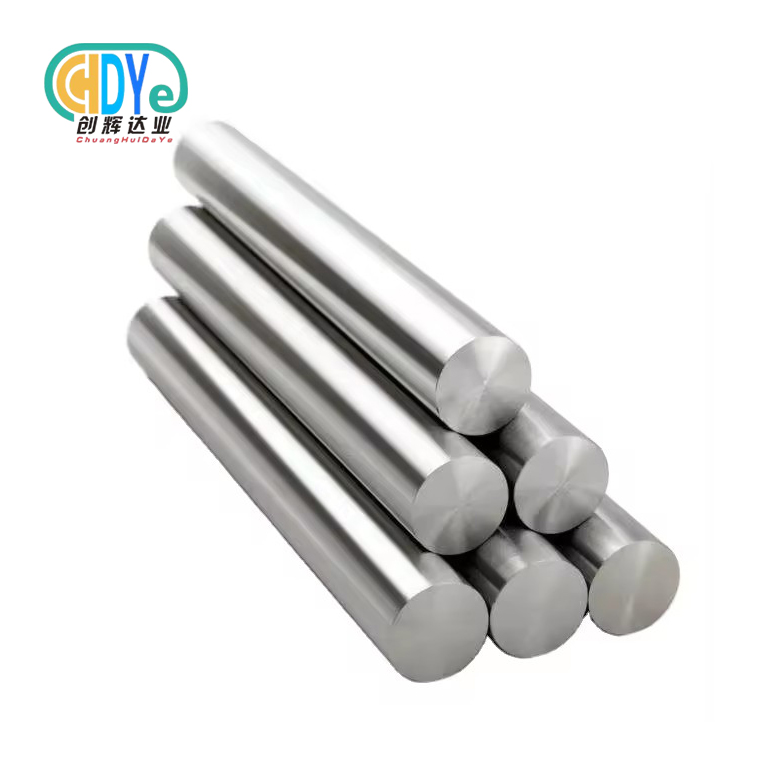
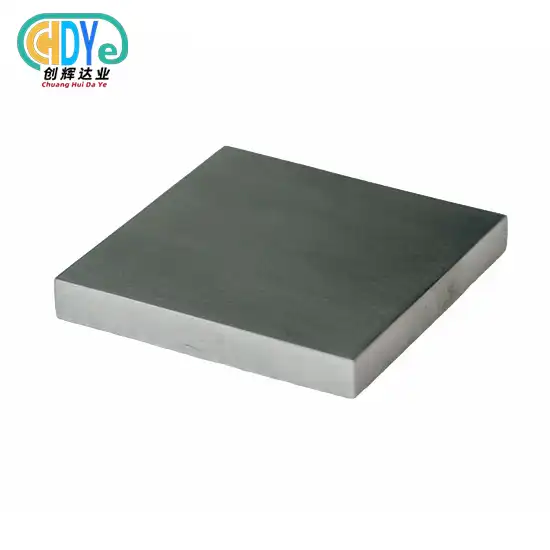
Niobium is a bright, ductile, refractory metal with a melting point of 2468 °C and a density of 8.57 g/cm 3 . Its body-centered cubic (BCC) crystal structure results in a very ductile metal at ambient temperature. The basic stock shape for machining, forging and manufacturing end use parts is a pure niobium bar. Bars are available in rectangular or circular cross sections.
Grades and Dimensional Range
Commercial Grade (ASTM B392 R04210) is used in typical industrial and chemical applications where regulated tantalum impurities are acceptable. Reactor Grade (R04200) requires stronger interstitial restrictions on oxygen, nitrogen, hydrogen and carbon. At Chuanghui Daye we provide bars from 5 mm to 350 mm thickness in custom cut lengths for prototype quantities and large volume manufacturing runs.
Why Purity and Certification Matter
Purity directly influences corrosion resistance and mechanical performance. For example, the excess oxygen level over 150 ppm has a measurable detrimental effect on the ductility and the Residual Resistance Ratio (RRR) of the material, crucial for superconducting and cryogenic applications. Always ask for a mill test certificate (MTC) that meets ASTM B392 or similar ISO requirements, including chemical composition, mechanical qualities and heat/lot numbers for full traceability of pure niobium bar.
Criteria for Evaluating Pure Niobium Bar Suppliers
Not all the suppliers that have niobium round bar or niobium billet in their catalog truly control the whole production chain. One of the most important phases in B2B buying is to identify the real manufacturer from the trade middleman.
Quality Management Systems
ISO 9001:2015 certification means a supplier’s operations from raw ingot inspection to final packaging are controlled by written, auditable controls. Verify the certificate’s scope and validity date. Suppliers who do vacuum melting in-house, using electron beam furnaces, have a demonstrable advantage: they do not run the danger of contamination that arises when delicate rare metals are processed by third-party smelters.
Production Capabilities and Customization
One producer can make rectangular niobium bar, round niobium rod and custom machined blanks from the same plant, decreasing lead time and cost. Consider if the supplier is able to accommodate small-batch prototypes or just big orders. Low volume runs with precise dimensional tolerances are often required by research institutes and medical device developers, which is a key differentiator of specialist producers vs commodity wholesalers.Also, the valuation of geographic location is important. Suppliers in established rare-metal production centers, such as Baoji in Shaanxi Province, which is sometimes referred to as China’s “Titanium Capital,” have the advantage of developed supply chains, competent workers, and deep institutional knowledge that together consistently provide high product quality.
Comparing Pure Niobium Bar Suppliers: What Matters Most?
Once you have your shortlist, the comparison comes down to three variables that procurement managers face in every sourcing cycle. The constant decision variables for choosing a pure niobium bar stock supplier are:
- Price transparency: Check basic price per kg and bulk discounts, minimum order quantities, and additional costs for custom sizes, finishing, or expedited shipping. Low headline price eats away apparent savings with hidden charges.
- Lead time transparency: A supplier who provides realistic production timetables and sticks to them is worth more than a supplier that promises ambitious timeframes that don’t pan out. Please confirm that the given lead times include material procurement, processing, inspection, and export documents.
- Technical and after-sales support: Availability of metallurgical professionals to provide advice on grade selection, welding issues (niobium needs inert-gas or electron-beam welding — never open-air), or heat treatment techniques greatly lowers downstream engineering risk.
These criteria will collectively influence whether a supplier relationship stays a transactional one or develops into a strategic partnership. The latter provides better pricing, priority scheduling, and collaborative issue resolution over time.
How Pure Niobium Bar Compares to Alternative Materials
Procurement engineers tend to compare niobium to titanium, tantalum, and austenitic stainless steel. Each material has a unique performance-cost position, and the optimal option is always application-dependent.
Niobium vs. Titanium
Titanium has a very good strength-to-weight ratio and wide corrosion resistance for its price per kilogram. Pure niobium bar is more stable at high temperatures and in hydrofluoric acid conditions than titanium, and is thus used to make chemical processing equipment where titanium would erode.
Niobium vs. Tantalum
Tantalum has a slightly improved corrosion resistance and is the material of choice for the most vigorous acid service. However, tantalum is substantially more expensive per kilogram. Pure niobium bar covers most of the performance difference at a significantly lower price point, spanning the gap between titanium's affordability and tantalum's high resistance.
Niobium vs. Stainless Steel
In terms of applications that need resistance to molten metals, powerful organic acids, or cryogenic superconducting performance, stainless steel just can’t compare to niobium’s inherent qualities. The choice between them is not usually a choice of cost, but a choice of function. By understanding these differences, your engineering and purchasing teams can define the most cost-effective material that fulfills all performance requirements.
Making the Purchase: Practical Tips for B2B Procurement of Pure Niobium Bars
Getting high-quality niobium bar stock from a trusted, worldwide source includes a few specific actions that may safeguard your firm against quality failures and supply interruptions. Request recent MTCs for a similar batch of the material and validate the supplier’s ISO 9001:2015 certification. Ask explicitly about vacuum melting and in-house machining. Suppliers with in-house capabilities have better quality control than those using sub-contractors. Auditing via third-party platforms or, if possible, direct visits to factories, also gives further confidence. Negotiating isn't just about unit pricing, but volume flexibility, delivery window commitments, and defined standards for non-conforming goods. The provider's willingness to agree on the acceptance criteria, inspection rights, and replacement processes shows operational trust in their own product. Please confirm below before making any order:
- Certificate of compliance and chemical analysis report as per ASTM B392 or equivalent.
- Dimensional Inspection Report - Thickness and Length Tolerances
- Packaging requirements for overseas shipping (protection from moisture, corrosion inhibition)
- Payment terms and Incoterms according to your logistics model
These methods provide a procurement baseline that mitigates risk for individual purchases and long-term agreements.
Conclusion
Choosing a reliable provider of niobium bars requires consideration of purity of the material, transparency of manufacture, stringency of certification, and authentic response. The greatest provider isn’t always the one advertising the lowest price. It’s the one whose methods, paperwork, and communication give you confidence that every cargo will be justified. Verify certificates, evaluate in-house competencies, and approach after-sales assistance as a non-negotiable condition. Your fully qualified supplier is an extension of your quality system, not merely a vendor on a buy order, ensuring access to high-quality pure niobium bar materials that meet strict application requirements.
FAQ
Q: What certifications should a pure niobium bar supplier hold?
A: At minimum, look for ISO 9001:2015 certification covering the full production scope. Material certifications should align with ASTM B392 for niobium bar, documenting chemical composition, mechanical properties, and heat traceability. Suppliers serving nuclear or superconducting markets should additionally demonstrate compliance with reactor-grade interstitial impurity controls.
Q: What are typical lead times for custom niobium bar orders?
A: Lead times vary by order complexity and volume. Standard commercial-grade bars with common dimensions often ship within two to four weeks. Custom dimensions, special purity grades, or machined components typically require four to eight weeks. Confirm exact timelines with your supplier before committing to a project schedule.
Q: Can niobium bars be supplied in custom dimensions?
A: Yes. Reputable manufacturers supply both rectangular and round niobium bars across a wide dimensional range — at Chuanghui Daye, that covers thicknesses from 5 mm to 350 mm with cut-to-length flexibility — accommodating prototype needs through production volumes.
Q: How should niobium bar be welded?
A: Niobium absorbs oxygen and nitrogen aggressively above 200°C, causing embrittlement. Welding must be performed in a high-vacuum electron beam chamber or a controlled inert-gas (argon/helium) environment. Open-air welding is not acceptable under any circumstance.
Request a Quote from Chuanghui Daye — Your Trusted Pure Niobium Bar Manufacturer
Shaanxi Chuanghui Daye, headquartered in Baoji's renowned rare-metal manufacturing district, delivers ISO 9001:2015-certified niobium bar stock — rectangular or round, 5–350 mm thickness, Nb ≥99.9% purity — with factory-direct pricing and full traceability documentation. Whether you need a single prototype billet or a recurring production supply, our engineering team is ready to support your exact specifications. Contact us at info@chdymetal.com or visit www.chdymetal.com to request your customized quotation today.
References
1. ASTM International. ASTM B392: Standard Specification for Niobium and Niobium Alloy Bar, Rod, and Wire. ASTM International, 2022.
2. Cardarelli, François. Materials Handbook: A Concise Desktop Reference. Springer, 2018.
3. Krishnamurthy, N., and C. K. Gupta. Extractive Metallurgy of Niobium. CRC Press, 2019.
4. ASM International. ASM Handbook, Volume 2: Properties and Selection — Nonferrous Alloys and Special-Purpose Materials. ASM International, 2020.
5. Savitzky, B. H., et al. "Structural and Chemical Characterization of Refractory Metal Alloys for Aerospace Applications." Journal of Materials Engineering and Performance, 2021.
6. International Organization for Standardization. ISO 9001:2015 Quality Management Systems — Requirements. ISO, 2015.
Learn about our latest products and discounts through SMS or email