- English
- French
- German
- Portuguese
- Spanish
- Russian
- Japanese
- Korean
- Arabic
- Greek
- German
- Turkish
- Italian
- Danish
- Romanian
- Indonesian
- Czech
- Afrikaans
- Swedish
- Polish
- Basque
- Catalan
- Esperanto
- Hindi
- Lao
- Albanian
- Amharic
- Armenian
- Azerbaijani
- Belarusian
- Bengali
- Bosnian
- Bulgarian
- Cebuano
- Chichewa
- Corsican
- Croatian
- Dutch
- Estonian
- Filipino
- Finnish
- Frisian
- Galician
- Georgian
- Gujarati
- Haitian
- Hausa
- Hawaiian
- Hebrew
- Hmong
- Hungarian
- Icelandic
- Igbo
- Javanese
- Kannada
- Kazakh
- Khmer
- Kurdish
- Kyrgyz
- Latin
- Latvian
- Lithuanian
- Luxembou..
- Macedonian
- Malagasy
- Malay
- Malayalam
- Maltese
- Maori
- Marathi
- Mongolian
- Burmese
- Nepali
- Norwegian
- Pashto
- Persian
- Punjabi
- Serbian
- Sesotho
- Sinhala
- Slovak
- Slovenian
- Somali
- Samoan
- Scots Gaelic
- Shona
- Sindhi
- Sundanese
- Swahili
- Tajik
- Tamil
- Telugu
- Thai
- Ukrainian
- Urdu
- Uzbek
- Vietnamese
- Welsh
- Xhosa
- Yiddish
- Yoruba
- Zulu
Why Is GR4 Titanium Bar Preferred in Medical Applications?
The industry that makes medical devices is still searching endlessly for materials that have both great mechanical properties and complete patient safety. When it comes to widely pure titanium grades, the GR4 titanium bar is the best choice for important medical uses. This material is the strongest type of unalloyed titanium that is currently available. It has a tensile strength of over 550 MPa and all of the great biocompatibility and rust protection that come naturally with pure titanium. Instead of lower grades that might not be able to hold enough weight or titanium alloys with potentially reactive elements like aluminum and vanadium, Grade 4 strikes the perfect balance that meets the exact needs of implantable devices, surgical instruments, and medical equipment that work in harsh biological environments.
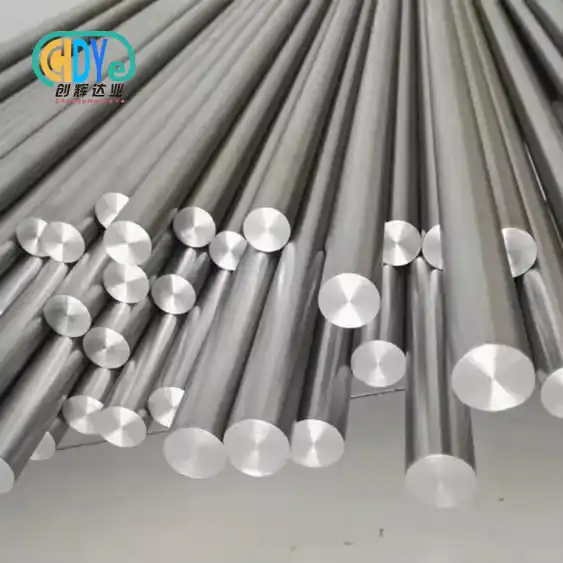
Introduction to GR4 Titanium Bar in Medical Applications
Knowing how medical-grade titanium is made helps buying managers make smart decisions about where to get materials. The GR4 titanium bar is made of commercially pure (CP) titanium, which is categorized under UNS R50700 and meets standards like ASTM B348, ASME SB348, and most importantly, ASTM F-67 for use in medical implants. For this grade to have better mechanical qualities, the interstitial strengthening is managed and comes from higher iron and oxygen levels (up to 0.40%), not from adding alloys.
Chemical Composition and Classification
By carefully controlling the elements, Grade 4 titanium's chemical makeup makes it different from other CP grades. Oxygen is a solid-solution strengthening agent that makes the tensile qualities much better while keeping the alpha-phase microstructure that is typical of pure titanium. This fixed makeup makes sure that all production batches perform the same, which is very important for companies that make medical devices that have to deal with strict government oversight.
Mechanical Properties Essential for Medical Use
Materials used in medical applications need to be able to withstand a lot of mechanical stress without breaking down. Grade 4 titanium has a minimum tensile strength of 550 MPa and a minimum yield strength of 480 MPa. This makes it about 30–40% stronger than Grade 2 titanium. This increased strength is important for load-bearing implants like bone plates, spine fixation devices, and tooth implant posts that have to withstand repeated physiological forces for long periods of time.
Material Selection Context in Medical Manufacturing
For internal parts, medical device makers have traditionally used stainless steel 316L and cobalt-chromium metals. But these materials have some problems, like being denser, not being as good at resisting rusting in chloride-rich body fluids, and possibly causing bad reactions in tissues. The GR4 titanium bar fixes these problems and is 45% lighter than similar bars made of stainless steel. This makes patients more comfortable and lowers the stress buffering effects in orthopedic settings.
Core Properties That Make the GR4 Titanium Bar Ideal for Medical Use
The great performance of Grade 4 titanium in medical settings comes from a number of interconnected material properties that work together to keep both the gadget working and the patient safe.
Superior Biocompatibility and Osseointegration
Biocompatibility is the most important thing that any material that comes into contact with human flesh must have. Because it has a solid, self-passivating oxide layer, commercially pure titanium, even Grade 4, is very inactive in living things. When exposed to air, this protective film forms on its own, stopping the release of metal ions that could cause inflammation or tissue rejection. Osseointegration is when bone tissue directly joins to the titanium surface without any fibrous tissue growth in between. This has been shown in clinical tests. In hip implants and oral replacements, where strong bone-implant contacts are key to long-term success rates, this trait is especially useful.
Exceptional Corrosion Resistance in Biological Environments
Interestingly, the human body is not a good place for metals to be. Body fluids contain chlorides, proteins, and different pH levels that make rusting faster in many metals. Grade 4 titanium is very resistant to these living processes that cause rusting. The substance stays stable in wet chlorine and hypochlorite treatments, which would quickly break down stainless steel options. This resistance to rust makes sure that the device lasts a long time and stops metallic particles from flying off and causing bad responses in patients or device failure.
Strength-to-Weight Ratio Advantages
The technical effectiveness of medical equipment has a direct effect on how well surgeries go and how quickly patients heal. With a mass of about 4.5 g/cm³ compared to 8.0 g/cm³ for stainless steel, Grade 4 titanium is very strong while keeping the weight of the device as low as possible. This feature lowers stress on the bones and makes it easier for patients to move around, especially with big orthopedic implants like hip stems and spine bars. Because the material is ductile (it can stretch at least 15%), it can be deformed in a controlled way during installation without breaking.
Comparative Analysis: GR4 Titanium Bar vs Alternatives in the Medical Industry
Before making a purchase choice, it's important to know how Grade 4 titanium compares to other materials in a number of important ways.
Grade 4 vs. Grade 2 Titanium
Both types of titanium are biocompatible, but Grade 2 has lower mechanical strength, with compressive values around 345 MPa. Grade 4 is stronger than Grade 3, which makes it better for medical uses that need to withstand high stress levels, like fracture stabilization plates or tooth abutments that are put through chewing forces. In exchange, it is a little less easy to shape, but both kinds can still be easily machined with the right tools and methods.
Grade 4 versus Grade 5 Titanium Alloy
Grade 5 titanium (Ti-6Al-4V) is much stronger, with a tensile strength of about 900 MPa. This makes it ideal for high-performance medical devices and difficult aircraft applications. However, worries about the release of aluminum and vanadium ions have limited its use in some implantable situations. More and more, regulatory bodies and companies that make medical devices like grade 4 are choosing commercially pure grades for long-term implants where full biocompatibility is more important than maximum strength. When deciding what to buy, the difference in price is also taken into account. Grade 4 usually has better economics for uses where its strength is enough.
Grade 4 versus Stainless Steel and Alternative Metals
Due to its low cost and well-established supply lines, stainless steel 316L is still often used in temporary surgery tools and some implants. However, stainless steel has some problems, such as being more likely to stress corrosion crack in salt settings, being denser, and some patients being sensitive to nickel. The GR4 titanium bar gets rid of these worries while also offering better resistance to tiredness and lowering the risk of metal allergies. Cobalt-chromium metals are very resistant to wear, but they are more expensive to make and harder to machine than Grade 4 titanium.
Procurement Considerations for Medical-Grade GR4 Titanium Bars
To successfully find medical-grade titanium, you need to pay more attention than usual to certification, provider skills, and supply chain management.
Essential Certifications and Compliance Standards
Manufacturers of medical devices have to find materials that meet strict government standards. Look for providers who can give you full material test certificates (MTCs) that meet EN 10204 3.1 standards. These certificates should show the chemical makeup, mechanical qualities, and the ability to track back to production runs. Certification to ISO 9001:2015 means that quality management is done in a planned way, and compliance to ASTM F-67 means that medical implant materials meet certain standards. It is very important to check the levels of oxygen, nitrogen, and hydrogen because higher amounts in the intermediate space than what is allowed can make the material less flexible and less resistant to breaking.
Evaluating Supplier Reliability and Technical Support
Because medical uses are so complicated, providers need to offer more than just selling basic materials. Check out possible partners to see if they can provide expert advice, work with unique requirements, and understand the needs of medical device making. Suppliers who have ISO approval and well-established quality management systems show that they are dedicated to making sure that output standards are always met. Ask for proof of the steps used in the manufacturing process, such as the steps for heat treatment, cleaning the surface, and checking for flaws like center holes or surface contamination.
Customization Options and Lead Time Management
When making medical devices, they often need to be made with specific sizes, finishes, and technical qualities that are suited to their use. Shaanxi Chuanghui Daye Metal Material Co., Ltd. makes GR4 titanium bars with diameters from 6.0mm to 200mm and lengths from 1000mm to 6000mm. Our typical lengths are between 2000mm and 5800mm. Our Baoji facility can be customized by precision turning, centerless grinding, and making changes to the heat treatment process to reach certain hardness levels or stress-relieving conditions. Knowing the average wait time helps with planning production, and buying in bulk and making long-term deals with suppliers can often lead to better prices and faster schedules.
Manufacturing and Heat Treatment Processes Enhancing GR4 Medical Titanium Bars
From raw titanium waste to finished medical-grade bars, the production process has many complex steps that decide the end features of the material and the quality of the bars.
Primary Processing and Forging Operations
To make medical-grade titanium bars, high-purity titanium sponge is first burned in vacuum or neutral-atmosphere ovens to keep it from getting contaminated. After being shaped, the bars go through hot forging steps that smooth out the grain structure and get rid of any casting flaws. Controlling the temperature and distortion ratios during multiple forging passes ensures that the microstructure is the same across the whole cross-section of the bar. This part of the process has a big effect on how uniform the mechanical properties are. This is especially important for medical devices, where any weak spots could cause them to break too soon.
Annealing and Heat Treatment Protocols
In the making of medical titanium, the annealing heat process is used for more than one thing. The process gets rid of any leftover stresses that were created during casting and cutting, and it also finds the best balance between strength and flexibility. In normal annealing processes, the material is heated to between 650°C and 750°C in a vacuum or neutral environment. It is then cooled down in a controlled way. The heat process also evens out the alpha-phase microstructure, which helps predict how the material will behave mechanically. Our production plant is ISO 9001:2015 approved and follows written heat treatment processes that include checking and tracking the temperature to make sure that all batches meet strict medical requirements.
Quality Control and Inspection Methodologies
For medical uses, quality control must be done in a way that goes beyond what is normally done in industry. When you use ultrasonic testing, it finds internal flaws like holes or inclusions that could cause cracks to spread. Surface screening finds pollution or mechanical damage in the alpha case that needs to be fixed before the device is made. The tensile qualities, flexibility, and hardness values of samples from each production lot that were tested mechanically show that they are within the acceptable ranges. Full paperwork sets that include chemical analyses, mechanical test results, and process certifications make it possible to track medical devices and make sure they follow the rules set by regulators.
Applications and Future Outlook of GR4 Titanium Bars in the Medical Sector
There are many medical fields that use Grade 4 titanium, and new technologies are making those specialties even bigger.
Orthopedic Implants and Fracture Fixation
Titanium is used a lot in orthopedic surgery for both temporary support devices and permanent implants. Bone screws, plates, intramedullary nails, and joint replacement parts are all made from GR4 titanium bars. The strength of the material helps load move across fracture sites, and its biocompatibility keeps tissue reactions to a minimum. Machined spinal fusion plates made from Grade 4 bars integrate well with vertebral bone, making it easier to fixate in difficult structural places.
Dental Prosthetics and Implantology
The mix of strength and osseointegration qualities in grade 4 titanium makes dental implant systems much better. When implant pins are put through a lot of chewing force, grade 4 titanium is needed because it is stronger than softer grades. The material's ability to fight rust is very important in the mouth, where temperature changes, pH changes, and bacterial biofilms can make materials last a shorter time. Precision bars are used to make custom abutments and prosthesis frames that fit perfectly and stay stable over time.
Emerging Trends and Advanced Manufacturing
Additive manufacturing technologies are changing the way medical devices are made by making it possible to make implants with shapes that are specific to each patient. This wasn't possible with traditional cutting. Most 3D printers use titanium powder as a material, but some systems can now handle wire shapes made from bar stock, which increases the use of grade 4 in custom medicine. Titanium's durability and ability to be recycled are also good for sustainability because they lower the environmental impact of medical equipment supply chains. The material's well-known biocompatibility and mechanical performance make it a good choice as life-cycle assessment and circular economy concepts become more important in legal systems.
Conclusion
Medical uses have long preferred the GR4 titanium bar because it has a unique mix of mechanical strength, biological compatibility, and rust protection that no other material can match. As medical device technology moves toward more exact performance standards and personalized treatment methods, Grade 4 titanium will remain popular because it has a history of success and can be easily changed to fit different needs. When purchasing managers and design engineers work with experienced suppliers, they can get more than just basic materials. These suppliers should also be able to offer full technical support, detailed quality systems, and the ability to make changes that are needed to be successful in the controlled medical device market.
FAQ
Q: What makes Grade 4 stronger than other commercially pure titanium grades?
A: Grade 4 is stronger because the intermediate elements are raised in a managed way. For example, the oxygen level goes up to 0.40% in Grade 4, while it is only about 0.25% in Grade 2. This oxygen works as a solid-solution strengthening mechanism, raising the tensile and yield strengths by about 30–40% while keeping the pure titanium's alpha-phase microstructure and resistance to rust.
Q: Can Grade 4 titanium bars be welded for medical device assembly?
A: Grade 4 shows that it is very easy to weld using the right methods. To weld properly, you need to use argon or helium as an inert gas shield on both the weld face and the root to keep the atmosphere from getting contaminated during the heat cycle. The mechanical qualities and rust resistance of the material are maintained by proper welding processes. However, weld zones need to be inspected to make sure that the joints are defect-free and meet medical device standards.
Q: How does Grade 4 compare cost-wise to stainless steel for medical applications?
A: Although Grade 4 titanium costs more than stainless steel 316L for the raw materials, overall device costs often favor titanium because it is more resistant to rust, fewer surgeries need to be redone, and patients do better. The material has worth beyond its original purchase price because it lasts longer and doesn't cause allergies. This makes it economically competitive for important internal uses.
Partner with Chuanghui Daye for Your Medical-Grade Titanium Requirements
Finding dependable GR4 titanium bar providers who know what medical device manufacturers need can have a big effect on the quality of your product and the time it takes to get it to market. Shaanxi Chuanghui Daye Metal Material Co., Ltd. has been working in the rare metals business for more than 30 years and is very good at both modern manufacturing and quality control. Because we are in Baoji, China's titanium capital, we have easy access to high-quality raw materials and specialized processing tools like electron beam ovens and precise machining centers. We keep our ISO 9001:2015 certification and all the paperwork needed to support medical device legal standards. Get in touch with our expert team at info@chdymetal.com to talk about your specific GR4 titanium bar needs, get full specs, or get quotes for unique sizes and numbers that will work for your medical manufacturing needs.
References
1. American Society for Testing and Materials. (2021). Standard Specification for Titanium and Titanium Alloy Bars and Billets (ASTM B348-21). West Conshohocken, PA: ASTM International.
2. Brunette, D.M., Tengvall, P., Textor, M., & Thomsen, P. (2012). Titanium in Medicine: Material Science, Surface Science, Engineering, Biological Responses, and Medical Applications. Berlin: Springer-Verlag.
3. International Organization for Standardization. (2016). Implants for Surgery — Metallic Materials — Part 2: Unalloyed Titanium (ISO 5832-2:2018). Geneva: ISO.
4. Rack, H.J., & Qazi, J.I. (2006). Titanium Alloys for Biomedical Applications. Materials Science and Engineering C, 26(8), 1269-1277.
5. Sidambe, A.T. (2014). Biocompatibility of Advanced Manufactured Titanium Implants: A Review. Materials, 7(12), 8168-8188.
6. Niinomi, M., Nakai, M., & Hieda, J. (2012). Development of New Metallic Alloys for Biomedical Applications. Acta Biomaterialia, 8(11), 3888-3903.

Learn about our latest products and discounts through SMS or email