- English
- French
- German
- Portuguese
- Spanish
- Russian
- Japanese
- Korean
- Arabic
- Greek
- German
- Turkish
- Italian
- Danish
- Romanian
- Indonesian
- Czech
- Afrikaans
- Swedish
- Polish
- Basque
- Catalan
- Esperanto
- Hindi
- Lao
- Albanian
- Amharic
- Armenian
- Azerbaijani
- Belarusian
- Bengali
- Bosnian
- Bulgarian
- Cebuano
- Chichewa
- Corsican
- Croatian
- Dutch
- Estonian
- Filipino
- Finnish
- Frisian
- Galician
- Georgian
- Gujarati
- Haitian
- Hausa
- Hawaiian
- Hebrew
- Hmong
- Hungarian
- Icelandic
- Igbo
- Javanese
- Kannada
- Kazakh
- Khmer
- Kurdish
- Kyrgyz
- Latin
- Latvian
- Lithuanian
- Luxembou..
- Macedonian
- Malagasy
- Malay
- Malayalam
- Maltese
- Maori
- Marathi
- Mongolian
- Burmese
- Nepali
- Norwegian
- Pashto
- Persian
- Punjabi
- Serbian
- Sesotho
- Sinhala
- Slovak
- Slovenian
- Somali
- Samoan
- Scots Gaelic
- Shona
- Sindhi
- Sundanese
- Swahili
- Tajik
- Tamil
- Telugu
- Thai
- Ukrainian
- Urdu
- Uzbek
- Vietnamese
- Welsh
- Xhosa
- Yiddish
- Yoruba
- Zulu
Why is pure titanium wire preferred for Chemical Processing?
Chemical processing environments pose some of the harshest challenges for materials. Exposure to aggressive acids, chlorides, and fluctuating temperatures can rapidly degrade equipment, leading to costly downtime and safety risks. Pure titanium wire has emerged as a trusted solution because it forms an instant, self-healing oxide layer that resists corrosion even in highly acidic and chloride-rich media. Unlike stainless steel or copper alternatives, commercially pure titanium maintains structural integrity without releasing contaminants, making it invaluable for applications demanding long-term reliability and chemical inertness. This material solves critical industry pain points by extending component lifespan and reducing maintenance frequency.
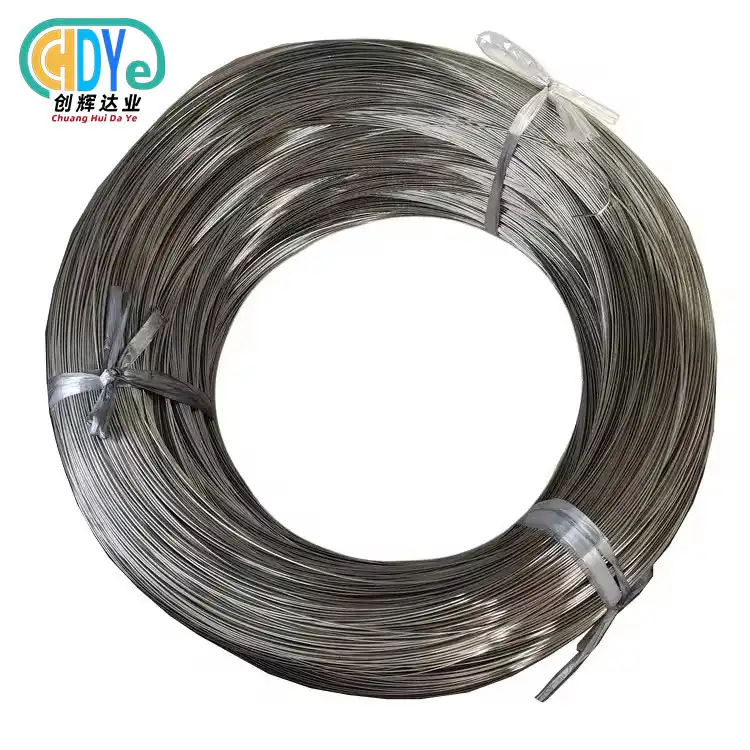
Understanding Pure Titanium Wire and Its Properties
There is pure titanium wire for sale that is mostly titanium and not much else. Based on how much oxygen and iron are in it, ASTM B863 sets standards that split it into Grades 1 through 4. It is easiest to shape Grade 1 when it comes to steel. Grade 2 is the best choice for chemical uses because it is strong and bendable at the same time. It's harder to work with Grade 4, but it can hold its shape better.
A vacuum arc is used to clean the high-purity titanium sponge. This is the first step in making something. To make the ingot work better, it is hot-worked, pushed through dies, and strengthened after it is made. There are strict checks on the metal as it is being made to make sure that the limits on thickness, surface finish, and purity are all the same. Researchers at Shaanxi Chuanghui Daye Metal Material Co., Ltd. have found that more than 99.6% of each batch contains titanium. All of this makes sure that the metal can be found and follows all rules set by the world.
Physical Characteristics That Matter
Pure titanium wire has a density of about 4.51 g/cm³, which is about 60% of steel's density. This means that it can lower structure load without lowering strength. It can work reliably in high-temperature chemical reactors because its melting point of 1668°C enables stable performance. The tensile strength of the material ranges from 240 MPa (Grade 1) to 550 MPa (Grade 4), which is strong enough for structural and fastening uses. Low thermal conductivity means that the welding parameters need to be carefully chosen, but it also helps keep the shape stable when the temperature changes.
The Passivation Advantage
Titanium makes a dense layer of titanium dioxide (TiO₂) on its own in microseconds when it comes into contact with air. If this passive film gets damaged, it fixes itself right away, protecting against pitting and crevice corrosion all the time. Titanium is different from stainless steel because it doesn't have chromium oxide layers that can break down in chloride environments, which can cause localised corrosion failures.
Core Advantages of Pure Titanium Wire in Chemical Processing
Chemical handling equipment needs to be made of materials that can stay mechanically sound even after being exposed to harmful substances for a long time. Commercially pure titanium wire meets these needs by offering several measurable benefits that have a direct effect on operational efficiency and the total cost of ownership.
In chloride-filled environments, the material's corrosion resistance is orders of magnitude higher than that of 316L stainless steel. Testing done by a separate lab shows that titanium doesn't corrode in 10% hydrochloric acid at room temperature, but stainless steel does weaken quickly. This performance means that equipment lasts longer. For example, heat exchanger coils made of pure titanium wire usually last more than 20 years, while stainless steel equivalents only last 5 to 7 years in chlor-alkali plants.
Mechanical Strength Under Stress
Actually, commercially pure titanium wire is pretty light, but it's strong enough for structural uses. Titanium's resistance to stress corrosion cracking (SCC) makes it useful for parts like electrode systems, filter supports, and basket screens. In industrial settings with hydrogen sulfide and chlorides present, titanium wire parts do not fail catastrophically as austenitic stainless steels do. Because the material isn't magnetic, electromagnetic interference can't happen in sensor housings or instrument wires. This keeps the analysis equipment's measurements accurate.
Chemical Inertness and Contamination Prevention
For chemical processing that is safe for food and medicine, you need materials that won't leak ions or mix with the process media. Titanium is great for making high-purity compounds because it is biocompatible and doesn't react with living things. Titanium stays chemically neutral, unlike copper metals that can cause unpleasant side effects or stainless steels that contain nickel, which may introduce allergenic contaminants. This quality is very important when making APIs (Active Pharmaceutical Ingredients), because trace metal contamination could make the product less effective or non-compliant with the rules.
Stability at room temperature is another useful feature. Pure titanium wire keeps its mechanical qualities at high temperatures up to 400°C, so it can be used in a wide range of chemical processing situations, from moving liquid gases to high-temperature polymerisation reactors.
Application Scenarios: Where and Why Titanium Wire Excels in Chemical Processing
Real-life examples demonstrate that pure titanium wire is better than other materials in many chemical processing situations. Each use case shows how the choice of material has a direct effect on the reliability of the process and the costs of running it.
Pure titanium wire is used for tube bundle supports and baffle ties in chlor-alkali production heat exchangers. These parts are exposed to sodium hydroxide solutions and chlorine gas at the same time, which breaks down normal materials very quickly. Facilities that switched to titanium wire supports say that unexpected repair shutdowns have gone down by 70%. Titanium is also easy to handle during routine inspections and cleaning tasks because it is light.
Filtration and Separation Equipment
In the pharmaceutical industry, where chemical stability and cleanliness are very important, woven pure titanium wire mesh is used as a filter medium. The material is resistant to hot, acidic cleaning solutions, and the smooth surface finish keeps it from getting dirty. This makes it possible to sterilise completely between batches. Mesh screens made from pure titanium wire with a diameter of 0.3 mm can hold particles as small as 50 microns and keep their shape through hundreds of thermal shock cycles during steam sterilisation.
Electrochemical cells for chlorine dioxide generation employ pure titanium wire anodes covered with catalytic metal oxides. In the highly oxidising electrolyte environment, the wire substrate both conducts electricity and protects against corrosion. Titanium's stable electrical properties and resistance to chloride attack are used in this application to make electrodes last 8–10 years instead of 2–3 years for competing substrate materials.
Reactant Coil and Heating Elements
When corrosive process fluids are heated directly, serpentine coils made of commercially pure titanium wire can be used. In systems that concentrate sulphuric acid, these coils are immersed in 60–80% acid all the time, at temperatures close to 200°C. It doesn't rust and doesn't transfer heat as well as copper, but that's enough for many chemical heating uses without the contamination risks that come with metallic corrosion goods.
Water treatment plants processing brackish or seawater rely on pure titanium wire for sensor probe construction and instrumentation connections. Biofouling and chlorine don't affect the material, so it stays accurate for longer periods of time, which reduces the need for frequent calibration or maintenance.
Comparing Pure Titanium Wire with Other Wire Materials for Chemical Use
When making choices about what to buy, it helps to know how the performance of different materials compares. Commercially pure titanium wire has its own area because it doesn't rust and is lighter than other wires. However, cost and ease of manufacturing affect the choice of material.
Stainless steel wire (304, 316, and 316L) is much cheaper than titanium—usually 30 to 40 percent less—and it is easy to cut and join. However, it can't be used in chemical settings because it is easily damaged by pitting and crevice rust caused by salt. When a pharmaceutical company switched the tie rods in their heat exchangers from 316L to Grade 2 pure titanium wire, they no longer had to repair them every year. This saved them money in maintenance costs and increased operating readiness, achieving payback in just 18 months.
Titanium Alloys: Strength Versus Formability
Titanium metals like Ti-6Al-4V (Grade 5) have a higher tensile strength (930 MPa vs. 340 MPa for Grade 2), which lets engineers make structures that are lighter. However, alloys are a little less resistant to corrosion in some acidic environments and cost about 50% more than commercially pure grades. For chemical processing tasks that don't need alloy-level strength very often, commercially pure titanium wire is the most cost-effective option unless very heavy mechanical loads require something else.
Copper and brass wires are better at conducting electricity and heat, but they rust quickly in acidic and oxidising environments. Because ammonia exposes copper metals to severe stress corrosion cracking, they can't be used to make fertiliser or petrochemicals, which are tasks where titanium excels.
Nickel-titanium (Nitinol) shape-memory alloys are used in certain actuators, but they aren't as chemically resistant or as cheap as commercially pure titanium wire for general chemical processing infrastructure.
Procurement Considerations for Buying Pure Titanium Wire
By choosing the right specifications, you can be sure that the pure titanium wire will perform in a way that meets the needs of the application. Tolerances in diameter, surface finish, and mechanical properties all have a direct effect on how well something is made and how reliable it is in the long term.
When it comes to chemical processing, Grade 2 pure titanium wire is the best choice because it is resistant to rust, strong enough, and easy to shape. If you need the most ductility for tight-radius bends or a lot of cold working, Grade 1 is the right choice. The choice of diameter depends on the loads on the structure and the way it is made. Common diameters range from 0.2 mm for woven mesh to 6 mm for bolts and structural ties. By giving wire width tolerances (usually h7 or h8 ISO limits), fitting problems can be avoided during assembly.
Surface Finish and Form Selection
Bright-annealed wire has a smooth, oxide-free surface that is great for soldering and other uses where a rough surface could affect the flow of fluids or the cleaning of the area. Pickled finishes get rid of scale that builds up during hot-working, giving the metal a matte look that works well for structural uses. Straight-cut and coil shapes are both useful for different manufacturing processes. Coils make it easier to feed wires continuously through automated equipment, while straight-cut lengths make it easier to put things together by hand.
Material Test Certificates (MTC) and other certification paperwork should confirm the chemical make-up, mechanical qualities, and agreement with ASTM B863 or similar standards. ISO 9001:2015 certification means that strong quality management systems are used throughout the production process. At Chuanghui Daye, every shipment comes with a full traceability report that includes a batch number and detailed test results. This gives buyers confidence and proof that they are following the rules.
Lead Time and Logistics Planning
Standard sizes can be shipped within one to three days from stock, which makes it possible to make quick prototypes and repairs right away. It takes 3 to 6 weeks to make and check the quality of products with custom sizes, lengths, or standards. When you plan purchase cycles around normal project timelines, you can avoid having to pay expensive expediting fees. Bulk orders get better prices because of the bulk discount. Making a framework that deals with trusted suppliers makes sure that prices stay the same and that orders are prioritised when there are problems in the supply chain.
Shaanxi Chuanghui Daye Metal Material Co., Ltd. is in Baoji, which is known as the "Titanium Valley of China." They take advantage of the region's supply chain and have thirty years of experience working with rare metals. Our facility keeps a stock of a wide range of grades and diameters, thanks to high-tech equipment for melting, rolling, and quality control, such as electron beam furnaces and precise cutting machines.
Conclusion
Long-lasting materials that don't rust and are safe to use are needed in places where chemicals are processed. These needs can be met by commercially pure titanium wire because it has a self-passivating oxide layer, is chemically inert, and has a good strength-to-weight ratio. Using these materials instead of regular ones in heat exchangers, filtration systems, electrochemical cells, and instruments has been shown to make tools last longer and cost less to maintain. Pure titanium wire is a good investment in many chemical production situations when the total cost of ownership is taken into account instead of just the price of the material itself. Selecting appropriate grades, specs, and certified suppliers ensures successful implementation and sustained operational benefits.
FAQ
Q: What titanium grade works best for chemical processing applications?
A: Grade 2 pure titanium wire is good for most chemical processing tasks because it doesn't rust in acidic, basic, or salt conditions and is easy to shape for manufacturing. Grade 1 is the most flexible and can be bent in complicated ways, but it is also a little weaker. Grade 4 has more mechanical strength for structural loads, but it's harder to work with. Certain media and weather conditions may make one grade better than others. Talking to experts in the materials will help you make the best choice.
Q: How does titanium wire compare to stainless steel regarding corrosion resistance?
A: Pure titanium wire is better at resisting corrosion in chloride- and acid-rich settings than stainless steel, which breaks down due to pitting and crevice corrosion. While chromium oxide coatings on stainless steel break down in harsh conditions, the self-healing titanium dioxide layer protects all the time. Field data shows that titanium parts last three to four times longer than stainless steel parts in chlor-alkali and seawater environments, justifying higher original material costs through reduced replacement frequency.
Q: Can titanium wire be customized for specific chemical environments?
A: To meet the needs of different applications, manufacturers let you change the diameter, length, surface finish, and mechanical properties. Custom annealing plans find the best balance between strength and ductility, and special surface processes improve the ability to join or stick. Before buying a lot of something, testing a sample in real-world process conditions makes sure that the material works well. Leading providers offer expert advice to help make specs fit difficult chemical exposures.
Partner with a Trusted Pure Titanium Wire Supplier
Over the past 30 years,Shaanxi Chuanghui Daye has been working with rare metals in chemical processing all over the world. Our pure titanium wire is made in Baoji's well-known titanium industrial zone. It meets ASTM B863 standards and has full ISO 9001:2015 certification, which means it is guaranteed to be 99.6% pure. We keep a lot of different grades and diameters in stock, so standard sizes can be delivered in one to three days. For special needs, we can also do custom processing at competitive factory-direct prices. You can test how well a material works with free samples before committing to large-scale production. Technical support teams help with choosing the right grade, making sure that the specifications are met, and giving advice based on the application. Email our engineering experts at info@chdymetal.com to talk about your chemical processing needs and get a detailed quote. Chuanghui Daye gives your projects the quality, dependability, and expert support they need, whether they're looking for parts for a new building or to improve old ones.
References
1. ASTM International. "ASTM B863-20: Standard Specification for Titanium and Titanium Alloy Wire." West Conshohocken, PA: ASTM International, 2020.
2. Schutz, R.W. and Watkins, H.B. "Recent Developments in Titanium Alloy Application in the Chemical Process Industry." Materials Performance, Vol. 37, No. 6, 1998, pp. 58-65.
3. Donachie, Matthew J. "Titanium: A Technical Guide, 2nd Edition." Materials Park, OH: ASM International, 2000.
4. Cotton, J.D. "Selection and Use of Titanium Alloys for Seawater Applications in the Chemical Process Industries." Materials Selection and Design, ASM Handbook Vol. 20, 1997, pp. 365-373.
5. Boyer, R., Welsch, G., and Collings, E.W. "Materials Properties Handbook: Titanium Alloys." Materials Park, OH: ASM International, 1994.
6. Shoesmith, D.W. and Ikeda, B.M. "The Resistance of Titanium to Corrosion in Aqueous Environments." Corrosion Engineering, Science and Technology, Vol. 32, No. 4, 1997, pp. 277-283.
Learn about our latest products and discounts through SMS or email