- English
- French
- German
- Portuguese
- Spanish
- Russian
- Japanese
- Korean
- Arabic
- Greek
- German
- Turkish
- Italian
- Danish
- Romanian
- Indonesian
- Czech
- Afrikaans
- Swedish
- Polish
- Basque
- Catalan
- Esperanto
- Hindi
- Lao
- Albanian
- Amharic
- Armenian
- Azerbaijani
- Belarusian
- Bengali
- Bosnian
- Bulgarian
- Cebuano
- Chichewa
- Corsican
- Croatian
- Dutch
- Estonian
- Filipino
- Finnish
- Frisian
- Galician
- Georgian
- Gujarati
- Haitian
- Hausa
- Hawaiian
- Hebrew
- Hmong
- Hungarian
- Icelandic
- Igbo
- Javanese
- Kannada
- Kazakh
- Khmer
- Kurdish
- Kyrgyz
- Latin
- Latvian
- Lithuanian
- Luxembou..
- Macedonian
- Malagasy
- Malay
- Malayalam
- Maltese
- Maori
- Marathi
- Mongolian
- Burmese
- Nepali
- Norwegian
- Pashto
- Persian
- Punjabi
- Serbian
- Sesotho
- Sinhala
- Slovak
- Slovenian
- Somali
- Samoan
- Scots Gaelic
- Shona
- Sindhi
- Sundanese
- Swahili
- Tajik
- Tamil
- Telugu
- Thai
- Ukrainian
- Urdu
- Uzbek
- Vietnamese
- Welsh
- Xhosa
- Yiddish
- Yoruba
- Zulu
Is a pure titanium sheet better than a stainless steel sheet?
When choosing between commercially pure titanium sheets and stainless steel for industrial applications, the answer depends on your specific project requirements. Pure titanium sheet doesn't rust easily in places with a lot of chloride, like the ocean. It is also stronger than most metals and can be used with live things in ways that no other metal can. It's still easy and cheap to get stainless steel, but it's not good for things that need to be light or resistant to harsh chemicals. When people who work in buying know these basic differences, they can pick materials that meet performance needs, budgets, and long-term costs.
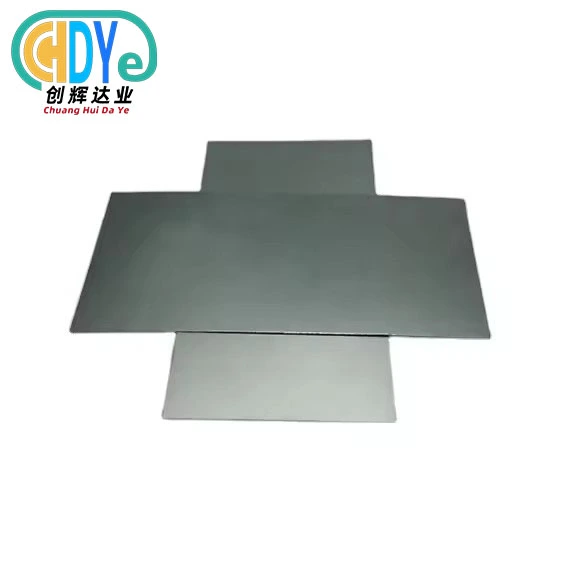
Understanding Pure Titanium Sheets and Stainless Steel Sheets
Selecting the right metal sheet begins with understanding the intrinsic properties that define each material's performance envelope.
Composition and Grading of Commercially Pure Titanium
Commercially pure titanium, which is defined by ASTM B265, is made up of more than 99% titanium and limited amounts of oxygen, nitrogen, carbon, and iron. The mechanical strength of the four main grades is based on these trace elements:
- Grade 1 (GR1): Most flexible, with a tensile strength of about 240 MPa and a stretch of more than 24%. It is perfect for deep drawing and complicated shaping tasks.
- Grade 2 (GR2): The industry workhorse, offering balanced tensile strength of approximately 345 MPa and yield strength near 275 MPa. This grade dominates chemical processing and marine applications due to optimal formability and corrosion resistance.
- Grade 3 (GR3): Moderate strength level positioned between Grade 2 and Grade 4, suitable for applications requiring slightly enhanced mechanical properties.
- Grade 4 (GR4): Highest oxygen content among commercially pure grades, delivering tensile strength approaching 550 MPa, comparable to mild steel but with vastly superior corrosion performance.
We keep GR1, GR2, GR3, and GR4 pure titanium sheets in standard sizes in stock at Chuanghui Daye. This lets us deliver within 1–5 days to meet tight project deadlines.
Stainless Steel Grades and Specifications
There are three main types of this metal: duplex, austenitic (300 series), and ferritic (400 series). Types 304 and 316 are what most businesses buy. Grade 304 doesn't rust often because it has 18% chromium and 8% nickel. There is an extra 2% to 3% molybdenum in Grade 316, which makes it less likely to split when salt is added. The surface can have a mill finish or a mirror shine, and it can be between 0.3 mm and 6 mm thick, which is thick enough for most business uses.
Even though stainless steel is useful most of the time, its chromium oxide layer breaks down after a long time of being in the ocean, acids, and high salt levels. Titanium dioxide films, on the other hand, stay stable in these conditions.
Comparative Mechanical and Chemical Properties
It's clear that these materials don't work the same way when you look at their specs. 4.51 g/cm³ is how dense titanium is, which is about 60% of 8.0 g/cm³, which is how dense stainless steel is. To put it another way, titanium can be used to make planes and tools that are lighter. To stretch Grade 2 titanium, you need about 105 GPa of force. To stretch Grade 2 stainless steel, you need 200 GPa of force. To put it another way, Grade 2 titanium can bend more before it becomes permanently deformed.
It keeps rust from happening in many ways. Titanium makes a thin layer of TiO₂ when it comes into contact with oxygen. This film protects the metal from salt attack, crevice corrosion, and stress corrosion cracking in chemical and sea environments. The chromium oxide layer on stainless steel shields it from places where metals oxidise, but it doesn't protect it at all from places where acids and high-temperature brines above 60°C break down metals.
Performance and Application Comparison: Pure Titanium vs Stainless Steel
Real-world operating conditions reveal where each material excels and where compromises become necessary.
Corrosion Resistance in Harsh Environments
Marine purification plants show that titanium works better in harsh environments. Plate heat exchangers made from Grade 2 pure titanium sheets can handle temperatures up to 130°C in seawater without cracking, which is how stainless steel 316L fails within months. Titanium is the only material used by the chlor-alkali industry for electrolysis cell liners that are exposed to wet chlorine gas. Stainless steel quickly develops holes in this environment.
Stainless steel works well in environments that are exposed to air, when food is being processed, and in architecture as long as it is cleaned every so often. The substance is harmful in still saltwater, lowering acids like hydrochloric and sulphuric, and process streams that have bromides or iodides in them.
Strength-to-Weight Ratio Advantages
Aerospace companies try to make things lighter without making them less strong. Pure titanium is just as strong as stainless steel, but it's only 60% heavier. It will be easier to drive, hold more stuff, and use less gas. It is used to make parts for the structure of satellites, aircraft bulkhead panels, and rotor systems for helicopters.
The people who make medical tools have the same problems. It is possible to see through titanium grade 2 or 4 surgical toolboxes and implantable fixation plates during treatments because they are strong, biocompatible, and radiolucent. This can't be done with polished steel.
Industry-Specific Case Studies
Chemical processing plants that work with concentrated sulphuric acid, nitric acid, and organic chlorides use pure titanium sheets to build heat exchangers, reactor tanks, and pipe systems. A petrochemical plant in Europe said that titanium equipment had a 15-year service life compared to 3–5 years for lined or solid stainless steel options. This supports the lifecycle cost case.
Titanium covering is being used more and more in coastal building projects. Titanium can keep its good looks without any upkeep, as shown by the Guggenheim Museum Bilbao and the Tokyo Big Sight exhibition center. It develops a slight patina that stays in place after the first contact. In the same kind of environment, stainless steel needs to be cleaned every so often to get rid of salt deposits and stop pitting.
Cost, Procurement, and Supply Chain Factors
Budget allocation and supply chain reliability influence material selection as significantly as technical performance.
Price Analysis and Cost Considerations
At the moment, Grade 2 pure titanium sheets cost about 8–12 times as much per kilogram as 316L stainless steel. The exact price depends on the thickness, amount, and world supply of titanium sponge. This difference gets smaller when you add up the prices of replacements, upkeep labour, and downtime over the course of a product's life. An analysis of a desalination plant showed that titanium heat exchangers had a 40% lower total cost of ownership over 20 years of operation compared to stainless steel units, which needed to be replaced every 5–7 years. This was true even though the initial investment was higher.
Choosing the grade affects the price. Grade 1 costs more because it can be shaped more easily, while Grade 4 costs a little more because it has better mechanical properties. Standard width sheets (1.0mm, 2.0mm, and 3.0mm) are cheaper than unique measurements that need special rolling campaigns.
Supplier Selection and Certification Verification
When making sourcing decisions, companies that are certified by ISO 9001:2015 and follow ASTM B265 should be given more weight. Chuanghui Daye is located in Baoji, which is known as China's Titanium Capital. This gives us direct access to primary titanium sponge producers and integrated processing facilities. Our production line has electron beam furnaces, vacuum melting equipment, CNC rolling machines, and finishing furnaces. This makes sure that the features of the materials stay the same and that the raw materials can be tracked all the way to the finished product.
ICP-OES analysis should be used by procurement teams for pure titanium sheet to check the chemical makeup and make sure that the oxygen level stays below 0.25% for Grade 2 to keep the material from becoming weak. Tensile and yield strength are checked using ASTM E8 testing, and formability without surface cracking is checked using bend testing. Ultrasonic analysis finds internal laminations that weaken the structure.
Minimum Order Quantities and Delivery Timelines
Standard inventory systems cut wait times by a huge amount. We keep common sizes and grades in stock so that we can deliver within 1 to 5 days for urgent needs. Depending on how complicated they are, custom sizes, special metal compositions, and precise cutting can add 15 to 30 days to the lead time. For stock items, the minimum order quantity usually starts at 50 kilograms. For custom orders, the minimum order quantity needs to be 200 kilograms to cover the costs of setting up the production line.
With the help of consolidated paperwork like material test results, compliance certificates, and customs statements, global logistics partners make it possible to ship to markets in North America, Europe, and Asia. Samples for testing are still available at no cost, so you can check the quality before committing to large orders.
How to Choose Between Pure Titanium and Stainless Steel for Your Project
Strategic material selection requires systematic evaluation of project-specific parameters.
Defining Project Requirements
Environmental exposure is the most important factor in making a decision. Titanium is needed for projects that will be in constant contact with seawater, chemical process streams, or high-chloride environments so that the materials don't fail too soon. Titanium is stable at temperatures above 200°C, but stainless steel works fine below 100°C in environments that don't corrode.
Titanium is used more and more in aerospace, cars, and portable electronics because of its low weight. When doing structural estimates, you should weigh the loss of weight in parts against the higher cost of materials. According to ISO 10993, biocompatibility testing is needed for medical applications. This means that stainless steel can't be used for long-term implants.
Budget limitations are still real problems. Stainless steel works well for applications where looks are more important than ultimate rust protection, such as food handling, atmospheric service, and artistic uses. Titanium's high price is worth it in mission-critical systems where failure could have terrible effects on safety, the environment, or money.
Side-by-Side Material Comparison
Corrosion Resistance: Titanium is very resistant to corrosion in chlorides, bromides, wet chlorine, and hot seawater. Stainless steel can handle air, fresh water, and mild chemicals well, but it can't handle acids and high-temperature brines.
Mechanical Strength: At 60% weight, grade 4 titanium is about as strong as mild steel. The exact strength of stainless steel 316L is higher, but it is much heavier.
Welding and Fabrication: If you use the right methods, you can join both types of materials together. Titanium needs to be protected from inert gases and contaminated materials to keep it from becoming weak. In acidic service, stainless steel needs to be passivated after welding, but it can handle a wider range of welding conditions.
Cost and Availability: Stainless steel is easy to find and doesn't cost too much. To get titanium, you need to have established relationships with suppliers and wait longer for special specs.
Expert Recommendations for Optimal Selection
Titanium grades 1-4 should be used in chemical processes, naval, and medical devices based on the mechanical qualities they need. Titanium is good for aerospace construction because it is light and doesn't wear down easily. Coastal architecture projects can afford titanium's higher price because it doesn't need to be maintained.
Stainless steel can still be used for indoor industrial equipment, food processing machinery, general manufacturing, and artistic purposes as long as it doesn't get too much corrosion. In some situations, hybrid approaches that combine structures made of stainless steel with wear surfaces made of titanium give the best cost-benefit ratio.
Practical Tips for Working with Pure Titanium Sheets
Maximising the performance of a material takes specialised understanding in fabrication and keeping the area clean.
Cutting and Welding Best Practices
When cutting titanium, you need sharp carbide or ceramic tools and slower cutting speeds than when cutting stainless steel. Using coolant stops heat from building up, which stops work from hardening and tools from wearing out. Cutting with a plasma or waterjet leaves clean edges without any problems with heat-affected zones.
As a gas tungsten arc welding (GTAW) process, both sides of the joint must be shielded with argon. Trailing shields keep the metal from getting contaminated by air, which can make it brittle. To keep air from soaking in, the weld zone must stay below 430°C while it cools. Grade 2 filler wire makes joints that are flexible and match the properties of the base metal.
Storage and Contamination Prevention
To stop galvanic corrosion and metal transfer, pure titanium sheets need to be kept away from carbon steel and aluminium. Spacers made of wood or plastic should be used in storage racks so that different metals don't touch directly. When you handle something, surface protection films or paper interleaving keep it from getting scratched.
Acid pickling gets rid of the heat tint and surface alpha-case layers that form when you work with hot metals, making them more resistant to corrosion. Mixed nitric acid and hydrofluoric acid liquids are used in the process, which is followed by a thorough rinse and passivation. Passive layer development will happen evenly if the surface is properly prepared.
Quality Assurance and Inspection Standards
Protocols for incoming inspections include checking the dimensions, judging the quality of the surface, and validating the material test results. Tensile tests according to ASTM E8 show that the mechanical properties are within the acceptable ranges. Chemical research proves that interstitial element control is real, especially the oxygen level that controls how flexible the material is.
Ultrasonic testing finds problems below the surface that can't be seen with the naked eye. As per ASTM B265, tests can be done according to AMS 2631 Class A1 standards, which require sensitivity to 1.6 mm flat-bottom holes. Formability is judged by how well it bends around a 4T–5T radius without cracking. For Grade 2, it must bend successfully.
Conclusion
Whether or not commercially pure titanium works better than stainless steel depends on the needs of the product. Pure titanium sheets are the best at resisting corrosion in marine and chemical settings. They also save a lot of weight in aircraft and medical equipment and save money over the course of their useful life. For mild exposure situations, stainless steel is a cost-effective choice because it is easy to work with and widely available. To make smart choices, procurement professionals have to look at things like the harshness of the environment, the amount of weight that can be carried, the budget, and the expected level of upkeep. No matter what material is chosen, the project will be successful as long as it is worked on with qualified suppliers who offer testing, customisation, and expert support.
FAQ
Q: Which material performs better in seawater applications?
A: When immersed in seawater for a long time, commercially pure titanium grades work better than other grades because they don't rust or pit and can withstand temperatures up to 130°C. Stainless steel 316L is good for splash zones that dry out every so often, but it doesn't work well for underwater uses that are above 60°C or have conditions that don't move.
Q: What drives the cost difference between titanium and stainless steel sheets?
A: The main difference in costs is caused by the difficulty of getting the raw materials and processing them. To make titanium, the Kroll process, reduction, and vacuum melting use a lot of energy. To make stainless steel, regular electric arc furnaces are used. Global supply problems with titanium sponges and the need for specialised fabrication tools add to the costs.
Q: How do welding requirements differ between these materials?
A: Titanium welding requires inert gas shielding on both the joint face and the root side. Trailing shields keep the metal that is cooling from getting contaminated by air. Stainless steel can only handle argon shielding on the face, and it doesn't need as much protection from the air. Both materials need to be inspected after the weld, and the right filler must be used.
Contact Chuanghui Daye Metal – Your Trusted Pure Titanium Sheet Manufacturer
For more than 30 years, Shaanxi Chuanghui Daye Metal Material Co., Ltd. has been working with rare metals. They can help global B2B procurement teams find trusted titanium sheet providers. We are in Baoji, China, which is known as the "Titanium Capital." We sell Grades 1-4 commercially pure titanium sheets that are certified by ISO 9001:2015 and can be quickly delivered. Standard sizes can be shipped within 1 to 5 days from our stock collection, and we can also do custom processing to meet your specific thickness, width, and surface finish needs. Testing samples are still available for free, so you can check the quality before placing an order for production. Get in touch with our technical team at info@chdymetal.com to talk about the details of your project, get reasonable quotes, and take advantage of factory-direct prices from a trusted pure titanium sheet manufacturer that cares about quality and building relationships with customers.
References
1. American Society for Testing and Materials. "ASTM B265 - Standard Specification for Titanium and Titanium Alloy Strip, Sheet, and Plate." ASTM International, 2022.
2. Schutz, R.W. "Corrosion Resistance Properties of Titanium and Titanium Alloys." Journal of Materials Engineering and Performance, Vol. 12, No. 4, 2003.
3. Peters, M., and Leyens, C. "Titanium and Titanium Alloys: Fundamentals and Applications." Wiley-VCH Verlag, 2003.
4. Boyer, R., Welsch, G., and Collings, E.W. "Materials Properties Handbook: Titanium Alloys." ASM International, 1994.
5. Davis, J.R. "Corrosion of Weldments." ASM International Materials Selection and Design Series, 2006.
6. Donachie, Matthew J. "Titanium: A Technical Guide, 2nd Edition." ASM International Technical Books, 2000.
Learn about our latest products and discounts through SMS or email