- English
- French
- German
- Portuguese
- Spanish
- Russian
- Japanese
- Korean
- Arabic
- Greek
- German
- Turkish
- Italian
- Danish
- Romanian
- Indonesian
- Czech
- Afrikaans
- Swedish
- Polish
- Basque
- Catalan
- Esperanto
- Hindi
- Lao
- Albanian
- Amharic
- Armenian
- Azerbaijani
- Belarusian
- Bengali
- Bosnian
- Bulgarian
- Cebuano
- Chichewa
- Corsican
- Croatian
- Dutch
- Estonian
- Filipino
- Finnish
- Frisian
- Galician
- Georgian
- Gujarati
- Haitian
- Hausa
- Hawaiian
- Hebrew
- Hmong
- Hungarian
- Icelandic
- Igbo
- Javanese
- Kannada
- Kazakh
- Khmer
- Kurdish
- Kyrgyz
- Latin
- Latvian
- Lithuanian
- Luxembou..
- Macedonian
- Malagasy
- Malay
- Malayalam
- Maltese
- Maori
- Marathi
- Mongolian
- Burmese
- Nepali
- Norwegian
- Pashto
- Persian
- Punjabi
- Serbian
- Sesotho
- Sinhala
- Slovak
- Slovenian
- Somali
- Samoan
- Scots Gaelic
- Shona
- Sindhi
- Sundanese
- Swahili
- Tajik
- Tamil
- Telugu
- Thai
- Ukrainian
- Urdu
- Uzbek
- Vietnamese
- Welsh
- Xhosa
- Yiddish
- Yoruba
- Zulu
Anodized Titanium Wire Applications in Aerospace Engineering
Anodised titanium wire is an important material in modern aircraft engineering, especially in places where harsh conditions, high temperatures, and strict weight limits all come together. The anodisation process adds a controlled oxide layer to the wire's surface. This makes it much more resistant to corrosion and improves its dielectric qualities without changing the strength-to-weight ratio of the substrate. Aerospace manufacturers use this special wire to keep parts in place while they are being surface treated, to make long-lasting supports for electrical harnesses, and to colour-code identification systems. This is done in places where normal coating methods could lead to contamination or add extra weight to flight-critical assemblies.
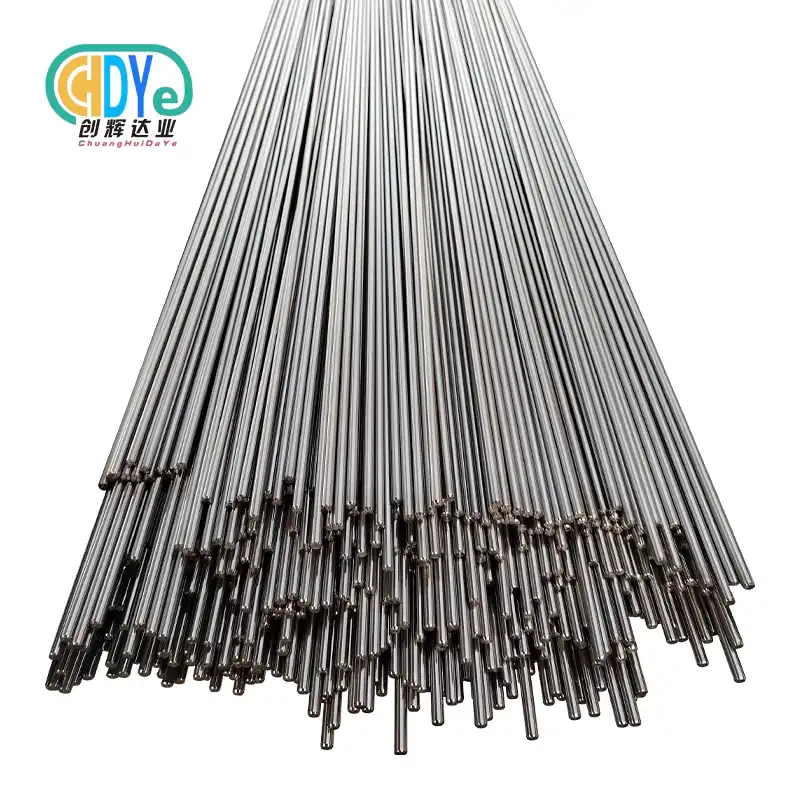
Understanding Anodised Titanium Wire and Its Aerospace-Grade Properties
The transformation of standard titanium wire into an aerospace-grade material begins with an electrolytic passivation process that thickens the natural oxide layer from mere nanometers to a controlled range of 30nm to 200nm. This isn't a coating or paint application—the colour variations visible on the wire surface result from light interference phenomena, similar to how oil creates rainbow patterns on water. The precision of this oxide thickness determines both the visual appearance and functional performance characteristics.
What Makes the Anodization Process Different
Anodisation improves the titanium substrate by turning its outermost atomic layers into a dense, highly adherent oxide. This is different from other surface processes that add foreign materials. The process takes place in controlled electrolyte baths, and the end oxide thickness is set by voltage parameters. Standards like AMS 2488, which set requirements for oxide layer uniformity, surface hardness, and dielectric strength, must be strictly followed in aerospace uses. This standardisation makes sure that every metre of wire works the same, no matter what batch was used to make it.
Key Aerospace-Grade Properties
The improved oxide layer gives measured performance benefits that are important for aerospace uses. Corrosion resistance goes up a lot, especially against chloride-induced breakdown that happens a lot in maritime and coastal flight operations. The oxide layer doesn't break down at temperatures above 400°C, so it stays structurally sound in high-heat areas near engines and exhaust systems. The mechanical properties stay the same because the base titanium keeps its original tensile strength and flexibility. However, the surface gets better wear resistance. Anodised titanium wire keeps wires from galling when they regularly touch metal fixtures during vibration cycles. Depending on the thickness of the oxide, the dielectric breakdown voltage can reach up to 100V. This gives the oxide natural electrical insulation properties that are useful in certain harness uses. Because titanium oxide is biocompatible, these wires can be used for cabin air quality sensors and other human-contact uses. They meet ISO 10993 standards without any extra treatments.
Core Aerospace Applications and Problem-Solving with Anodised Titanium Wire
Aerospace engineering faces persistent challenges in balancing performance demands with weight constraints and environmental durability. Traditional wiring solutions using stainless steel or aluminium alloys often fail prematurely in corrosive atmospheres or add excessive mass that reduces fuel efficiency. Anodised titanium wire addresses these specific pain points through its unique combination of properties.
Solving Corrosion and Mechanical Wear Challenges
Corrosion speeds up in wire harness supports and component mounting fixtures on planes that fly near the coast or are exposed to de-icing salts. A big company that makes commercial aeroplanes found that replacing harness supports 67% less often after moving from stainless steel wire to anodised titanium wire in wing assembly jigs. The oxide layer stops chloride ions from getting in, which usually starts crevice corrosion. This makes it possible to go longer between service intervals and save a lot of money on upkeep costs. In places with a lot of shaking, mechanical wear is another problem. During flight, the constant tiny moves between the wires and the mounting brackets cause friction that wears away at normal wire surfaces over time. The hardened top layer of anodised titanium wire defies this rough wear, keeping the wire's shape and stopping galling, a metal-to-metal cold welding phenomenon. This trait comes in handy in automated manufacturing processes where aluminium parts are handled many times during the anodising process.
Heat Resistance and Electrical Performance Benefits
Wiring systems are exposed to high temperatures that are too high for polymer-insulated copper wires to handle in engine compartments and exhaust paths. Anodised titanium wire stays strong at temperatures where other types of insulation would melt or give off dangerous fumes. The thermal stability of the oxide layer ensures that the electrical insulation qualities stay the same at all temperatures, from areas with cryogenic fuel systems to mounting points for instruments in hot zones. Compared to bare copper wire, the anodised surface's dielectric properties make it naturally electrically isolated. This is useful in situations where conductive materials need to be run near sensitive electronics without the risk of short circuits. This gets rid of the need for extra steps like sleeving or coating, which make aircraft electrical systems heavier and more complicated.
Comparative Analysis for Procurement Decisions: Why Choose Anodised Titanium Wire?
Procurement managers evaluating wiring materials for aerospace applications must balance initial material costs against lifecycle performance, maintenance expenses, and regulatory compliance requirements. The decision framework extends beyond Anodised titanium wire simple price-per-kilogram comparisons to encompass the total cost of ownership across a component's service life.
Material Performance Benchmarking
Stainless steel wire costs less up front, but it is heavier and doesn't fight corrosion as well in chloride environments. Copper wire is a great conductor of electricity, but it needs a lot of protection and breaks quickly when heated and cooled above 200°C. Some problems are solved by polymer-coated titanium wire, but the coating adds steps to the process, makes the wire bigger, and can separate when heated or exposed to chemicals. Anodised titanium wire strikes a balance: the oxide layer is an integral part of the base rather than a separate coating, so there are no risks of delamination. Standardised salt spray tests show that it is more resistant to corrosion than stainless steel, but it still weighs 44% less. Extremes of temperature don't affect the material's performance, so its properties stay the same across all aerospace operating envelopes.
Cost-Efficiency Over Lifecycle
The initial cost of materials for anodised titanium wire is about 2.5 times higher than for stainless steel wire with the same width. Lifecycle study, on the other hand, shows a different economics. Longer service intervals lower the cost of replacement labour, which in aerospace repair is usually five to ten times higher than the cost of materials. Finding ways to cut down on weight leads to lower fuel costs that add up over decades of use. More and more strict environmental rules about corrosion-resistant coatings and getting rid of hazardous trash favour materials that don't need much post-treatment.A detailed cost model that compares stainless steel wire to anodised titanium wire for harness support applications over the course of a twenty-year airframe service life shows that the stainless steel option breaks even within the first seven years, while the titanium option saves money by lowering the number of maintenance events and fuel used.
Procurement Guide: Sourcing Anodised Titanium Wire for Aerospace Engineering
Successful procurement of aerospace-grade anodised titanium wire requires understanding supplier capabilities, quality verification processes, and customisation options that align with specific project requirements. The global supply chain concentrates expertise in regions with established titanium processing infrastructure.
Supplier Vetting and Verification Methods
Verification of certification is the first step in qualifying sources. While ISO 9001:2015 certification shows basic knowledge of a quality management system, other certifications like AS9100 for aviation, space, and defence quality systems are needed for aerospace uses. Ask for proof that the material meets the requirements set out in AMS 2488 for anodising methods and ASTM B863 for the mechanical properties of titanium wire. An evaluation of a manufacturer's abilities should look at how complex their equipment is. Advanced providers use electron beam melting furnaces to process raw materials, precision wire drawing equipment to keep diameter tolerances very tight, and computer-controlled anodisation systems to make sure that the oxide layer forms consistently. Ask for facility audit reports or third-party inspection certificates that show how the process controls and measuring tools were calibrated.
Geographic Sourcing Considerations
China's Baoji area, which is known as the "Titanium Capital," has a lot of processing anodised titanium wire experts who have learned a lot over the years by making rare metals. Integrated supply lines, a highly skilled technical workforce, and economies of scale that lower production costs are all good for the manufacturers here. This regional advantage is best shown by Shaanxi Chuanghui Daye Metal Material Co., Ltd., which has over 30 years of experience in the rare metal industry and modern processing facilities such as electron beam furnaces, precision machining centres, and quality control laboratories that are certified to international standards. Suppliers based in the United States are closer to North American aerospace manufacturers, which makes logistics and communication easier. But the amount that can be made in the United States is still limited, and prices reflect the higher costs of labour and running a business in the area. Strategic procurement usually finds a balance between using domestic suppliers for quick prototypes and emergency needs and qualified foreign suppliers for low-cost mass production.
Future Trends and Performance Optimisation of Anodised Titanium Wire in Aerospace
The aerospace industry's trajectory toward electric propulsion, autonomous flight systems, and sustainable aviation fuels creates evolving demands for materials combining traditional performance with emerging requirements. Anodised titanium wire technology continues to advance to meet these future needs.
Emerging Anodization Technology Advancements
Research into plasma electrolytic oxidation processes promises oxide layers with enhanced thickness uniformity and superior adhesion properties compared to conventional anodization. These advanced processes create crystalline oxide structures demonstrating improved wear resistance and higher dielectric strength, potentially expanding applications into higher-voltage electrical systems planned for electric aircraft propulsion. Nano-structured surface treatments applied before anodization show potential for further enhancing corrosion resistance in extreme environments. Laboratory testing indicates these hybrid treatments could extend service life by an additional 30-40% in accelerated corrosion protocols simulating decades of coastal operations.
Integration in Next-Generation Aerospace Systems
Electric aircraft development introduces new challenges, including electromagnetic interference management and thermal loads from high-density battery systems. The dielectric properties of anodised titanium wire make it a candidate material for shielding and grounding applications where conventional materials add excessive weight or fail to meet temperature requirements near battery compartments. Advanced avionics systems incorporating artificial intelligence and sensor fusion require extensive wiring harnesses with precise identification systems. The colour-coding capability of anodised titanium wire, achieved through controlled oxide thickness without added dyes or coatings, provides permanent, non-fading identification that won't degrade from UV exposure or cleaning solvents over multi-decade service lives.
Conclusion
Anodised titanium wire delivers a compelling combination of corrosion resistance, thermal stability, and weight savings that address critical aerospace engineering challenges. The material's proven performance in demanding applications, from coastal operations to high-temperature engine zones, demonstrates clear advantages over conventional alternatives. Procurement decisions benefiting from lifecycle cost analysis rather than initial price comparisons consistently favour this material specification. As aerospace technology advances toward electric propulsion and autonomous systems, the unique properties of anodised titanium wire position it as an enabling material for next-generation aircraft development. Strategic partnerships with qualified suppliers offering technical expertise and flexible production capabilities will prove essential for aerospace manufacturers, optimising performance while controlling costs.
FAQ
1. What Specific Aerospace Standards Must Anodised Titanium Wire Meet?
Aerospace applications require compliance with AMS 2488 governing the anodising process parameters and resulting surface characteristics. Wire substrate material must conform to ASTM B863 specifications for mechanical properties and chemical composition. Depending on the application, additional standards such as AS9100 quality management certification and ISO 10993 biocompatibility may apply. Qualified suppliers provide certified material test reports documenting compliance with all relevant specifications, including lot traceability, enabling root cause analysis should field issues emerge.
2. How Does Wire Diameter Affect Anodization Quality?
Thinner wire diameters require more precise process control since the oxide layer represents a larger proportion of the total cross-section. Maintaining uniform current density across small-diameter wire challenges anodization bath design and requires specialised fixturing. Wires below 0.5mm diameter may exhibit slight colour variation along length due to current density gradients, though functional properties remain within specification. Diameters above 2.0mm anodise more uniformly but sacrifice flexibility. Most aerospace applications specify 0.8mm-1.5mm diameters, balancing mechanical properties with processing consistency.
3. Can Anodised Titanium Wire Be Welded or Soldered?
The oxide layer prevents traditional welding and soldering since it electrically insulates the base metal. Applications requiring joined wire assemblies typically specify mechanical crimping methods using titanium or compatible ferrules. Alternatively, wire ends can be mechanically abraded to remove the oxide layer in specific locations, allowing localised welding using TIG processes in inert atmospheres. The exposed weld zone requires re-passivation through chemical treatment to restore corrosion resistance, though this creates a clear rather than colored oxide layer at the joint.
Partner with Chuanghui Daye for Aerospace-Grade Anodised Titanium Wire
Aerospace projects demand materials meeting exacting specifications and suppliers capable of delivering consistent quality on schedule. Shaanxi Chuanghui Daye combines deep expertise in titanium processing with ISO 9001:2015 certified quality systems and Anodised titanium wire advanced manufacturing equipment located in China's Baoji Titanium Capital. Our engineering team provides technical guidance through specification development, rapid prototyping for validation testing, and flexible production volumes accommodating research quantities through full-scale manufacturing programs. Contact our team at info@chdymetal.com to discuss your specific requirements with an anodised titanium wire supplier committed to supporting aerospace innovation through reliable, high-performance materials.
References
1. Davis, J.R. (2000). Titanium: A Technical Guide, 2nd Edition. ASM International, Materials Park, OH.
2. Aerospace Material Specification AMS 2488C (2019). Anodic Treatment of Titanium and Titanium Alloys. SAE International, Warrendale, PA.
3. Brunette, D.M., Tengvall, P., Textor, M., and Thomsen, P. (2001). Titanium in Medicine: Material Science, Surface Science, Engineering, Biological Responses and Medical Applications. Springer-Verlag, Berlin.
4. ASTM International (2020). ASTM B863-20 Standard Specification for Titanium and Titanium Alloy Wire. West Conshohocken, PA.
5. Lutjering, G. and Williams, J.C. (2007). Titanium, 2nd Edition. Springer Science & Business Media, Berlin.
6. Federal Aviation Administration (2018). Advisory Circular AC 43-4B: Corrosion Control for Aircraft. U.S. Department of Transportation, Washington, D.C.
Learn about our latest products and discounts through SMS or email