- English
- French
- German
- Portuguese
- Spanish
- Russian
- Japanese
- Korean
- Arabic
- Greek
- German
- Turkish
- Italian
- Danish
- Romanian
- Indonesian
- Czech
- Afrikaans
- Swedish
- Polish
- Basque
- Catalan
- Esperanto
- Hindi
- Lao
- Albanian
- Amharic
- Armenian
- Azerbaijani
- Belarusian
- Bengali
- Bosnian
- Bulgarian
- Cebuano
- Chichewa
- Corsican
- Croatian
- Dutch
- Estonian
- Filipino
- Finnish
- Frisian
- Galician
- Georgian
- Gujarati
- Haitian
- Hausa
- Hawaiian
- Hebrew
- Hmong
- Hungarian
- Icelandic
- Igbo
- Javanese
- Kannada
- Kazakh
- Khmer
- Kurdish
- Kyrgyz
- Latin
- Latvian
- Lithuanian
- Luxembou..
- Macedonian
- Malagasy
- Malay
- Malayalam
- Maltese
- Maori
- Marathi
- Mongolian
- Burmese
- Nepali
- Norwegian
- Pashto
- Persian
- Punjabi
- Serbian
- Sesotho
- Sinhala
- Slovak
- Slovenian
- Somali
- Samoan
- Scots Gaelic
- Shona
- Sindhi
- Sundanese
- Swahili
- Tajik
- Tamil
- Telugu
- Thai
- Ukrainian
- Urdu
- Uzbek
- Vietnamese
- Welsh
- Xhosa
- Yiddish
- Yoruba
- Zulu
Can Titanium Filler Wire Handle Extreme Environments?
Titanium filler wire works great in harsh conditions where other materials fail. This special consumable was made to weld commercially pure titanium and titanium alloys. It has the best corrosion resistance, thermal stability, and mechanical power even in the worst conditions. Titanium filler wire keeps its shape in underwater installations and aircraft uses where temperatures can reach over 600°C. Other wires, like stainless steel or aluminium, break down due to oxidation, stress cracking, or chemical breakdown. Its controlled low interstitial content keeps it from becoming brittle, and strict adherence to AWS A5.16 and ASTM B863 standards guarantees stable performance from very cold to very hot temperatures. This makes it the material of choice when failure is not an option.
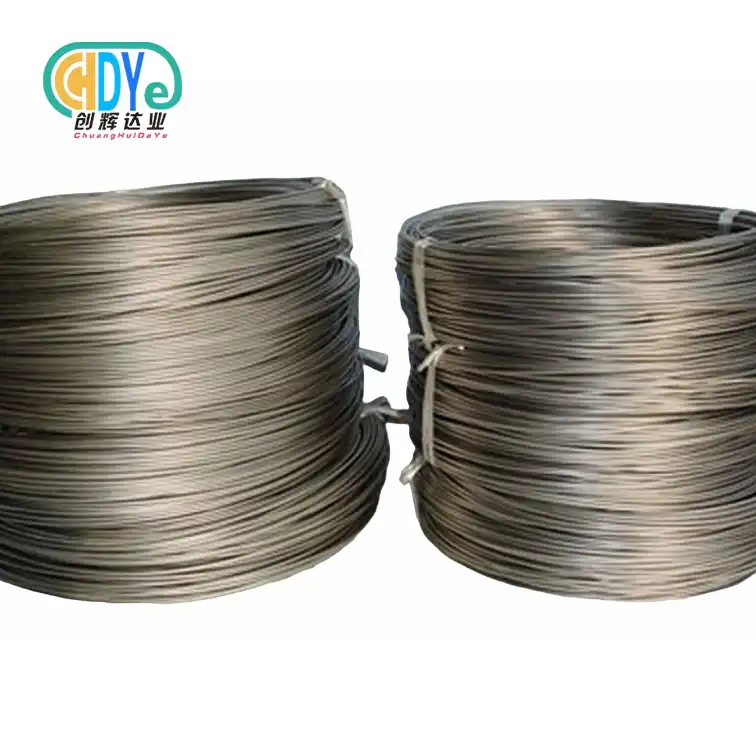
Understanding Titanium Filler Wire and Its Properties
Chemical Composition and Industry Grades
Specialised welding tools for titanium-based parts are a special type of metal joining technology. These materials are mostly made of pure titanium or certain alloy mixtures. They are designed to meet the strict needs of industries where regular options don't work. Interstitial elements like oxygen, nitrogen, carbon, and hydrogen are usually kept at controlled amounts in the composition. This is done to stop a process called alpha case formation, which makes weld zones more brittle. The ERTi-1 through ERTi-13 ratings are common grades that procurement teams can use. ERTi-2 is made up of commercially pure titanium with an oxygen level of about 0.25%. It is used for general tasks that need moderate strength. The ERTi-5 type of metal has 6% aluminium and 4% vanadium, making it much stronger than Ti-6Al-4V. Its tensile strength is very close to 130 ksi. This grade is widely used in aircraft structural parts that need to be light while also being able to hold a lot of weight.
Hallmark Material Properties
Three things make these welding supplies stand out and give them their good name. Corrosion protection is better than that of almost all metals, especially in chloride-rich environments where stainless steel pits and cracks easily. This natural electrochemical stability is important for chemical processing plants that use hydrochloric acid or marine uses that are exposed to saltwater for long periods of time. The strength-to-weight ratio gives the material performance benefits that you can't get with heavy materials. The parts that were welded with these consumables have a density that is about 40% lower than steel, but their mechanical qualities are the same as or better than steel's. Manufacturers of aerospace products use this trait to lighten their planes, which directly leads to better fuel economy and a longer operational range. Welded joints can work successfully in a wide range of temperatures because they are resistant to heat. Whether it's near absolute zero in a liquefied gas storage area or parts of a turbine that are constantly heated to more than 550°C, structural integrity is maintained by properly executed welds using the right filler grades. The low thermal expansion coefficient of the material lowers the chance of fatigue failure by titanium filler wire, reducing thermal stress during temperature cycling.
The Welding Process of Titanium Filler Wire in Extreme Conditions
Standard Welding Techniques
Gas Tungsten Arc Welding, or TIG welding, is the most common way to work with titanium because it gives you exact control over the amount of heat you use and the shielding gas that covers the metal. A tungsten electrode that doesn't need to be replaced is used to make the arc, and filler wire can be fed into the molten pool by hand or automatically. Negative polarity for a direct current electrode is normal; it gives stable arc properties and good penetration. Plasma arc welding is a more advanced type where the arc is narrowed through a fine-bore copper nozzle, making a targeted plasma jet with a lot of energy. This method works well for parts that are thicker or for jobs that need to go deeper with less heat-affected zone width. When heat exchangers or pressure vessels are being made, automated plasma devices offer very high levels of repeatability.
Critical Role of Shielding Gas
Titanium's ability to react with gases in the air at high temperatures is the main technical problem that comes up when soldering. When temperatures rise above 400°C, oxygen and nitrogen are quickly absorbed, making substances that are brittle in the weld metal and heat-affected zone. It's important to have full protection everywhere that's heated, not just where the arc is, until the temperature drops below the critical level. High-purity argon or helium is used for primary shielding, which covers the molten weld pool right below the torch. Secondary trailing shields provide extra protection behind the moving weld. They do this by using bigger gas cups or special trailing devices that send a steady flow of gas over the cooling bead. Backing purge systems fill the root side of full-penetration joints, which stops oxidation on inside surfaces that can't be reached by shielding from the outside.
Comparing Titanium Filler Wire with Alternative Filler Materials
Mechanical and Chemical Property Contrasts
When evaluating purchases, it's common to compare them to welding supplies made of stainless steel and aluminium. Filler wires made of stainless steel, especially 316L grades, don't rust and are much cheaper than other materials. They can be used in many commercial settings. In the softened state, the tensile strength is 85 ksi, and the elongation value is about 40%. These qualities are good enough for chemical processing at room temperature, where mild chloride exposure happens. Aluminium filler metals like ER4043 and ER5356 are good at transferring heat and don't weigh much, which makes them appealing for making heat exchangers. Ultimate tensile values are usually between 42 and 45 ksi, which is a lot less than those of titanium filler wire and titanium grades. Because the material is easily damaged by galvanic corrosion when mixed with different metals, it can't be used in marine settings. Titanium welding supplies give you better results in a number of areas at the same time. Resistance to corrosion in reducing acids, oxidising chloride solutions, and seawater is much higher than in either of the other two options. At high temperatures, the strength-to-weight ratio stays the same, while aluminium loses its mechanical qualities and stainless steel needs much thicker walls to have the same structural capacity.
Compatibility and Metallurgical Considerations
Matching the filler makeup to the base material is very important for successful welding. To keep the same mechanical qualities and corrosion behaviour, commercially pure titanium substrates need ERTi-2 filler. To get the right amount of aluminium and vanadium in the weld metal for Ti-6Al-4V parts, ERTi-5 filler is needed. This makes sure that the strength and microstructure are the same. Welds with poor qualities are made when incompatible combinations are mixed. When you use pure titanium filler on Ti-6Al-4V base metal, the weld strength isn't as good as it could be, which makes it a weak link in structural uses. On the other hand, using alloy filler on commercially pure base material adds alloying elements that aren't needed and raises the cost of the material without improving its performance. Metallurgical compatibility also means keeping different metal tools and fittings from getting dirty, which could introduce elements that could weaken the weld.
Procurement Considerations for Titanium Filler Wire
Supplier Evaluation and Certification Requirements
Identifying reliable sources involves assessing multiple criteria beyond quoted pricing. ISO 9001:2015 certification demonstrates a supplier's commitment to quality management systems encompassing process control, document management, and continuous improvement. Aerospace suppliers may require additional AS9100 certification, while medical device manufacturers seek ISO 13485 compliance. Material traceability capabilities distinguish premium suppliers from commodity vendors. Each production lot should possess complete documentation tracing back to the original melt, including chemical composition verification via optical emission spectrometry, mechanical property testing results, and surface finish inspection reports. Suppliers offering digital certificates accessible through online portals streamline procurement documentation and audit trail maintenance. Manufacturing capability assessment reveals a supplier's ability to fulfil custom specifications. Facilities equipped with electron beam melting, vacuum annealing furnaces, and precision wire drawing equipment indicate the technical sophistication necessary for producing consistent, high-purity material. Site audits or third-party assessments provide verification of stated capabilities and quality control procedures.
Pricing Variables and Budget Planning
Material costs reflect multiple factors beyond raw titanium pricing. Grade selection significantly impacts pricing, with commercially pure variants (ERTi-2) typically priced 40-60% below premium alloys (ERTi-5) due to simpler composition control and broader availability. Wire diameter affects unit pricing, with smaller diameters commanding premiums due to additional processing steps and tighter dimensional tolerances. Order quantity creates economies of scale. Minimum order quantities of 100-200 pounds often represent pricing break points where per-pound costs decrease substantially. Lead times correlate with order size and specification complexity—standard grades in common diameters ship within 2-4 weeks, while custom specifications or large quantities may require 8-12 week production schedules. Procurement teams should forecast requirements and consolidate orders to optimise both pricing and delivery timelines. Logistics considerations add to delivered costs. International shipments require proper classification, export documentation, and potentially duty payments. Freight costs for small quantities can represent significant percentages of material value, making consolidated shipments with other consumables economically advantageous. Suppliers offering regional warehousing reduce lead times and shipping expenses for recurring titanium filler wire requirements.
Ensuring Safety and Longevity When Using Titanium Filler Wire
Essential Safety Protocols
Worker protection during titanium welding operations requires specific precautions addressing both conventional welding hazards and titanium-specific risks. Personal protective equipment must include welding helmets with appropriate shade ratings (typically shade 10-14 depending on amperage), leather gloves resistant to heat and UV radiation, and flame-resistant clothing covering exposed skin. Respiratory protection becomes critical when welding in confined spaces or when the base material contains surface treatments that generate hazardous fumes during heating. Ventilation systems must provide adequate air changes to remove ozone generated by ultraviolet radiation during arc welding. Local exhaust ventilation with capture hoods positioned near the welding area prevents fume accumulation. Monitoring systems detecting oxygen deficiency in confined spaces where inert shielding gases displace breathable air prevent asphyxiation hazards. Compliance with OSHA 29 CFR 1910.252 welding standards and manufacturer safety data sheets ensures regulatory adherence and worker safety. Fire prevention measures address titanium's combustibility in certain conditions. While solid titanium exhibits excellent fire resistance, finely divided particles generated during grinding or machining can ignite, burning intensely once initiated. Hot work permits, fire watch personnel, and readily available Class D fire extinguishers specifically designed for metal fires should be standard procedures in fabrication environments.
Storage Optimisation and Material Preservation
Controlled keeping conditions are needed to keep the quality of filler wire high between purchases and uses. Climate-controlled spaces with a relative humidity below 50% stop moisture absorption, which brings hydrogen into the welding process and makes the metal porous. The wire should be kept in its original packaging until it is needed. Once it has been opened, packages should be packed again with moisture barrier bags and desiccant. Keeping it separate from other metals stops cross-contamination. Using storing racks, tools, and handling equipment that are only for titanium eliminates the chance of moving iron, copper, or other elements that lower the quality of the weld. Colour-coded tool systems or clearly labelled storage areas keep different materials from getting mixed up by accident. Using first-in, first-out rules to rotate inventory keeps things fresh. While titanium is more stable on the shelf than flux-cored wires, which have a shorter shelf life, keeping it for a long time increases the chance that the packaging will break or the surface will oxidise if the seals don't work. Tracking systems that record the dates of arrival and storage limits of 24 months for unopened packages keep materials in good condition.
Conclusion
Titanium filler wire demonstrates unequivocal capability in extreme environments where material performance directly impacts operational success and safety. Its unique combination of corrosion immunity, strength retention across temperature extremes, and biocompatibility positions it as the optimal choice for aerospace, chemical processing, and medical applications despite higher initial costs. Proper grade selection, rigorous welding procedures, and partnership with certified suppliers transform material properties into reliable, long-lasting welded joints. Procurement professionals who understand the technical nuances, establish quality-focused supply relationships, and implement comprehensive quality assurance protocols unlock the full potential of titanium welding technology, delivering components that perform reliably throughout extended service lives in the harshest conditions where failure carries unacceptable consequences.
FAQ
1. What temperature range can titanium filler wire withstand?
Commercially pure grades maintain mechanical properties from cryogenic temperatures approaching -200°C to continuous service temperatures around 315°C. Ti-6Al-4V alloy filler extends the upper temperature capability to approximately 400°C for sustained exposure, with short-term excursions to 600°C permissible in aerospace turbine applications. Beyond these thresholds, oxidation rates accelerate, and strength degradation occurs.
2. How do I select the appropriate grade for my specific application?
Match filler composition to base material chemistry as the primary criterion. ERTi-2 pairs with commercially pure titanium substrates in chemical processing equipment. ERTi-5 serves Ti-6Al-4V alloy components in aerospace structures. Corrosion environment analysis may dictate specific alloy variants—ERTi-12 addresses applications requiring enhanced resistance to reducing acids. Consulting with materials engineers and conducting qualification testing validates selections for critical applications.
3. What cost differences exist compared to stainless steel filler wire?
Titanium welding consumables typically cost 300-500% more per pound than equivalent 316L stainless steel filler wire. This differential narrows substantially when analysing lifecycle costs, including corrosion-related maintenance, component replacement frequency, and downtime expenses. Applications with severe corrosive conditions or weight-critical designs often demonstrate a favourable total cost of ownership despite higher material acquisition costs.
Partner with Chuanghui Daye for Premium Titanium Welding Solutions
Sourcing high-quality titanium filler wire from a reliable titanium filler wire manufacturer ensures your extreme-environment projects achieve optimal performance and longevity. Shaanxi Chuanghui Daye Metal Material Co., Ltd., located in China's "Titanium Capital" of Baoji, brings over 30 years of rare metal expertise to global aerospace, chemical processing, and medical device manufacturers. Our ISO 9001:2015 certified facility produces ERTi-2, ERTi-5, and custom grades with complete chemical analysis and traceability documentation. Advanced electron beam furnaces and precision wire drawing equipment deliver consistent surface quality and dimensional accuracy critical for contamination-free welding. Whether you require small-batch prototypes or volume production quantities, our technical team provides application-specific recommendations and rapid quotations. Contact us at info@chdymetal.com to discuss your titanium filler wire requirements with experienced metallurgists who understand your quality expectations and delivery timelines.
References
1. Boyer, R., Welsch, G., & Collings, E.W. (1994). Materials Properties Handbook: Titanium Alloys. ASM International, Materials Park, Ohio.
2. Donachie, Matthew J. (2000). Titanium: A Technical Guide, 2nd Edition. ASM International, Materials Park, Ohio.
3. American Welding Society (2014). AWS A5.16/A5.16M: Specification for Titanium and Titanium-Alloy Welding Electrodes and Rods. Miami, Florida.
4. ASTM International (2019). ASTM B863-19: Standard Specification for Titanium and Titanium Alloy Wire. West Conshohocken, Pennsylvania.
5. Lütjering, Gerd & Williams, James C. (2007). Titanium, 2nd Edition. Springer-Verlag Berlin Heidelberg, Engineering Materials and Processes.
6. Schutz, R.W. & Watkins, H.B. (1998). Recent Developments in Titanium Alloy Application in the Energy Industry. Materials Science and Engineering: A, Volume 243, Issues 1-2, Pages 305-315.
Learn about our latest products and discounts through SMS or email