- English
- French
- German
- Portuguese
- Spanish
- Russian
- Japanese
- Korean
- Arabic
- Greek
- German
- Turkish
- Italian
- Danish
- Romanian
- Indonesian
- Czech
- Afrikaans
- Swedish
- Polish
- Basque
- Catalan
- Esperanto
- Hindi
- Lao
- Albanian
- Amharic
- Armenian
- Azerbaijani
- Belarusian
- Bengali
- Bosnian
- Bulgarian
- Cebuano
- Chichewa
- Corsican
- Croatian
- Dutch
- Estonian
- Filipino
- Finnish
- Frisian
- Galician
- Georgian
- Gujarati
- Haitian
- Hausa
- Hawaiian
- Hebrew
- Hmong
- Hungarian
- Icelandic
- Igbo
- Javanese
- Kannada
- Kazakh
- Khmer
- Kurdish
- Kyrgyz
- Latin
- Latvian
- Lithuanian
- Luxembou..
- Macedonian
- Malagasy
- Malay
- Malayalam
- Maltese
- Maori
- Marathi
- Mongolian
- Burmese
- Nepali
- Norwegian
- Pashto
- Persian
- Punjabi
- Serbian
- Sesotho
- Sinhala
- Slovak
- Slovenian
- Somali
- Samoan
- Scots Gaelic
- Shona
- Sindhi
- Sundanese
- Swahili
- Tajik
- Tamil
- Telugu
- Thai
- Ukrainian
- Urdu
- Uzbek
- Vietnamese
- Welsh
- Xhosa
- Yiddish
- Yoruba
- Zulu
Are Titanium Rods Better Than Stainless Steel for Fabrication?
Choosing titanium or stainless steel rods for industrial manufacturing can affect project outcomes. For demanding aeronautical, medicinal, and chemical processing applications, titanium rods have excellent corrosion resistance and strength-to-weight ratios. While stainless steel is versatile and cost-effective, titanium's particular characteristics frequently justify the expenditure for important applications. Advanced manufacturing techniques and low pricing make our premium titanium rod for sale reliable for the most difficult fabrication needs.
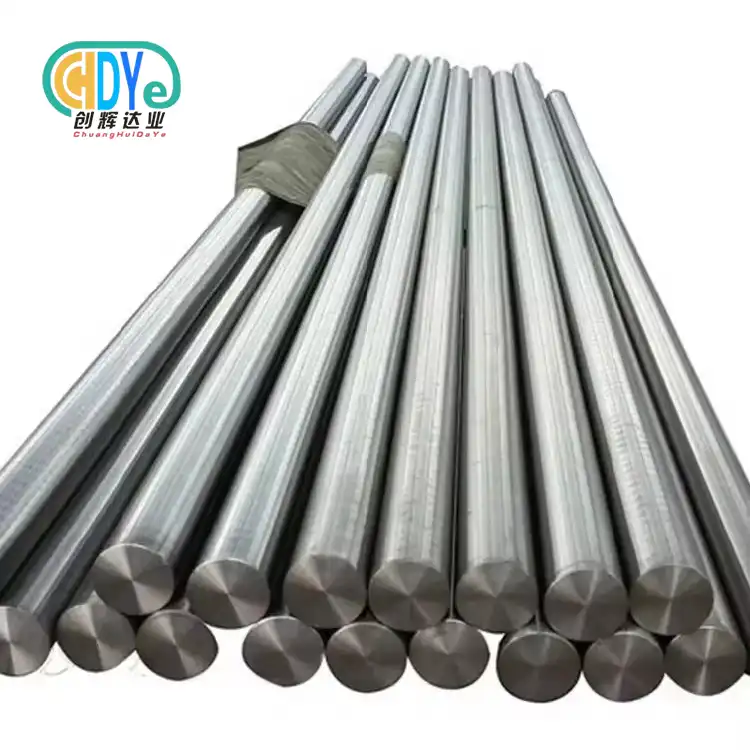
Understanding Titanium Rods and Stainless Steel Rods
Material Composition and Properties
Titanium bars are made from unadulterated titanium or forged amalgams for execution. Most visit grades are Review 2 unadulterated titanium, which is corrosion-resistant for ordinary employments, and Ti-6Al-4V (Review 5), which is stronger for aviation and restorative applications. The materials have tall strength-to-weight proportions, with ductile qualities from 345 to 950 MPa and a moo thickness of 4.51 g/cm³.
Stainless steel poles utilize 304 and 316 stainless steel compositions with chromium and nickel for erosion resistance and mechanical strength. 316 review has molybdenum for marine and chemical employments, whereas 304 review is cost-effective for commonplace mechanical applications.
Manufacturing Process Differences
Progressed generation strategies significantly influence both materials' execution. Vacuum circular segment remelting (VAR) and exactness manufacturing give homogeneous grain shapes and kill impurities in titanium bars. This office employs electron bar heaters and particular strengthening to guarantee the bar's mechanical characteristics are uniform.
Conventional softening and rolling strategies deliver high-quality stainless steel with great dimensional precision and surface wrap-up. The stainless steel fabricating framework permits quick generation and competitive cost over grades and determinations.
Quality Standards and Certifications
Both materials must meet strict worldwide benchmarks for pivotal application unwavering quality. ASTM B348, AMS 4928, and ISO 5832-2 benchmarks administer chemical composition, mechanical qualities, and dimensional limits of titanium bars. ISO 9001:2015 and AS9100 certifications guarantee manufacturing-wide quality control.
ASTM A276 and AISI measures set chemical composition and mechanical execution details for stainless steel poles. Stainless steel manufacturing develops quality forms that guarantee item accessibility and execution.
Comparing Titanium Rods vs Stainless Steel Rods for Fabrication
Mechanical Performance Analysis
The strength-to-weight proportion of titanium poles is invaluable in weight-sensitive applications. Titanium's thickness of 4.51 g/cm³, compared to stainless steel's 8.0 g/cm³, permits critical weight diminishment without influencing auxiliary judgment. This characteristic is valuable in airship applications where each gram influences fuel economy and payload.
Another imperative contrast between these materials is erosion resistance. Titanium can withstand seawater, acids, and alkalines, which would disintegrate stainless steel. Titanium surfaces self-heal from erosion due to their inborn oxide coating.
These materials contrast enormously in temperature execution. Titanium is suitable for high-temperature hardware since it stands up to warm extension and jamming mechanical qualities. Stainless steel has unsurprising warm characteristics but may require uncommon dealing with at high temperatures.
Fabrication and Processing Considerations
Each material has welding compatibility issues and potential. Titanium welding may require inert gas shielding and particular techniques to prevent contamination, increasing manufacturing complexity and cost. Proper titanium welds match or exceed base material strength.
Stainless steel welding uses standard methods and equipment, speeding production and reducing fabrication training. Established stainless steel welding techniques ensure joint quality and predictable manufacturing dates.
These materials have very different machinability. Titanium requires particular cutting tools and methods to avoid work hardening and tool wear, while stainless steel uses ordinary equipment with suitable tool selections and cutting settings.
Total Cost of Ownership Analysis
Due to raw material costs and processing constraints, titanium costs more than stainless steel. However, lifecycle analysis often shows titanium's economic benefits from decreased maintenance, extended service life, and no replacement cycles.
In corrosive conditions, titanium's endurance minimizes coating requirements and inspection frequencies, lowering operational expenses over time. Titanium's biocompatibility eliminates the requirement for surface treatments or protective coatings in medical applications.
Key Industrial Applications: Which Rod Fits Best?
Aerospace and Defense Applications
Due to their superior performance in harsh flight situations, titanium rods for sale are most popular in the aerospace industry. Titanium is essential for structural and engine parts due to its resistance to temperature extremes, ambient moisture corrosion, and cyclic loading fatigue.
Ti-6Al-4V rods are used in landing gear, engine mounts, and structural fasteners on commercial aircraft to reduce weight and enhance payload. Titanium's non-magnetic characteristics improve stealth and decrease electromagnetic fingerprints in military applications.
Medical Device Manufacturing
Titanium is favored for implants and surgical tools due to biocompatibility. Osteointegration with human bone tissue generates permanent, solid implant connections that can last decades without adverse effects.
For load-bearing applications like hip and knee replacements, Ti-6Al-4V ELI (Extra Low Interstitial) increases fatigue resistance. Grade 2 pure titanium is used for basic implants. Non-ferromagnetic characteristics allow MRIs without safety issues or image artifacts.
Chemical Processing Industry
Materials for chemical processing must withstand chemical assault and remain structurally intact under pressure and temperature extremes. Reactor vessels, heat exchangers, and piping systems require titanium's corrosion resistance in acids, bases, and organic solvents.
Resistant to stress corrosion cracking, the material lasts in chloride-containing situations where stainless steel fails quickly. This trait is useful in saltwater desalination, chlor-alkali manufacturing, and petrochemical refining.
Marine and Offshore Applications
The inherent challenges of marine settings benefit titanium's corrosion resistance. The harsh chlorides, oxygen, and biological activity of seawater quickly damage traditional materials.
When combined with other metals, titanium's galvanic corrosion resistance benefits offshore drilling equipment, submarine components, and marine propulsion systems. Anti-biofouling properties reduce maintenance and lengthen service intervals in distant marine equipment.
How to Choose the Right Rod for Your Fabrication Needs?
Performance Requirements Assessment
A complete project-specific performance study is the first step in material selection. Tensile, yield, and fatigue resistance must be assessed for load-bearing applications under projected service circumstances. Temperature, chemical exposure, and atmospheric conditions greatly affect material compatibility.
Weight matters more in modern design optimization. Titanium's strength-to-weight ratio benefits energy efficiency, transportation, and portable equipment industries, despite higher starting costs.
Environmental Exposure Evaluation
Operating environment study establishes necessary corrosion resistance for long-term reliability. Titanium's corrosion resistance benefits marine, chemical, and outdoor applications, while stainless steel can work well indoors.
Mechanical qualities, thermal expansion, and oxidation resistance affect material selection with temperature exposure ranges. Titanium resists oxidation in high-temperature conditions and is ductile in cryogenic applications.
Budget and Lifecycle Cost Analysis
Complete cost analysis includes original material costs, fabrication costs, maintenance, and replacement schedules. Titanium costs more initially, but its longer service life and lower maintenance costs yield better economic value across project lifecycles.
For ongoing production, bulk purchasing and long-term supply agreements can lower material prices. Customers who need a reliable titanium rod for sale benefit from our factory-direct pricing.
Grade Selection and Customization
Application needs and performance priorities determine the titanium grade. Pure titanium grades (1 and 2) give maximum corrosion resistance for chemical processing, while Ti-6Al-4V strengthens structures.
Custom processing optimises rod size, surface finishes, and mechanical qualities for specific applications. Our facility can accommodate fabrication needs from 6mm to 300mm in diameter and 6000mm in length.
Procurement Insights and Trusted Supplier Overview
Quality Certification and Traceability
Quality vendors give material certifications, test results, and traceability records. Our ISO 9001:2015 certification ensures quality control from raw material inspection to packaging and delivery.
Material traceability documentation meets aerospace, medical, and nuclear supply chain visibility standards. Chemical composition, mechanical qualities, and processing history are recorded for each titanium rod.
Supply Chain Reliability and Global Delivery
Suppliers need inventory management and production capacity to ensure material availability. Global customers may rely on our strategic location in China's titanium production hub for raw materials and specialized manufacturing facilities.
International shipping and logistics networks allow fast global delivery. We minimize delivery times and costs while protecting material integrity during travel with our packing and handling.
Technical Support and Customization Services
Customers receive extensive technical support for material selection and application design. Our engineering team provides material property data, fabrication guidelines, and application-specific advice based on decades of industry experience.
Customers receive finished components ready for installation after precision machining, surface treatments, and specialist testing. This lowers customer processing and speeds project completion.
Competitive Pricing and Value Proposition
Premium quality and no distributor markups are achieved with factory-direct pricing. Our smart raw material procurement and efficient manufacturing procedures save customers money without compromising quality.
Customers with continuing needs save money with volume pricing and long-term supply agreements. Bulk purchasing reduces costs for large projects or annual consumption agreements.
Shaanxi Chuanghui Daye Metal Material Co., Ltd. offers titanium rods at great value through modern manufacturing and customer service. Our extensive product line, customization options, and global delivery network serve customers in many sectors and applications.
Conclusion
The decision between titanium and stainless steel rods depends on application, environment, and lifespan cost. Titanium rods for sale are best for corrosion resistance, high strength-to-weight ratios, and biocompatibility, whereas stainless steel is cost-effective for general manufacturing.
Titanium's unique qualities improve performance and service life in aircraft, medical devices, chemical processing, and marine applications, justifying the premium cost. Our extensive knowledge of material attributes and application requirements optimizes material selection for different production demands.
FAQ
Q: What are the main advantages of titanium rods over stainless steel?
A: Titanium rods offer superior corrosion resistance, exceptional strength-to-weight ratios, and biocompatibility that stainless steel cannot match. The corrosion resistance enables long-term performance in aggressive environments, including seawater, acids, and industrial chemicals. The low density provides significant weight savings while maintaining structural integrity, particularly valuable in aerospace and portable equipment applications.
Q: How does welding titanium rods compare to welding stainless steel?
A: Titanium welding requires inert gas protection and specialized procedures to prevent contamination from atmospheric gases. While this increases complexity compared to stainless steel welding, properly executed titanium welds achieve strength levels equal to base material properties. Stainless steel welding utilizes conventional techniques with standard equipment, enabling faster fabrication cycles.
Q: Which material performs better in marine environments?
A: Titanium demonstrates superior performance in marine environments due to its exceptional resistance to seawater corrosion. The natural oxide layer provides self-healing protection against chloride attack, while stainless steel may experience pitting and crevice corrosion in marine conditions. Titanium's immunity to galvanic corrosion, when coupled with other metals, provides additional advantages in marine applications.
Contact Chuanghui Daye for Premium Titanium Rod Solutions
Shaanxi Chuanghui Daye stands ready to support your fabrication projects with premium titanium rods that deliver exceptional performance and reliability. Our experienced engineering team provides comprehensive technical consultation to help identify the optimal material specifications for your unique application requirements. With competitive factory-direct pricing and global delivery capabilities, we serve as your trusted titanium rod for sale supplier for both prototype development and large-scale production needs. Contact our technical sales team at info@chdymetal.com to discuss your specific requirements and receive personalized quotations for custom processing services and bulk orders.
References
1. Boyer, R., Welsch, G., & Collings, E.W. "Materials Properties Handbook: Titanium Alloys." ASM International Materials Park, 2019.
2. Davis, J.R. "Stainless Steels: Properties and Selection." ASM International Handbook Committee, 2018.
3. Lutjering, G. & Williams, J.C. "Titanium: Engineering Materials and Processes." Springer-Verlag Berlin Heidelberg, 2020.
4. Sedriks, A.J. "Corrosion of Stainless Steels in Marine Environments." Materials Performance and Characterization, 2021.
5. Peters, M. & Leyens, C. "Titanium and Titanium Alloys: Fundamentals and Applications." Wiley-VCH Verlag, 2019.
6. Peckner, D. & Bernstein, I.M. "Handbook of Stainless Steels: Applications and Properties." McGraw-Hill Professional Engineering, 2020.
Learn about our latest products and discounts through SMS or email