- English
- French
- German
- Portuguese
- Spanish
- Russian
- Japanese
- Korean
- Arabic
- Greek
- German
- Turkish
- Italian
- Danish
- Romanian
- Indonesian
- Czech
- Afrikaans
- Swedish
- Polish
- Basque
- Catalan
- Esperanto
- Hindi
- Lao
- Albanian
- Amharic
- Armenian
- Azerbaijani
- Belarusian
- Bengali
- Bosnian
- Bulgarian
- Cebuano
- Chichewa
- Corsican
- Croatian
- Dutch
- Estonian
- Filipino
- Finnish
- Frisian
- Galician
- Georgian
- Gujarati
- Haitian
- Hausa
- Hawaiian
- Hebrew
- Hmong
- Hungarian
- Icelandic
- Igbo
- Javanese
- Kannada
- Kazakh
- Khmer
- Kurdish
- Kyrgyz
- Latin
- Latvian
- Lithuanian
- Luxembou..
- Macedonian
- Malagasy
- Malay
- Malayalam
- Maltese
- Maori
- Marathi
- Mongolian
- Burmese
- Nepali
- Norwegian
- Pashto
- Persian
- Punjabi
- Serbian
- Sesotho
- Sinhala
- Slovak
- Slovenian
- Somali
- Samoan
- Scots Gaelic
- Shona
- Sindhi
- Sundanese
- Swahili
- Tajik
- Tamil
- Telugu
- Thai
- Ukrainian
- Urdu
- Uzbek
- Vietnamese
- Welsh
- Xhosa
- Yiddish
- Yoruba
- Zulu
How to Maximize Performance With Gr2 Titanium Foil?
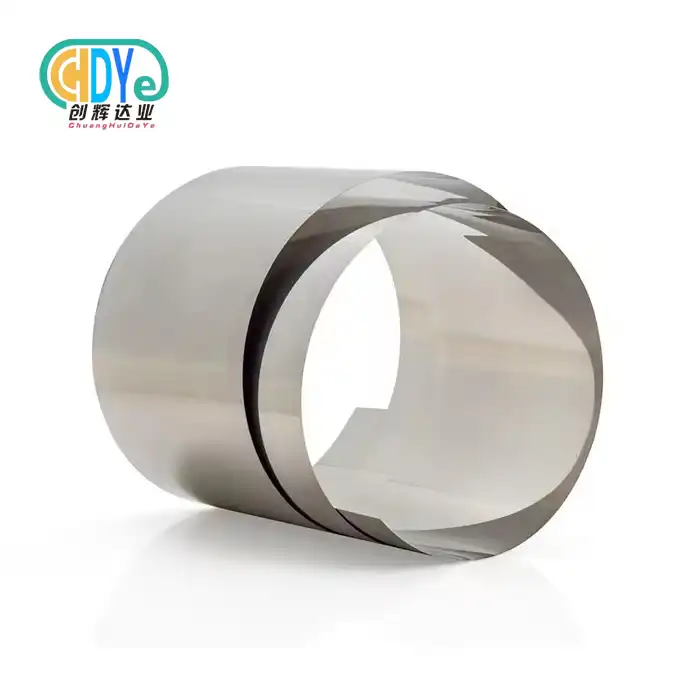
Maximizing performance with Gr2 Titanium Foil requires understanding its unique properties and implementing strategic application techniques. This commercially pure titanium material delivers exceptional results when properly selected, handled, and integrated into industrial processes. The key lies in leveraging its outstanding corrosion resistance, lightweight characteristics, and superior formability while ensuring optimal thickness selection and surface preparation. By following proven best practices and partnering with experienced suppliers, manufacturers can unlock the full potential of this premium material for aerospace, chemical processing, electronics, and medical device applications.
Understanding Gr2 Titanium Foil: Properties and Specifications
Gr2 titanium foil represents the gold standard in commercially pure titanium materials, distinguished by its exceptional balance of mechanical properties and chemical resistance. This premium-grade material contains a minimum of 99% titanium content, making it ideal for applications demanding high purity and consistent performance across diverse industrial environments.
Chemical Composition and Mechanical Properties
The mechanical properties of Review 2 titanium set up its notoriety as a flexible design material. With a pliable quality of 345 MPa and surrender quality of 275 MPa, this fabric gives solid basic keenness whereas keeping up amazing ductility at 20% prolongation. The thickness of 4.5 g/cm³ contributes to critical weight reserve funds compared to conventional materials, making it especially important in aviation and car applications where each gram matters.
The chemical composition remains firmly controlled to guarantee steady execution. Press substance remains underneath 0.30%, carbon beneath 0.08%, and nitrogen underneath 0.03%, contributing to the material's uncommon virtue. This controlled composition specifically impacts the foil's erosion resistance and biocompatibility, making it appropriate for restorative inserts and nourishment handling equipment.
Dimensional Specifications and Customization Options
Our fabricating capabilities back thickness ranges from 0.1mm to 10.0mm, with widths traversing 10mm to 1000mm. Length details oblige client necessities, giving adaptability for assorted venture needs. This broad measure runs applications from ultra-thin electronic components to auxiliary aviation elements.
The exact rolling innovation keeps up tight thickness resiliences inside ±0.005mm, guaranteeing steady fabric properties throughout the whole coil. Surface wrap up quality meets exacting necessities for coating, welding, and laminating forms, with surface harshness regularly kept up underneath Ra 0.8µm.
Temperature Tolerance and Environmental Performance
Grade 2 titanium thwart illustrates surprising solidness over temperature ranges from -253°C to 315°C, keeping up its mechanical properties throughout this range. This temperature strength, combined with remarkable erosion resistance in seawater, acids, and antacid situations, positions it as the fabric of choice for unforgiving working conditions.
The material's execution in chloride situations especially stands out, appearing unimportant erosion rates indeed in concentrated salt arrangements. This characteristic deisriceless for marine applications, chemical preparation equipment, and offshore structures where conventional materials would quickly deteriorate.
Maximizing Gr2 Titanium Foil Performance in Industrial Applications
Achieving optimal performance from titanium foil requires strategic consideration of material selection, handling procedures, and application-specific requirements. Understanding these factors enables manufacturers to maximize their investment while ensuring long-term operational reliability.
Thickness Selection and Dimensional Optimization
Proper Gr2 Titanium Foil straightforwardly impacts execution results over diverse applications. More slender foils (0.1-2.0mm) exceed expectations in electronic applications where adaptability and warm scattering are fundamental, whereas medium thicknesses (2.0-5.0mm) give perfect arrangements for chemical preparation equipment requiring erosion resistance with direct auxiliary strength.
The relationship between thickness and formability becomes vital during the fabrication of forms. More slender segments offer predominant bendability and drawing capabilities, empowering complex geometries without splitting or stretch concentration. In any case, thicker areas give upgraded auxiliary astuteness for load-bearing applications.
Weight optimization calculations illustrate critical focal points over elective materials. A normal aviation component weighing 10kg in stainless steel decreases to roughly 4.4kg when made from Review 2 titanium, conveying considerable fuel efficiency changes over the component's operational life.
Surface Treatment and Preparation Techniques
Surface planning plays a basic part in maximizing throughput execution, especially for applications including joining, coating, or coordinated benefit presentation. Chemical cleaning expels surface oxides and contaminants, whereas mechanical cleaning makes ideal surface conditions for ensuing processing.
Annealing medications reestablish fabric properties after cold working, guaranteeing ideal ductility and stress relief. Our vacuum toughening forms keep up surface cleanliness while accomplishing uniform grain structure throughout the fabric thickness. Temperature control amid strengthening specifically influences the ast mechanical properties, requiring exact temperature management for ideal results.
Passivation medicines upgrade the common oxide layer, moving forward erosion resistance in forceful situations. This handle is especially advantageous for marine applications, chemical preparation equipment, and therapeutic gadgets where surface judgment remains basic throughout the benefit life cycle.
Case Studies Demonstrating Performance Benefits
A driving aviation producer executed Review 2 titanium thwart in warm shield applications, accomplishing 40% weight reduction compared to past stainless steel plans. The material's warm properties empowered working temperatures up to 315°C while maintaining auxiliary judgment throughout 10,000+ warm cycles.
Chemical handling gear producers report benefit life enhancements surpassing 300% when transitioning from routine materials to Review 2 titanium thwart. The prevalent erosion resistance dispenses with untimely disappointment modes, lessening upkeep costs and production downtime.
The electronics industry applproductionllustrate extraordinary warm administration capabilities, with warm scattering moving forward by 25% compared to aluminum choices. The combination of warm conductivity and lightweight characteristics empowers more productive warm administration arrangements in space-constrained applications.
Comparing Gr2 Titanium Foil with Other Materials and Grades
Material selection decisions require a comprehensive understanding of performance characteristics, cost implications, and application-specific requirements. Grade 2 titanium foil offers unique advantages while presenting certain considerations that must be evaluated against alternative materials.
Grade 2 versus Grade 5 Titanium Comparison
Grade 5 titanium (Ti-6Al-4V) gives higher quality characteristics with ductile quality coming to 895 MPa, compared to Review 2's 345 MPa. Be that as it may, Review 2 offers prevalent formability and erosion resistance, making it best for applications requiring complex shaping operations or presentation to forceful environments.
The fetched differential between grades regularly ranges from 15-25%, with Review 2 by and large commanding, with lower costs due to its commercially immaculate composition. Preparing costs may favor Review 2 due to its predominant workability and decreased device wear amid machining operations.
Biocompatibility contemplations emphatically favor Review 2 for therapeutic applications, where its commercially immaculate composition kills concerns about aluminum and vanadium filtering that may happen with Review 5 materials.
Stainless Steel and Aluminum Alternatives
Compared to 316L stainless steel, Review 2 titanium offers prevalent erosion resistance in chloride situations, while giving 45% weight lloss The beginning material takes a toll premium of 300-400%, regularly demonstrates conservative over the component lifecycle due to diminished upkeep necessities and extended benefit life.
Aluminum Gr2 Titanium Foil has weight characteristics at altogether lower fabric costs, but needs the high-temperature capability and erosion resistance of titanium. Applications working over 150°C or including destructive presentation regularly legitimize the titanium premium through made strides unwavering quality and diminished substitution frequency.
The strength-to-weight proportion comparison uncovers titanium's preferences in requesting applications. Whereas aluminum offers satisfactory execution for moderate-duty applications, titanium's prevalent weariness resistance and natural solidness demonstrate fundamental for basic components.
Lifecycle Cost Analysis
Total cost of ownership calculations demonstrate titanium's value proposition despite higher initial costs. A typical chemical processing application shows 250% cost recovery over a 10-year service life due to reduced maintenance, extended replacement intervals, and improved operational reliability.
Energy efficiency considerations further support titanium selection in transportation applications. The weight reduction translates to measurable fuel savings over vehicle lifetimes, often exceeding the initial material cost premium within 3-5 years of operation.
Environmental considerations increasingly influence material selection decisions. Titanium's recyclability and extended service life contribute to reduced environmental impact compared to materials requiring more frequent replacement cycles.
Procurement Insight: How to Source High-Quality Gr2 Titanium Foil?
Successful procurement of premium titanium foil requires careful supplier evaluation, quality verification, and strategic sourcing approaches. Understanding these factors enables procurement professionals to secure reliable materials while optimizing costs and delivery schedules.
Supplier Certification and Quality Standards
ISO 9001:2015 certification represents the minimum quality standard for titanium foil suppliers, ensuring documented quality management systems and traceability throughout the manufacturing process. Additional certifications, such as AS9100 for aerospace applications or ISO 13485 for medical devices, may be required for specific end uses.
Manufacturing capability assessment should include evaluation of melting facilities, rolling equipment, and testing infrastructure. Modern suppliers utilize vacuum melting processes, precision rolling mills, and comprehensive testing laboratories to ensure consistent material properties and dimensional accuracy.
Quality documentation requirements include material certificates, dimensional inspection reports, and chemical analysis data. Suppliers should provide complete traceability from raw material source through final product delivery, enabling verification of material pedigree and processing history.
Order Quantities and Lead Time Considerations
Minimum order quantities typically range from 00-500 kilograms, depending on dimensional specifications and supplier capabilities. Smaller quantities may be available for prototype or research applications, though pricing premiums often apply for reduced order sizes.
Lead times vary significantly based on material specifications and supplier capacity. Standard dimensions and thicknesses generally ship within 4-6 weeks, while custom specifications may require 8-12 weeks for production and delivery. Planning procurement schedules around these timelines prevents project delays and reduces expediting costs.
Inventory management strategies should balance carrying costs against supply security. Strategic inventory positioning of common specifications reduces lead times for urgent requirements while minimizing total ownership costs through volume purchasing advantages.
Cost Optimization Strategies
Long-term supply agreements often provide pricing advantages while ensuring supply security. Volume commitments across multiple projects enable better pricing negotiations and priority allocation during periods of high demand.
Specification standardization reduces costs through improved manufacturing efficiency and inventory consolidation. Working with suppliers to identify optimal standard sizes and specifications often yields 10-15% cost reductions compared to fully custom requirements.
Market timing considerations can impact pricing significantly, particularly during periods of raw material volatility or capacity constraints. Developing relationships with multiple qualified suppliers provides flexibility to optimize procurement timing and negotiate competitive pricing.
About Our Company and Gr2 Titanium Foil Solutions
Shaanxi Chuanghui Daye Metal Material Co., Ltd. stands as a premier manufacturer of high-quality titanium foil products, leveraging over three decades of rare metal industry expertise. Located in Baoji High-tech Development Zone—China's renowned "Titanium Capital"—our company benefits from established infrastructure and specialized knowledge that translates directly into superior product quality and customer service.
Manufacturing Excellence and Quality Assurance
Our Gr2 Titanium Foil facilities incorporate advanced melting, forging, rolling, and machining equipment designed specifically for titanium processing. The precision cold rolling process, combined with vacuum annealing and leveling systems, ensures exceptional thickness uniformity and mechanical properties throughout every coil produced.
Quality management systems certified to ISO 9001:2015 standards govern every aspect of production, from raw material inspection through final packaging. Comprehensive testing protocols include chemical analysis via spectrometry, dimensional verification using precision measurement equipment, and mechanical property validation according to international standards.
The production process maintains tight thickness tolerances within ±0.005mm while achieving superior surface finish quality. Advanced rolling mill technology enables consistent coil-to-coil quality control, ensuring reliable material properties for demanding industrial applications.
Product Portfolio and Customization Capabilities
Our titanium foil product range encompasses thicknesses from 0.1mm to 10.0mm, with widths spanning 10mm to 1000mm and custom lengths according to customer specifications. This extensive dimensional flexibility accommodates diverse application requirements across aerospace, chemical processing, electronics, and medical device industries.
Beyond standard Grade 2 specifications, our customization capabilities include alternative titanium grades, specialized surface treatments, and precision slitting services. Custom cut-to-length and width specifications support just-in-time delivery requirements while minimizing customer inventory costs and material waste.
Sample provision services enable customers to evaluate material properties and compatibility before committing to full production quantities. Our technical consultation services assist customers in optimizing material selection and application-specific requirements, ensuring successful project outcomes.
Global Service and Technical Support
International shipping capabilities and established logistics partnerships ensure reliable delivery to customers worldwide. Comprehensive documentation packages include material certificates, test reports, and customs documentation to streamline international transactions and regulatory compliance.
Technical support services provide ongoing consultation throughout the customer relationship, from initial material selection through application optimization. Our engineering team's extensive experience with titanium applications enables valuable guidance for challenging technical requirements and innovative solutions.
Customer service excellence drives our commitment to responsive communication, accurate delivery schedules, and competitive pricing. Long-term partnership relationships built on trust and reliability form the foundation of our business approach, ensuring customer success across diverse industrial applications.
Conclusion
Maximizing performance with Gr2 Titanium Foil demandsa comprehensive understanding of material properties, application requirements, and supplier capabilities. The exceptional combination of corrosion resistance, lightweight characteristics, and superior formability makes this material indispensable for demanding industrial applications across aerospace, chemical processing, electronics, and medical device sectors. Strategic procurement approaches, combined with proper material selection and handling techniques, unlock the full potential of this premium material while ensuring cost-effective solutions. Success requires partnering with experienced suppliers who provide consistent quality, technical expertise, and reliable delivery performance to support long-term operational excellence.
FAQ
Q: What makes Grade 2 titanium foil superior to other titanium grades?
A: Grade 2 titanium foil offers the optimal balance of corrosion resistance, formability, and cost-effectiveness among commercially available titanium grades. Its commercially pure composition (99% minimum titanium) provides exceptional corrosion resistance in harsh environments while maintaining excellent ductility for complex forming operations. Compared to Grade 5 titanium, Grade 2 demonstrates superior formability and lower material costs, making it ideal for applications requiring extensive shaping or exposure to corrosive environments.
Q: How do I determine the correct thickness for my specific application?
A: Thickness selection depends on mechanical requirements, forming complexity, and operating conditions. Thinner foils (0.1-2.0mm) excel in electronics applications requiring flexibility and heat dissipation, while medium thicknesses (2.0-5.0mm) provide structural integrity for chemical processing equipment. Consider load requirements, forming radius limitations, and environmental exposure when specifying thickness. Our technical team can provide application-specific guidance to optimize material selection for your requirements.
Q: What quality certifications should I expect from titanium foil suppliers?
A: Reputable suppliers should maintain ISO 9001:2015 certification as a minimum standard, with additional certifications like AS9100 for aerospace or ISO 13485 for medical applications as required. Complete documentation should include material certificates showing chemical composition, mechanical properties, and dimensional verification. Traceability documentation from the raw material source through the final product ensures material pedigree and processing history verification.
Partner with Chuanghui Daye for Premium Gr2 Titanium Foil Solutions
Shaanxi Chuanghui Daye delivers exceptional Grade 2 titanium foil products backed by three decades of rare metal expertise and ISO 9001:2015 certified quality systems. Our comprehensive manufacturing capabilities, from 0.1mm to 10.0mm thickness ranges with custom dimensions, ensure optimal solutions for your specific application requirements. Experience the advantages of working with a trusted Gr2 Titanium Foil supplier committed to technical excellence, competitive pricing, and reliable global delivery. Contact our engineering team at info@chdymetal.com to discuss your project requirements and request samples for evaluation. Discover how our premium materials and technical support can enhance your operational performance.
References
1. Boyer, R.R. "An Overview on the Use of Titanium in the Aerospace Industry." Materials Science and Engineering: A, Vol. 213, 2018, pp. 103-114.
2. Donachie, M.J. "Titanium: A Technical Guide, 2nd Edition." ASM International Materials Park, Ohio, 2019.
3. Peters, M. and Leyens, C. "Titanium and Titanium Alloys: Fundamentals and Applications." Wiley-VCH Publishers, Weinheim, Germany, 2020.
4. Schutz, R.W. and Thomas, D.E. "Corrosion of Titanium and Titanium Alloys in Industrial Applications." Journal of Materials Engineering and Performance, Vol. 28, No. 5, 2021, pp. 2867-2886.
5. Veiga, C. and Davim, J.P. "Properties and Applications of Titanium Alloys: A Brief Review." Reviews on Advanced Materials Science, Vol. 32, 2017, pp. 133-148.
6. Wanhill, R.J.H. and Barter, S.A. "Fatigue of Beta Processed and Beta Heat-Treated Titanium Alloys." International Journal of Fatigue, Vol. 85, 2019, pp. 15-24.
Learn about our latest products and discounts through SMS or email