- English
- French
- German
- Portuguese
- Spanish
- Russian
- Japanese
- Korean
- Arabic
- Greek
- German
- Turkish
- Italian
- Danish
- Romanian
- Indonesian
- Czech
- Afrikaans
- Swedish
- Polish
- Basque
- Catalan
- Esperanto
- Hindi
- Lao
- Albanian
- Amharic
- Armenian
- Azerbaijani
- Belarusian
- Bengali
- Bosnian
- Bulgarian
- Cebuano
- Chichewa
- Corsican
- Croatian
- Dutch
- Estonian
- Filipino
- Finnish
- Frisian
- Galician
- Georgian
- Gujarati
- Haitian
- Hausa
- Hawaiian
- Hebrew
- Hmong
- Hungarian
- Icelandic
- Igbo
- Javanese
- Kannada
- Kazakh
- Khmer
- Kurdish
- Kyrgyz
- Latin
- Latvian
- Lithuanian
- Luxembou..
- Macedonian
- Malagasy
- Malay
- Malayalam
- Maltese
- Maori
- Marathi
- Mongolian
- Burmese
- Nepali
- Norwegian
- Pashto
- Persian
- Punjabi
- Serbian
- Sesotho
- Sinhala
- Slovak
- Slovenian
- Somali
- Samoan
- Scots Gaelic
- Shona
- Sindhi
- Sundanese
- Swahili
- Tajik
- Tamil
- Telugu
- Thai
- Ukrainian
- Urdu
- Uzbek
- Vietnamese
- Welsh
- Xhosa
- Yiddish
- Yoruba
- Zulu
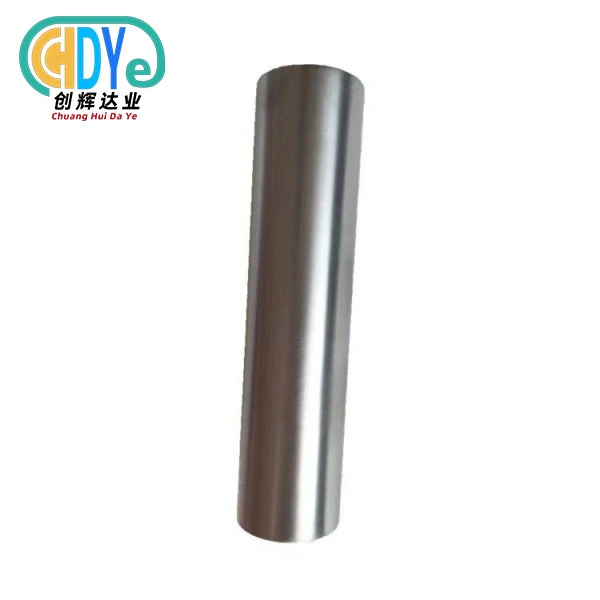
Best High Purity Niobium Bar Rod for Superconducting Parts
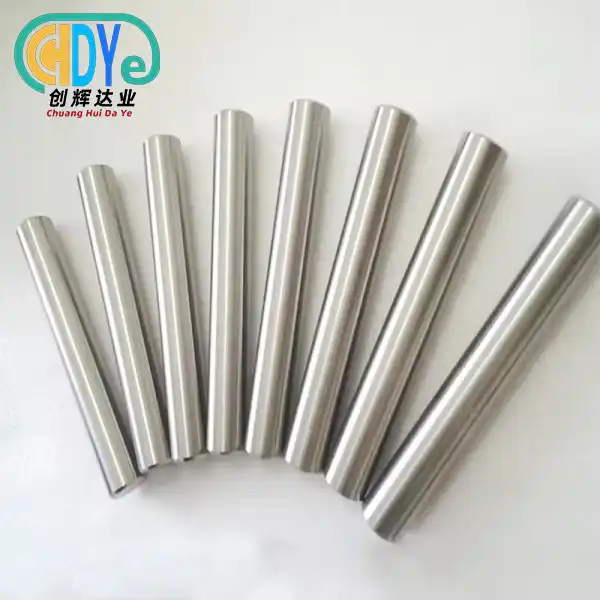
The high purity niobium bar rod is always at the top when engineers and procurement managers are looking for the most dependable material for superconducting components. High purity 99.99% and Residual Resistivity Ratios (RRR) more than 300, these precision rods provide the thermal stability and lattice integrity required for superconducting applications. These are available in grades R04200 and R04210, are ASTM B 392-95 compliant and are used in areas including particle accelerator research, aerospace and medical device manufacture.
Understanding High Purity Niobium Bar Rods and Their Role in Superconducting Parts
What Makes Niobium "High Purity" in an Industrial Context
Of all elemental superconductors, niobium has the highest critical temperature, at 9.25 K. But for manufactured components, getting to that level reliably rests solely on material integrity. The quality of a high purity niobium rod is not simply determined by its chemical composition but also by its RRR value, which is normally over 300 and indicates the low level of interstitial contamination by oxygen, nitrogen, hydrogen and carbon. Trace contaminants at the parts-per-billion level may cause thermal instability in superconducting radio frequency, or SRF, cavities—the components used in particle accelerators at places like Fermilab and CERN.
Key Physical and Mechanical Properties
Niobium has a body-centered cubic (BCC) crystal structure and a density of 8.57 g/cm3. With a melting point of 2,477°C, niobium is firmly in the category of refractory metals. Its low work-hardening rate and inherent ductility make it very workable without the need for many annealing cycles. High purity niobium bar rod products offer excellent material consistency for applications that require strict chemical composition control. It is resistant to nitric, hydrochloric and sulfuric acids but attacked by hydrofluoric acid. Such qualities in aerospace applications translate into dependable performance in heat shields and structural components subject to high thermal cycling. The physiological inertness of niobium makes it a good option for MRI components and implanted parts in medical devices.
Comparing High Purity Niobium Bar Rods with Alternative Materials and Forms
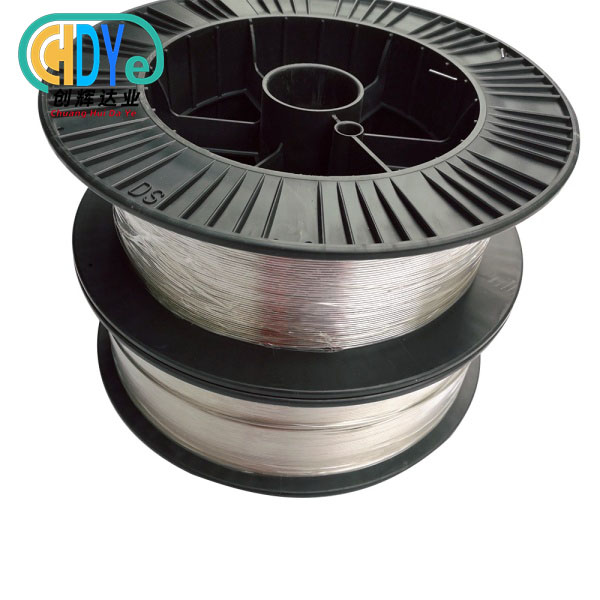
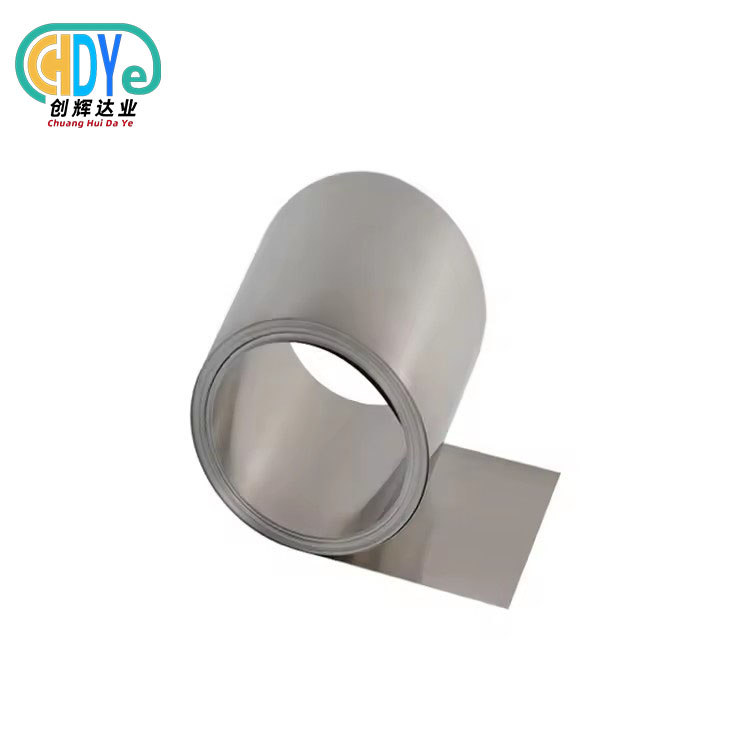
The choice of the proper forms of material is as important as the choice of the right element. Niobium wires are used in filament-level applications in superconducting magnets and sheets are used for flat panel sputtering targets in semiconductor production. Bar rods, however, provide a vital structural advantage: they provide the feedstock geometry required for machining SRF cavities, crucibles, and complicated structural components with dimensional accuracy. Lower-purity commercial grades (~99.9%) are adequate for reactor structural elements, although they have larger surface resistance losses in cryogenic superconducting settings than 99.99% RRR-grade material.Corrosion-resistant materials are often used as an alternative to titanium and stainless steel, however none of them are superconducting at realistic circumstances. Titanium is excellent for biomedical and aerospace construction applications whereas stainless steel is economical for ordinary chemical equipment. Tantalum is a competitor to niobium for corrosion resistance and has some similar cryogenic qualities, but its greater density and expense make it less suitable for large volume superconducting components. The bar rod of niobium has a distinct advantage in situations where both cryogenic performance and machinability are non-negotiable.
Procurement Considerations for High Purity Niobium Bar Rods
Certifications and Quality Documentation
Accountability starts with credentials that can be verified. Buyers are advised to verify that suppliers are certified to ISO 9001:2015, which means they maintain a systematic control over every step of manufacturing, including raw material inspection, vacuum melting, cold working, heat treatment and final testing. For aerospace, nuclear and medical applications, you must have full traceability paperwork, including mill test reports and chemical analysis certifications for high purity niobium bar rod. Each manufacturing batch should have traceable lot numbers for downstream quality checks.
Pricing, Lead Times, and Custom Capabilities
The price of top quality niobium bar stock depends on the raw material and production difficulty. Processes that can get to RRRs of more than 300, vacuum arc remelting (VAR) and electron beam melting (EBM) add considerable expense, but are required for superconducting-grade production. Typical lead times for catalog sizes are two to four weeks. Longer lead times may be required for bespoke dimensions, unique grain size requirements (ASTM grain size No. 5 or finer) or adapted alloy compositions . Buyers sourcing for research institutes or prototype projects need to provide their time limitations as soon as possible to enable for optimal scheduling.Partnering with a provider that can do OEM and produce small batch sizes decreases the friction of iterative development cycles. This is especially true for colleges and R&D teams who are investigating novel cavity geometries or thin film deposition configurations.
Why Choose High Purity Niobium Bar Rod for Your Superconducting Parts?
The justification for niobium at the 99.99 percent pure level is based on measured performance. In SRF cavity applications, a greater RRR corresponds directly to lower surface resistance and better quality factor (Q₀) implying that the accelerating cavity stores more energy every cycle. Experiments at Jefferson Lab and other accelerator sites demonstrate that cavities machined from RRR > 300 niobium routinely outperform those machined from commercial grade stock in sustained operating efficiency.Here are the key performance benefits that have made this material the favored option in challenging industries:
- SRF Cavity Fabrication: The high RRR value reduces energy dissipation at liquid helium temperatures (2 K–4 K), directly enhancing accelerator efficiency. This property is crucial for facilities using continuous-wave accelerators to achieve steady output without thermal quenching occurrences.
- Sputtering Target Uses: Bars machined into rotary or planar sputtering targets provide defect-free thin coatings for optical waveguides and microelectronic capacitors, where ppb-level impurities may cause signal loss or short circuits in final devices.
- Aerospace and High-Temperature Applications: In jet turbine blades, niobium increases creep resistance when included into nickel-based superalloys. It is stable at temperatures close to the melting point, and is thus a critical component in heat shield and combustion-adjacent structural components .
- Biocompatible Medical Components: The physiological inertness of niobium is a plus for safe use in pacemaker housings and MRI compatible implants where long-term contact with human fluids necessitates total chemical stability.
These combined benefits make high purity niobium bar rod a material that answers genuine engineering challenges and not simply a premium standard on paper. The demand for RRR-grade niobium is anticipated to increase significantly throughout the latter half of this decade with the growth of quantum computing and next-generation particle physics projects.
How to Make an Informed Decision When Selecting Niobium Bar Rods
Avoid expensive procurement mistakes by matching material specs to application needs. Procurement teams should establish their intended RRR range, allowable impurity levels for critical interstitials, needed grain size uniformity and dimensional tolerances before submitting a purchase order. These characteristics decide if a commercial-grade product is enough or whether RRR-grade material produced by EBM or VAR is essential.Supplier reputation is equally important. Ask if the company does its own melting and forming, or whether it uses subcontracted manufacturing chains that increase unpredictability. Ask for material certifications of the samples and check against ASTM B 392-95 standards for R04200 and R04210 grades. Post-sale assistance, such as attention to technical questions, readiness to offer retest certifications, and flexibility on re-order changes, is a reflection of a supplier’s long-term dependability rather than transactional price alone.
Conclusion
High purity niobium bar rods are indispensable in the materials stack for superconducting components, sophisticated semiconductors, and high integrity aerospace constructions. A product where accuracy is built in, not inspected in. Specially processed with 99.99% purity, RRR above 300, ASTM B 392-95 conformity and ISO 9001:2015 production discipline. Procurement teams that pick suppliers based on verified quality certifications, in-house processing capabilities and rapid technical assistance will discover that their production results are more predictable and their supply chains more robust.
FAQ
Q: What purity level qualifies as "high purity" for superconducting applications?
A: For superconducting uses, high purity niobium is defined by a niobium content of 99.99% or greater and an RRR value exceeding 300. Commercial reactor-grade niobium at 99.9% does not meet cryogenic performance thresholds for SRF cavity applications.
Q: How does niobium compare to tantalum in superconducting performance?
A: Niobium has a critical temperature of 9.25 K compared to tantalum's 4.47 K, making niobium significantly more practical for superconducting applications. Tantalum offers comparable corrosion resistance but higher density and cost.
Q: What are typical lead times for custom niobium bar orders?
A: Standard catalog sizes ship within two to four weeks. Custom dimensions or special grain size specifications require four to eight weeks depending on production scheduling and order volume.
Q: How are high purity niobium bars packaged for shipment?
A: Bars are chemically cleaned, vacuum-packed in double-layer polyethylene bags, and shipped in reinforced wooden crates to prevent surface oxidation and physical damage during transit.
Partner with Chuanghui Daye — Your Trusted High Purity Niobium Bar Rod Manufacturer
Shaanxi Chuanghui Daye, headquartered in Baoji — China's recognized Titanium Capital — brings over 30 years of rare metal manufacturing expertise to every order. Our high purity niobium bar rod for sale meets ASTM B 392-95 standards in grades R04200 and R04210, backed by ISO 9001:2015 certification and full traceability documentation. Whether you need prototype quantities or production-scale supply, reach out to our technical team at info@chdymetal.com or visit www.chdymetal.com to request a quote today.
References
1. Padamsee, H., Knobloch, J., & Hays, T. RF Superconductivity for Accelerators. Wiley-VCH, 2008.
2. ASTM International. Standard Specification for Niobium and Niobium Alloy Bar, Rod, and Wire — ASTM B392. ASTM International, 2019.
3. Myneni, G. R. "Niobium for Superconducting RF Applications." AIP Conference Proceedings, 2006.
4. Halbritter, J. "On the Oxidation and on the Superconductivity of Niobium." Applied Physics A, 1987.
5. Schulze, K., & Müller, G. Refractory Metals and Their Industrial Applications. ASTM Special Technical Publication, 1984.
6. Hillenbrand, B., & Martens, H. "Production and Properties of High Purity Niobium for Superconducting Applications." Journal of the Less-Common Metals, 1975.
Learn about our latest products and discounts through SMS or email