- English
- French
- German
- Portuguese
- Spanish
- Russian
- Japanese
- Korean
- Arabic
- Greek
- German
- Turkish
- Italian
- Danish
- Romanian
- Indonesian
- Czech
- Afrikaans
- Swedish
- Polish
- Basque
- Catalan
- Esperanto
- Hindi
- Lao
- Albanian
- Amharic
- Armenian
- Azerbaijani
- Belarusian
- Bengali
- Bosnian
- Bulgarian
- Cebuano
- Chichewa
- Corsican
- Croatian
- Dutch
- Estonian
- Filipino
- Finnish
- Frisian
- Galician
- Georgian
- Gujarati
- Haitian
- Hausa
- Hawaiian
- Hebrew
- Hmong
- Hungarian
- Icelandic
- Igbo
- Javanese
- Kannada
- Kazakh
- Khmer
- Kurdish
- Kyrgyz
- Latin
- Latvian
- Lithuanian
- Luxembou..
- Macedonian
- Malagasy
- Malay
- Malayalam
- Maltese
- Maori
- Marathi
- Mongolian
- Burmese
- Nepali
- Norwegian
- Pashto
- Persian
- Punjabi
- Serbian
- Sesotho
- Sinhala
- Slovak
- Slovenian
- Somali
- Samoan
- Scots Gaelic
- Shona
- Sindhi
- Sundanese
- Swahili
- Tajik
- Tamil
- Telugu
- Thai
- Ukrainian
- Urdu
- Uzbek
- Vietnamese
- Welsh
- Xhosa
- Yiddish
- Yoruba
- Zulu
Best Pure Tantalum Tubes for High-Temperature Systems
For engineers and procurement managers seeking durable tubing in harsh settings, pure tantalum tubes are often the preferred answer. These precisely crafted components are fabricated from high-purity tantalum alloys that provide excellent corrosion resistance, impressive thermal stability, and extended service life in situations where failure is not an option.
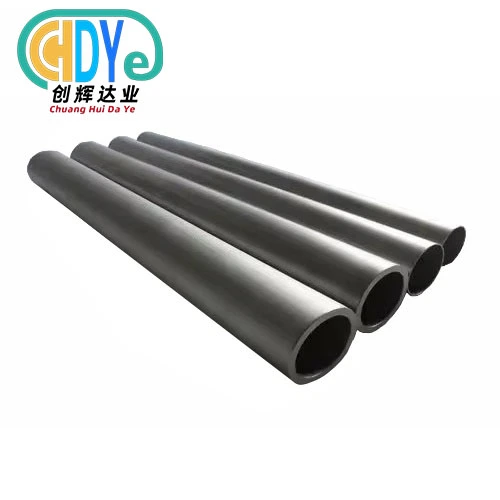
Performance Comparison: Pure Tantalum Tubes vs Alternative Materials
When choosing a material, procurement specialists will often compare tantalum to stainless steel, titanium, and glass. The benefit profiles of the various comparisons are different.
Tantalum tubing is much superior to stainless steel in chemically hostile settings. In hydrochloric and sulfuric acid environments of moderate concentrations, stainless steel corrodes, whereas tantalum keeps its structural integrity. This difference results in longer replacement intervals and cheaper lifetime maintenance costs, despite the greater initial material cost of tantalum.
Tantalum is superior to titanium in very acidic environments, especially those involving sulfuric or hydrochloric acid, and in applications requiring resistance above titanium’s practical upper temperature limit. Titanium is good in many corrosive situations but not as generally chemically inert as tantalum.
Tantalum is also mechanically robust; it cannot be compared with glass or ceramic tubes. The dynamics of mechanical load in industrial reactors and heat exchangers make sealed tantalum tubes the best option, as they are resistant to temperature cycling, vibration, and pressure changes without fracture risk.
Another corrosion-resistant material possibility is zirconium; however, tantalum provides a broader spectrum of chemical conditions and is the preferable material when established biocompatibility is also a requirement, which is especially significant for medical device and research laboratory applications.
Selecting the Best Pure Tantalum Tubes for Your High-Temperature System
Defining Your Operational Requirements
Before ordering, identify the precise circumstances to which your tubing will be subjected: operational temperature range, chemical media and their concentrations, mechanical stress patterns, and any regulatory compliance needs particular to your company. The requirements of a tube that does well at 300°C in a dilute acid bath are somewhat different from one utilized in a vacuum furnace at temperatures in excess of 1,500°C.
Evaluating Specifications and Sealing Integrity
When you have a good understanding of your operating parameters, then look at tube size, wall thickness tolerances, and alloy grade in relation to your system design. The sealing technique is just as important as the base material: welded seams from automated fusion welding without filler metal to ensure uniform joint quality, and seamless tubes that completely avoid weld-related stress concentrations. Requesting material certifications and traceability documents offers you independent confirmation of purity and mechanical qualities.
Typical catalog sizes meet many requirements, although vendors with their own machining and forming facilities may produce pure tantalum tubes to customer specifications as to dimensions and alloy make-up. Custom orders do take longer to produce, so remember to consider this in your project schedule from the start.
Procurement and Supplier Selection for Pure Tantalum Tubes
Choosing a supplier demands the same diligence as choosing the material itself. Important assessment factors are the ISO 9001:2015 certification, proven manufacturing capability, and a lot of quality assurance paperwork from the complete production chain. Suppliers situated in established rare metal production zones may take advantage of closeness to sources of raw materials and well-developed supply chains, which can minimize lead times and material prices.
Chuanghui Daye is located in Baoji, Shaanxi Province, the titanium and rare metal manufacturing heartland of China. The company has modern melting, forging, rolling, and machining equipment, such as electron beam furnaces and precision lathes. The company is ISO 9001:2015 certified and has quality control from raw material inspection to final packaging. It produces tantalum tubing in grades R05200, R05400, R05252, and R05255, in seamless and welded forms, with special specifications available on request.
Chuanghui Daye is a vertically integrated company that offers factory-direct prices without the markup of intermediaries. This is a big plus for procurement managers who are on a tight budget and cannot afford to compromise on specification compliance.
Application Case Studies and Long-Term Benefits
Chemical processing plants that use strong hydrochloric acid have reported extending service life from around 18 months to well over 10 years by converting heat exchanger coils from stainless steel to tantalum tubing. By reducing the frequency of replacements, we have dramatically cut direct material costs and production downtime.
Superalloys with tantalum up to 9% concentration show measurable increases in strength retention at high temperatures, and so aerospace component makers working on turbine and high-temperature structural assemblies employ tantalum alloy tubes. That’s why tantalum-containing nickel superalloys are typical in jet engine hot-section components.
Due to its low vapor pressure and consistent electrical properties at higher temperatures and in vacuum, tantalum is widely used in the semiconductor and electronics industry. At 800° C, it can absorb up to 740 volumes of gas per volume of metal. This property aids in maintaining vacuum integrity in electron tube conditions.
This is underpinned by a compelling long-term value proposition for B2B customers across various industries based on lower maintenance frequency, higher system safety, and a total cost of ownership that justifies the tantalum premium over other materials.
Conclusion
Pure tantalum tubes are among the few materials that provide a combination of thermal durability, chemical inertness, and mechanical dependability in high-temperature use. Whatever your application — hostile chemical media, intense heat cycling, or precise vacuum situations — the appropriate tantalum tube specification means longer system life and peace of mind. Careful attention to material grade, sealing technique, supplier certification, and traceability paperwork will guarantee that your purchase choice is still valid under production settings.
FAQ
Q: What temperature range can pure tantalum tubes withstand?
A: Tantalum has a melting point of approximately 3,017°C. In practical tube applications, tantalum tubing operates reliably at continuous service temperatures well above 1,000°C, with specific upper limits depending on alloy grade and system pressure. Ta-10W alloy variants offer improved creep resistance at the higher end of this range.
Q: How does tantalum corrosion resistance compare to stainless steel?
A: Tantalum resists attack from most mineral acids, including hydrochloric and sulfuric acid at moderate temperatures, where stainless steel would corrode and fail. In aggressive chemical environments, tantalum tubing typically outlasts stainless steel by a factor of five or more, making it the preferred material where chemical exposure is a primary design concern.
Q: What are standard lead times for custom tantalum tube orders?
A: Lead times vary by specification complexity and order volume. Standard size orders typically ship within two to four weeks. Custom dimensions, alloy compositions, or tight-tolerance machined components generally require four to eight weeks. Suppliers with in-house processing capabilities can often accommodate expedited timelines for urgent project requirements.
Q: Are tantalum tubes available with full material traceability documentation?
A: Reputable suppliers provide material test reports, chemical composition certificates, and dimensional inspection records aligned with ASTM B521 standards. Full traceability from raw material through finished product is standard practice among ISO 9001:2015 certified manufacturers.
Partner with Chuanghui Daye for Pure Tantalum Tubes
Shaanxi Chuanghui Daye brings over 30 years of rare metal expertise and ISO 9001:2015-certified manufacturing to every order. As a trusted pure tantalum tubes supplier, we offer factory-direct pricing, full traceability documentation, and custom processing tailored to your exact specifications. Reach our technical team directly at info@chdymetal.com to request a quotation or product catalog today.
References
1. ASTM International. ASTM B521: Standard Specification for Tantalum and Tantalum Alloy Seamless and Welded Tubes. ASTM International, 2022.
2. Cardarelli, F. Materials Handbook: A Concise Desktop Reference. Springer, 2018.
3. Savitskii, E. M., et al. Handbook of Precious Metals. Hemisphere Publishing Corporation, 1989.
4. Emsley, J. Nature's Building Blocks: An A-Z Guide to the Elements. Oxford University Press, 2011.
5. ASM International. ASM Specialty Handbook: Heat-Resistant Materials. ASM International, 1997.
6. Lide, D. R. (Ed.). CRC Handbook of Chemistry and Physics, 97th Edition. CRC Press, 2016.
Learn about our latest products and discounts through SMS or email