- English
- French
- German
- Portuguese
- Spanish
- Russian
- Japanese
- Korean
- Arabic
- Greek
- German
- Turkish
- Italian
- Danish
- Romanian
- Indonesian
- Czech
- Afrikaans
- Swedish
- Polish
- Basque
- Catalan
- Esperanto
- Hindi
- Lao
- Albanian
- Amharic
- Armenian
- Azerbaijani
- Belarusian
- Bengali
- Bosnian
- Bulgarian
- Cebuano
- Chichewa
- Corsican
- Croatian
- Dutch
- Estonian
- Filipino
- Finnish
- Frisian
- Galician
- Georgian
- Gujarati
- Haitian
- Hausa
- Hawaiian
- Hebrew
- Hmong
- Hungarian
- Icelandic
- Igbo
- Javanese
- Kannada
- Kazakh
- Khmer
- Kurdish
- Kyrgyz
- Latin
- Latvian
- Lithuanian
- Luxembou..
- Macedonian
- Malagasy
- Malay
- Malayalam
- Maltese
- Maori
- Marathi
- Mongolian
- Burmese
- Nepali
- Norwegian
- Pashto
- Persian
- Punjabi
- Serbian
- Sesotho
- Sinhala
- Slovak
- Slovenian
- Somali
- Samoan
- Scots Gaelic
- Shona
- Sindhi
- Sundanese
- Swahili
- Tajik
- Tamil
- Telugu
- Thai
- Ukrainian
- Urdu
- Uzbek
- Vietnamese
- Welsh
- Xhosa
- Yiddish
- Yoruba
- Zulu
OEM Pure Tantalum Tubes: Custom Sizes and Specifications
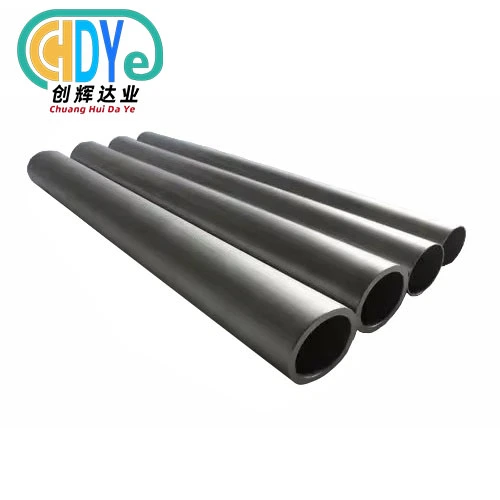
OEM pure tantalum tubing is a precision-engineered component for those sectors where chemical aggressiveness, intense heat, and the possibility of contamination are daily concerns. These tubes have excellent corrosion resistance, high-temperature stability up to 1370°C, and good mechanical integrity. If you are in the chemical processing, aerospace, electronics, or medical device manufacturing industries, it’s crucial to get pure tantalum tubes with the correct bespoke sizes and grades of material for operational safety and cost-effectiveness. This book covers all you need to know, from material qualities and OEM customization to best procurement practices and supplier selection.
Understanding Pure Tantalum Tubes and Their Key Properties
Tantalum is one of the most chemically resistant metals available in the commercial market. Its oxide layer is spontaneously formed on contact with air and serves as an almost impermeable barrier to most acids, including hydrochloric acid and sulfuric acid. Pure tantalum tubes further extend this inherent benefit by sealing the tube ends or internal components to avoid leakage, contamination, and media entry in pressurized or reactive systems.
Material Grades and Standards
Pure tantalum tubes are available in many grades per ASTM B521, including:
- R05200 — Unalloyed tantalum, electron-beam or vacuum-arc melted, 99.95% pure and easily workable.
- R05400 – Preferred for surface-sensitive applications. Tantalum, sintered (powder metallurgy), fine grain structure.
- R05252 — Ta-2.5W alloy (97.5% tantalum, 2.5% tungsten), enhanced strength at high temperatures.
- R05255 — Ta-10W alloy providing excellent structural stiffness while maintaining ductility, commonly used in chemical reactors.
Each grade has a different profile of applicability. R05200 and R05400 are ideal for high-purity electronic and medical applications, while the tungsten-alloyed grades are suited for mechanically demanding situations in chemical processing and aerospace.
Dimensional Range and Physical Characteristics
Standard manufacturing diameters from φ1.0 mm to φ150 mm, wall thicknesses from 0.2 mm to 5.0 mm, and lengths from 100 mm to 12,000 mm. Tantalum capillaries are tubes having an outside diameter of less than 5 mm, used in analytical instruments and precise fluid management. Tantalum has a melting temperature of around 3,017C. So these tubes have a thermal performance limit most other materials can’t beat.
OEM Customization: Why Custom Sizes and Specifications Matter
Factory tubing almost never meets the exacting standards of state-of-the-art industrial equipment, semiconductor reactors, or implanted medical devices. A custom design will avoid dimensional mismatches that cause premature failure, chemical bypass, or seal deterioration. When a chemical factory needs a heat exchanger coil for hydrochloric acid duty under high pressure, every millimeter of wall thickness and every sealing technique counts. Pure tantalum tubes can be customized to meet these demanding requirements.OEM tantalum tube manufacturing utilizes both seamless and welded production routes. Seamless tubes are manufactured by solid billet extrusion and cold working, which produces a homogeneous grain structure and no weld seams – perfect for high-pressure applications. Welded tubes are made from flat-rolled tantalum strip by automated fusion welding without filler metal and are capable of thin walls and larger-diameter configurations not readily obtainable by seamless techniques. Below are the main customization settings we provide in Chuanghui Daye:
- Outer Diameter and Wall Thickness: As specified per drawing tolerances, ASTM B521 or customer-specified.
- Alloy grade selection: Pure tantalum or Ta-W alloy grades are selected depending on service temperature, chemical media, and mechanical stress.
- Sealing technique: End caps, compression fittings, or welded closures, depending on pressure rating and medium compatibility.
- Surface finish: Pickled, electropolished, or as-machined to fulfill cleanliness criteria for semiconductor and medical applications.
For procurement teams for long-cycle industrial equipment, these capabilities mean immediately enhanced service life, fewer unexpected shutdowns, and better total cost of ownership.
Comparing Pure Tantalum Tubes with Alternative Materials
The selection of which material to choose for tubing has long-term repercussions for cost and dependability. Tantalum competes with titanium, stainless steel, zirconium, and ceramics in numerous industrial areas, although the comparison is never easy.
Tantalum vs. Titanium and Stainless Steel
Titanium has high corrosion resistance in oxidizing and moderately acidic environments, but is attacked by hydrochloric acid at quantities greater than trace. It is resistant to intense hydrochloric and sulfuric acids throughout a broad temperature range in which titanium fails. Stainless steel is vulnerable to pitting and crevice corrosion in halide-rich environments, and needs expensive alloy improvements such as 316L or duplex grades to get close to tantalum’s performance – but never quite equal it. Total cost of ownership for tantalum tubing is generally competitive. The greater initial material cost is countered by longer service life, lower replacement frequency, and less maintenance intervention in hostile chemical service settings.
Tantalum vs. Zirconium and Ceramics
Zirconium, for instance, is attacked by certain acids but is resistant to strong alkalis and mixed acids. Tantalum is stable in all of these media. Ceramic tubes can withstand high temperatures, but are brittle, prone to thermal shock fracture, and difficult to seal effectively under variable pressures. Tantalum offers a unique combination of ductility, machinability, and chemical inertness, unmatched by any ceramic.
Procurement Guide: Buying OEM Pure Tantalum Tubes for Business
Procurement Guide: Commercial Procurement of OEM pure Tantalum Tubes. Procurement teams in America and across the world should consider tantalum tube suppliers on a number of levels before entering into a long-term supply partnership. Certification is not negotiable. Being ISO 9001:2015 compliant means there are quality management systems in place for raw material input, manufacturing, inspection, and delivery. Full traceability documentation such as material test reports and certificates of compliance linked to ASTM B521 safeguards purchasers during audits and project certification stages.
Custom tantalum tube minimum order numbers vary depending on the provider, but reputable manufacturers are able to produce small-batch prototype orders in addition to scale manufacturing – a key capacity for R&D labs and pilot plant projects. Standard grades generally have lead times of two to six weeks, depending on complexity and finishing requirements.
Packaging and exporting conformity are equally important. Tantalum tubes heading for the U.S. or Europe need to be properly classified as hazardous materials, packed securely in crating to minimize surface damage, and accompanied by the right customs documents to prevent delays in clearance.
Why Trust Chuanghui Daye for OEM Pure Tantalum Tubes
Shaanxi Chuanghui Daye Metal Material Co., Ltd. is located in the internationally known Chinese Titanium Capital, in Baoji High-tech Development Zone, which provides direct access to existing supply chains and industrial facilities for rare metals. Chuanghui Daye was founded by a rare metal industry professional with over 30 years of experience and has the technical depth that generic distributors just cannot provide.
Our manufacturing facilities are equipped with electron beam furnaces, rolling mills, annealing furnaces, lathes, and precision machining equipment. We verify raw materials, manage dimensions in production, and conduct final inspection on every pure tantalum tube we create prior to export. All stages are controlled by ISO 9001:2015 certification. We provide pure tantalum grades R05200 and R05400 and Ta-2.5W and Ta-10W alloy tubes in diameters from 1.0 mm to 150 mm and lengths up to 12,000 mm.
Customers worldwide in chemical processing, aerospace, semiconductor fabrication, and medical device manufacture know they can count on us for dependable quality, fast technical assistance, and affordable factory-direct pricing.
Conclusion
The pure tantalum tube is one of the most reliable technical solutions for corrosive, high-temperature, and contamination-sensitive applications. The difference between a smooth project and an expensive material failure is choosing the proper grade, size, and sealing technique, as well as a manufacturer that can provide OEM customization and comprehensive quality documentation. Chuanghui Daye provides precision-engineered tantalum tubing with decades of rare metal experience, ISO-certified manufacturing, and a true devotion to long-term customer engagements.
FAQ
Q: What material grades are available for custom tantalum tubes?
A: We produce tubes in R05200, R05400, R05252 (Ta-2.5W), and R05255 (Ta-10W) per ASTM B521. Grade selection depends on your chemical environment, operating temperature, and mechanical load requirements.
Q: How long does a custom order typically take?
A: Lead times vary by specification, but most custom orders are completed within two to six weeks. Prototype and small-batch orders receive priority scheduling to support R&D timelines.
Q: Which industries most commonly use tantalum tubing?
A: Chemical processing, aerospace, electronics and semiconductor manufacturing, medical device production, and high-temperature industrial furnace applications all rely on tantalum tubing where performance cannot be compromised.
Partner with Chuanghui Daye — Your Trusted Pure Tantalum Tubes Manufacturer
Shaanxi Chuanghui Daye combines factory-direct pricing, ISO 9001:2015 certification, and over 30 years of rare metal expertise to deliver custom pure tantalum tube solutions that perform under real industrial demands. Whether you need small-batch prototypes or volume production runs, our team provides full technical support from specification to delivery. Reach out to discuss your exact requirements and receive a competitive quote tailored to your project. Contact us at info@chdymetal.com or visit www.chdymetal.com to get started.
References
1. ASTM International. ASTM B521: Standard Specification for Tantalum and Tantalum Alloy Seamless and Welded Tubes. ASTM International, 2022.
2. Hampel, C. A. Rare Metals Handbook. Reinhold Publishing Corporation, 1961.
3. Sibum, H., et al. "Tantalum and Tantalum Compounds." Ullmann's Encyclopedia of Industrial Chemistry. Wiley-VCH, 2017.
4. ASM International. Corrosion: Fundamentals, Testing, and Protection (ASM Handbook, Volume 13A). ASM International, 2003.
5. Savitzky, E. M., and G. S. Burkhanov. Metal Alloys Based on Refractory Rare Metals. Nauka Publishers, 1971.
6. Donachie, M. J., and S. J. Donachie. Superalloys: A Technical Guide. ASM International, 2002.
Learn about our latest products and discounts through SMS or email