- English
- French
- German
- Portuguese
- Spanish
- Russian
- Japanese
- Korean
- Arabic
- Greek
- German
- Turkish
- Italian
- Danish
- Romanian
- Indonesian
- Czech
- Afrikaans
- Swedish
- Polish
- Basque
- Catalan
- Esperanto
- Hindi
- Lao
- Albanian
- Amharic
- Armenian
- Azerbaijani
- Belarusian
- Bengali
- Bosnian
- Bulgarian
- Cebuano
- Chichewa
- Corsican
- Croatian
- Dutch
- Estonian
- Filipino
- Finnish
- Frisian
- Galician
- Georgian
- Gujarati
- Haitian
- Hausa
- Hawaiian
- Hebrew
- Hmong
- Hungarian
- Icelandic
- Igbo
- Javanese
- Kannada
- Kazakh
- Khmer
- Kurdish
- Kyrgyz
- Latin
- Latvian
- Lithuanian
- Luxembou..
- Macedonian
- Malagasy
- Malay
- Malayalam
- Maltese
- Maori
- Marathi
- Mongolian
- Burmese
- Nepali
- Norwegian
- Pashto
- Persian
- Punjabi
- Serbian
- Sesotho
- Sinhala
- Slovak
- Slovenian
- Somali
- Samoan
- Scots Gaelic
- Shona
- Sindhi
- Sundanese
- Swahili
- Tajik
- Tamil
- Telugu
- Thai
- Ukrainian
- Urdu
- Uzbek
- Vietnamese
- Welsh
- Xhosa
- Yiddish
- Yoruba
- Zulu
Why Choose pure Tantalum Tubes for Corrosive Media?
If corrosive substances are damaging the integrity of industrial equipment, pure tantalum tubes are one of the most reliable solutions available on the market. Tantalum tubes are especially adapted to situations in which other materials just fail. With a near-universal chemical inertness to sulfuric acid, hydrochloric acid, and most other corrosive fluids below 150ºC, paired with precise sealing technologies, Do you manage a chemical processing plant, aerospace facility, or semiconductor manufacturing line? If so, knowing why sealed tantalum tubing is superior to traditional options may have a direct bearing on the safety and lifespan of your systems.
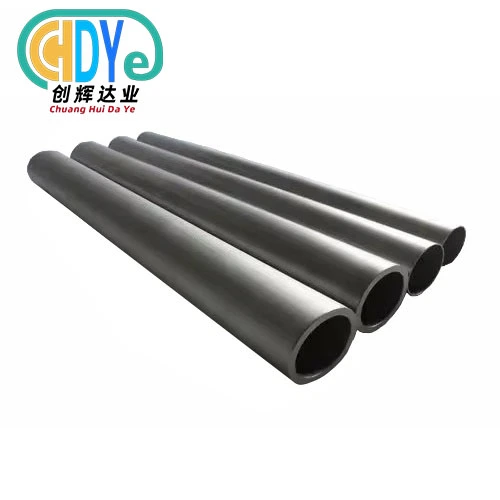
Advantages of Pure Tantalum Tubes Over Traditional Alternatives
As procurement teams compare tantalum tubing, they are often faced with options such as glass-lined steel, ceramic pure tantalum tubes, stainless steel pipe, and zirconium alloys. Each option may have appeal in particular applications, but none can match the range of chemical compatibility paired with mechanical endurance that tantalum offers.
The following are performance benefits that tantalum always has over competitor materials:
- Compared to stainless steel: Tantalum resists intense sulfuric and hydrochloric acids that readily attack and pit stainless steel grades. In chemical process equipment, this means a lifetime measured in decades instead of years, cutting total cost of ownership, even with the greater initial material cost.
- Titanium against titanium: Titanium is a good performer in oxidizing acid settings, but it declines in reducing acid situations. Tantalum is resistant to both oxidizing and reducing media, providing designers with more freedom in multi-fluid systems.
- Zirconium: Good corrosion resistance, although not as good as tantalum in a larger range of chemical conditions, especially mixed acid streams. The known biocompatibility of tantalum also makes it suitable for use in medical-grade applications where zirconium cannot qualify.
These material benefits significantly minimize unscheduled downtime, maintenance costs, and the danger of chemical leaks – three operational pain points that substantially influence procurement choices in chemical processing and aerospace production.
Technical Specifications and Quality Assurance for Reliable Procurement
Understanding the technical profile of tantalum tubing before issuing a purchase order protects your supply chain from costly substitutions or performance shortfalls.
Key Material Grades and Dimensional Standards
Chuanghui Daye provides tantalum tubes in a variety of approved grades. R05200 melted tantalum and R05400 sintered tantalum are guaranteed to have 99.95% metallic purity. The sintered grade is fine grained microstructure to increase workability and surface quality, an advantage for precision-machined components. The alloy grades R05252 and R05255 include 2.5% and 10% tungsten additions, respectively, which greatly improve the tensile strength at high temperatures, yet keep the necessary ductility for tube formation.
Quality Verification Protocols
Reliable providers of tantalum tubes systematically employ quality standards throughout manufacture. At Chuanghui Daye, each manufacturing batch is subject to raw material inspection, electron beam or vacuum-arc melting verification, rolling and forming inspections, and final dimensional and surface inspection before shipping. The organization adheres to the whole quality management process and offers the traceability documents required by purchasers in regulated sectors with ISO 9001:2015 certification. Each order is supplied with full material test results, chemical composition certifications, and dimensional inspection records.
How to Select and Procure Pure Tantalum Tubes for Your Business Needs
Price is not the only consideration in choosing a tantalum tube provider. Your project schedule and the final component’s performance are affected by lead time dependability, customisation capabilities, and technical response.
Pure tantalum tubes with an outer diameter less than 5 mm are considered capillary tubes and may be used for sensor protection and microreactor applications. Larger diameter tubes are used as heat exchanger coils, as linings for reactors, and as thermowell housings. High-pressure piping for chemical and petrochemical users may be made stronger using Ta-10W alloy tubes. Melted tantalum R05200 is an asset to medical device makers that use implant-grade components since it is a proven biocompatible material with uniform mechanical characteristics.
When selecting a provider of pure tantalum tubes, verify if they provide:
- Custom OD, wall thickness, and length to your engineering drawings
- Seamless & Welded Construction Available
- Ability to do high-volume manufacturing using small-batch prototypes
- Full material certifications under ASTM B521 or similar foreign standards
Shaanxi Chuanghui Daye is equipped with modern melting, forging, rolling, and machining equipment, such as electron beam furnaces and precision lathes, providing both prototype quantities and steady volume supply from a single factory-direct source.
Future Outlook and Innovation in Tantalum Tube Technology
The need for corrosion-resistant materials is growing worldwide, as chemical processing facilities handle more aggressive feedstocks and the production of semiconductors drives purity standards higher. Improvements in powder metallurgy are allowing tantalum tubes to be produced with a finer grain structure, tighter tolerances on dimensions, and more uniform mechanical properties from batch to batch.
Alloy research, notably Ta-W compositions, is increasing the working environment of tantalum components into higher temperature regimes where even nickel superalloys have constraints. Sustainability demands are also redefining procurement methods. Tantalum’s exceptional longevity means less frequent material replacement, which aligns with lifetime cost reduction targets and environmental compliance frameworks that are increasingly being embraced by industrial customers.
Conclusion
Pure tantalum tubes offer a unique mix of chemical inertness, mechanical endurance, and precision engineering that is not completely duplicated by any other material. Tantalum tubing is trusted to function reliably in applications where failure is not an option—from chemical reactors containing intense mineral acids to aircraft components subjected to heat stress. Partner with an experienced tantalum tube manufacturer with verified material grades and strict quality standards who can customize to keep your supply chain robust and your equipment running.
FAQ
1. What corrosive media are pure tantalum tubes resistant to?
Tantalum resists virtually all inorganic acids, including sulfuric, hydrochloric, nitric, and phosphoric acid, at temperatures below 150°C. It also withstands many organic acids and oxidizing media. The primary exceptions are hydrofluoric acid, fuming sulfuric acid above 175°C, and concentrated hot alkalis. This broad compatibility makes tantalum the material of choice in multi-acid chemical processing environments.
2. How do I verify the quality of tantalum tubes before procurement?
Request full material test reports confirming chemical composition to ASTM B521 grade requirements, along with dimensional inspection records and a certificate of conformance. Suppliers holding ISO 9001:2015 certification maintain documented traceability for each production batch. At Chuanghui Daye, these documents accompany every shipment as standard practice.
3. Can tantalum tubes be customized for specialized applications?
Yes. Tantalum tubes are available in custom outer diameters, wall thicknesses, lengths, and end configurations, including sealed designs, flanged ends, and machined fittings. Both seamless and welded constructions are manufacturable, with alloy grades selectable based on the specific chemical and mechanical demands of your application.
Partner with Chuanghui Daye for Your Pure Tantalum Tube Requirements
Shaanxi Chuanghui Daye combines over 30 years of rare metal expertise with ISO 9001:2015-certified manufacturing in China's Titanium Capital—Baoji, Shaanxi. As a trusted pure tantalum tubes manufacturer, we deliver factory-direct pricing, full material traceability, and responsive technical support for every order. Reach out to our team today at info@chdymetal.com to request a quote or discuss your specific application requirements.
References
1. ASTM International. ASTM B521: Standard Specification for Tantalum and Tantalum Alloy Seamless and Welded Tubes. ASTM International, 2022.
2. Cardarelli, François. Materials Handbook: A Concise Desktop Reference. Springer, 2018.
3. Sibum, Heinz, et al. "Tantalum and Tantalum Compounds." Ullmann's Encyclopedia of Industrial Chemistry. Wiley-VCH, 2017.
4. Schussler, Martin, and Claude Pokross. "Corrosion Data Survey on Tantalum." Corrosion, NACE International, 2015.
5. Krebs, Robert E. The History and Use of Our Earth's Chemical Elements: A Reference Guide. Greenwood Press, 2006.
6. Davis, Joseph R. Corrosion: Understanding the Basics. ASM International, 2000.
Learn about our latest products and discounts through SMS or email