- English
- French
- German
- Portuguese
- Spanish
- Russian
- Japanese
- Korean
- Arabic
- Greek
- German
- Turkish
- Italian
- Danish
- Romanian
- Indonesian
- Czech
- Afrikaans
- Swedish
- Polish
- Basque
- Catalan
- Esperanto
- Hindi
- Lao
- Albanian
- Amharic
- Armenian
- Azerbaijani
- Belarusian
- Bengali
- Bosnian
- Bulgarian
- Cebuano
- Chichewa
- Corsican
- Croatian
- Dutch
- Estonian
- Filipino
- Finnish
- Frisian
- Galician
- Georgian
- Gujarati
- Haitian
- Hausa
- Hawaiian
- Hebrew
- Hmong
- Hungarian
- Icelandic
- Igbo
- Javanese
- Kannada
- Kazakh
- Khmer
- Kurdish
- Kyrgyz
- Latin
- Latvian
- Lithuanian
- Luxembou..
- Macedonian
- Malagasy
- Malay
- Malayalam
- Maltese
- Maori
- Marathi
- Mongolian
- Burmese
- Nepali
- Norwegian
- Pashto
- Persian
- Punjabi
- Serbian
- Sesotho
- Sinhala
- Slovak
- Slovenian
- Somali
- Samoan
- Scots Gaelic
- Shona
- Sindhi
- Sundanese
- Swahili
- Tajik
- Tamil
- Telugu
- Thai
- Ukrainian
- Urdu
- Uzbek
- Vietnamese
- Welsh
- Xhosa
- Yiddish
- Yoruba
- Zulu
Can Anodized Titanium Wire Resist Extreme Temperatures?
Anodized titanium wire is very stable at high temperatures, withstanding up to 450–480°C (840–900°F) of constant contact before the anodized oxide layer starts to break down. The base titanium layer doesn't oxidize and keeps its tensile strength at temperatures above 600°C, so it can be used in high-temperature situations. Even though the anodized layer makes the structure more resistant to rust and gives it color, it can break down beyond these limits. This means that the material can be used for effective fixing in spacecraft, cleaning processes for medical devices, and chemical processing areas where controlled heat exposure happens often.
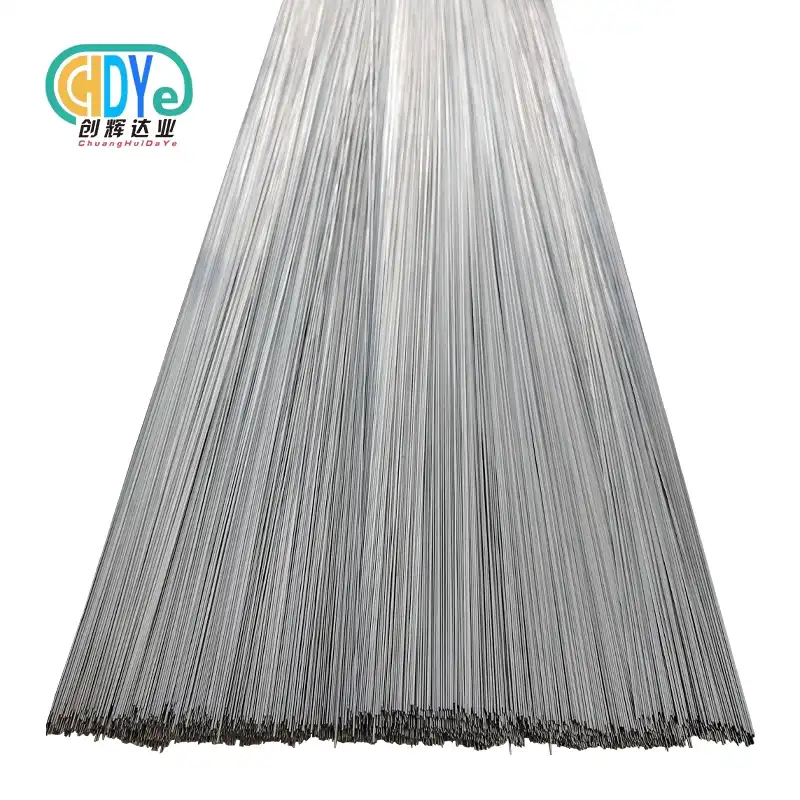
Understanding Anodized Titanium Wire and Its Properties
The electrochemical anodization process changes anodized titanium wire in a basic way by speeding up and managing the growth of the layer of naturally occurring titanium dioxide (TiO₂) on the surface. Unlike paints or coats, this oxide layer is part of the base metal. It changes the metal permanently in a way that makes it work better in industrial settings.
The Anodizing Process and Surface Modification
During anodizing, anodized titanium wire is put into an electrolytic bath that usually has phosphoric or sulfuric acid solutions in it, and a controlled voltage is applied. The oxide layer thickness is set by the voltage level, which can be anywhere from 10V to over 100V. Usually, it is between 30 and 200 nanometers thick. This level of accuracy lets makers get certain useful qualities while keeping measurement limits within ±0.01 mm, which is important for medical and military high-precision parts.
Enhanced Corrosion Resistance and Mechanical Performance
It is much more resistant to salty, acidic, and long-term wet surroundings after the anodized layer is added. Because of this, the wire is very useful for tools used in chemical handling and in the naval industry. The process also changes how surface friction works, creating a dry lubrication effect that prevents galling or cold-welding in threaded fastening applications. This is especially important in aircraft assembly, where vibration and temperature cycling are constant factors.
Structural Color and Identification Benefits
Anodized titanium wire exhibits vivid colors that are caused by light bouncing around in the oxide layer, not by paints or dyes. This structure coloring stays steady even when exposed to UV light and sterilized many times, which makes it perfect for color-coding systems on medical devices. During important procedures, surgeons can quickly tell the difference between wire sizes (blue for 1.0 mm and green for 1.5 mm) without worrying about the deadly dye getting into the tissue. Precise voltage control during anodization is needed to keep the colors consistent. That's why buying teams should tell sellers about voltage factors when they place orders, instead of just using color names.
In our Baoji plant, Chuanghui Daye uses high-tech electrolytic anodizing tools to make sure that the formation of oxide layers is the same from batch to batch. Our process is approved by ISO 9001:2015 and keeps voltage levels within a range of ±0.5 V. This ensures consistent color and performance that meets military AMS 2488 and medical ISO 10993 biocompatibility standards.
Can anodized titanium wire withstand extreme temperatures?
Titanium is naturally thermally stable because it has a solid structure and a low thermal expansion rate of about 8.6 × 10⁻⁶/°C. The metal stays strong mechanically and doesn't rust at temperatures where many other materials fail. When buying wire for places that need to withstand high temperatures, sourcing workers need to know how the anodized layer reacts to heat.
Thermal Performance of the Anodized Oxide Layer
When heated to normal industrial temperatures, the anodized TiO₂ layer stays very stable. Medical device makers use anodized titanium wire for surgery tools because cleaning processes in an autoclave at 134°C (273°F) have no effect on color or structural stability. When used in aerospace for safety wire around engine parts, the material is often exposed to temperatures between 200°C and 400°C without losing any of its performance.
Beyond approximately 480°C, the anodized layer begins experiencing thermal breakdown. The oxide may change color because the material underneath is still oxidizing, but this doesn't always mean that the base titanium is losing its tensile strength. When heated above 600°C, the base still works, but the unique benefits of anodization—better resistance to rust and less friction—become less useful because the structure of the original oxide layer changes.
Real-World Industrial Temperature Thresholds
Practical temperature limits are shown in aerospace fastening uses. Titanium safety wire, which is often polished according to AMS 2488 standards, keeps important bolts in place in places where the temperature can change from -55°C to 400°C. The wire stays flexible and doesn't gall during these cycles, which keeps the clip from coming loose when it vibrates.
Making electronics is another example of proof. Anodized titanium wire is used as rack material in aluminum anodizing baths that work at temperatures between 15°C and 25°C. On occasion, the wire is exposed to high cooling temperatures of up to 150°C. The stainless steel wire doesn't need the harsh cleaning processes that are needed for metal racks, which cuts down on costs and damage to the environment.
Chemical processing equipment that uses anodized titanium wire for parts that don't rust usually works below 300°C, which is well within the performance range of the material. Because the wire doesn't rust and stays stable at high temperatures, it can be used in heat exchanges, to support the inside of reactor vessels, and in pipe systems that handle harsh chemicals at high temperatures.
At Chuanghui Daye, we have annealing ovens and electron beam melting tools that let us make titanium wire from Grade 1 (commercially pure) to Grade 5 (Ti-6Al-4V alloy), with each grade having its own thermal performance profile. Grade 5 keeps its strength better at high temperatures, which makes it better for uses that will be subject to prolonged mechanical loads near 450°C.
Comparing Anodized Titanium Wire with Other Materials Under Extreme Temperatures
When choosing a material, it's important to carefully compare how well anodized titanium wire works with other well-known options. Different types of metals that are often used in industrial purchases have very different rates of thermal expansion, resistance to rust, and mechanical stability at high temperatures.
Anodized Titanium Wire versus Stainless Steel Wire
316L and 321 types of stainless steel alloys are often asked for in high-temperature wire uses. Compared to titanium, stainless steel has a higher heat conductivity (about 16 W/m·K) and usually lower material costs. As high as about 600°C, stainless steel stays strong. However, rust becomes noticeable above 800°C, based on the metal makeup.
Titanium wire, which has a density about 60% that of stainless steel, has clear benefits in uses that need to be light. Anodized titanium is much more resistant to rust than stainless steel in salt and acidic situations, which means it needs less long-term care. Titanium has a lower amount of elasticity than stainless steel (about 110 GPa vs. 200 GPa), which makes it more flexible. This is useful in situations where the metal needs to be bent or formed over and over again without becoming hard.
Anodized versus Plain Titanium Wire Performance
The extra processing cost for anodization is worth it because it gives real benefits. A natural oxide layer only 2 to 5 nanometers thick forms on plain titanium wire, which protects it from rusting in a basic way. Anodization makes this protected layer 10–100 times thicker, which makes it much more resistant to pitting, rust, and surface wear from heat cycles.
Anodization's anti-galling qualities are very important in threaded uses. Titanium that is just powder tends to cold weld when it comes into contact with friction, especially in vacuum or neutral atmospheres that are common in aircraft and electronics manufacturing. This worry is gone thanks to the anodized surface modification, which lowers the assembly pressure needs and keeps the threads from getting damaged during the installation and removal processes.
Anodized wire's ability to be color-coded makes operations more efficient in ways that plain wire can't. Medical device makers say that using color-coded anodized titanium K-wires cuts surgery times by 15 to 20 percent because it's easier to tell what size the wire is right away. This speed directly leads to lower costs in the surgery room and better results for patients.
Copper Wire as an Alternative Material
Copper wire is the best at conducting electricity and heat (about 400 W/m·K thermal conductivity), so it can't be replaced in uses that only need to move heat or electricity. Copper's lower melting point of about 1085°C and its tendency to oxidize at temperatures above 200°C make it very unsuitable for use in high-temperature construction uses.
Anodized titanium wire is used in situations where electrical conductivity is not the most important thing, but temperature stability, resistance to rust, and mechanical strength are. Even though copper is better at handling heat, it can't provide these mixed qualities that are needed in chemical processing equipment, aircraft structure parts, and medical implants.
When purchasing managers look at different options for materials, they should not only look at the unit price but also the total cost of ownership. Anodized titanium wire costs two to three times as much as stainless steel wire of the same size, but it has a longer service life and needs less upkeep, so it often has cheaper lifetime costs in places that are acidic or that change temperature often.
Procurement Considerations for Anodized Titanium Wire in High-Temperature Applications
To get anodized titanium wire, you need to pay attention to technical specs, business terms, and seller qualifications. These all work together to make sure the material works well and the project is a success. B2B buyers have to deal with all of these things that affect each other while sticking to their budgets and meeting deadlines.
Specifying Wire Characteristics and Anodizing Parameters
Tolerances in wire width have a direct effect on how well precision parts fit together. Standard manufacturing errors run from ±0.05 mm for wires with diameters above 2 mm to ±0.01 mm for wires with diameters less than 0.5 mm. The tighter tolerance class is usually needed for medical devices and military uses. This should be made clear in the buy specs to avoid having to do expensive repairs or having the assembly fail.
The anodizing voltage determines the color and thickness of the oxide layer. Instead of saying "blue wire," purchase papers should talk about voltage ranges (25–30 V for blue) or give test samples to make sure the colors match. This method clears up any confusion and guarantees stability from batch to batch, which is especially important when getting supplies from multiple sources or working on a project with a long timeline.
The type of surface finish—bright annealed, pickled, or as-rolled—affects both the anodizing process and how the wire handles in the end. For medical uses, bright annealed surfaces are better because they have more even coloring and a cleaner texture. On the other hand, pickled surfaces may be fine for industrial fastening applications where function is more important than appearance.
Understanding Pricing Structures and Order Quantities
The price of anodized titanium wire depends on the cost of the raw materials (the price of titanium sponge changes with the market), how hard it is to process, and how many orders are placed. Depending on the wire thickness and anodizing requirements, the minimum order quantity is usually between 10 and 50 kilograms. Higher minimums may be needed for custom colors or treatments in order to cover setup costs and keep the process stable.
Volume discounts are useful for orders over 100 kilos, and regular customers who place regular orders often can get price cuts of 8 to 15%. Purchasing teams that are in charge of ongoing production needs should discuss yearly contracts with quarterly call-offs. This will get them better prices, keep their inventory flexible, and keep capital from getting stuck in raw material stocks.
Lead times depend on how busy the provider is and how complicated the specifications are. Standard sizes and popular anodizing colors usually ship 3 to 4 weeks after the order is confirmed. Lead times may be extended to 6 to 8 weeks for custom orders that need special wire drawing dies or different anodizing voltages. When production plans require faster shipping, rush handling is sometimes offered at a higher cost.
Evaluating Supplier Quality and Certifications
ISO 9001:2015 approval sets the standards for quality control for industry companies. This approval shows that there are written process rules, tracking methods, and a dedication to always making things better. It is important for procurement managers to check the current status of certifications and read purpose statements to make sure that anodizing processes are included in the approved operations.
Aerospace suppliers need to show that they follow the AMS (Aerospace Material Specifications) rules, especially AMS 2488 for anti-galling anodization. For medical device uses, suppliers need to know how to do ISO 10993 biocompatibility testing procedures and be able to provide material certifications that show they meet FDA or CE marking standards.
Shipments should come with material tracking paperwork, such as mill test records, chemical makeup analyses, and certificates of mechanical properties. These papers make it possible to check the quality further down the line and give the audit trail that controlled businesses need. If a supplier can't or won't provide full tracking, they shouldn't be considered whether their prices are lower or higher.
Our ISO 9001:2015-certified quality management system helps Chuanghui Daye keep detailed quality records for every lot of products it makes. We are located in Baoji, which is known as China's titanium capital. This gives us direct access to high-purity titanium sponge made by local companies, which guarantees the quality of our materials and the stability of our supply chain. We can handle orders as small as 10 kilos, and we include full mill certifications and tracking paperwork with every package to meet our customers' quality assurance needs.
Conclusion
Anodized titanium wire works well in situations with high temperatures up to about 480°C because it combines the thermal stability of the base metal with better resistance to rust and useful surface qualities. In situations where lightweight strength, better rust resistance, and heat cycle longevity are needed, this material is clearly better than stainless steel and plain titanium. To successfully buy something, you need to pay attention to the specifics, like the anodizing voltage, the measurement limits, and the quality certifications of the seller. The designed qualities will last longer if they are handled and maintained properly, which will maximize the return on investment. Anodized titanium wire is a tried-and-true method of meeting the growing demands for high-performance materials in the aircraft, medical device, chemical processing, and electronics industries.
FAQ
Q: What is the maximum operating temperature for anodized titanium wire?
A: Anodized titanium wire can withstand constant exposure to temperatures between 450 and 480°C (840 and 900°F) without losing its structural integrity or useful qualities. The base titanium material keeps working at temperatures above 600°C, but the anodized oxide layer may change color and become less resistant to rust above 480°C. Short-term trips to higher temperatures are usually fine and won't cause problems right away.
Q: Does thermal discoloration affect wire strength?
A: Changes in color caused by heat contact show that the oxide layer has been changed, but they don't always mean that the base metal is less strong. The titanium base keeps its tensile and yield strengths even after the anodized layer breaks down at high temperatures. For labeling reasons, applications that need to keep the color may need to be re-anodized after being exposed to high temperatures.
Q: Can anodized titanium wire be customized for specific applications?
A: To meet the needs of a particular application, manufacturers can change the width of the wire, the anodizing voltage (which controls color and oxide thickness), and the surface finish. For custom orders, the minimum order size is usually between 25 and 50 kilos, and the lead time is 2- 3 weeks. Giving providers specific technical needs and application context helps them suggest the best options.
Partner with Chuanghui Daye for High-Performance Anodized Titanium Wire Solutions
If you choose the right anodized titanium wire provider, you can be sure that the materials you use in high-temperature uses will be reliable and last a long time. Shaanxi Chuanghui Daye has been working with rare metals for more than 30 years and uses ISO 9001:2015-certified production methods to make sure that the quality of the products we sell from our Baoji plant, which is in China's titanium capital, stays high. We make anodized titanium wire that meets the standards for Grades 1 through 5. The width can be customized from 0.3 mm to 6.0 mm, and the color stays the same from batch to batch thanks to precise anodizing limits. Our factory-direct price gets rid of markups for middlemen while keeping all the material tracking paperwork for industrial, medical, and aircraft uses. Our team can help you match the right material specs to your temperature and rust needs, whether you need a small quantity for a trial or a lot for regular production. Talk to our experts at info@chdymetal.com about your project needs and get a full price from a reputable company that makes anodized titanium wire and is dedicated to quality, dependability, and quick customer service.
References
1. Peters, M., Kumpfert, J., Ward, C.H., and Leyens, C. (2003). "Titanium Alloys for Aerospace Applications." Advanced Engineering Materials, Vol. 5, No. 6, pp. 419-427.
2. Blackwood, D.J. and Peter, L.M. (1989). "The Influence of Growth Rate on the Properties of Anodic Oxide Films on Titanium." Electrochimica Acta, Vol. 34, No. 6, pp. 875-880.
3. Guleryuz, H. and Cimenoglu, H. (2004). "Effect of Thermal Oxidation on Corrosion and Corrosion-Wear Behavior of a Ti-6Al-4V Alloy." Biomaterials, Vol. 25, No. 16, pp. 3325-3333.
4. Delplancke, J.L. and Winand, R. (1988). "Galvanostatic Anodization of Titanium—I. Structures and Compositions of the Anodic Films." Electrochimica Acta, Vol. 33, No. 11, pp. 1539-1549.
5. Lampman, S. (1990). "Wrought Titanium and Titanium Alloys." ASM Handbook, Volume 2: Properties and Selection: Nonferrous Alloys and Special-Purpose Materials, ASM International, pp. 592-633.
6. Sul, Y.T., Johansson, C.B., Petronis, S., et al. (2002). "Characteristics of the Surface Oxides on Turned and Electrochemically Oxidized Pure Titanium Implants up to Dielectric Breakdown." Biomaterials, Vol. 23, No. 2, pp. 491-501.
Learn about our latest products and discounts through SMS or email