- English
- French
- German
- Portuguese
- Spanish
- Russian
- Japanese
- Korean
- Arabic
- Greek
- German
- Turkish
- Italian
- Danish
- Romanian
- Indonesian
- Czech
- Afrikaans
- Swedish
- Polish
- Basque
- Catalan
- Esperanto
- Hindi
- Lao
- Albanian
- Amharic
- Armenian
- Azerbaijani
- Belarusian
- Bengali
- Bosnian
- Bulgarian
- Cebuano
- Chichewa
- Corsican
- Croatian
- Dutch
- Estonian
- Filipino
- Finnish
- Frisian
- Galician
- Georgian
- Gujarati
- Haitian
- Hausa
- Hawaiian
- Hebrew
- Hmong
- Hungarian
- Icelandic
- Igbo
- Javanese
- Kannada
- Kazakh
- Khmer
- Kurdish
- Kyrgyz
- Latin
- Latvian
- Lithuanian
- Luxembou..
- Macedonian
- Malagasy
- Malay
- Malayalam
- Maltese
- Maori
- Marathi
- Mongolian
- Burmese
- Nepali
- Norwegian
- Pashto
- Persian
- Punjabi
- Serbian
- Sesotho
- Sinhala
- Slovak
- Slovenian
- Somali
- Samoan
- Scots Gaelic
- Shona
- Sindhi
- Sundanese
- Swahili
- Tajik
- Tamil
- Telugu
- Thai
- Ukrainian
- Urdu
- Uzbek
- Vietnamese
- Welsh
- Xhosa
- Yiddish
- Yoruba
- Zulu
Can ASTM B 348 Titanium Rods Be Used for High-Temperature Applications?
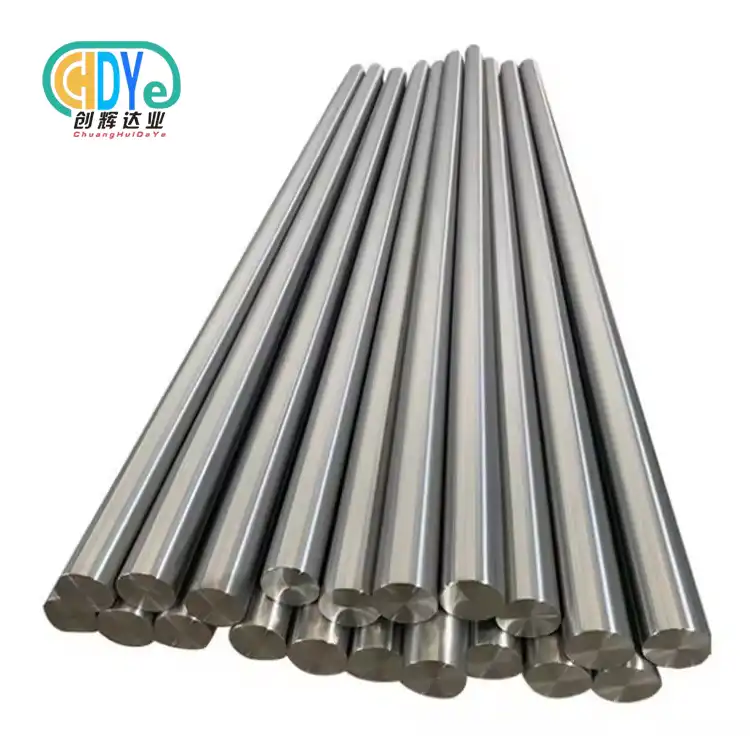
Yes, ASTM B 348 industrial titanium rod can absolutely be used for high-temperature applications. These titanium rods demonstrate exceptional thermal stability, maintaining their mechanical properties at elevated temperatures up to 400°C (752°F) for most grades. The unique microstructure and chemical composition of titanium alloys covered under ASTM B 348 standards provide superior creep resistance and thermal shock resistance compared to conventional materials. The heat resistance capabilities make these rods particularly valuable in aerospace engine components, chemical processing equipment, and power generation systems where sustained high-temperature performance remains critical.
Understanding ASTM B 348 Titanium Rods and Their Properties
The ASTM B 348 standard lays out all the requirements for titanium and titanium alloy bars. This makes sure that the quality and performance are the same in all kinds of industry settings. This standard covers a range of grades, from Grade 1 and 2 commercially pure titanium to Grade 5 high-strength alloys like Ti-6Al-4V. Each grade is designed to work well in a certain range of temperatures and stress levels.
Chemical Composition and Heat Resistance
The chemicals used are very important in determining how resistant something is to heat. Grade 2 titanium has low amounts of intermediate elements like oxygen, nitrogen, and carbon. This makes it very flexible and strong at high temperatures. Aluminum (5.5–6.75%) and vanadium (3.5–4.5%) are both found in Grade 5 metal. This creates a dual-phase microstructure that stays strong up to 400°C and has better creep resistance.
The controlled interstitial content keeps the material from becoming weaker during thermal cycling, and the alpha-beta phase structure in alloy grades keeps the mechanical properties fixed when heated for a long time. Depending on the grade, the oxygen level is usually between 0.10% and 0.20%. This is the best range for strength and flexibility at working temperatures.
Manufacturing Process Impact on High-Temperature Performance
The ability of these titanium bars to withstand high temperatures is greatly improved by modern manufacturing methods. Vascular arc remelting (VAR) gets rid of dangerous flaws and makes sure that the chemicals are the same all the way through the rod's cross-section. The forming process improves the structure of the grains, making sure that the alpha grains in commercially pure grades are evenly distributed and that the alpha-beta lamellae in mixed grades are properly oriented.
Protocols for heat treatment, especially annealing at temperatures between 650°C and 760°C, reduce stresses inside the material and make the architecture more stable at high temperatures. This managed thermal processing makes a stress-relieving environment that keeps the shape stable during high-temperature service and against thermal cycles.
Mechanical Properties at Elevated Temperatures
Titanium bars made to ASTM B 348 standards keep a lot of their mechanical power even when they are heated up. At 300°C, Grade 5 metal keeps about 70% of its tensile strength from when it was at room temperature. It also has great wear resistance when heated and cooled over and over again. The elasticity stays pretty stable up to 400°C, which makes sure that structures that hold weight stay strong.
Creep resistance is very important in high-temperature situations where the load stays on for a long time. The alpha-beta lattice in alloy grades gives them higher creep strength than pure titanium. This means that these materials can be used for long periods of time in turbine parts and pressure vessels that are heated to high temperatures.
ASTM B 348 Titanium Rod vs. Other Materials for High-Temperature Applications
When looking at materials that can handle high temperatures, the ASTM B 348 industrial titanium rod is clearly better than other materials that are often used in harsh thermal settings. Knowing these differences in benefits helps buying teams make smart choices based on performance needs and prices over the product's life.
Comparison with Stainless Steel Alloys
Standard options for high-temperature uses are types of stainless steel like 316L and 17-4 PH, but titanium rods work better in a number of important ways. Titanium's density (4.51 g/cm³) is still about 43% lower than stainless steel's. This means that titanium is a much lighter material than stainless steel when it comes to spinning machines, where inertial forces are important.
Another important difference is corrosion resistance. Stainless steels are protected by layers of chromium oxide. Titanium, on the other hand, makes a stable, self-healing layer of titanium dioxide that works in a wider range of temperatures and harsher chemical conditions. This oxide layer keeps its protective qualities even when temperatures change quickly, which can damage the passivation of stainless steel.
Titanium's thermal expansion coefficient (8.6 × 10⁻⁶/°C) is very close to that of many ceramics. This means that composite products will be less stressed by heat. Stainless steels usually expand more when heated, which can cause stress to build up in designs with more than one material that work with changing temperatures.
Performance Against Aluminum Alloys
Above 150°C, aluminum metals lose a lot of their strength, which means they can't be used in real high-temperature situations. Titanium bars keep their shape at temperatures where aluminum metals would either completely break or slowly deform. Titanium alloys have a higher specific strength (strength-to-weight ratio) than aluminum at temperatures above 200°C. This makes titanium the best material for aircraft and automobile uses that need to be able to handle high temps.
Cost-Effectiveness Analysis
Titanium rods cost more than other alloys to make at first, but a lifetime study often shows that titanium is better for high-temperature uses. Lower total ownership costs are caused by things like longer service life, less upkeep, and not needing protection coatings. Because it doesn't rust, it doesn't need the special anodes or cathodic protection systems that are popular with steel alloys in harsh settings.
The benefits of reducing weight include saving energy in rotating tools, needing less base in structural uses, and using less fuel in transportation systems. These practical benefits usually make up for the higher initial investment within the running timeframe of the asset.
Industrial and High-Temperature Applications of ASTM B 348 Titanium Rods
Titanium bars are very good at withstanding high temperatures, which makes them essential in many fields where high-temperature performance is key to success and safety. These uses show how flexible the material is and how reliable it is in harsh thermal circumstances.
Aerospace and Defense Applications
Manufacturers of aerospace parts often use titanium bars in jet engine parts that are heated to over 500°C while they are running. Compressor blades, turbine discs, and bolts made from Grade 5 titanium keep their shape even when temperatures change a lot. They also save weight, which is important for fuel economy.
The material's low thermal conductivity (about 22 W/m·K) acts as a thermal shield in engine parts where controlling heat is very important. This feature lets engineers reduce the amount of cooling needed, make the engine work more efficiently, and keep parts reliable across a wide range of operating temperatures.
Some military uses for this material are in rocket parts, airplane structural elements, and naval power systems. Its ability to withstand high temperatures and corrosion ensures mission effectiveness in harsh circumstances.
Chemical Processing and Petrochemical Industry
Chemical processing facilities depend on ASTM B 348 industrial titanium rod for manufacturing reactor components, heat exchanger elements, and pipe systems that handle acids and other toxic chemicals at high temperatures. The material's immunity to chloride stress corrosion cracking makes it essential for chlor-alkali plants that work at temperatures above 80°C.
Titanium bars are used in petrochemical plants for catalyst support structures because regular materials would break down quickly in places where they are exposed to sulfur compounds and acidic conditions at processing temperatures. The temperature stability makes sure that the equipment is accurate in terms of size and eliminates the contamination risks that come with corroded goods.
Power Generation Systems
Titanium rods are used in power plants in steam turbines that have to work at temperatures of up to 400°C for a long time. This means that they need to have very high creep resistance and wear strength. Titanium doesn't rust easily in high-temperature brine settings with dissolved minerals that eat away at other metals. This is especially helpful for geothermal power systems.
Titanium bars are used in heat transfer systems in nuclear power plants because they are resistant to radiation, stable at high temperatures, and don't rust. This makes sure that the systems work safely for long periods of time between maintenance.
Procurement Considerations for Buying ASTM B 348 Titanium Rods for High-Temperature Uses
To successfully buy titanium bars for high-temperature uses, you need to carefully look at the skills of the seller, the certifications of the materials, and the quality control procedures. Understanding these factors is important for getting the best results from materials and a successful job.
Supplier Qualification and Certification Requirements
Checking ISO 9001:2015 certification and, if necessary, aircraft industry approvals is part of choosing approved suppliers. Suppliers must show that they have consistent quality control methods, such as the ability to do chemistry analyses, test products mechanically, and have tracking systems that can track materials from the ingot to the finished product.
When you evaluate a company's manufacturing skills, you should look at its melting facilities, forging tools, and heat treatment capabilities. The vacuum arc remelting process makes sure that the material is very clean, and the precise forging equipment makes sure that the rod's mechanical qualities are the same all the way through its cross-section.
Custom Processing and Lead Time Considerations
For high-temperature uses, custom sizes and grinding methods are often needed in addition to standard mill goods. One-stop shopping is easier, and better quality control is made possible by suppliers who offer value-added services like precise cutting, surface treatments, and non-destructive testing.
Lead times for ASTM B 348 industrial titanium rod depend on the grade, size, and amount that you need. Standard grades like Grade 2 and Grade 5 usually have shorter wait times because they are made on a regular schedule. However, specialty grades may need longer delivery times because they need to be melted and processed in a way that is unique to them.
Quality Assurance and Testing Requirements
For high-temperature uses, material approval packages must include full chemistry analyses, mechanical test results, and proof of grain size. Ultrasonic testing makes sure that the inside is sound, and dimensional checking makes sure that the parts are within the allowed ranges, which is very important for precision setups.
Suppliers should give full tracking paperwork that connects the produced goods to the sources of the original titanium sponge and the working conditions. This paperwork is necessary for apps that need to check the material's history and figure out why it failed.
Best Practices for Handling, Machining, and Maintaining ASTM B 348 Titanium Rods in High-Temperature Environments
Titanium bars work best at high temperatures when they are handled and processed correctly. This also makes sure that production is safe and effective. These methods take into account the special properties of titanium that make it different from other materials.
Machining Guidelines for High-Temperature Components
To get the needed surface finishes while controlling heat generation and tool wear, titanium machining needs special methods. Cutting tools that are sharp and have positive rake angles avoid building up cutting forces and heat, which can harden work. Cutting continuously at steady feed rates stops edges from building up, which lowers the quality of the surface.
Using a flood cooler keeps the temperature of the part below the critical level, where phase changes could change its mechanical properties. With climb milling, you can get better surface finishes while lowering the cutting forces that can bend thin-walled parts.
In high-temperature situations, where surface flaws can cause fatigue breaking, surface stability is very important. Cutting at the right speed and keeping the tools sharp will keep the surface compressed instead of creating tensile leftover forces that shorten the life of the part.
Welding Procedures and Joint Design
When welding titanium, both the weld face and the root must be shielded with an inert gas to keep the air from getting contaminated. Argon shielding gas with backup purge keeps the qualities of the material in the weld areas that will be exposed to high temperatures. Titanium doesn't conduct heat well, so it usually doesn't need to be heated first. However, for important uses, post-weld stress release may be needed.
As part of the joint design process, minimizing restraint is important to allow for heat growth during service. To make sure that the thermal expansion properties of welded parts are the same all over, the weld metal should fit the composition of the base material.
Inspection and Maintenance Protocols
High-temperature titanium parts should be inspected regularly by looking at the surface for oxidation, measuring the size to track heat growth, and using non-destructive tests to find cracks. Discoloration on the surface means that the working temperature is too high, which could damage the mechanical qualities.
Cleaning products with chloride should not be used for maintenance because they can cause stress corrosion cracking, especially in areas that have been heated and where pressures may still be present. Ultrasonic cleaning with alkaline solutions gets rid of contaminants well without worrying about whether the material will work with the cleaning solution.
Conclusion
ASTM B 348 industrial titanium rod demonstrates exceptional suitability for high-temperature applications across aerospace, chemical processing, and power generation industries. The material's unique combination of thermal stability, corrosion resistance, and strength retention at elevated temperatures provides superior performance compared to conventional alloys. Manufacturing processes, including vacuum arc remelting and precision forging, ensure consistent quality and reliability in demanding thermal environments. Proper procurement considerations, including supplier qualification and quality assurance protocols, maximize material performance while ensuring project success. These characteristics position titanium rods as the optimal choice for applications requiring sustained high-temperature operation with minimal maintenance requirements.
FAQ
Q: What temperature limits apply to different ASTM B 348 grades in continuous service?
A: For constant use, Grade 2 commercially pure titanium keeps its features up to 300°C (572°F), and Grade 5 alloy works reliably up to 400°C (752°F). Higher temperatures may be okay for a short time, based on the needs of the application and the amount of stress.
Q: How does thermal cycling affect the mechanical properties of titanium rods?
A: Titanium bars are very resistant to thermal cycling because their oxide layer is stable and their thermal expansion coefficient is low. Heating and cooling things over and over again usually doesn't hurt their mechanical qualities as long as the highest temperatures stay within the limits set for each grade.
Q: Can ASTM B 348 rods be used in oxidizing atmospheres at high temperatures?
A: Yes, titanium rods work very well in acidic environments because they naturally form an oxide layer. But being in low-pressure atmospheres or high-temperature settings with hydrogen should be carefully thought out to avoid hydrogen embrittlement.
Q: What surface treatments enhance high-temperature performance?
A: For high-temperature uses, anodizing and heat weathering can make the surface harder and more resistant to wear. The natural oxide layer, on the other hand, usually gives enough protection for most industry uses without any extra surface processes.
Q: How do welded joints perform in high-temperature titanium applications?
A: When used at high temperatures, titanium welds that are done correctly keep their mechanical qualities similar to the base material. Stress relief techniques and inert gas shielding during welding make sure that the performance of the weld zone fits the performance of the parent material.
Partner with Chuanghui Daye for Premium ASTM B 348 Industrial Titanium Rod Solutions
Shaanxi Chuanghui Daye Metal Material Co., Ltd. stands as your trusted ASTM B 348 industrial titanium rod manufacturer, combining over 30 years of rare metal expertise with advanced manufacturing capabilities in China's renowned "Titanium Capital." Our ISO 9001:2015-certified factory makes Grade 2 and Grade 5 titanium rods in diameters ranging from 4mm to 350mm. We use vacuum arc remelting and precision forging techniques that ensure excellent high-temperature performance. We are in the Baoji High-tech Development Zone and offer reasonable factory-direct prices, full quality documentation, and flexible delivery options such as express shipping for jobs that need to be done quickly. You can talk to our expert team at info@chdymetal.com about your unique high-temperature application needs and get custom solutions backed by strict quality control and full material traceability.
References
1. American Society for Testing and Materials. "Standard Specification for Titanium and Titanium Alloy Bars and Billets." ASTM B348-21, West Conshohocken, PA, 2021.
2. Leyens, C., and Peters, M. "Titanium and Titanium Alloys: Fundamentals and Applications." Wiley-VCH, Weinheim, Germany, 2003.
3. Boyer, R., Welsch, G., and Collings, E.W. "Materials Properties Handbook: Titanium Alloys." ASM International, Materials Park, OH, 1994.
4. Peters, M., Hemptenmacher, J., Kumpfert, J., and Leyens, C. "Structure and Properties of Titanium and Titanium Alloys." Titanium and Titanium Alloys, Wiley-VCH, 2003.
5. Lutjering, G., and Williams, J.C. "Titanium: Engineering Materials and Processes." Springer-Verlag, Berlin, Germany, 2007.
6. ASM International Handbook Committee. "Properties and Selection: Nonferrous Alloys and Special-Purpose Materials." ASM Handbook, Volume 2, ASM International, Materials Park, OH, 1990.
Learn about our latest products and discounts through SMS or email