- English
- French
- German
- Portuguese
- Spanish
- Russian
- Japanese
- Korean
- Arabic
- Greek
- German
- Turkish
- Italian
- Danish
- Romanian
- Indonesian
- Czech
- Afrikaans
- Swedish
- Polish
- Basque
- Catalan
- Esperanto
- Hindi
- Lao
- Albanian
- Amharic
- Armenian
- Azerbaijani
- Belarusian
- Bengali
- Bosnian
- Bulgarian
- Cebuano
- Chichewa
- Corsican
- Croatian
- Dutch
- Estonian
- Filipino
- Finnish
- Frisian
- Galician
- Georgian
- Gujarati
- Haitian
- Hausa
- Hawaiian
- Hebrew
- Hmong
- Hungarian
- Icelandic
- Igbo
- Javanese
- Kannada
- Kazakh
- Khmer
- Kurdish
- Kyrgyz
- Latin
- Latvian
- Lithuanian
- Luxembou..
- Macedonian
- Malagasy
- Malay
- Malayalam
- Maltese
- Maori
- Marathi
- Mongolian
- Burmese
- Nepali
- Norwegian
- Pashto
- Persian
- Punjabi
- Serbian
- Sesotho
- Sinhala
- Slovak
- Slovenian
- Somali
- Samoan
- Scots Gaelic
- Shona
- Sindhi
- Sundanese
- Swahili
- Tajik
- Tamil
- Telugu
- Thai
- Ukrainian
- Urdu
- Uzbek
- Vietnamese
- Welsh
- Xhosa
- Yiddish
- Yoruba
- Zulu
Why Is Titanium Alloy Sheet Ideal for Marine Construction?
Titanium metal sheet is the best material for building on the ocean because it works so well in even the roughest conditions. Titanium metals have changed how marine engineers build ships and work on remote infrastructure projects because they are so resistant to corrosion, have a high strength-to-weight ratio, and last a very long time. This detailed guide looks at why titanium alloy sheets are so important for marine uses. It meets the important needs of engineering and B2B procurement professionals who need materials that can handle corrosion in salt water, high temperatures, and harsh weather. When it comes to marine engineering jobs, choosing the right materials is the most important choice. When it comes to marine environments, normal materials just can't handle the problems that come up. Because saltwater is very toxic and is always under mechanical stress from waves and weather, materials have to be specially designed to work very well. This piece talks about the properties, makeup, and strategic benefits of titanium alloys that make them last longer, work better, and cost less in tough marine uses.
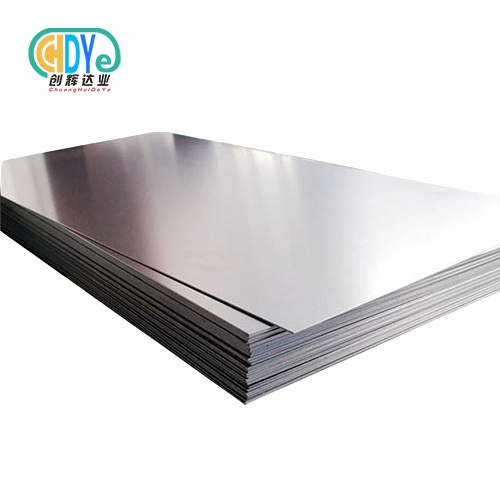
Understanding Titanium Alloy Sheets in the Marine Context
Titanium alloy sheets are made up of titanium mixed with carefully chosen alloying elements. This makes materials that are stronger than pure titanium. Ti-6Al-4V (Grade 5), which has 6% aluminum and 4% vanadium, is the most well-known marine-grade titanium metal. These features make titanium much stronger while keeping its natural resistance to rust. Grade 2 commercially pure titanium is also used a lot in naval settings where rust resistance is more important than strength.
Chemical Composition and Marine Performance
In saltwater settings, the alloying elements in titanium sheets do certain jobs. Aluminum is an alpha stabilizer that makes things stronger and less dense, and vanadium is a beta stabilizer that makes things more flexible and easy to work with. This mix makes materials that can withstand tensile stresses of more than 130,000 psi while still being very easy to shape for making complex naval parts.
Manufacturing Standards for Marine Applications
Marine-grade titanium sheets are made using strict methods to make sure they work perfectly. Impurities that could weaken rust protection are removed by vacuum melting. Controlled heating makes the microstructure best for marine service conditions, while cold rolling makes the thickness regular and the surface quality better. The thickness of these sheets usually ranges from 0.020 inches to 4 inches, so they can be used for a wide range of naval building needs. Modern production methods make sure that the standard of each sheet is the same. Electron beam melting makes ingots that are all the same and don't separate, and precision rolling keeps the tight size limits that are needed for marine uses. As part of quality control, ultrasonic testing is used to find problems inside the product, and chemical analysis is used to make sure the makeup meets the requirements.
Advantages of Titanium Alloy Sheets Over Traditional Marine Construction Materials
Traditionally, steel and metal alloys were used for marine building. However, these materials don't work well in saltwater. Even with protective coats, steel corrodes quickly, while aluminum has problems with galvanic rust and isn't very strong. Titanium alloy sheet gets rid of these issues and offers other performance benefits that make the investment worthwhile.
Superior Corrosion Resistance
Titanium makes a stable, self-healing oxide layer that protects against rust in saltwater very well. Instead of pitting and crevice rust in chloride settings, which can happen to stainless steel, titanium stays solid in seawater forever. When the surface comes into contact with air, this natural passivation happens right away, making a barrier that stops further oxidation.
The advantage of rust resistance becomes especially clear when exposed to salt water for a long time. Stainless steel needs to be maintained regularly and will eventually need to be replaced because of rust, but titanium parts stay strong for decades without breaking down. Even though the materials cost more at first, this means big savings over the life of the product.
Weight Reduction and Structural Efficiency
Titanium's density of about 4.5 g/cm³ is much lower than steel's density of 7.8 g/cm³, which means it is much lighter. Marine boats directly gain from less weight because it makes them use less fuel, carry more cargo, and turn more easily. Grade 5 titanium is stronger than most marine steels in terms of weight-to-strength, which lets designers make smaller sections without sacrificing structural integrity.
Fatigue Resistance in Dynamic Marine Environments
Marine buildings are always being loaded and unloaded by waves, wind, and operating pressure. Titanium metals are very resistant to wear, meaning that their structures stay strong even after millions of stress cycles that would break other materials. This resistance to wear is very important for parts that are loaded over and over, like propeller shafts, ship reinforcements, and deck structures.
Practical Applications of Titanium Alloy Sheets in Marine Construction
Marine construction utilizes titanium alloy sheet across diverse applications where performance and longevity justify the material investment. Knowing about these uses helps buying workers find ways to use titanium in their projects.
Hull Construction and Reinforcement
Modern naval vessels and high-performance civilian craft increasingly incorporate titanium sheets in hull construction. Critical stress areas benefit from titanium's combination of strength and corrosion resistance. Submarine hulls particularly benefit from titanium's ability to maintain structural integrity under extreme pressure while resisting seawater corrosion. The material's non-magnetic properties provide additional advantages for military use.
Hull reinforcement applications include areas around propeller tubes, rudder posts, and engine mounts, where stress is high and needs better materials. Titanium sheets can be shaped into complex bent shapes while keeping their features the same all the way through the structure.
Superstructure and Deck Applications
Superstructures exposed to salt spray and weather conditions benefit significantly from titanium's corrosion resistance. Radar masts, communication panels, and bridge structures made from titanium sheets don't need to be painted or maintained, and they also have less weight on top, which makes the ship more stable. Because the material is so easy to shape, it can be used in a wide range of building forms while still being strong.
Propulsion System Components
Extreme weathering and corrosion conditions make it hard for regular materials to be used in propeller parts, shaft housings, and tube walls. Titanium alloy strips are strong enough to fight erosion in these situations and keep their shape even when they are under a lot of stress. Because the material is biocompatible, sea growth can't stick to it, which means less upkeep is needed.
Procurement Considerations for Titanium Alloy Sheets in Marine Projects
To buy titanium successfully, you need to know how the market works, what the seller can do, and the technical requirements that will affect the project's success. Material prices and lifetime benefits must be weighed by marine project managers, who must also make sure that supply lines are reliable and quality standards are met.
Cost Analysis and Budget Planning
Titanium material costs typically range from 10 to 20 times steel prices, but a lifecycle study shows that it has big cost benefits. Total purchase costs are often cheaper when coating, painting, and replacement costs are taken out over a 20-year service life. For big naval projects, buying in bulk and building long-term ties with suppliers can significantly reduce material costs for large marine projects.
Supplier Selection and Quality Assurance
To find suitable providers, you have to look at their manufacturing skills, quality certifications, and experience in the water business. The ISO 9001:2015 certification makes sure that quality management is always the same, and the ASTM material certifications make sure that the materials meet marine standards. To make sure the integrity of the materials, suppliers should show that they can vacuum-melt them and use modern testing tools.
Technical Specifications and Grade Selection
Marine applications usually ask for either Grade 2 (which is the most resistant to rust) or Grade 5 (which is the strongest) for structural uses. Tolerances for thickness, standards for surface finish, and mechanical feature lists must all match up with the way the part is made and how it will be used. Different types of heat treatment can make features work better in certain situations. Teams in charge of buying things should set clear requirements for things like chemical makeup, mechanical qualities, and size variations. Documentation that shows where materials came from makes sure that marine rules are followed and makes quality control easier throughout the whole production process.
Future Trends and Innovations in Titanium Alloy Applications for Marine Construction
The marine titanium market is always changing because technology is always getting better, and business needs are always changing. New rules about the environment, digital buying platforms, and new production methods are changing how titanium is used in naval building projects.
Advanced Alloy Development
Some naval problems can be solved with new titanium alloy formulas that also lower costs. Beta titanium alloys are better at shaping complex forms, and near-alpha metals are better at resisting creep in high-temperature marine settings. Titanium-aluminum intermetallics are still being studied as a way to make things lighter while still keeping their rust protection.
Additive Manufacturing Integration
With 3D printing, complicated titanium parts can be made straight from digital drawings. This ability lets structures be improved with cooling channels, lattice frames, and built-in fastening systems that aren't possible with standard manufacturing. Marine building uses these methods more and more for making prototypes and small batches of products.
Sustainability and Recycling
People who care about the environment want things that last and have little effect on the environment. Titanium can be recycled over and over again and is not harmful, so it can be used in green naval building projects. Titanium alloy sheet recycling methods get back almost all of the material's value, which supports the ideas of the circular economy and is better for the earth. Digital buying systems make it easier to find titanium by automatically matching specifications, showing prices in real time, and incorporating quality paperwork. These methods cut down on the time it takes to buy things and make sure they meet marine building standards.
Conclusion
Titanium alloy sheet is the best material for shipbuilding projects that need high performance, durability, and dependability. The mix of excellent resistance to corrosion, high strength-to-weight ratio, and excellent resistance to fatigue solves the main problems that marine settings present while also bringing about long-term economic benefits. When marine engineers and procurement workers use titanium solutions, they get lower maintenance costs, longer service lives, and better operating performance, which makes the initial investment in the material worth it. As standards for shipbuilding keep getting better, titanium alloys are the tried-and-true technology that works in the world's toughest settings.
FAQ
Q: What makes titanium alloy sheets superior to stainless steel for marine applications?
A: Titanium alloy sheets provide significantly better corrosion resistance in saltwater environments compared to stainless steel. While stainless steel can suffer from pitting and crevice corrosion in chloride environments, titanium forms a stable oxide layer that prevents further corrosion indefinitely. Additionally, titanium offers a better strength-to-weight ratio and eliminates the need for protective coatings.
Q: Which titanium grades are most suitable for marine construction?
A: Grade 2 economically pure titanium is the most resistant to rust and can be used in situations where strength isn't very important. Higher strength for structural uses is found in Grade 5 (Ti-6Al-4V), which also has great rust protection. The choice relies on the needs of the product, weighing the importance of strength against corrosion resistance.
Q: How do lifecycle costs compare between titanium and conventional marine materials?
A: Titanium costs more to buy at first, but lifetime research usually shows that it is cheaper to use for 15 to 20 years. Total ownership costs are often 20–40% cheaper than with steel or aluminum options because coating, upkeep, and replacement costs are not needed. This depends on the purpose and environmental conditions.
Q: Can titanium alloy sheets be welded and fabricated using standard techniques?
A: Titanium needs to be welded using special methods that use inert gas protection to keep the metal from getting contaminated. But normal forming processes like rolling, bending, and pressing work well when the right tools are used. With the right training and changes to their tools, most marine manufacturing shops can change how they do things to work with titanium.
Partner with Chuanghui Daye for Premium Marine Titanium Solutions
Marine building projects need materials that work well and are reliable without any compromises. You can trust Shaanxi Chuanghui Daye Metal Material Co., Ltd. to give you high-quality titanium alloy sheets that are ISO 9001:2015 approved and made to last in the sea environment. Our high-tech production tools, like electron beam furnaces and precision rolling equipment, make sure that the standard is always high enough to meet the strictest marine requirements. Get in touch with our technical team at info@chdymetal.com to talk about your project needs and find out how our 30 years of experience with rare metals can help you get better results in shipbuilding with our superior titanium solutions.
References
1. Boyer, R. R. "An Overview on the Use of Titanium in the Aerospace Industry." Materials Science and Engineering: A, vol. 213, 1996.
2. Schutz, R. W., and Watkins, H. B. "Recent Developments in Titanium Alloy Application in the Energy Industry." Materials Science and Engineering: A, vol. 243, 1998.
3. Peters, M., et al. "Titanium Alloys for Aerospace Applications." Advanced Engineering Materials, vol. 5, 2003.
4. Donachie, Matthew J. "Titanium: A Technical Guide." ASM International, 2000.
5. Lutjering, Gerd, and Williams, James C. "Titanium Engineering Materials and Processes." Springer-Verlag, 2007.
6. Cotton, J. D., et al. "State of the Art in Beta Titanium Alloys for Airframe Applications." Journal of the Minerals, Metals and Materials Society, vol. 67, 2015.

Learn about our latest products and discounts through SMS or email