- English
- French
- German
- Portuguese
- Spanish
- Russian
- Japanese
- Korean
- Arabic
- Greek
- German
- Turkish
- Italian
- Danish
- Romanian
- Indonesian
- Czech
- Afrikaans
- Swedish
- Polish
- Basque
- Catalan
- Esperanto
- Hindi
- Lao
- Albanian
- Amharic
- Armenian
- Azerbaijani
- Belarusian
- Bengali
- Bosnian
- Bulgarian
- Cebuano
- Chichewa
- Corsican
- Croatian
- Dutch
- Estonian
- Filipino
- Finnish
- Frisian
- Galician
- Georgian
- Gujarati
- Haitian
- Hausa
- Hawaiian
- Hebrew
- Hmong
- Hungarian
- Icelandic
- Igbo
- Javanese
- Kannada
- Kazakh
- Khmer
- Kurdish
- Kyrgyz
- Latin
- Latvian
- Lithuanian
- Luxembou..
- Macedonian
- Malagasy
- Malay
- Malayalam
- Maltese
- Maori
- Marathi
- Mongolian
- Burmese
- Nepali
- Norwegian
- Pashto
- Persian
- Punjabi
- Serbian
- Sesotho
- Sinhala
- Slovak
- Slovenian
- Somali
- Samoan
- Scots Gaelic
- Shona
- Sindhi
- Sundanese
- Swahili
- Tajik
- Tamil
- Telugu
- Thai
- Ukrainian
- Urdu
- Uzbek
- Vietnamese
- Welsh
- Xhosa
- Yiddish
- Yoruba
- Zulu
Can GR4 Titanium Bar Be Machined Easily?
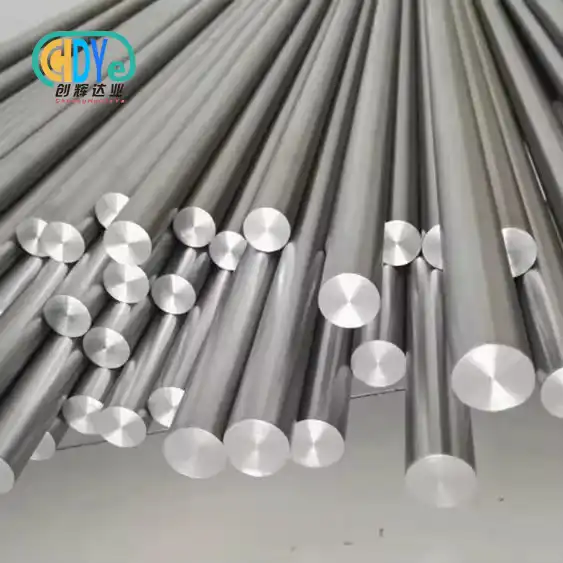
Different types of commercially gr4 titanium bar pure titanium bars are very different in how easy they are to machine. Knowing these differences helps you make better purchasing decisions. The GR4 titanium bar is at the high-strength end of the CP titanium range. It has a tensile strength of up to 550 MPa and the corrosion-resistance that titanium is known for. The higher oxygen and iron content of this material make it harder than Grade 2. This means that it needs a little more care when it is being machined. On the other hand, GR4 is still a lot easier to work with than alloyed Grade 5 titanium. The key is to choose the right cutting settings, sharp carbide tools, and enough coolant flow. When these conditions are met, GR4 titanium bars give precision parts in the aircraft, medical device manufacturing, and chemical processing industries great surface finishes and accurate measurements.
Understanding the GR4 Titanium Bar and Its Machinability
Chemical Composition and Microstructure
Grade 4 titanium bars are different from lower CP grades because they have a controlled interstitial strengthening process. If you compare this material to Grades 1 through 3, it has a microstructure that is alpha-phase and has higher amounts of iron and oxygen (up to 0.40%). This way of putting the materials together makes them stronger without adding alloying elements like the aluminium or vanadium found in Grade 5. The crystalline structure that is made is moderately hard and has good corrosion resistance, which comes from pure titanium. Chemical tolerances are controlled by manufacturing standards like ASTM B348 and ASME SB348 to make sure that all production runs are the same. At our Baoji plant, we keep a close eye on the composition of the metal by using modern melting methods and electron beam furnaces to make sure that there is little contamination and that the properties of each billet are the same. This regularity in the metal directly affects how predictable the machining process is. Differences in the interstitial gr4 titanium bar content can cause uneven tool wear and chip formation that is hard to predict during cutting operations.
Key Mechanical Properties Affecting Machining
The mechanical profile of commercially pure Grade 4 material creates both advantages and considerations for machining operations. Tensile strength reaches a minimum of 550 MPa, with yield strength specifications requiring at least 480 MPa. Elongation values of 15% minimum indicate reasonable ductility, though this is lower than softer CP grades. These properties position the material in an interesting middle ground—strong enough to resist deflection during cutting but not so hard as to necessitate specialized tooling strategies required for high-alloy aerospace materials. Work hardening behavior presents the most significant machining challenge. When cutting parameters generate excessive heat or inadequate chip clearance occurs, the material beneath the cutting edge can harden rapidly. This phenomenon accelerates tool wear and can compromise surface finish quality. Understanding this characteristic explains why depth of cut, feed rates, and cutting speed must be carefully balanced. Proper parameter selection prevents the subsurface strain hardening that creates problems during subsequent machining passes. Temperature resistance also influences machining strategies. The material maintains structural integrity at elevated temperatures better than many alternatives, which means the heat generated during cutting operations doesn't soften the workpiece significantly. This characteristic requires effective coolant delivery to prevent thermal damage to both the workpiece and cutting tools.
Comparing GR4 Titanium Bar Machining With Other Metals
GR4 Versus GR5 Titanium Alloy
The decision between commercially pure Grade 4 and alloyed Grade 5 often hinges on application-specific performance requirements balanced against manufacturing realities. Grade 5 delivers approximately 60% higher tensile strength, making it indispensable for highly stressed aerospace structures and landing gear components. However, this strength advantage comes with substantial machining penalties. Tooling costs increase significantly when working with Grade 5. Carbide grades must be carefully selected for their hot hardness and wear resistance, and tool replacement frequency rises dramatically. Cutting speeds typically drop to 40-60% of those used for GR4, directly impacting production throughput. Heat generation becomes more problematic, requiring high-pressure coolant systems that may not be necessary for CP Grade 4 operations. Material cost differences further influence total procurement expenses. Grade 5 raw material pricing typically runs 25-40% higher than GR4, depending on market conditions and order volumes. When combined with increased machining time and tooling expenses, the total cost differential can exceed 50% for finished components. Procurement teams must evaluate whether the mechanical performance gain justifies this premium. Certain applications specifically favor GR4 despite lower absolute strength. Medical implant manufacturing often avoids Grade 5 due to concerns about vanadium bio-reactivity, making commercially pure grades the preferred specification. Chemical processing environments with extreme corrosive exposure may also favor GR4, as the absence of alloying elements can enhance resistance to specific aggressive media.
Titanium GR4 Against Stainless Steel
Stainless steel 316, a common industrial material, provides an interesting comparison point. While 316 machines more easily than any titanium grade—faster cutting speeds, longer tool life, better chip breaking—it cannot match titanium's corrosion performance in chloride environments or weight-to-strength advantages. Density differences become significant in weight-critical applications. Grade 4 titanium weighs approximately 4.5 g/cm³ compared to 8.0 g/cm³ for stainless steel, representing a 45% weight reduction. This translates directly into fuel savings for aerospace applications, payload improvements for defense equipment, and ergonomic benefits for handheld medical instruments. Chloride-induced stress corrosion cracking limits stainless steel in many chemical processing and marine environments. Commercially pure Grade 4 titanium demonstrates immunity to these failure modes, maintaining structural integrity in seawater, hot chloride solutions, and other aggressive environments where stainless steel components fail prematurely. This durability advantage of the Gr4 titanium bar often justifies higher initial material and machining costs through extended service life and reduced maintenance expenses.
Best Practices for Machining GR4 Titanium Bar Effectively
Optimizing Cutting Parameters
Successful machining of commercially pure Grade 4 material begins with appropriate parameter selection. Cutting speeds should typically range between 40-80 meters per minute for turning operations using carbide tooling, notably lower than speeds used for stainless steel or aluminum. These reduced speeds help manage heat generation and minimize work hardening in the cut zone. Feed rates require careful consideration to balance productivity with tool life. Moderate feeds of 0.15-0.30 mm per revolution generally produce optimal results for turning operations. Feeds that are too light can cause rubbing rather than cutting, which accelerates work hardening. Excessive feeds increase cutting forces and tool stress, leading to premature failure. The goal is to maintain consistent chip formation with adequate thickness to carry heat away from the cutting zone. Depth of cut specifications depend on operation type and machine rigidity. Roughing passes may utilize depths of 2-4 mm where machine capability permits, while finishing cuts typically employ 0.5-1.0 mm depths to minimize deflection and achieve target surface finishes. Sharp cutting edges remain essential—even slight edge radius breakdown dramatically increases cutting forces and heat generation.
Tool Material Selection and Geometry
Carbide tool grades designed for titanium machining deliver the best combination of wear resistance and edge toughness. Uncoated fine-grain carbide tools often outperform coated alternatives when machining commercially pure grades, as coatings can delaminate under the specific stress conditions that titanium creates. Tool geometry should feature positive rake angles to reduce cutting forces and sharp edges to prevent material smearing. Tool wear monitoring becomes critical for maintaining quality. Unlike steel machining, where gradual wear can be tolerated, titanium operations require timely tool replacement before excessive flank wear develops. Once wear reaches certain thresholds, work hardening accelerates exponentially, and surface finish degradation becomes difficult to reverse. Chip control features must be carefully evaluated. Long, stringy chips are common when machining titanium, and inadequate chip breaking can create safety hazards and interrupt automated operations. Chip breaker geometries should be selected based on depth of cut and feed rate specifications to ensure chips segment appropriately without increasing cutting forces.
Procurement Insights: How to Buy GR4 Titanium Bars for Machining
Evaluating Supplier Capabilities
Selecting the appropriate titanium supplier requires evaluating technical capabilities beyond simple price comparisons. Manufacturing facilities with advanced melting equipment—particularly vacuum arc remelting (VAR) or electron beam cold hearth melting—produce material with superior cleanliness and consistency. These processes remove inclusions and homogenize composition in ways that conventional melting cannot match. ISO 9001:2015 certification provides baseline assurance of quality management systems, though certification gr4 titanium bar alone doesn't guarantee material expertise. Look for suppliers with specific titanium production experience rather than general metal distributors who source from multiple mills. Direct manufacturers typically offer better technical support, shorter lead times for custom sizes, and more consistent lot-to-lot properties. Stock availability becomes critical for time-sensitive projects. Suppliers maintaining a comprehensive inventory across diameter ranges (6-200mm in our case) can fulfill orders immediately rather than requiring 8-12 week mill lead times. This responsiveness proves invaluable for prototype development, emergency repairs, or production ramp-ups where material delays cascade through project timelines.
Understanding Pricing Structures
Market pricing for commercially pure Grade 4 material reflects several factors beyond simple commodity metal costs. The material typically commands a 15-25% premium over Grade 2 due to tighter compositional control and higher base metal content. Compared to Grade 5 alloy, GR4 generally costs 25-40% less, making it attractive for applications where full alloy strength isn't required. Volume discounts become available at various thresholds, depending on the supplier. Orders exceeding 500 kilograms often trigger preferential pricing, while annual agreements for regular consumption can reduce costs by an additional 5-15%. Procurement teams should evaluate total annual requirements to determine whether volume commitments make financial sense. Custom processing adds value but increases unit cost. Standard lengths (2000-5800mm) ship at base pricing, while non-standard cuts, centerless grinding, or precision tolerance specifications add charges. However, these services may reduce overall project cost by eliminating secondary operations at your facility. The economic decision depends on your internal capabilities and capacity utilization.
Quality Documentation and Traceability
Comprehensive material certification represents a non-negotiable requirement for regulated industries. Proper test reports should include chemical analysis for all specified elements, mechanical property testing (tensile strength, yield strength, elongation), and heat lot traceability. Medical device manufacturers require additional documentation, including ASTM F-67 compliance, while aerospace applications demand AS9100 certification from suppliers. Third-party testing verification adds another layer of confidence. While supplier-generated test reports are standard, critical applications may warrant independent laboratory analysis of incoming material. This practice identifies any discrepancies before material enters production, preventing costly scrapping of finished components. Traceability systems enable recalls and failure investigations when problems emerge. Suppliers using comprehensive lot tracking can identify all customers who received material from specific production batches, facilitating targeted responses rather than blanket notifications. This capability becomes particularly valuable in the medical and aerospace sectors where regulatory reporting obligations exist.
Conclusion
Machining commercially pure Grade 4 titanium bars presents manageable challenges when approached with proper understanding and appropriate techniques. The material occupies a valuable position in the titanium grade spectrum—offering substantially higher strength than softer CP grades while remaining more machinable and cost-effective than high-alloy alternatives. Success depends on selecting the correct cutting parameters, utilizing proper tooling, implementing effective coolant strategies, and sourcing material from qualified suppliers who maintain consistent quality. Procurement decisions should weigh the total cost of ownership rather than focusing solely on raw material pricing. When the application demands titanium's unique combination of corrosion resistance, strength-to-weight ratio, and biocompatibility, Grade 4 frequently represents the optimal specification. Strategic supplier partnerships that provide technical support, comprehensive documentation, and value-added processing capabilities transform material sourcing from a transactional commodity purchase into a competitive manufacturing advantage.
FAQ
1. Can standard carbide tooling machine Grade 4 titanium effectively?
Standard carbide tooling designed for steel machining often underperforms on commercially pure titanium grades. Tools specifically engineered for titanium—featuring appropriate substrate grades, sharp edge preparation, and optimized geometries—deliver substantially better results. While the material doesn't require exotic tool materials like those needed for high-temperature superalloys, using titanium-specific tooling improves tool life by 40-70% compared to general-purpose grades. The investment in proper tooling quickly pays for itself through reduced tool changes and improved surface finishes.
2. Why choose Grade 4 over lower-cost Grade 2 titanium?
Applications requiring higher mechanical strength or improved wear resistance justify the Grade 4 premium. The approximately 60% increase in tensile strength compared to Grade 2 enables lighter component designs or allows parts to withstand higher stress levels. High-pressure pump shafts, structural aerospace fasteners, and load-bearing medical instruments frequently require this additional strength. When pure titanium's corrosion resistance is essential, but Grade 2's mechanical properties are marginally insufficient, Grade 4 provides the optimal balance without the cost and machining complexity of alloyed grades.
3. Does corrosion resistance affect machining performance?
Corrosion resistance and machinability represent largely independent material characteristics. Grade 4's exceptional corrosion performance results from the stable titanium oxide layer that forms spontaneously, which has minimal impact on cutting operations. The material properties that influence machining—strength, work hardening tendency, thermal conductivity—stem from metallurgical structure rather than corrosion behavior. However, post-machining cleaning and passivation can enhance corrosion performance by ensuring complete oxide layer formation on freshly cut surfaces.
Partner With an Experienced GR4 Titanium Bar Manufacturer
Navigating the complexities of commercially gr4 titanium bar pure titanium procurement demands more than simply identifying competitive pricing. Successful sourcing relationships are built on technical competence, manufacturing consistency, and responsive customer support that extends beyond order fulfillment. At Shaanxi Chuanghui Daye, we combine over 30 years of rare metal expertise with ISO 9001:2015 certified production processes to deliver commercially pure Grade 4 titanium bars that meet exacting international standards, including ASTM B348 and ASME SB348.
Our manufacturing facility in Baoji—China's recognized Titanium Capital—leverages advanced melting technologies, precision rolling equipment, and comprehensive machining capabilities to provide custom solutions tailored to your specifications. Whether you require standard bar stock in diameters from 6-200mm or need value-added services including custom cutting and semi-finished machining, our team delivers the quality and responsiveness your operations demand. Contact our technical sales team at info@chdymetal.com to discuss your specific requirements and discover how partnering with a dedicated Gr4 titanium bar supplier can optimize your supply chain and manufacturing efficiency.
References
1. Oyer, R., Welsch, G., and Collings, E.W. (1994). Materials Properties Handbook: Titanium Alloys. ASM International, Materials Park, Ohio.
2. Donachie, M.J. (2000). Titanium: A Technical Guide, 2nd Edition. ASM International, Materials Park, Ohio.
3. Lutjering, G. and Williams, J.C. (2007). Titanium, 2nd Edition: Engineering Materials and Processes. Springer-Verlag, Berlin.
4. Ezugwu, E.O. and Wang, Z.M. (1997). "Titanium Alloys and Their Machinability: A Review." Journal of Materials Processing Technology, Vol. 68, Issue 3, pp. 262-274.
5. ASM International Handbook Committee (1989). ASM Handbook Volume 16: Machining. ASM International, Materials Park, Ohio.
6. Peters, M., Kumpfert, J., Ward, C.H., and Leyens, C. (2003). "Titanium Alloys for Aerospace Applications." Advanced Engineering Materials, Vol. 5, Issue 6, pp. 419-427.

Learn about our latest products and discounts through SMS or email