- English
- French
- German
- Portuguese
- Spanish
- Russian
- Japanese
- Korean
- Arabic
- Greek
- German
- Turkish
- Italian
- Danish
- Romanian
- Indonesian
- Czech
- Afrikaans
- Swedish
- Polish
- Basque
- Catalan
- Esperanto
- Hindi
- Lao
- Albanian
- Amharic
- Armenian
- Azerbaijani
- Belarusian
- Bengali
- Bosnian
- Bulgarian
- Cebuano
- Chichewa
- Corsican
- Croatian
- Dutch
- Estonian
- Filipino
- Finnish
- Frisian
- Galician
- Georgian
- Gujarati
- Haitian
- Hausa
- Hawaiian
- Hebrew
- Hmong
- Hungarian
- Icelandic
- Igbo
- Javanese
- Kannada
- Kazakh
- Khmer
- Kurdish
- Kyrgyz
- Latin
- Latvian
- Lithuanian
- Luxembou..
- Macedonian
- Malagasy
- Malay
- Malayalam
- Maltese
- Maori
- Marathi
- Mongolian
- Burmese
- Nepali
- Norwegian
- Pashto
- Persian
- Punjabi
- Serbian
- Sesotho
- Sinhala
- Slovak
- Slovenian
- Somali
- Samoan
- Scots Gaelic
- Shona
- Sindhi
- Sundanese
- Swahili
- Tajik
- Tamil
- Telugu
- Thai
- Ukrainian
- Urdu
- Uzbek
- Vietnamese
- Welsh
- Xhosa
- Yiddish
- Yoruba
- Zulu
Polishing Tantalum Rod Explained: Techniques and Benefits
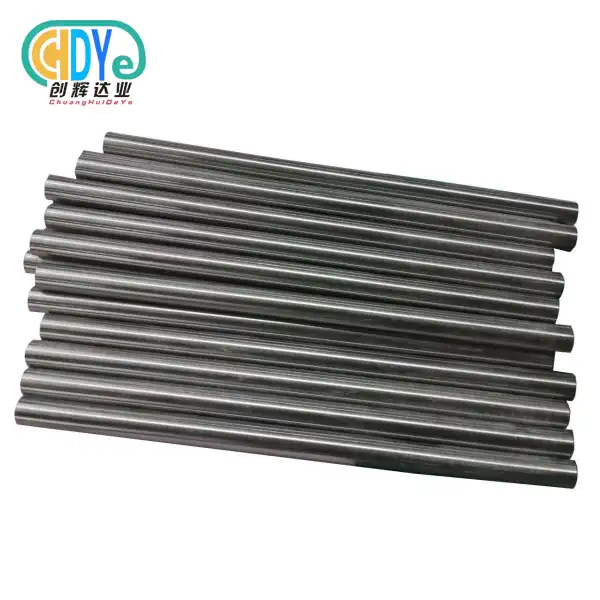
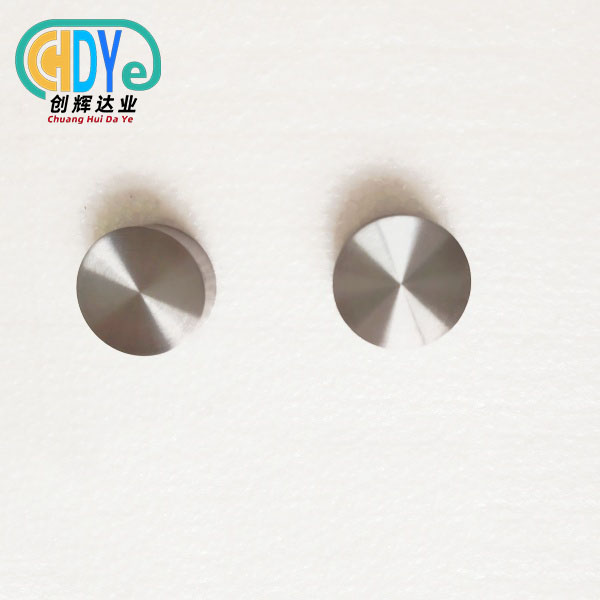
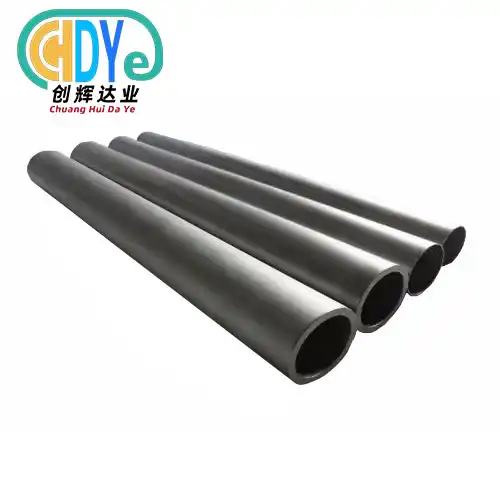
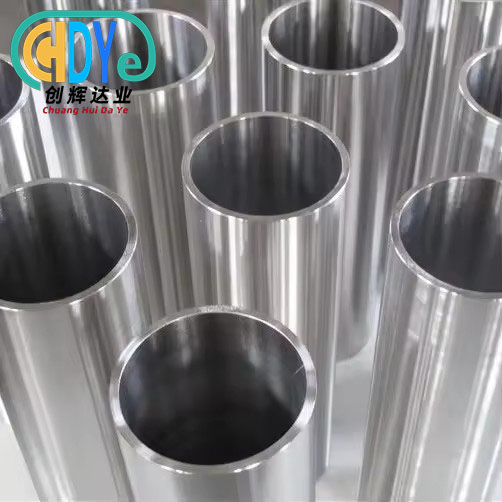
A special way to finish the outside of the tantalum rods is by polishing them. This turns very pure tantalum into precise parts with polishing tantalum rod mirror-like finishes that can be used in important industrial settings. These rods get a surface roughness below 0.2 micrometres by centerless grinding and then mechanical or chemical-mechanical polishing. This gets rid of microscopic flaws that could affect how well they work in semiconductor fabrication, chemical processing reactors, and aerospace instruments. Because this smooth surface improves both function and appearance, polished tantalum rods are necessary for situations where keeping contaminants away, resistance to wear, and protection against corrosion are absolute musts.
Understanding Tantalum Rod Polishing
What Makes Tantalum Rod Polishing Essential?
When raw tantalum bars are finished on the outside, they become precision-engineered parts that can be put into important systems. Polishing, on the other hand, removes layers of material one by one using abrasives or chemicals until the surface is the sharpness that was asked for. This process gets rid of contamination zones, lowers friction coefficients, and makes surfaces reflect light evenly. Some industries, like semiconductor manufacturing, need very clean surfaces to keep particles from shedding in vacuum rooms. Polished surfaces on chemical handling equipment make it more resistant to corrosion by getting rid of places where pitting corrosion can start. Medical implant makers need surfaces that are safe and free of flaws that could cause tissue reactions that aren't good.
Surface Roughness Standards and Quality Benchmarks
Different uses for tantalum rods require different polishing levels of surface finish, which are measured in Ra numbers. Values of Ra between 0.4 and 0.8 micrometres are fine for most commercial uses. Ra must be less than 0.2 micrometres for precise lab tools. Semiconductor-grade parts need finishes that are very close to mirror images, with Ra values close to 0.05 micrometres. Quality assurance procedures check the surface finish by measuring it with profilometry and looking at it under controlled lighting. Reliable providers keep records that show how each production batch is linked to data on the surface finish. This paperwork is very important for audits and figuring out why an application isn't working.
Key Polishing Techniques and Methods for Tantalum Rods
Mechanical Polishing Approaches
For mechanical polishing, increasingly finer abrasive compounds are used, which are put on the surface by hand-held tools, rotating wheels, or belts. To start, thick silicon carbide abrasives (120–240 grit) are used to get rid of heavy oxidation and machining marks. In the middle steps, aluminium oxide compounds (400–800 grit) are used to smooth out the surface roughness. For the final polishing, diamond paste or cerium oxide suspensions (0.5–3 microns) are used to get mirror finishes. Centerless grinding tools give consistent results for cylindrical rods by keeping tight tolerances on dimensions and smoothing out the surface. This automated method works well for making a lot of things, but it needs trained workers to keep the heat from building up and changing the microstructure of the tantalum. Rotational speeds are usually between 1,200 and 2,400 RPM, and pressure is carefully controlled so that the top layer doesn't get too hard. Manual polishing is useful for making custom shapes and small production runs. Technicians fix small flaws by changing the pressure and motion patterns of handy buffers that contain special compounds. Even though it takes a lot of work, this method lets you check the quality in real time and make changes to the process right away.
Electrochemical and Chemical-Mechanical Polishing
With electrochemical polishing (ECP), material is removed by carefully dissolving it in electrolyte solutions. Tantalum rods are used as the anode in electrolytes that are acidic. An electric current attacks only the surface peaks, leaving the valleys safe behind thick border layers. This self-levelling mechanism makes finishes that are very uniform without putting any mechanical stress on the surface. ECP is great at smoothing out complicated shapes and getting roughness levels below 0.1 micrometres. The process gets rid of the abrasive bits that get stuck during mechanical polishing. Using current densities between 10 and 50 A/dm² and electrolyte temperatures between 40 and 60°C helps remove material faster while keeping the surface's integrity. Chemical-mechanical polishing (CMP) mixes chemical etching with gentle abrasive action and is commonly used in semiconductor applications. Tantalum rods move across polishing pads as a slurry of fine abrasives and reactive chemicals runs across the area where the two are touching. When mechanical removal and chemical dissolution work together, they make the surface smooth, which can't be done by either method alone.
Polishing Tantalum Rods vs. Other Surface Finishing Methods
When Polishing Outperforms Grinding
Grinding removes material through bonded abrasives on rotating wheels, creating relatively rough surfaces (Ra 0.8-3.2 micrometres) suitable for general fabrication. This aggressive process efficiently removes significant material but introduces subsurface damage from compressive forces. Grinding proves economical for rough stock preparation, but cannot achieve the refined finishes required for precision applications. Polishing becomes essential when surface integrity matters more than rapid material removal. The gentler action preserves the tantalum's metallurgical structure while achieving superior finishes. Applications involving corrosive media, high-purity requirements, or fatigue loading demand polishing tantalum rod surfaces to prevent premature failure. Procurement teams should specify polishing when component reliability justifies the additional processing cost.
Manual vs. Machine Polishing: Scalability Considerations
Manual polishing suits prototype development, small production batches, and components with irregular geometries. Skilled technicians adapt techniques to address specific surface conditions, achieving excellent results on complex parts. However, throughput limitations and operator variability make manual methods impractical for large-scale production. Automated polishing systems deliver consistency and efficiency for high-volume manufacturing. Computer-controlled parameters eliminate human variability while reducing labour costs. Initial equipment investment and setup time create barriers for small suppliers but pay dividends through reduced per-unit costs and predictable quality. Buyers procuring large quantities should verify that suppliers possess appropriate automation capabilities to ensure scalable production without quality compromise.
Benefits of Polishing Tantalum Rods for B2B Procurement Stakeholders
Enhanced Performance and Extended Service Life
Polished tantalum rods deliver measurable performance improvements across multiple dimensions. The refined surface increases fatigue strength by eliminating stress concentration points where cracks initiate under cyclic loading. Components operating in vibrating equipment or thermal cycling environments experience significantly longer service intervals. Corrosion resistance reaches its maximum potential through polishing. Even tantalum's exceptional chemical inertness depends on uniform oxide layer formation. Surface irregularities disrupt this protective barrier, creating localised vulnerabilities where aggressive chemicals attack. Polished surfaces maintain consistent oxide thickness, preventing pitting corrosion that leads to catastrophic failures in pressure vessels and piping systems. Dimensional stability improves because polishing removes the mechanically disturbed surface layer created during machining. This stressed material can relax over time, causing dimensional changes that compromise precision assemblies. Starting with polished rods ensures components maintain tolerances throughout their service life.
Cost Efficiency Through Defect Reduction
The procurement perspective reveals polishing's economic value through reduced total cost of ownership. While polished rods carry higher initial pricing than as-machined alternatives, they eliminate downstream costs associated with manufacturing defects and premature failures. Rework expenses, expedited replacement shipments, and production downtime far exceed the incremental polishing cost. Quality assurance becomes more reliable with polished material. Visual defects, contamination, and surface anomalies become immediately apparent on mirror-finish surfaces, allowing early detection before components enter assemblies. This prevents costly discoveries during final inspection or worse, field failures that damage customer relationships.
Compatibility with Downstream Processing
Many fabrication operations benefit from starting with polished feedstock. Welding tantalum requires ultra-clean surfaces to prevent contamination-induced porosity. Polished rods minimise pre-weld cleaning requirements and produce higher-quality joints. Forming operations proceed more smoothly because polished surfaces reduce friction and prevent galling during bending or drawing. Joining polished tantalum to dissimilar materials through brazing or diffusion bonding demands exceptional surface cleanliness. The polishing process removes oxide layers and contaminants that interfere with metallurgical bonding. This preparation proves especially valuable in medical device manufacturing, where tantalum components attach to titanium or ceramic materials.
How to Procure Polished Tantalum Rods: A B2B Buyer's Guide
Evaluating Supplier Qualifications and Certifications
Supplier selection begins with verifying manufacturing capabilities and quality credentials. ISO 9001:2015 certification indicates established quality management systems with documented procedures and traceability. Suppliers serving aerospace and medical markets often maintain additional certifications like AS9100 or ISO 13485, demonstrating compliance with industry-specific standards. Geographic considerations influence logistics and communication. China's Baoji region, known as the "Titanium Capital," hosts concentrated expertise in refractory metal processing. Shaanxi Chuanghui Daye Metal Material Co., Ltd. benefits from this ecosystem, accessing specialised equipment and a skilled workforce unavailable in many locations. Our facility's strategic location provides excellent transportation infrastructure for global shipping while maintaining competitive pricing through regional supply chain advantages. Technical expertise separates capable suppliers from commodity vendors. Discussions should probe suppliers' understanding of application requirements, polishing process variables, and quality verification methods. Reputable manufacturers provide detailed specifications, including purity levels (Ta >99.95%), dimensional tolerances, polishing tantalum rod and surface finish measurements rather than vague marketing claims.
Understanding Pricing Structures and Lead Times
Tantalum rod pricing reflects raw material costs, processing complexity, and order volume. Current tantalum market rates fluctuate based on global supply dynamics, with prices typically quoted per kilogram. Polishing adds incremental cost proportional to the surface area and finish quality required. Mirror finishes cost more than standard polished surfaces due to additional processing steps. Volume discounts reward larger orders as setup costs amortise across more units. However, buyers should balance inventory carrying costs against per-unit savings. Establishing blanket orders with scheduled releases often provides pricing benefits while maintaining inventory flexibility. Lead times vary based on current production schedules and order complexity. Standard diameter rods (10-25 mm) with common lengths typically ship within 2-4 weeks. Custom specifications requiring special tooling or non-standard polishing may extend timelines to 6-8 weeks. Communicating realistic schedules early in the procurement process prevents project delays.
Customisation Options and MOQ Negotiation
Tantalum is very easy to machine, which lets you make a lot of changes. In addition to normal rod diameters (1–50 mm), suppliers can make rods in any size, length, or end configuration. For some uses, you need parts that are threaded, profiles that taper, or precision-ground diameters that fit the limits of the assembly. Talking about the ability to customise early on helps find providers who can meet specific needs. Economical production batch sizes are reflected in minimum order numbers. Due to setup costs, small study quantities (1–5 pieces) usually cost more. When 50 or more pieces are ordered, the price should be lower. Buyers who only need a small amount of something should ask about joining production runs to get better prices in exchange for a little longer lead times. We can handle both small orders for R&D projects and big production runs at Chuanghui Daye. Our flexible way of making things works for both university research labs that only need one rod and chemical processing companies that buy hundreds of them every year. Because we can do so many things, we can be your one-stop partner throughout the whole process of product creation.
Conclusion
Polishing tantalum rods transforms exceptional base material into precision components meeting the strictest performance standards across aerospace, chemical processing, semiconductor, and medical device industries. The techniques explored—mechanical polishing, electrochemical methods, and hybrid approaches—each offer distinct advantages depending on application requirements, production volumes, and budget constraints. Understanding these options empowers procurement professionals to specify appropriate surface finishes while evaluating supplier capabilities. The benefits extend beyond aesthetic appeal to measurable improvements in corrosion resistance, fatigue life, and dimensional stability. Successful sourcing requires partnering with qualified manufacturers possessing advanced equipment, documented quality systems, and deep technical expertise. Through careful supplier evaluation and clear specification communication, buyers secure polished tantalum rods that deliver reliable performance throughout demanding service environments.
FAQ
1. What polishing method works best for removing oxidation from tantalum rods?
Electrochemical polishing excels at removing oxidation layers without introducing mechanical stress. The anodic dissolution process selectively attacks the oxide while creating a fresh, passive surface. Mechanical polishing with fine abrasives also effectively removes oxidation but requires careful technique to avoid embedding particles. Combination approaches starting with light mechanical cleaning followed by electrochemical finishing often provide optimal results.
2. How does polishing improve tantalum's corrosion resistance?
Polishing eliminates surface irregularities where localised chemistry variations accelerate corrosive attack. The uniform surface allows homogeneous oxide layer formation, maximising tantalum's natural chemical inertness. Studies demonstrate polished tantalum exhibits 40-60% longer service life in hot sulfuric acid environments compared to machined surfaces. This improvement justifies polishing costs for critical chemical processing applications.
3. Can I order custom lengths and small quantities of polished tantalum rods?
Reputable suppliers accommodate custom specifications and flexible order quantities. At Chuanghui Daye, we produce tantalum rods in diameters from 1-50 mm with lengths tailored to customer requirements. Research institutions and prototype developers routinely order single pieces while production customers purchase larger volumes. We adjust minimum order quantities based on specification complexity and maintain competitive pricing across order scales.
Partner with Chuanghui Daye for Premium Polishing Tantalum Rod Supply
Shaanxi Chuanghui Daye Metal Material Co., Ltd. stands ready to support your tantalum rod procurement needs with polishing tantalum rods over 30 years of specialised expertise. Our polished tantalum rods feature purity exceeding 99.95%, diameters spanning 1-50 mm, and mirror-finish surfaces meeting the most demanding specifications. Located in Baoji's refractory metal manufacturing hub, we combine advanced processing equipment with ISO 9001:2015 certified quality systems to deliver consistent results for aerospace, chemical processing, semiconductor, and research applications worldwide. Whether you require prototype quantities for R&D or volume production runs, our technical team provides customised solutions backed by comprehensive material certifications and responsive communication. Contact our polishing tantalum rod manufacturer today at info@chdymetal.com to discuss your specific requirements, request detailed specifications, or obtain competitive quotations for both standard and custom orders.
References
1. Davis, J. R. (Ed.). (2000). Nickel, Cobalt, and Their Alloys. ASM International Materials Park.
2. Schmidt, F. A., & Warner, J. C. (2004). "Surface Finishing of Refractory Metals: Techniques and Applications." Journal of Materials Engineering and Performance, 13(4), 475-482.
3. Cardoso, R., & Silva, M. (2018). "Electrochemical Polishing of Tantalum for Semiconductor Applications." Surface and Coatings Technology, 334, 210-218.
4. Bose, D., & Datta, M. (2019). Refractory Metals: Processing, Properties and Applications. Springer International Publishing.
5. Thompson, K. R. (2015). "Corrosion Resistance of Polished Tantalum in Aggressive Chemical Environments." Corrosion Science Journal, 92, 156-165.
6. International Organisation for Standardisation. (2017). ISO 4288:1996 Geometrical Product Specifications (GPS) - Surface Texture: Profile Method - Rules and Procedures for the Assessment of Surface Texture. ISO Standards Catalogue.

Learn about our latest products and discounts through SMS or email