- English
- French
- German
- Portuguese
- Spanish
- Russian
- Japanese
- Korean
- Arabic
- Greek
- German
- Turkish
- Italian
- Danish
- Romanian
- Indonesian
- Czech
- Afrikaans
- Swedish
- Polish
- Basque
- Catalan
- Esperanto
- Hindi
- Lao
- Albanian
- Amharic
- Armenian
- Azerbaijani
- Belarusian
- Bengali
- Bosnian
- Bulgarian
- Cebuano
- Chichewa
- Corsican
- Croatian
- Dutch
- Estonian
- Filipino
- Finnish
- Frisian
- Galician
- Georgian
- Gujarati
- Haitian
- Hausa
- Hawaiian
- Hebrew
- Hmong
- Hungarian
- Icelandic
- Igbo
- Javanese
- Kannada
- Kazakh
- Khmer
- Kurdish
- Kyrgyz
- Latin
- Latvian
- Lithuanian
- Luxembou..
- Macedonian
- Malagasy
- Malay
- Malayalam
- Maltese
- Maori
- Marathi
- Mongolian
- Burmese
- Nepali
- Norwegian
- Pashto
- Persian
- Punjabi
- Serbian
- Sesotho
- Sinhala
- Slovak
- Slovenian
- Somali
- Samoan
- Scots Gaelic
- Shona
- Sindhi
- Sundanese
- Swahili
- Tajik
- Tamil
- Telugu
- Thai
- Ukrainian
- Urdu
- Uzbek
- Vietnamese
- Welsh
- Xhosa
- Yiddish
- Yoruba
- Zulu
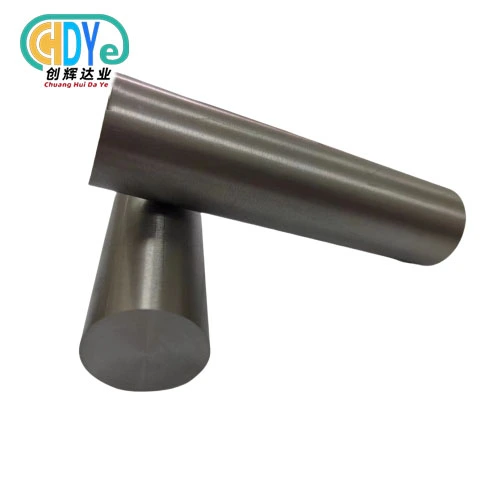
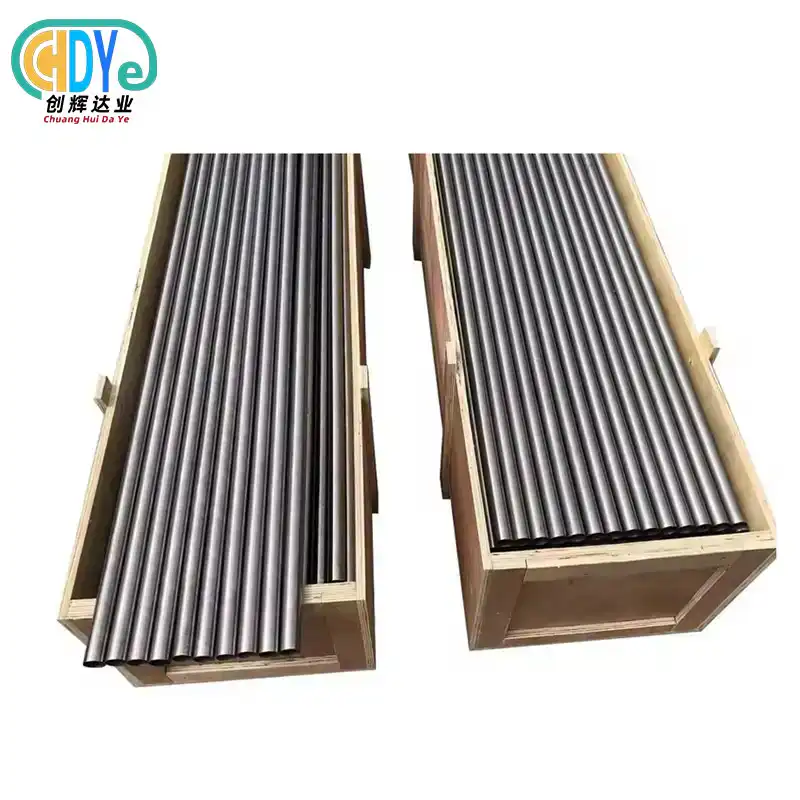
Can pure niobium bar Improve High-Temperature Systems?
A pure niobium bar can make high-temperature systems much better. Niobium melts at 2,468°C, better than stainless steel and many titanium alloys under thermal stress. Its coefficient of thermal expansion (7.3 µm/m·K) is consistent throughout broad ranges of temperature, minimizing dimensional drift in precision systems. The material easily generates a stable passivation layer of Nb2O5 that protects the components from acid attack and oxidative degradation. But for aerospace, chemical processing, and semiconductor engineers needing structural integrity at severe temperatures, the inclusion of this refractory metal bar in the system design is a well-supported technical option.
Understanding Pure Niobium Bar and Its Properties
What Makes Niobium Unique at the Atomic Level
Pure niobium is a group 5 element of the periodic table and has a body centered cubic (BCC) crystal structure. This combination produces a remarkable ductility - you can cold work it at room temperature without breaking, something that tungsten and molybdenum cannot offer. Its density is 8.57 g/cm³, almost half that of tantalum (16.6 g/cm³), making it an attractive material for weight-conscious structural components without losing performance.Niobium is self-healing chemically. Whenever the substrate is scraped or abraded, the Nb 2 O 5 surface layer is reformed. This provides for corrosion protection in most organic and mineral acid conditions below 100°C. This passive film behavior is similar in principle to that of titanium, but is more robust in strong hydrochloric acid conditions.
Key Physical and Mechanical Parameters
Procurement engineers and materials scientists often compare niobium bar stock to the following benchmarks:
- Melting point: 2,468°C – good for furnace parts, high-vacuum equipment and jet engine gear, where many alloys would soften or creep.
- Thermal expansion coefficient: 7.3 µm/m·K – very near to alumina ceramics, which minimizes the interfacial stress in ceramic-metal assemblies
- Superconducting transition temperature: 9.25 K — important for particle accelerator cavities and MRI-related applications
- Purity grades: Commercial Grade (R04210) allows for larger tantalum concentration for ordinary industrial applications; Reactor Grade (R04200) imposes tight impurity restrictions for nuclear and superconducting applications.
These characteristics are in line with ASTM B394 requirements for interstitial impurity control and determine both grade selection and downstream processing. Together, these physical properties make niobium bar a flexible refractory metal for use in conditions where stainless steel fails prematurely and titanium alloys reach their service limitations.
How Pure Niobium Bar Enhances High-Temperature System Performance
Addressing Common Failure Modes in Thermal Environments
The common failure modes for high-temperature systems include oxidative deterioration, thermal fatigue cracking, and creep-caused loss of dimension. The niobium passivation layer of Nb2O5 directly attacks the oxidation process. Its BCC lattice maintains structural coherence at high temperatures longer than austenitic stainless steels, which begin to lose tensile strength beyond 600°C. Pure niobium bar is another worry in applications where thermal exhaustion is a concern. Niobium’s low and steady coefficient of thermal expansion results in less accumulated stress at joints and welds when cycling between ambient and process temperatures than with greater expansion metals. This translates directly into longer service intervals and lower maintenance costs for chemical reactors, vacuum furnaces, and heat exchangers.
Machinability and Custom Fabrication Advantages
One such practical benefit that is often ignored is machinability. Niobium bar stock machines well with high-speed steel tools, water-soluble coolants, and moderate cutting rates, but tungsten or molybdenum rods need diamond tooling and careful process control. The material is reportedly “gummy”—it likes to stick to cutting edges—so precise rake angles and continuous coolant flow are important. But it has a far more machinable profile than most other refractory metals. Machinability of this kind enables quick prototyping and tight-tolerance production for industries like as medical device manufacture, aircraft structural components, and semiconductor process equipment. Engineers may test design geometries without the need for costly tooling for each iteration.
Comparing Pure Niobium Bars with Alternative Materials
Niobium vs. Tantalum, Molybdenum, and Stainless Steel
The selection of the suitable refractory metal bar includes matching the material attributes to the operational requirements and financial restrictions. How does niobium stack up versus the most popular alternatives:
- Tantalum vs. Niobium Tantalum is superior than niobium in acidic situations with high concentrations over 150°C but it is substantially more expensive and weighs almost twice as much. Niobium has equivalent corrosion resistance at a lower cost for situations where the acid temperature is not over 150 °C.
- vs. Molybdenum Higher melting point (2,623°C) and superior oxidation resistance in dry atmospheres above 400°C. It is fragile at room temperature and difficult to cold-form, however. Niobium wins for manufacturing flexibility and ductility.
- vs. Stainless Steel: Stainless steel is cheaper but restricted to around 800-900°C continuous use. It corrodes and outgasses under severe acid or vacuum settings; For more demanding applications, the cost increase is justified by the improved chemical inertness and higher service temperature ceiling of niobium.
Understanding these trade-offs may assist procurement teams avoid over-engineering (paying for tantalum when niobium would do) and under-engineering (using stainless steel when niobium is required).
Practical Guidance for Procuring Pure Niobium Bars
What to Verify Before Placing an Order
Ordering commodity metals is rather straightforward; however, sourcing niobium bar stock takes a little more attention. Here are a few elements that directly impact downstream performance:
- Purity grade and RRR value: For superconducting or nuclear applications, specify R04200 with high Residual Resistance Ratio (RRR > 300). R04210 Commercial Grade is usually acceptable for chemical and industrial uses.
- Interstitial impurity levels: Oxygen, nitrogen, hydrogen, and carbon need to be regulated — preferably below 100 ppm total for high-performance grades. Shipment with Inert Gas Fusion (IGF) analysis report.
- Surface condition: Verify surface roughness (Ra) tolerances. Check for rolling flaws, pits, or residual lubricants that may cause corrosion in service.
- Certifications and Traceability – The supplier’s ISO 9001:2015 certification and comprehensive material traceability paperwork safeguard you against counterfeit or sub-specification material.
Working with a factory-direct supplier of pure niobium bar (not a broker) you have direct access to the manufacturing records, batch traceability, and technical assistance for when you need requirements adjusted.
Future Prospects and Innovations in Using Pure Niobium Bars
Niobium is becoming important for modern technologies. Research is also underway on niobium-based superalloys for next-generation aircraft turbine components working over 1,200°C. In renewable energy, researchers are looking into niobium coatings and structural bars for high-temperature electrolysis cells used in green hydrogen generation. Niobium is still used in the medical device field in implant-grade components where corrosion resistance and biocompatibility are essential.
Research on surface treatment, such as physical vapor deposition (PVD) niobium nitride coatings, is pioneering new horizons in wear resistance without losing thermal stability of the underlying metal. Meanwhile, improvements in electron beam melting and vacuum annealing are increasing the grain homogeneity of bar material, directly impacting fatigue performance in cyclic loading applications. The trends demonstrate that pure niobium is not a niche metal, but a platform metal with tremendous development potential across numerous high-value sectors.
Conclusion
Few refractory metals can match the combination of temperature robustness, corrosion immunity and manufacturing flexibility of the pure niobium bars. This material solves genuine engineering challenges, with documented physical attributes and industry-validated performance, from chemical processing reactors to aeronautical thermal management systems. If your objective is weight reduction over tantalum, ductility over molybdenum, or a higher temperature ceiling over stainless steel, you should seriously consider niobium in your material selection process.
FAQ
Q: What is the difference between R04200 and R04210 grades for niobium bar?
A: R04200 is Reactor Grade with strictly controlled tantalum impurities and low interstitial gas content, mandatory for nuclear and superconducting applications. R04210 is Commercial Grade with permissible higher impurity levels, offering cost savings for general chemical and industrial use. Grade selection depends on your application's neutron cross-section sensitivity and acid temperature range.
Q: Can niobium bar be welded without embrittlement?
A: Not in open air. Niobium absorbs oxygen and nitrogen rapidly above 260°C. All welding must occur inside a high-vacuum chamber (below 1×10⁻⁴ Torr) or a glove box purged with 99.999% argon. Atmospheric exposure during welding causes immediate and irreversible embrittlement.
Q: Why does RRR matter when specifying niobium bar?
A: RRR (Residual Resistance Ratio) measures how efficiently electrons move through the material at cryogenic temperatures. A high RRR (above 300) indicates minimal impurity scattering, which is essential for superconducting cavity applications. For standard chemical or structural use, a lower RRR around 30–40 is acceptable.
Q: How should niobium bar stock be machined correctly?
A: Use high-speed steel tools with sharp rake angles and water-soluble coolants. Slow cutting speeds prevent heat buildup that causes the material to weld onto the tool face. Avoid chloride-based coolants to prevent localized corrosion on finished surfaces.
Partner With Chuanghui Daye for Reliable Pure Niobium Bar Supply
Shaanxi Chuanghui Daye manufactures and supplies ISO 9001:2015-certified pure niobium bar with full traceability documentation, custom dimensions, and competitive factory-direct pricing. Our team of specialists — backed by over 30 years of rare metal expertise — supports your procurement from material selection through final inspection. Contact us today at info@chdymetal.com to request a quote or discuss your project specifications.
References
1. ASM International. ASM Handbook, Volume 2: Properties and Selection of Nonferrous Alloys and Special-Purpose Materials. ASM International, 1990.
2. ASTM International. ASTM B394: Standard Specification for Niobium and Niobium Alloy Seamless and Welded Tubes. ASTM International, 2021.
3. Savitzky, B. H., et al. "Refractory Metal Processing and High-Temperature Applications." Journal of Materials Engineering and Performance, 2019.
4. Cardarelli, François. Materials Handbook: A Concise Desktop Reference. Springer, 2018.
5. Konings, R. J. M., ed. Comprehensive Nuclear Materials, Volume 4: Reactor Fuel Elements. Elsevier, 2020.
6. Lide, David R., ed. CRC Handbook of Chemistry and Physics, 97th Edition. CRC Press, 2016.
Learn about our latest products and discounts through SMS or email