- English
- French
- German
- Portuguese
- Spanish
- Russian
- Japanese
- Korean
- Arabic
- Greek
- German
- Turkish
- Italian
- Danish
- Romanian
- Indonesian
- Czech
- Afrikaans
- Swedish
- Polish
- Basque
- Catalan
- Esperanto
- Hindi
- Lao
- Albanian
- Amharic
- Armenian
- Azerbaijani
- Belarusian
- Bengali
- Bosnian
- Bulgarian
- Cebuano
- Chichewa
- Corsican
- Croatian
- Dutch
- Estonian
- Filipino
- Finnish
- Frisian
- Galician
- Georgian
- Gujarati
- Haitian
- Hausa
- Hawaiian
- Hebrew
- Hmong
- Hungarian
- Icelandic
- Igbo
- Javanese
- Kannada
- Kazakh
- Khmer
- Kurdish
- Kyrgyz
- Latin
- Latvian
- Lithuanian
- Luxembou..
- Macedonian
- Malagasy
- Malay
- Malayalam
- Maltese
- Maori
- Marathi
- Mongolian
- Burmese
- Nepali
- Norwegian
- Pashto
- Persian
- Punjabi
- Serbian
- Sesotho
- Sinhala
- Slovak
- Slovenian
- Somali
- Samoan
- Scots Gaelic
- Shona
- Sindhi
- Sundanese
- Swahili
- Tajik
- Tamil
- Telugu
- Thai
- Ukrainian
- Urdu
- Uzbek
- Vietnamese
- Welsh
- Xhosa
- Yiddish
- Yoruba
- Zulu
Why Choose Tantalum Metal Plate for Corrosion Resistance?
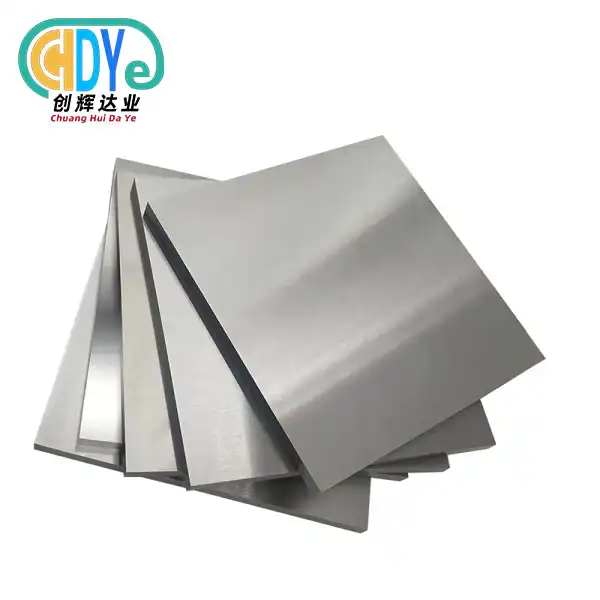
Material choice is a defining decision when corrosion is not an option. A tantalum metal plate is unique among the known metals in that it resists attack by almost all acids known to man; even boiling sulfuric, hydrochloric and nitric acids at a temperature less than 150°C. Nothing dissolves it except hydrofluoric acid. That unique chemical stability, along with a self-repairing oxide layer and a melting temperature of 2,996°C, make tantalum flat-rolled sheet the go-to option for engineers who can't afford equipment failure in chemical plants, semiconductor fabs or aerospace components.
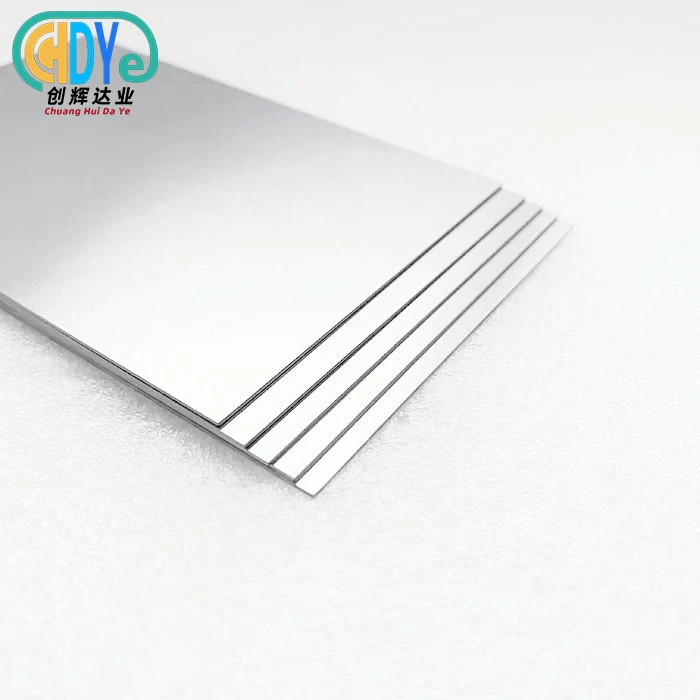
Understanding the Corrosion Resistance of Tantalum Metal Plates
The Oxide Film That Does the Heavy Lifting
Tantalum is corrosion resistant for good reason. When the metal is exposed to oxygen, a thick and adherent coating of Ta2O5 oxide is formed spontaneously. If scratched, this passive layer recovers again. So the material is self-healing under service circumstances. This behavior may be reproduced in any of the conforming grades under ASTM B 708, the industry standard for flat-rolled tantalum products. This inherent process cannot be replicated by any coating, plating or post-treatment.
How Tantalum Compares to Other Corrosion-Resistant Metals
When choosing a material, procurement engineers often compare tantalum with stainless steel, titanium and niobium. The contrast is illuminating. Stainless steel suffers pitting in chloride-rich conditions. Titanium resists various acids but is attacked by strong hydrochloric acid over 80 °C. Niobium provides comparable corrosion behavior but at a somewhat lower temperature ceiling. When operating conditions are unknown or extreme, tantalum is the logical choice, as it performs better than all three in the broadest range of aggressive media.
Key Properties of Tantalum Metal Plates Relevant to Corrosion Resistance
Even if it was just corrosion resistance, that would be worth the investment,” but tantalum has a wider material profile, he said. Tantalum metal plate to 99.95% purity, meeting ASTM B 708, are available in thicknesses from 0.5 mm to 30 mm, widths up to 2,500 mm and lengths up to 3,000 mm, and provide constant mechanical and chemical performance throughout a large dimensional range. The key material attributes that make tantalum flat-rolled products technically attractive are:
- * High melting point (2,996°C): Retains structural integrity at operating temperatures when other engineering metals would soften or oxidize, enabling high-temperature reactor linings and vacuum furnace components.
- Good ductility and density (~16.6 g/cm³): The metal may be cold rolled, deep drawn and precisely machined without breaking, allowing complicated shapes with little material loss.
- Superior electrical and thermal conductivity: These properties make high-purity tantalum sheet essential for capacitor manufacture, sputter target production, and thermal management components in electronic systems.
- Broad chemical stability: Tantalum is resistant to acids, alkalis and oxidizing chemicals throughout a pH range that would degrade stainless steel or even titanium, minimizing the danger of contamination in pharmaceutical and semiconductor operations.
Together, these qualities answer the material degradation concerns that end users in chemical processing, electronics and aerospace experience every day. Tantalum specification is not an indulgent extra – it’s a lifetime cost choice that saves unexpected downtime, replacement costs and product contamination risk.
Applications Where Tantalum Metal Plates Excel
Chemical Processing Equipment
Tantalum plate is commonly utilized in the manufacture of bayonet heaters, shell and tube heat exchangers, distillation columns and reaction vessels. Engineers often explosion-clad tantalum to carbon steel substrates to provide the corrosion resistance of tantalum at a reasonable material cost. No alternative exists with a comparable service life in respect of boiling sulfuric or hydrochloric acid.
Electronics, Capacitors, and Semiconductor Systems
High purity tantalum metal plate is used in the manufacture of electrolytic capacitors and physical vapor deposition sputtering targets. Tantalum-based diffusion barrier layers are used on silicon wafers in the fabrication of semiconductors to prevent copper migration, which might damage the integrity of the device. Tantalum-based components are used in wind turbine generators and consumer devices to provide steady electrical performance over lengthy cycles.
Aerospace, Medical Devices, and Hard-Metal Tooling
For example, tantalum is biologically inert and osteoconductive, as well as clinically proven for cranioplasty plates and reconstructive implants. Soft tissue bonds immediately to the metal surface without immunological rejection—a characteristic that no polymer or stainless steel implant can truly imitate. Tantalum alloys are used in aerospace and hard-metal tooling. They are used in jet engine components and in cutting tool compositions where high-temperature strength is required.
How to Source and Evaluate Tantalum Metal Plates for Your Business Needs
Choosing a tantalum supplier is not only a price comparison. There are four things procurement teams have to juggle at the same time: Material specification compliance, quality documentation, customization capabilities and delivery dependability.Material specification compliance shall imply verification that the provided plate is in accordance with ASTM B 708, has a verified purity certificate of 99.95% or above (UNS R05200 or R05400) and has complete dimensional inspection records. Dimensional range is important: A manufacturer that can deliver from 0.5 mm to 30 mm thickness, up to 2,500 mm width and up to 3,000 mm length, fulfills both prototype and production volume needs in a single source relationship.Quality paperwork under ISO 9001:2015 certification should contain chemical composition tests, mechanical properties test results, surface inspection reports and dimensional inspection data – traceable from source material to final packing. Suppliers without this paperwork bring unquantifiable risk into your supply chain.It is also important that it may be customized. Processing services in-house, such as hot rolling, cold rolling, cutting, forming, drilling, machining, grinding and polishing, should all be accessible. Outsourced processing has discontinuities in quality and lead-times. In-house validated capability reduces production cycles and allows for rapid prototyping for R&D and urgent project schedules.
Practical Considerations for Working with Tantalum Metal Plates
Although ductile and workable, tantalum requires numerous handling methods to safeguard its corrosion-resistant qualities during manufacturing. Contamination and foreign particles entrapped in contact surfaces of carbon steel or iron tools might operate as local corrosion initiators. This may be avoided by dedicated machinery, clean handling surfaces and nitrile gloves during manual handling. Storage in a dry, low-humidity environment will prevent surface oxidation that may make further examination of the surface difficult.With the carbide tooling at a low feed rate, the sufficient cooling helps in preserving the surface polish and dimensional accuracy during cutting and machining. Care must be taken to regulate surface cold-working during the grinding and polishing to prevent excessive cold-working and the introduction of residual strains. After manufacture, surface inspection and dimensional verification in accordance with ASTM B 708 tolerances are carried out to ensure that the plate is within its stated corrosion performance prior to installation.
Conclusion
“When corrosion resistance is a zero-failure criterion, tantalum flat-rolled sheet is the material of choice due to the combination of the self-renewing oxide coating of tantalum, chemical stability in almost all industrial acids, high melting point and outstanding ductility. Tantalum is the material of choice for everything from chemical reactor linings to semiconductor diffusion barriers and medical implants. And it makes economical sense, too. Specifying a tantalum metal plate that meets the ASTM B 708 standard at 99.95% purity from a qualified producer with in-house processing capacity eliminates supply chain risk and guaranties long-term operating performance.”
FAQ
Q: Is tantalum plate resistant to all types of acids?
A: Tantalum resists virtually all mineral acids—including boiling sulfuric, hydrochloric, phosphoric, and nitric acids—below 150°C. Hydrofluoric acid and fuming sulfur trioxide are notable exceptions. This resistance covers the vast majority of chemical process environments encountered in industrial operations.
Q: How does tantalum compare in cost to titanium or stainless steel?
A: Tantalum carries a higher unit cost than both titanium and stainless steel. However, total lifecycle cost analysis consistently favors tantalum in highly corrosive environments because its service life is substantially longer, maintenance intervals are wider, and unplanned replacement is less frequent. For critical applications, the economics support the premium.
Q: What are standard delivery lead times for tantalum plate orders?
A: Lead times vary by order volume, dimensional specification, and processing requirements. Standard stock dimensions are typically available within two to four weeks. Custom dimensions requiring specific rolling, machining, or polishing may require four to eight weeks from order confirmation. Urgent project timelines can often be accommodated with advance communication.
Q: What certifications should I require from a tantalum supplier?
A: ISO 9001:2015 Quality Management System certification is the baseline requirement. Material test reports conforming to ASTM B 708, chemical composition certificates, and mechanical properties test documentation should accompany every shipment.
Partner with Chuanghui Daye — Your Certified Tantalum Metal Plate Manufacturer
Shaanxi Chuanghui Daye, based in China's Titanium Capital—Baoji, Shaanxi Province—supplies precision tantalum metal plate conforming to ASTM B 708 at 99.95% purity, with in-house hot rolling, cold rolling, machining, and testing under ISO 9001:2015 certification. Our team brings over 30 years of rare metal expertise to every order, from small-batch R&D prototypes to full production volumes. Contact us today at info@chdymetal.com or visit www.chdymetal.com to request a custom quote and discuss your material requirements directly with our technical team.
References
1. ASTM International. ASTM B708: Standard Specification for Tantalum and Tantalum Alloy Plate, Sheet, and Strip. ASTM International, 2022.
2. Scheirs, J., and T. E. Carmody. Corrosion Resistance of Refractory Metals in Industrial Environments. Materials Performance Journal, 2019.
3. Lide, D. R. (Ed.). CRC Handbook of Chemistry and Physics. CRC Press, 2021.
4. ASM International. Corrosion: Fundamentals, Testing, and Protection (ASM Handbook, Volume 13A). ASM International, 2003.
5. Donachie, M. J. Titanium: A Technical Guide, 2nd Edition. ASM International, 2000.
6. Hampel, C. A. Rare Metals Handbook, 2nd Edition. Reinhold Publishing Corporation, 1961.
Learn about our latest products and discounts through SMS or email