- English
- French
- German
- Portuguese
- Spanish
- Russian
- Japanese
- Korean
- Arabic
- Greek
- German
- Turkish
- Italian
- Danish
- Romanian
- Indonesian
- Czech
- Afrikaans
- Swedish
- Polish
- Basque
- Catalan
- Esperanto
- Hindi
- Lao
- Albanian
- Amharic
- Armenian
- Azerbaijani
- Belarusian
- Bengali
- Bosnian
- Bulgarian
- Cebuano
- Chichewa
- Corsican
- Croatian
- Dutch
- Estonian
- Filipino
- Finnish
- Frisian
- Galician
- Georgian
- Gujarati
- Haitian
- Hausa
- Hawaiian
- Hebrew
- Hmong
- Hungarian
- Icelandic
- Igbo
- Javanese
- Kannada
- Kazakh
- Khmer
- Kurdish
- Kyrgyz
- Latin
- Latvian
- Lithuanian
- Luxembou..
- Macedonian
- Malagasy
- Malay
- Malayalam
- Maltese
- Maori
- Marathi
- Mongolian
- Burmese
- Nepali
- Norwegian
- Pashto
- Persian
- Punjabi
- Serbian
- Sesotho
- Sinhala
- Slovak
- Slovenian
- Somali
- Samoan
- Scots Gaelic
- Shona
- Sindhi
- Sundanese
- Swahili
- Tajik
- Tamil
- Telugu
- Thai
- Ukrainian
- Urdu
- Uzbek
- Vietnamese
- Welsh
- Xhosa
- Yiddish
- Yoruba
- Zulu
Can tantalum round bar Improve Aerospace Component Life?
Every aerospace component faces a demanding mix of heat, vibration, pressure, and chemical exposure, and the cost of an early failure is high in both safety and money. Engineers therefore look for materials that last longer without adding risk. Tantalum is a strong candidate. A tantalum round bar offers an unusual blend of corrosion resistance, a melting point above 2996°C, and excellent formability, which makes it attractive for parts that must survive harsh service conditions. This article looks at whether a tantalum round bar can truly extend aerospace component life, how it compares with other materials, what specifications are available, and what to consider when you buy.
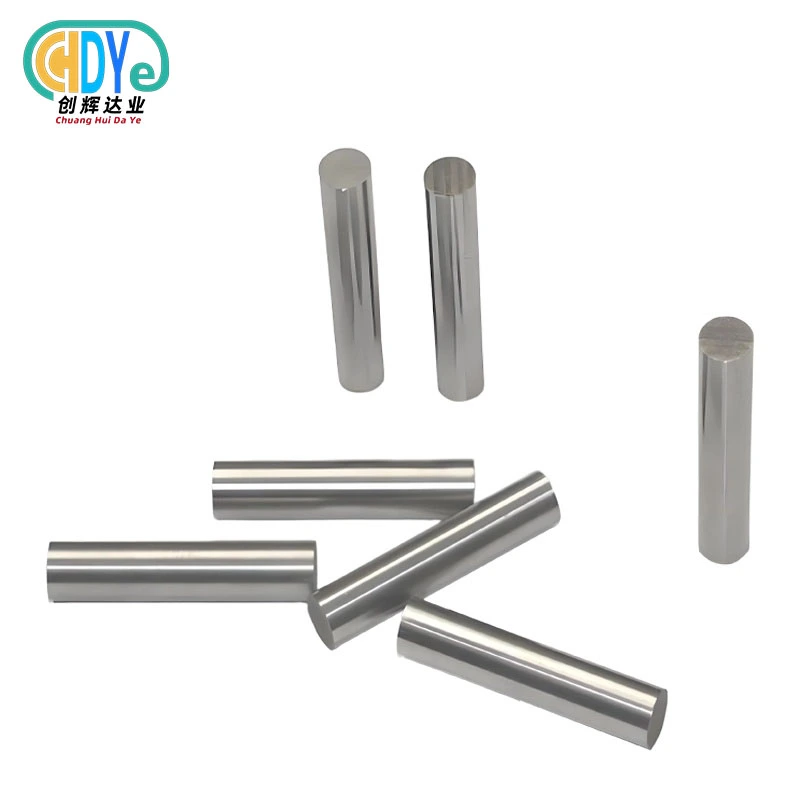
How a Tantalum Round Bar Extends Aerospace Component Life
Resistance to Corrosion and Oxidation in Severe Service
Many aerospace components, including fluid handling components, valve elements and sensor housings, are exposed to aggressive media such as acids, propellants and moist or oxidising atmospheres. Tantalum is a dense and stable material that forms a protective oxide coating on the underlying metal and resists attack by most acids. Machined from the bar, parts retain their dimensions and sealing performance far longer than many conventional alloys because the surface does not break down easily. This slower degradation translates directly into longer component life, fewer inspections and replacements, and a lower risk of leaks or contamination in critical systems.
Thermal Stability at Extreme Temperatures
Tantalum has one of the highest melting points of any metal, over 2996°C, and a tantalum round bar maintains excellent mechanical stability in extreme heat. This stability avoids the softening, creep, and distortion that shorten the life of lesser materials in aerospace applications like high-temperature fittings, heat shield supports, and instrumentation parts. The bar is also capable of enduring the repeated heating and cooling cycles typical of flight and testing. Operators gain confidence in longer service intervals when a part is dimensionally stable after thousands of thermal cycles and continues to perform as designed.
Formability and Machining Accuracy for Reliable Parts
Component life is not only a function of the material but also of the accuracy of the part fabrication. A tantalum round bar is very formable and can be forged, turned, drilled, and finished to precise tolerances with no cracking. Manufacturers use this property to produce pins, shafts, fasteners and fittings that fit tightly and distribute load evenly, thus reducing stress concentrations that often trigger fatigue failures. Accurate dimensions make assemblies easier to service and replace. Simply put, a quality tantalum round bar gives machinists a reliable base for parts that are built to last.
The table below summarises how the main properties of tantalum relate to component life.
| Property | Effect on Aerospace Component Life |
|---|---|
| Acid and oxidation resistance | Slows surface degradation and prevents leaks |
| Melting point above 2996°C | Preserves strength under extreme heat |
| Mechanical stability | Reduces creep and distortion |
| Excellent formability | Supports precise, low-stress machined parts |
| High purity | Keeps behaviour consistent from batch to batch |
Comparing Tantalum Round Bar with Other Aerospace Materials
Tantalum Round Bar Versus Stainless Steel and Titanium
Both stainless steel and titanium are commonly used in aerospace and have different advantages, such as titanium being very lightweight. However, in severe corrosive or hot service, a tantalum round bar will often outlast due to its vastly superior resistance to chemicals and thermal stability. When weight is the main concern, titanium and its alloys are still the better choice, while tantalum is more suitable for small, critical components where durability matters most. But many engineers use both — titanium for the structure and tantalum for the parts exposed to the worst conditions.
Tantalum Round Bar Versus Niobium, Tungsten, and Molybdenum
Other refractory metals also find use in aerospace work. Niobium is lighter and easier to form. Tungsten and molybdenum are great for high-temperature strength but can be more difficult to work with or more susceptible to oxidation. The tantalum round bar offers a useful middle ground with excellent corrosion resistance, good ductility, and dependable high-temperature characteristics. Shaanxi Chuanghui Daye also supplies niobium, tungsten, and molybdenum products, so our team can help you compare these options against your operating conditions and recommend the material that gives the best balance of life and cost.
Balancing Cost, Performance, and Lifecycle Value
Tantalum is more expensive per kg than steel or titanium, so you have to look at the entire lifecycle to compare fairly. A tantalum round bar can extend service life, reduce downtime, and avoid unplanned maintenance, all of which have real costs in aerospace programmes. The higher material price is often a small share of the total value for small, critical parts, as failure can be far more costly than the metal itself. By machining just what requires tantalum, designers can keep budgets under control and still benefit from durability where it counts.
| Material | Strength in Aerospace Use | Typical Limitation |
|---|---|---|
| Tantalum | Corrosion resistance, heat stability | Higher cost, high density |
| Titanium | Low weight, good strength | Less resistant in some corrosive media |
| Stainless steel | Low cost, wide availability | Weaker in harsh chemicals and extreme heat |
| Niobium | Light refractory option, easy forming | Lower corrosion resistance than tantalum |
| Tungsten and molybdenum | Very high-temperature strength | Harder to process, oxidation sensitivity |
Specifications and Sourcing for Tantalum Round Bar
Grades, Diameters, and Standards
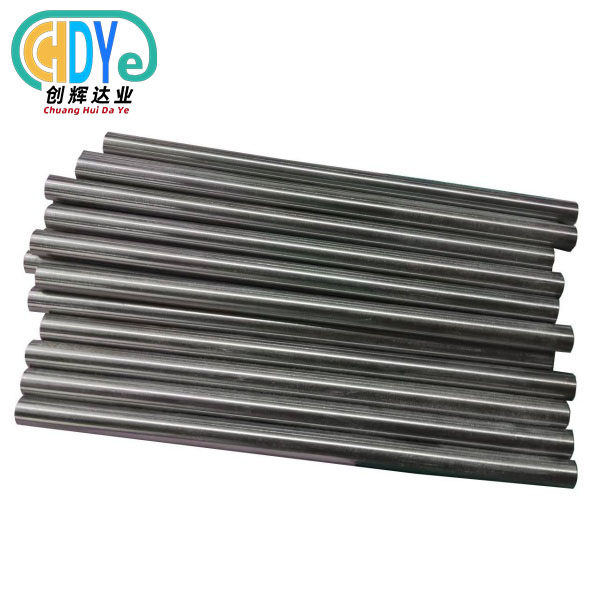
Our tantalum round bar is available in grades R05200 and R05400, with diameters from 2 to 100 mm, and in full compliance with ASTM B365 and other international standards. By choosing a recognised standard, you give your quality team a clear reference point for composition, dimensions, and testing. We supply tantalum round bars in various purities and sizes. Special projects can be supplied to custom specifications. If you give your drawing, quantity and performance targets at the start of an inquiry, we can confirm the correct grade and size quickly and avoid delays later on in your project.
Delivery Time and Order Flexibility
Aerospace programmes are on tight schedules, and material availability can be the determinant of whether a project stays on time. We can deliver tantalum round bars in stock sizes within 1 to 3 days, and custom sizes are normally produced within 15 working days. This allows you to place quick orders for urgent needs while planning larger orders in advance. We can support small trial orders and repeat production, and our team keeps you updated on progress so your purchasing and production schedules are predictable from quotation to shipment.
Manufacturing Process and Quality Assurance
High-purity tantalum ingots are the starting point for quality, which we forge, roll, and anneal into tantalum round bar. Our workshop is equipped with annealing furnaces, electron beam furnaces, rolling machines, lathes, and sawing and shearing equipment. We are ISO 9001:2015 certified with a system that controls raw material inspection, melting and forging, machining and forming, and final inspection and packaging. Shaanxi Chuanghui Daye is in the "Titanium Capital" - Baoji High-tech Development Zone, China. Shaanxi Chuanghui Daye has more than 30 years of rare metal experience, which allows us to supply customers worldwide with stable, low-cost products.
| Item | Specification |
|---|---|
| Grade | R05200 / R05400 |
| Diameter | 2–100 mm |
| Standard | ASTM B365 |
| Stock delivery | Within 1–3 days |
| Normal production time | About 15 working days |
| Customisation | Purities and sizes available on request |
Conclusion
A tantalum round bar can help extend aerospace component life through its corrosion resistance, thermal stability, and precise formability, especially in small parts exposed to the harshest conditions. The best results come from choosing the right grade, comparing materials honestly, and working with a supplier that controls quality. Shaanxi Chuanghui Daye Metal Material Co., Ltd. offers over 30 years of experience, advanced forging and rolling equipment, and ISO 9001:2015 certification. Contact our team to discuss your requirements and receive reliable, cost-effective tantalum materials made to your specifications.
FAQ
Q: Can a tantalum round bar really improve aerospace component life?
A: Yes, in the right applications. Its corrosion resistance, high melting point, and stable properties help parts resist degradation, which reduces replacement frequency and unplanned maintenance.
Q: What grades and sizes do you offer?
A: We supply grades R05200 and R05400 in diameters from 2 to 100 mm, produced according to ASTM B365, with customised sizes and purities available.
Q: How fast can I receive my order?
A: Stock sizes can be arranged within 1 to 3 days, and normal production time is about 15 working days.
Q: Where else is a tantalum round bar used?
A: Besides aerospace structures, it is widely used in chemical equipment, electronic components, and medical instruments.
Q: How do you control quality?
A: We operate under ISO 9001:2015 certification, with inspection from raw materials through melting, forging, machining, final inspection, and packaging.
Request Your Tantalum Round Bar Quote Today
Ready to give your aerospace components a longer, more reliable service life? Shaanxi Chuanghui Daye Metal Material Co., Ltd. provides high-quality tantalum round bars in standard and customised sizes, backed by more than 30 years of rare metal experience and strict quality control. Send us your grade, diameter, and quantity requirements, and our team will reply quickly with technical advice and a competitive quote. Contact us today at info@chdymetal.com to request samples, specifications, or delivery details, and let us help your next project take off with confidence.
References
1. Cardarelli, F. Materials Handbook: A Concise Desktop Reference. Springer, 2018.
2. Cardonne, S. M., Kumar, P., Michaluk, C. A., and Schwartz, H. D. "Tantalum and Its Alloys. "International Journal of Refractory Metals and Hard Materials, 1995.
3. Buckman, R. W. "New Applications for Tantalum and Tantalum Alloys." JOM, 2000.
4. Black, J. "Biological Performance of Tantalum. "Clinical Materials, 1994.
5. Gupta, C. K., and Suri, A. K. Extractive Metallurgy of Niobium. CRC Press, 1994.
6. ASTM International. ASTM B365: Standard Specification for Tantalum and Tantalum Alloy Rod and Wire.
Learn about our latest products and discounts through SMS or email