- English
- French
- German
- Portuguese
- Spanish
- Russian
- Japanese
- Korean
- Arabic
- Greek
- German
- Turkish
- Italian
- Danish
- Romanian
- Indonesian
- Czech
- Afrikaans
- Swedish
- Polish
- Basque
- Catalan
- Esperanto
- Hindi
- Lao
- Albanian
- Amharic
- Armenian
- Azerbaijani
- Belarusian
- Bengali
- Bosnian
- Bulgarian
- Cebuano
- Chichewa
- Corsican
- Croatian
- Dutch
- Estonian
- Filipino
- Finnish
- Frisian
- Galician
- Georgian
- Gujarati
- Haitian
- Hausa
- Hawaiian
- Hebrew
- Hmong
- Hungarian
- Icelandic
- Igbo
- Javanese
- Kannada
- Kazakh
- Khmer
- Kurdish
- Kyrgyz
- Latin
- Latvian
- Lithuanian
- Luxembou..
- Macedonian
- Malagasy
- Malay
- Malayalam
- Maltese
- Maori
- Marathi
- Mongolian
- Burmese
- Nepali
- Norwegian
- Pashto
- Persian
- Punjabi
- Serbian
- Sesotho
- Sinhala
- Slovak
- Slovenian
- Somali
- Samoan
- Scots Gaelic
- Shona
- Sindhi
- Sundanese
- Swahili
- Tajik
- Tamil
- Telugu
- Thai
- Ukrainian
- Urdu
- Uzbek
- Vietnamese
- Welsh
- Xhosa
- Yiddish
- Yoruba
- Zulu
Why Is Tantalum Lump Valued in Advanced Manufacturing?
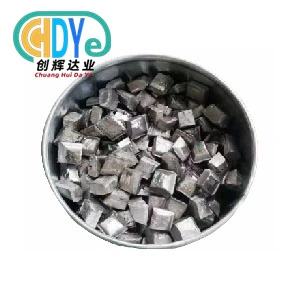
Advanced manufacturing depends on raw materials that are pure, predictable, and able to perform in extreme conditions. Tantalum lump fits that description well. These irregularly shaped pieces of tantalum metal are not made for machining into finished parts. Instead, they serve as a high-purity feedstock for alloy production, vacuum melting, and other metallurgical processes, where tantalum must be added to a melt to reach a specified composition. Manufacturers value tantalum lump for its purity, its very high melting point, its corrosion resistance, and its consistent chemistry. This article explains why those qualities matter, how the tantalum lump is produced, and what buyers should check before ordering.
Key Properties That Make Tantalum Lump Valuable
High Purity and Controlled Oxygen Content
In advanced manufacturing, tiny amounts of impurity can alter the behaviour of an entire alloy. Our 99.9% pure tantalum lump is a clean tantalum source for metallurgists for critical applications. The oxygen content is kept low, 120 ppm or less, so that the material will remain chemically stable during storage and melting. The surface oxidation is kept at 2% or less to minimise contamination and processing problems when the lumps are charged to a furnace. If you have strict chemical requirements, we recommend confirming individual impurity limits before ordering. A chemical composition report can be used to verify that the material meets your specification.
Exceptional High-Temperature Stability
Tantalum has a melting point of 3017°C. It is one of the most heat-resistant metals used in industry. So a lump of tantalum supports operations at extreme temperatures where many other materials would fail or contribute unwanted elements. Depending on the base alloy and composition, Tantalum can affect the high-temperature behaviour and microstructural stability during alloy production. At the same time, due to its high melting point, the melting process has to be chosen carefully. The incorporation of the tantalum lump in the melt or its dissolution depends on the type of furnace and base metal and alloy target.
Corrosion Resistance for Demanding Environments
Tantalum is also highly corrosion resistant, which makes it ideal for chemical processing environments. Although a tantalum lump is usually remelted rather than used in its original shape, this resistance matters for the end products it helps create. Alloys and parts of tantalum can be used in aggressive media with higher stability. The metal itself remains clean and reliable during storage and handling. For manufacturers supplying the chemical, electronic, or aerospace markets, starting with a reliable tantalum lump gives confidence that the finished material will meet demanding service requirements.
The table below summarises the key features of our tantalum lump.
| Feature | Specification | Benefit |
|---|---|---|
| Purity | 99.9% | Optimal performance in critical applications |
| Melting point | 3017°C | Supports extreme temperature operations |
| Oxygen content | ≤120 ppm | Maintains chemical stability |
| Lump size | 20–100 mm | Suited to industrial furnaces |
| Surface oxidation | ≤2% | Reduces processing issues |
| Grade | Ta-1 | Meets international quality standards |
Why a Tantalum Lump Is Used in Alloy Production
A Solid Metal Feedstock for Controlled Additions
Alloy makers add tantalum to certain high-performance metal systems to change their properties. A tantalum lump is a solid metal feedstock that can be charged directly into suitable melting equipment. The amount of addition is calculated from the target composition of the alloy and the actual tantalum content of the feedstock; thus, reliable analysis data is important. A tantalum lump is generally purchased for its chemical composition, the size of the piece, and suitability for melting rather than as a bar or plate to be machined. And this focus on composition is why purity and traceability are so important in this market.
Choosing the Right Lump Size for Your Process
The size of a tantalum lump influences its handling, charging, and melting behaviour. Some customers want smaller pieces to melt in the laboratory where precision and fast dissolving are important, but others need larger lumps for industrial production. We supply tantalum lumps from 20 to 100 mm in size for industrial furnaces and can confirm the availability of other sizes as per your requirements. The optimum size depends on the furnace capacity, the melting process, and the final alloy specification. Discussing these details with your supplier prior to placing your order can help you avoid inefficient charging or incomplete melting later.
Chemical Composition Control and Reporting
For alloying applications, the chemical composition is often more important than the appearance of the material. Customers can establish limits for the maximum permissible levels of certain elements so as to prevent undesired changes in the final alloy. A tantalum lump that doesn’t meet those limits can lead to expensive rejected batches. A chemical composition report will help to confirm that the material meets the specification required before going into the furnace. CHDY is able to supply tantalum metal lumps to industrial customers who need refractory metal raw materials, and we can discuss purity grades, lump sizes, and quantities based on your requirements.
| Alloying Consideration | What to Check |
|---|---|
| Target composition | Required tantalum addition and tolerance |
| Feedstock analysis | Actual tantalum content and impurity limits |
| Lump size | Compatibility with furnace and charging method |
| Melting process | Suitability for base metal and high melting point |
| Documentation | Chemical composition report |
How a Tantalum Lump Is Produced and Where to Source It
Electron Beam Melting for Superior Quality
Our tantalum lump is produced by advanced electron beam melting technology. The first step is the selection and purification of the raw materials; the second step is melting in a horizontal electron beam furnace. The lumps are then formed by controlled cooling and solidification, followed by quality inspection and testing, size sorting, and packaging. Electron beam melting takes place in a high vacuum, which helps to drive out volatile impurities and results in a cleaner final product. This fine-tuning process results in a uniform tantalum lump with low oxygen content and low contamination, which is precisely what advanced manufacturers require.
Quality Control From Raw Material to Packaging
The primary reason buyers return to the same supplier is consistency. Shaanxi Chuanghui Daye has passed the ISO 9001:2015 certification, which means the whole process is under control, from raw material inspection, melting and forging, machining and forming, to final inspection and packaging. Each lot of tantalum lump is tested and classified by size and packed for transit. Our Ta-1 grade is made to international quality standards and custom specifications available on request. That degree of control limits the variation between batches and keeps your own production steady.
Working With an Experienced Rare Metal Supplier
Selecting the supplier is as important as selecting the material. Shaanxi Chuanghui Daye Metal Material Co., Ltd. is located in Baoji High-tech Development Zone, known as the "Titanium Capital" of China, with convenient transportation and a mature industrial base. Founded by an expert with more than 30 years’ experience with rare metals, the company operates on a quality-first, customer-first basis. As well as tantalum lumps, we also stock titanium, niobium, tungsten, and molybdenum products, meaning you can source multiple refractory materials from one trusted supplier.
Conclusion
Tantalum lump is valued in advanced manufacturing because it delivers high purity, low oxygen content, outstanding heat resistance, and reliable chemistry for alloy production and vacuum melting. Success depends on choosing the right size, confirming impurity limits, and working with a supplier that controls quality. Shaanxi Chuanghui Daye Metal Material Co., Ltd. combines more than 30 years of experience, electron beam melting capability, and ISO 9001:2015 certification. Contact our team today to discuss your specifications and receive reliable, cost-effective tantalum materials for your next project.
FAQ
Q: What is a tantalum lump used for?
A: It is used as raw material for alloy production, vacuum melting, and other metallurgical processes where tantalum must be added to a melt.
Q: What purity and grade do you supply?
A: We offer a Ta-1 grade tantalum lump with 99.9% purity. Custom specifications are available on request.
Q: What sizes are available?
A: Our standard range is 20 to 100 mm, designed for industrial furnaces. Other sizes can be checked according to your requirements.
Q: How is the tantalum lump produced?
A: It is made by horizontal electron beam furnace melting, followed by controlled cooling, quality inspection, size sorting, and packaging.
Q: Can I get a chemical composition report?
A: Yes. For customers with strict chemical requirements, we recommend confirming individual impurity limits before ordering, and a composition report can verify the material.
Contact Us for Premium Tantalum Lumps Today
Looking for a dependable tantalum lump for your alloy production or vacuum melting process? Shaanxi Chuanghui Daye Metal Material Co., Ltd. supplies high-purity material, backed by electron beam melting equipment, ISO 9001:2015 quality control, and more than 30 years of rare metal experience. Tell us your required purity, lump size, impurity limits, and quantity, and our team will respond promptly with technical advice and a competitive quote. Email us at info@chdymetal.com to request specifications, samples, or a composition report, and let us help your next project run smoothly.
References
1. Cardarelli, F. Materials Handbook: A Concise Desktop Reference. Springer, 2018.
2. Cardonne, S. M., Kumar, P., Michaluk, C. A., and Schwartz, H. D. "Tantalum and Its Alloys. "International Journal of Refractory Metals and Hard Materials, 1995.
3. Buckman, R. W. "New Applications for Tantalum and Tantalum Alloys." JOM, 2000.
4. Gupta, C. K., and Suri, A. K. Extractive Metallurgy of Niobium. CRC Press, 1994.
5. Reed, R. C. The Superalloys: Fundamentals and Applications. Cambridge University Press, 2006.
6. Bakish, R. Electron Beam Melting and Refining: State of the Art. Bakish Materials Corporation.
Learn about our latest products and discounts through SMS or email