- English
- French
- German
- Portuguese
- Spanish
- Russian
- Japanese
- Korean
- Arabic
- Greek
- German
- Turkish
- Italian
- Danish
- Romanian
- Indonesian
- Czech
- Afrikaans
- Swedish
- Polish
- Basque
- Catalan
- Esperanto
- Hindi
- Lao
- Albanian
- Amharic
- Armenian
- Azerbaijani
- Belarusian
- Bengali
- Bosnian
- Bulgarian
- Cebuano
- Chichewa
- Corsican
- Croatian
- Dutch
- Estonian
- Filipino
- Finnish
- Frisian
- Galician
- Georgian
- Gujarati
- Haitian
- Hausa
- Hawaiian
- Hebrew
- Hmong
- Hungarian
- Icelandic
- Igbo
- Javanese
- Kannada
- Kazakh
- Khmer
- Kurdish
- Kyrgyz
- Latin
- Latvian
- Lithuanian
- Luxembou..
- Macedonian
- Malagasy
- Malay
- Malayalam
- Maltese
- Maori
- Marathi
- Mongolian
- Burmese
- Nepali
- Norwegian
- Pashto
- Persian
- Punjabi
- Serbian
- Sesotho
- Sinhala
- Slovak
- Slovenian
- Somali
- Samoan
- Scots Gaelic
- Shona
- Sindhi
- Sundanese
- Swahili
- Tajik
- Tamil
- Telugu
- Thai
- Ukrainian
- Urdu
- Uzbek
- Vietnamese
- Welsh
- Xhosa
- Yiddish
- Yoruba
- Zulu
gr2 titanium pipe Solutions for Oil, Gas, and Chemical Processing
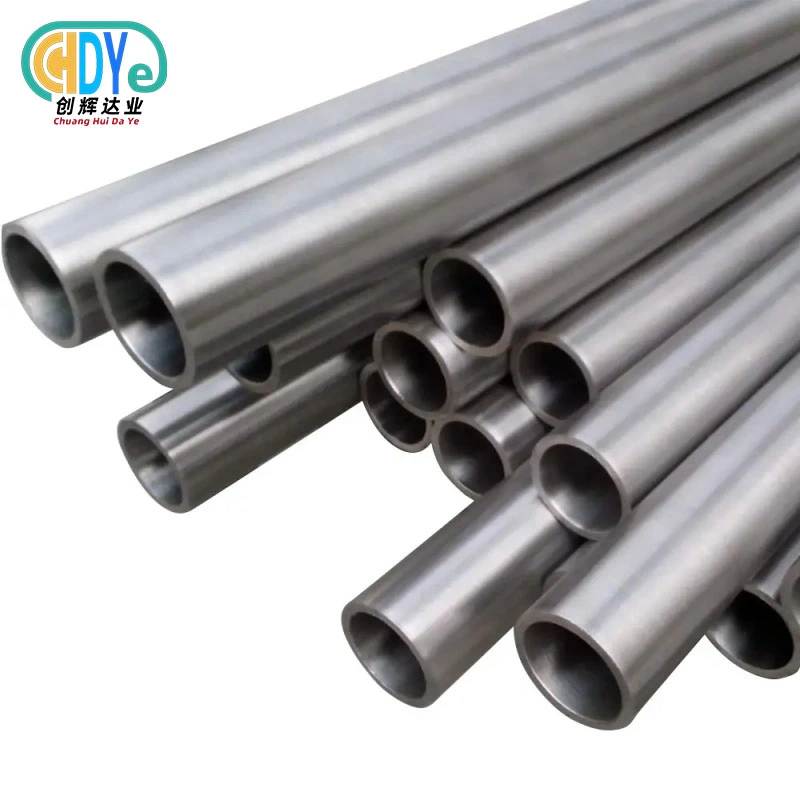
When facilities face recurring failures from corrosion-related shutdowns, material selection becomes the turning point between profitability and financial drain. Gr2 titanium pipe delivers unmatched corrosion immunity and mechanical stability in aggressive oil, gas, and chemical environments where conventional alloys fail prematurely. This commercially pure titanium solution provides engineering teams with a proven pathway to extend equipment lifecycles, reduce maintenance costs, and maintain operational safety in chloride-rich and chemically hostile conditions that routinely destroy stainless steel and copper-based systems.
Understanding GR2 Titanium Pipe: Specifications and Mechanical Properties
Chemicals are the basis for how well materials work. At Chuanghui Daye, we make sure that the quality of our titanium meets ASTM B338 and ASTM B861 standards during the making process. This makes sure that every batch of GR2 titanium pipe is the same. The chemical makeup strictly limits the interstitial elements—the amount of oxygen stays below 0.25%, the amount of iron stays below 0.30%, and the amount of hydrogen stays below 0.015%—to keep the structure from becoming weak when it's under stress.
Mechanical Strength Benchmarks
The lowest tensile strength is 345 MPa, and the highest yield strength is 275 MPa. This balance makes it possible for the material to handle working forces without losing the flexibility that is needed for installation. Because its elongation qualities are higher than 20%, it can be cold-shaped, bent, and flared without cracking, which can happen with stronger alloys.
Physical Properties That Matter
Compared to steel piping systems, the density of 4.51 g/cm³ means that about 44% less weight is saved. The thermal conductivity is 16.4 W/m·K, which is good enough for heat transfer in heat exchangers and condensers. The material stays the same size at temperatures ranging from very cold to 315°C, which is the highest temperature that ASME B31.3 guidelines say should be used for service.
Compliance and Traceability
Every pipe that leaves our factory in Baoji's Titanium Capital has all of its materials certified back to the melt batch that it came from. There are records on chemical analyses, mechanical tests, and compliance statements for ASTM B337, ASME SB338, and ISO 9001:2015 standards in the documentation. Without any delays, procurement teams get the verification data they need to meet engineering requirements and pass regulatory audits.
Advantages of GR2 Titanium Pipes in Oil, Gas, and Chemical Processing
The self-healing titanium dioxide film forms on the surface on its own, making a shield that can be fixed even after being damaged by mechanical means. This inactive layer almost completely protects GR2 titanium pipes against pitting, crevice corrosion, and stress cracking in saltwater, brines, wet chlorine, hypochlorites, and organic acids, which are all things that make 316L stainless steel break more quickly.
Offshore platforms have erosion-corrosion resistance at flow speeds of up to 20 meters per second, which is much faster than the speed at which copper-nickel alloys erode. Chemical companies that use chlor-alkali processes depend on this material to keep catastrophic breakdowns from happening because of stress corrosion cracking caused by chloride. Refineries that process sour crude have sulphide resistance because it increases service intervals and lowers the number of unplanned maintenance events.
Cost-Efficiency Over Equipment Lifetime
Titanium has much better lifetime economics than other materials, even though it costs more at first. Copper-nickel condenser tubes need to be replaced every 8–12 years at a coastal power plant. Titanium systems, on the other hand, can last 40 years or more if they are installed correctly. By getting rid of corrosion limits, wall shapes can be made thinner—usually between 0.5 and 0.7 mm in heat exchangers—which increases thermal efficiency while lowering the total volume of the material. When inspections for corrosion, coating renewals, and emergency replacements are taken off of operational schedules, maintenance budgets go down.
Performance Comparison With Alternatives
When chloride levels are above 1000 ppm and temperatures are high, stainless steel 316L breaks. Copper-nickel alloys can dealloy when they are not moving and can corrode faster than 3 meters per second when they are moving. Hastelloy C-276 has about the same level of rust protection, but it costs three to four times as much and is harder to work with. For most industry fluid handling tasks, Grade 2 titanium is the best balance of performance and cost.
Selecting the Right GR2 Titanium Pipe for Your Project
Material choices are based on the project's requirements. When you figure out the width of a wall for a GR2 titanium pipe, you have to take into account the internal pressure levels, the external loads, and the building codes in your area. Seamless pipes work well in high-pressure situations where weld joints could be weak spots. In lower-pressure systems and bigger diameters where seamless manufacturing isn't possible, welded versions are cheaper.
Supplier Evaluation Criteria
Real manufacturers can tell the difference between shady traders and those who are certified to be real. Having ISO 9001:2015 approval shows that quality control is carried out in a planned way throughout production. For tensile tests, material test records should use ASTM E8; for bend tests, ASTM E290; and for grain size proof, ASTM E112. Positive Material Identification with X-ray fluorescence confirms the chemistry without relying on mill certificates alone, which can give false information about the grade.
Heat treatment records are very important. Between 650°C and 750°C, annealing temperatures remove any remaining stresses from the forming process and restore the material's optimal ductility. At Chuanghui Daye, our electron beam melting process gets rid of the inclusion flaws that lead to early failure. This is especially important when making seamless pipes, where the reliability is directly affected by how homogeneous the material is.
Procurement Strategy Considerations
This depends on the size of the pipe, how thick the wall is, and the size of the order. Standard sizes ship between 4 and 6 weeks after stock is created. Custom specs that need custom tools or lengths that aren't standard add 8 to 12 weeks to the lead time. Procurement pros lower the risk of a project by working with suppliers early on in the planning phase, instead of waiting until the project's schedule requires them to place urgent orders at higher prices.
Ordering in bulk takes advantage of economies of scale. Projects that need more than 500 meters of pipe can negotiate better prices per meter and make sure that the materials used are the same throughout the whole work. When deliveries are split up to match up with construction milestones, there are fewer problems with storage on-site, and less capital is stuck in inventory.
Application-Specific Solutions: How GR2 Titanium Pipes Meet Industry Needs
These GR2 titanium pipes are used by upstream oil and gas operations to handle produced water. Hydrogen sulfide and carbon dioxide create corrosive conditions that, in just a few months, kill carbon steel. In subsea applications, the resistance to seawater and lighter weight make installation easier and reduce the need for structural support on platforms and floating production systems.
Chemical plants use this material for heat exchangers that deal with process streams that are acidic. The ability of the material to stay stable at pH levels between 2 and 12 is important for reactors that use chlorinated hydrocarbons, bleaching agents, and acidic condensates. Because it is non-reactive, it doesn't get into sensitive processes where picking up trace metals from pipes that are corroding could hurt the quality of the product or the performance of the catalyst.
Titanium is used for brine heaters and concentrate discharge lines in desalination plants that are building Multi-Stage Flash evaporators or reverse osmosis systems. The passive oxide film is not hurt by the hot, concentrated salt solutions that quickly pit and crevice-attack stainless steel. Copper-alloy condensers can get biofouling and rusty over time, but cooling systems at coastal power plants that use seawater don't have those problems.
Ballast systems, fire suppression networks, and onboard cooling circuits are all examples of marine engineering uses. The fact that it is not magnetic is useful for vessels that need to be degaussed. Aerospace hydraulic lines are strong for their weight and can work with aviation fluids even at high altitudes where temperatures can be very different.
Installation Best Practices and Maintenance for Optimal Performance
In order to keep oxygen from getting into the molten phase, both the weld face and the root side of the GR2 titanium pipe must be shielded with an inert gas. The protective atmosphere is kept up by argon purging, and the way something looks after being welded shows how well it was done. The right protection is shown by a silver or light straw colour. Blue, purple, or white rust means that there is contamination that needs to be cleaned up and reworked. When AWS guidelines are followed, TIG welding with Grade 2 filler metal that matches the base metal keeps the joint's qualities the same as the base metal.
Quality Assurance During Installation
Ultrasonic testing according to AMS 2631 can find problems below the surface that can't be seen with the naked eye. With eddy current testing, surface discontinuities can be found before they spread when the load is applied in cycles. Hydrostatic testing checks the integrity of the pressure at 1.5 times the design pressure. This confirms the quality of the weld and the tightness of the system. Flattening tests on sample pieces show that the material is flexible enough to be bent in the field without breaking.
Passivation after fabrication makes the protective oxide layer work better. Mild nitric acid solutions clean up pollution from handling and cutting, which helps a uniform film form. When you stay away from carbon steel tools and work surfaces, you don't pick up iron, which creates galvanic corrosion sites.
Maintenance Protocols for Extended Service
During regular visual checks, the focus is on support points, weld areas, and cracks where deposits could build up. Using nonmetallic brushes for mechanical cleaning gets rid of surface fouling without hurting the inactive film. Hydrofluoric acid and concentrated reducing acids are not good for cleaning with chemicals because they attack titanium. Ultrasonic thickness readings taken on a regular basis keep an eye on any unexpected material loss. In the right cases, corrosion-related thinning is still almost impossible to see.
Documentation practices keep records of service histories that allow for strategies for planned repair. Temperature and pressure logs show when working conditions are different from what was planned. This information helps with choices about how often to check and how to make the system work better.
Conclusion
The choice of materials affects whether industrial pipe systems last for decades without breaking down or become sources of constant failure and rising upkeep costs. In oil, gas, and chemical processing environments where corrosion resistance, mechanical integrity, and lifecycle economics are more important than initial purchase price, GR2 titanium pipes have been shown to work well. Standardised specs, thorough testing methods, and manufacturing know-how from well-known suppliers make it easy for engineering teams to confidently define these materials. Projects benefit from the long history of applications that show how well they work in the exact conditions that your systems face every day.
FAQ
Q: How does corrosion resistance compare between Grade 2 titanium and stainless steel 316L?
A: The passive titanium dioxide film protects GR2 titanium pipes better in chloride environments with more than 1000 parts per million and temperatures higher than 60°C, where austenitic stainless steels can pit and crack from stress corrosion. Stainless steel is made of chromium oxide, which breaks down in reducing conditions and when chloride attacks it. Titanium, on the other hand, stays strong over a wider pH range and the oxidizing-reducing cycles that are common in chemical processing.
Q: What certifications verify material authenticity and quality?
A: Chemical make-up and mechanical qualities are given in mill test results that follow ASTM standards. Inspection certificates from third parties, such as TÜV or Lloyd's Register, add an extra layer of security. Getting ISO 9001:2015 certification shows that you have systematic controls over your production. Using XRF analysers to positively identify materials confirms the grade during the receiving check, which stops material replacement.
Q: Can Grade 2 titanium pipes handle high-temperature applications?
A: ASME B31.3 says that the highest temperature that should be used for service is 315°C. Above this point, oxygen diffusion into the metal makes the alpha-case layers more brittle, which lowers the metal's mechanical properties. For uses that need higher temperatures, you might want to look into other metals or protective coatings. However, for most oil, gas, and chemical handling tasks, this temperature range works just fine.
Partner With Chuanghui Daye for Your Titanium Pipe Supply Needs
Shaanxi Chuanghui Daye Metal Material Co., Ltd. is based in China's Titanium Capital and has been working with rare metals for 30 years, so every production run is backed by that knowledge. Our ISO 9001:2015-certified facility can do electron beam melting, precision rolling, and advanced machining to give you GR2 titanium pipe options that are just right for you. Engineering support helps you choose the best materials, figure out the thickness of the walls, and improve the welding process so it works best for your purpose. Get in touch with our technical team at info@chdymetal.com to talk about the details of your project, get detailed quotes, and take advantage of factory-direct pricing that saves you money on purchases without lowering the quality standards your business needs.
References
1. ASTM International. (2021). ASTM B338-21: Standard Specification for Seamless and Welded Titanium and Titanium Alloy Tubes for Condensers and Heat Exchangers. West Conshohocken, PA: ASTM International.
2. Schutz, R.W., & Thomas, D.E. (2019). Corrosion of Titanium and Titanium Alloys in Industrial Environments. In Corrosion: Fundamentals, Testing, and Protection, ASM Handbook Vol. 13A. Materials Park, OH: ASM International.
3. American Petroleum Institute. (2020). API RP 571: Damage Mechanisms Affecting Fixed Equipment in the Refining Industry, 3rd Edition. Washington, DC: API Publishing Services.
4. Covington, L.C. (2018). The Use of Titanium in Offshore Oil and Gas Production. Journal of Materials Engineering and Performance, 27(8), 3842-3851.
5. ASME. (2020). ASME B31.3: Process Piping – Design, Fabrication, and Inspection Requirements. New York: American Society of Mechanical Engineers.
6. Boyer, R., Welsch, G., & Collings, E.W. (2017). Materials Properties Handbook: Titanium Alloys, Revised Edition. Materials Park, OH: ASM International.
Learn about our latest products and discounts through SMS or email