- English
- French
- German
- Portuguese
- Spanish
- Russian
- Japanese
- Korean
- Arabic
- Greek
- German
- Turkish
- Italian
- Danish
- Romanian
- Indonesian
- Czech
- Afrikaans
- Swedish
- Polish
- Basque
- Catalan
- Esperanto
- Hindi
- Lao
- Albanian
- Amharic
- Armenian
- Azerbaijani
- Belarusian
- Bengali
- Bosnian
- Bulgarian
- Cebuano
- Chichewa
- Corsican
- Croatian
- Dutch
- Estonian
- Filipino
- Finnish
- Frisian
- Galician
- Georgian
- Gujarati
- Haitian
- Hausa
- Hawaiian
- Hebrew
- Hmong
- Hungarian
- Icelandic
- Igbo
- Javanese
- Kannada
- Kazakh
- Khmer
- Kurdish
- Kyrgyz
- Latin
- Latvian
- Lithuanian
- Luxembou..
- Macedonian
- Malagasy
- Malay
- Malayalam
- Maltese
- Maori
- Marathi
- Mongolian
- Burmese
- Nepali
- Norwegian
- Pashto
- Persian
- Punjabi
- Serbian
- Sesotho
- Sinhala
- Slovak
- Slovenian
- Somali
- Samoan
- Scots Gaelic
- Shona
- Sindhi
- Sundanese
- Swahili
- Tajik
- Tamil
- Telugu
- Thai
- Ukrainian
- Urdu
- Uzbek
- Vietnamese
- Welsh
- Xhosa
- Yiddish
- Yoruba
- Zulu
What Standards Should gr2 titanium pipe Meet Before Purchasing?
Gr2 titanium pipe for critical applications, understanding material compliance becomes non-negotiable. Grade 2 economically pure titanium pipe is the type of titanium that is most often used in manufacturing around the world. People like it because it doesn't rust and is easy to shape. The people who work in procurement have to make sure that the pipe they want to buy meets international standards for its chemical make-up, mechanical properties, measurement limits, and tracking paperwork. By following rules like ASTM B338, ASTM B861, and ASME SB338, the material will be able to work well in tough places like power plants by the water and chlor-alkali factories. They can use this guide to follow the steps in the important standards review process and make decisions that protect practical ethics and project funds.
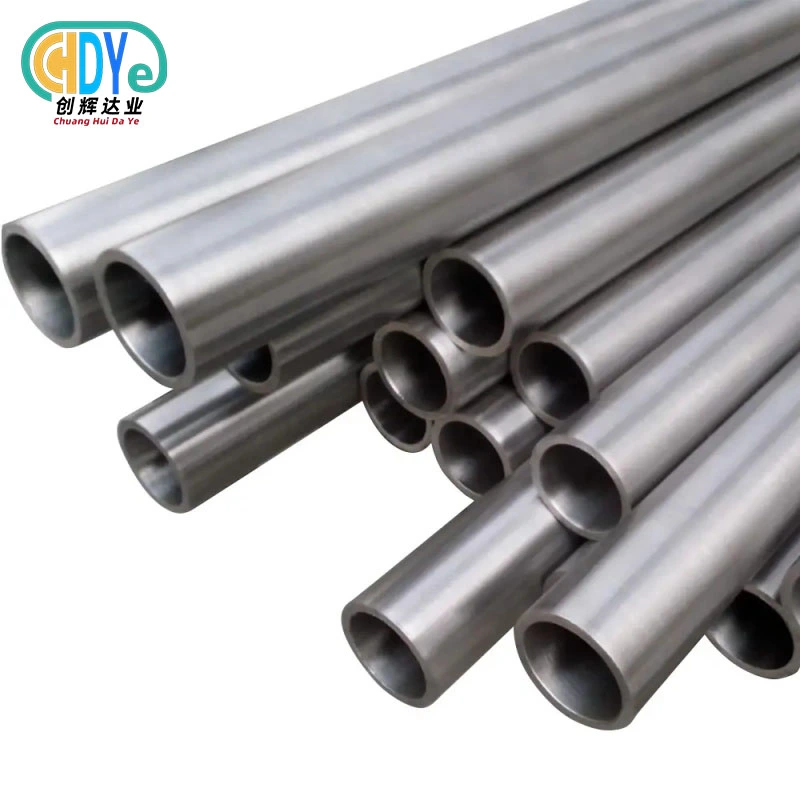
Understanding the Essential Standards for GR2 Titanium Pipe
ASTM Standards as the Foundation
The main rules for GR2 titanium pipe are set by the American Society for Testing and Materials. ASTM B338 talks about tubes that are seamless or welded and are used in condensers and heat exchangers. ASTM B861 talks about pipes that are seamless and are used for general corrosion-resistant work. These papers set exact limits for the amount of oxygen (up to 0.25%), iron (up to 0.30%), and hydrogen (up to 0.015%) in the metal. These limits have a direct effect on how easily it bends and joins. Knowing these interstitial element thresholds helps buyers stay away from brittle materials that could break while being made or used.
ISO and EN Standards for International Projects
Buyers from Europe and other countries often need suppliers to follow ISO 9001:2015 quality management systems and material standards like EN 10204 for inspection paperwork. Along with ASTM's material specifications, ISO standards set controls for the manufacturing process and requirements for tracking. Checking for ISO approval is a better way to judge a supplier's quality control than just inspecting each batch individually. This is especially helpful when looking for pipe for projects that involve more than one country, because using the same document forms makes the approval process easier for engineering teams in each country.
Regional Certifications and Their Importance
In addition to basic material standards, certain uses may also be governed by area standards like the ASME Boiler and Pressure Vessel Code (BPVC) Section II or the Japanese Industrial Standards (JIS). The main difference between ASME SB338 and ASTM B338 is that ASME SB338 has extra rules for pressure tank uses. Buyers who work on nuclear power plants, drug factories, or flight systems should make sure that sellers keep up-to-date on the certifications that are needed in their field. If a maker has these specialised approvals, it means they can meet higher quality and paperwork standards than just making basic tubing.
Chemical Composition Limits and Mechanical Properties
In normal tension tests, grade 2 titanium must have a tensile strength of at least 345 MPa and a yield strength of at least 275 MPa. It must also be able to stretch more than 20%. These mechanical properties make sure that the material stays structurally sound under working pressures while still being flexible enough to bend and shape during installation. Chemical purity has a direct effect on these properties. For example, too much oxygen makes things hard, which makes them less workable, and too much iron can make some materials less resistant to rust. It is possible to check before taking shipments by asking for certified mill test records that include both chemical and mechanical testing results.
Key Performance and Quality Criteria to Verify Before Purchase
Corrosion Resistance Validation
The best thing about GR2 titanium pipe is that it has a passive oxide film that heals itself right away when it gets scratched or damaged. This ability to heal itself protects against pitting and crevice corrosion in chloride environments, which quickly destroy stainless steel alternatives. People who are buying something should ask for rust testing paperwork that is specific to the process setting, like seawater, wet chlorine, or acidic condensate. Reports on surface quality inspections should make sure that there are no stains, scale, or iron particles buried in the surface that could cause local galvanic cells and start rusting.
Manufacturing Process Verification
The production method has a big effect on the properties and dependability of the finished pipe. When extruded, seamless pipe has a uniform wall thickness and no longitudinal weld seam. This makes it ideal for high-pressure or critical service applications. For lower-pressure systems, welded pipe is cheaper, but you need to pay close attention to the quality of the weld and the properties of the heat-affected zone. After making, heat treatment methods reduce any remaining stresses and make the microstructure best for service conditions. Figuring out whether your application needs seamless construction or welded pipe meets the performance standards helps you balance your technical needs with your budget.
Dimensional Accuracy and Tolerances
Precision control over dimensions is needed for installation to go smoothly and for the system to work well. ASTM B338 and B861 set limits for outside diameter, wall thickness, ovality, and straightness. These make sure that tube sheets, flanges, and support systems fit correctly. Not having the right wall thickness can lead to problems with the pressure rating and safety, while having too thick of a wall thickness adds weight and material cost that aren't needed. Length tolerances affect how much cutting needs to be done in the field and how much waste is made during installation. Asking for detailed dimensional inspection reports and making sure that the measurement methods used are in line with the project requirements can help avoid expensive rework and installation delays.
Inspection Protocols and Documentation Requirements
From the raw materials to the final review, all of the quality paperwork can be tracked. The heat number, chemical analysis results, mechanical test data, and non-destructive examination records should all be on mill test certificates. Ultrasonic testing finds flaws inside seamless pipes, and eddy current inspection finds flaws on the outside. Pressure stability is checked by hydrostatic tests. X-ray fluorescence is used to positively identify materials, and chemistry is checked at the point of use. Setting clear documentation standards in buy orders and making sure suppliers can provide full traceability packages prevents material mix-ups and lets you figure out what went wrong if problems happen in the field.
Comparing GR2 Titanium Pipe Standards with Other Grades and Materials
GR2 Versus GR1 and GR5 Titanium
Grade 1 is slightly more resistant to corrosion than Grade 2 because it has less interstitial content and is weaker. For most piping applications, GR2 titanium pipe is the best balance. Grade 5 (Ti-6Al-4V) is much stronger because it is alloyed with aluminium and vanadium, but it costs a lot more and doesn't fight rust as well in seawater and oxidising acids. The metal is less flexible, which makes shaping and bonding more difficult. When choosing a material for pipe systems, corrosion protection is more important than structural load capacity; Grade 2 is the best value for money when compared to both higher-purity GR1 and high-strength GR5.
Performance Comparison with Stainless Steel
Traditionally, type 316L stainless steel has been used for corrosive service, but titanium has clear advantages in some settings. Titanium doesn't get pitting or stress corrosion cracks in seawater, which is what limits the service life of stainless steel to 10 to 15 years. Titanium's high strength-to-weight ratio lets walls be smaller and support structures be lighter. This lowers the cost of installing the system even though the material is more expensive. Stainless steel, on the other hand, has advantages in dry chlorine service and lower material costs for uses where its corrosion resistance is good enough. When choosing titanium for long-term installations, it's important to know how much it will cost to install, maintain, and replace it over its entire life.
Cost Implications and Supply Chain Considerations
The standards for material certification have a direct effect on prices and wait times. Pipes that are certified to more than one standard (ASTM, ASME, EN) cost more but give multinational projects more options. When compared to made-to-order production, suppliers who keep a large stock of approved materials can send items faster. But buyers should weigh the chance of not getting the best specs against the availability of the product. Working with manufacturers who can make custom products in a fair amount of time gives you access to the best sizes and specs that lower the overall cost of the project through material efficiency, even if the price per kilogram is higher than a standard product.
Supplier Compliance and Certification Verification
Evaluating ISO 9001 and Industry-Specific Certifications
ISO 9001:2015 approval shows that quality management for GR2 titanium pipe is systematic, but it doesn't ensure the quality of the materials without being checked. Buyers should look at the scope of the certification to make sure it covers making titanium pipes and not just selling or trading them. Certifications that are specific to an industry, like API (American Petroleum Institute) for oil and gas applications or PED (Pressure Equipment Directive) for European pressure vessel service, show that the person knows how to meet the needs of that industry. By asking for copies of current certificates and checking their accuracy with the organisations that issued them, you can avoid relying on old or fake documents.
Factory Audit Best Practices
Facility checks, whether they are done online or in person, show more than just paper licenses. By watching melting operations, rolling tools, and heat treatment ovens in action, you can be sure of the production capacity and process control. Reviewing the calibration records for testing equipment makes sure that the measurements are correct. Contamination risks are found by looking at how raw materials are stored and handled. Talking to quality staff about non-conformance procedures and corrective actions shows that the company wants to keep getting better. As a way to lower their risk, buyers who commit to large volumes or specify critical applications should pay for supplier audits.
Non-Destructive Testing and Quality Control Procedures
Ultrasonic testing (UT) according to AMS 2631 finds holes and other things in smooth pipes that are below the surface and could lead to service breakdowns. Eddy current testing finds flaws on the surface and changes in the width of the walls. Positive material identification checks the chemistry without having to make scrap for harmful tests. Pressure capability is confirmed by hydrostatic or pneumatic testing. It is important to know which NDT methods apply to your product and to look over the test steps your provider uses to make sure that the inspection covers everything. In addition to the manufacturer's own certification, asking for witness testing or third-party inspection for important orders adds another layer of security.
Documentation for Traceability and Technical Compliance
For full material tracking, production records must be used to connect produced pipes to raw materials. Mill test reports should include heat numbers that are stamped on the pipe itself so that they can be checked in the field. Chemical analysis certificates from suppliers of raw materials show that the product has a good history. Tensile, flattening, and bending tests, which are recorded in mechanical test records, show that the material is ductile. Dimensional inspection reports make sure that the ordered specifications are met. Keeping this information safe helps with warranty claims, failure investigations, and regulatory compliance audits all the way through the lifecycle of an asset.
Practical Guidelines for Ensuring Standards Compliance in Procurement
Developing Internal Compliance Checklists
Putting industry standards into buying requirements that can be carried out keeps seller evaluations from falling through the cracks. Checklists should list the certifications, test methods, inspection frequency, and outputs for the necessary documents. Objective evaluation standards are made by including acceptance criteria for chemistry, mechanical properties, measurements, and surface quality. Customising checklists to meet application-specific needs like maximum operating temperature or specific corrosive media makes sure that specifications are based on real service conditions instead of general industry standards.
Requesting Critical Documentation Before Delivery
Instead of coming weeks later, mill test results, dimensional inspection data, and NDT records should be sent with packages. This lets the goods come in and be checked and inspected before payment is released or materials are installed. Including clear instructions on what paperwork is needed in purchase orders and making sure the supplier agrees to them helps avoid confusion. Sending documents electronically through private sites makes it easier to review and send to project teams quickly. Turning down shipments with missing or incorrect paperwork sets quality standards and keeps low-quality goods from getting into your facility.
On-Site Verification Techniques and Sampling Strategies
Samples should be used by the incoming review to make sure that the paperwork is correct. Positive material identification proves that the chemistry fits the test results from the mill. Quality control in production is done by checking the outside width, wall thickness, and length. Visual inspection finds flaws on the surface, contamination, or damage that happened during shipping. For big orders, statistical sampling based on AQL (Acceptable Quality Level) standards balances the risk and cost of inspection. Putting things in quarantine until they can be checked out stops people from using non-conforming products by accident.
Technical Support and Installation Guidance
Suppliers who offer detailed datasheets, welding methods, and assembly instructions show that they are committed to more than just selling materials. GR2 titanium pipe welding needs an inert gas shield both at the weld pool and on the root side to keep air from weakening the metal. When titanium is shaped, its springback properties must be taken into account. When things are handled correctly, they don't get damaged on the surface, which can lead to rust. Application engineering support from manufacturers helps buyers get the best specifications and avoid costly installation mistakes that hurt the performance of the material.
Conclusion
To choose compliant GR2 titanium pipe, you need to carefully look at the material standards, seller certifications, and the thoroughness of the paperwork. Checking that the requirements set by ASTM, ASME, and ISO are met protects against using low-quality materials that could put safety and reliability at risk. Knowing the differences between manufacturing methods, grade specifications, and quality control processes helps you make smart buying choices that balance your need for performance with your budget. In addition to certifications, thorough supplier evaluation and incoming inspection protocols give customers even more peace of mind. Buyers who take the time to make sure that standards are followed during buying avoid failures, installation delays, and early replacements that cost a lot of money and save a lot of money in the long run.
FAQ
Q: What are the primary ASTM standards for commercially pure titanium pipe?
A: ASTM B338 specifies the chemical makeup, mechanical features, and sizes of GR2 titanium pipe for condensers and heat exchangers. It covers both smooth and welded tubes. ASTM B861 covers seamless pipe for general corrosive service that meets the same standards. Both standards say that Grade 2 has a maximum of 0.25% oxygen, 0.30% iron, and a minimum tensile strength of 345 MPa. This makes sure that all suppliers of the material provide the same level of performance.
Q: How do I verify that pipe actually meets certified specifications?
A: Ask for mill test records that show chemical analysis and mechanical testing that can be linked to pipe heat numbers. Use portable XRF analysers to do positive material identification and make sure the chemistry fits the paperwork. Check the dimensions and look over the goods as soon as you get them. Reliable providers allow full tracking from the raw materials to the final inspection, which lets anyone check that compliance claims are true.
Q: Why does ISO 9001 certification matter when buying titanium pipe?
A: Systematic quality management is shown in ISO 9001:2015, which includes procedures for process control, calibration, training, and corrective action. Certification shows that an organization is committed to uniform production practices, but it doesn't ensure the quality of the materials. Buyers should make sure that the certification covers production as well as distribution, and they should ask for audit reports to show that ongoing compliance is being met.
Source Premium GR2 Titanium Pipe from a Certified Manufacturer
Shaanxi Chuanghui Daye Metal Material Co., Ltd. makes GR2 titanium pipe fully compliant with ASTM B338, ASTM B861, and ASME SB338 standards. Our facility in Baoji, China's Titanium Capital, is ISO 9001:2015 certified and uses precise melting, rolling, and finishing methods backed by detailed quality records. For tough jobs in chemical processing, marine systems, and power generation, we offer mill test certificates, dimensional inspection reports, and technical support. With affordable factory-direct prices, we can make custom diameters, wall thicknesses, and lengths to fit your project needs. Get in touch with our engineering team at info@chdymetal.com to talk about your needs and get a detailed quote from a dependable supplier who wants your project to succeed.
References
1. American Society for Testing and Materials. (2021). Standard Specification for Seamless and Welded Titanium and Titanium Alloy Tubes for Condensers and Heat Exchangers (ASTM B338-21).
2. American Society of Mechanical Engineers. (2019). Boiler and Pressure Vessel Code, Section II: Materials Specifications (ASME BPVC-II-2019).
3. International Organization for Standardization. (2015). Quality Management Systems—Requirements (ISO 9001:2015).
4. Schutz, R.W. & Watkins, H.B. (1998). Recent developments in titanium alloy application in the energy industry. Materials Science and Engineering: A, 243(1-2), 305-315.
5. Donachie, M.J. (2000). Titanium: A Technical Guide (2nd ed.). ASM International.
6. European Committee for Standardization. (2004). Metallic Materials—Inspection Documents (EN 10204:2004).
Learn about our latest products and discounts through SMS or email