- English
- French
- German
- Portuguese
- Spanish
- Russian
- Japanese
- Korean
- Arabic
- Greek
- German
- Turkish
- Italian
- Danish
- Romanian
- Indonesian
- Czech
- Afrikaans
- Swedish
- Polish
- Basque
- Catalan
- Esperanto
- Hindi
- Lao
- Albanian
- Amharic
- Armenian
- Azerbaijani
- Belarusian
- Bengali
- Bosnian
- Bulgarian
- Cebuano
- Chichewa
- Corsican
- Croatian
- Dutch
- Estonian
- Filipino
- Finnish
- Frisian
- Galician
- Georgian
- Gujarati
- Haitian
- Hausa
- Hawaiian
- Hebrew
- Hmong
- Hungarian
- Icelandic
- Igbo
- Javanese
- Kannada
- Kazakh
- Khmer
- Kurdish
- Kyrgyz
- Latin
- Latvian
- Lithuanian
- Luxembou..
- Macedonian
- Malagasy
- Malay
- Malayalam
- Maltese
- Maori
- Marathi
- Mongolian
- Burmese
- Nepali
- Norwegian
- Pashto
- Persian
- Punjabi
- Serbian
- Sesotho
- Sinhala
- Slovak
- Slovenian
- Somali
- Samoan
- Scots Gaelic
- Shona
- Sindhi
- Sundanese
- Swahili
- Tajik
- Tamil
- Telugu
- Thai
- Ukrainian
- Urdu
- Uzbek
- Vietnamese
- Welsh
- Xhosa
- Yiddish
- Yoruba
- Zulu
How Does GR2 Titanium Sheet Plate Perform in Saltwater?
GR2 titanium sheet plate demonstrates exceptional performance in saltwater environments, offering virtually immunity to pitting and crevice corrosion that commonly affects stainless steel and aluminum. This commercially pure Grade 2 titanium forms a stable titanium dioxide (TiO₂) passive layer that self-heals when exposed to oxygen, providing sustained protection against chloride attack. With minimal maintenance requirements and extended operational lifespan, GR2 titanium delivers superior cost-effectiveness for marine applications compared to traditional materials that suffer rapid degradation in harsh saltwater conditions.
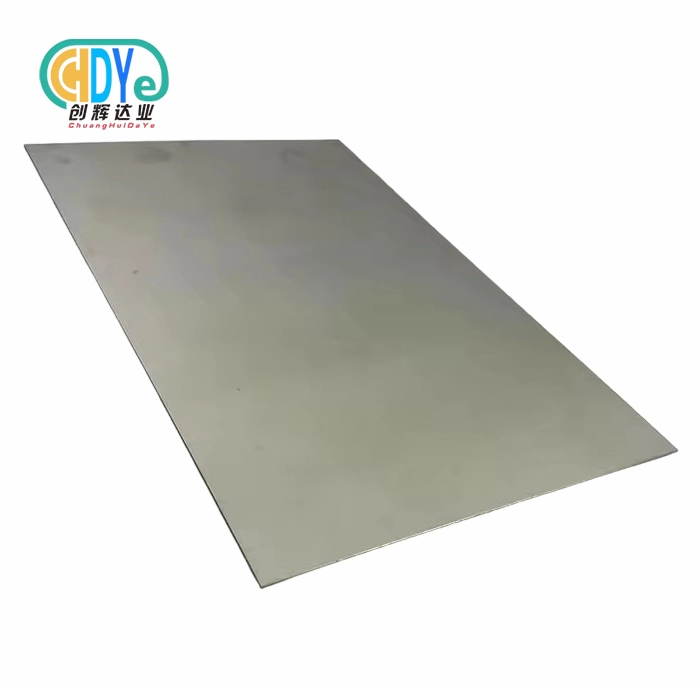
Understanding GR2 Titanium Sheet Plate: Properties and Composition
Chemical Composition and Purity Standards
Grade 2 titanium is the most common commercially pure titanium standard. It has a carefully controlled chemical makeup that makes it both very strong and very easy to shape. Some of the strict intermediate element limits that the material follows are nitrogen below 0.03%, carbon below 0.08%, hydrogen below 0.015 %, iron below 0.30%, and oxygen below 0.25%. This exact mix makes sure that the metal is highly resistant to rust while still being flexible enough to be used in complicated manufacturing processes.
The alpha-phase microstructure of Grade 2 titanium creates a uniform grain structure that helps keep the mechanical qualities the same across the width of the sheet. Higher-strength titanium alloys have beta-stabilizing elements, but Grade 2 only has one phase. This means that there are no worries about galvanic rust between the phases.
Mechanical Properties and Performance Characteristics
GR2 titanium sheet plate has a minimum tensile strength of 345 MPa (50 ksi) and a maximum yield strength of 275 MPa (40 ksi). It also has very high stretch values of at least 20%. Engineers can use this mixture to make materials that can handle mild mechanical loads and can be shaped more easily into complex shapes.
With a density of 4.51 g/cm³, it weighs about 56% as much as steel. This means that naval buildings can be made much lighter without losing their strength. Its thermal conductivity of 16.4 W/m·K is lower than that of copper alloys, but it's still good enough for many naval heat exchanger uses.
Corrosion Resistance Mechanisms
Titanium's great performance in saltwater comes from its ability to instantly form a passive oxide layer when it comes into contact with oxygen-containing surroundings. This titanium dioxide film is only 2 to 5 nanometers thick, but it is a very good shield against chloride getting through. Titanium's oxide layer is very stable over a wide range of pH levels and temperatures, unlike the passive layers of stainless steel, which can break down under certain conditions.
Performance Analysis of GR2 Titanium Sheet Plate in Saltwater Exposure
Real-World Marine Applications and Case Studies
In harsh saltwater settings, Grade 2 titanium has regularly been shown to last longer in industrial marine uses. Titanium condenser tubes in desalination plants have been used for more than 30 years with little upkeep. Copper-nickel metals, on the other hand, usually need to be replaced every 10 to 15 years because they erode and corrode.
Offshore oil platform applications showcase gr2 titanium sheet plate's resistance to high-velocity seawater flow, withstanding flow rates up to 20 m/s without being damaged by the impingement attack that breaks down other materials, and these installations have documented significant reductions in maintenance downtime and replacement costs.
Heat Treatment and Surface Preparation Impact
When you anneal Grade 2 titanium sheets the right way, they become more resistant to rust and keep their shape better. The normal heating temperature range, from 650°C to 750°C, reduces internal stresses while keeping the helpful alpha-phase microstructure. Pickling processes get rid of the oxides that form on the surface during heat treatment. This makes sure that the weld quality and rust performance are at their best.
Bright annealing, polishing, and sandblasting are some surface finishing choices that can be changed to fit the needs of a particular application. In heat exchanger uses, polished surfaces lower flow roughness, and pickled surfaces are great for getting ready for welding.
Long-term Cost Analysis and Operational Benefits
Because the GR2 titanium sheet plate is stronger for its weight, it has big cost savings over its lifetime, even though it costs more at first. When compared to other materials over 20 years of use, these materials often save more than 40% more in running costs thanks to shorter upkeep plans, longer replacement intervals, and the lack of the need for protective coatings.
Comparing GR2 Titanium Sheet Plate with Alternative Materials
Titanium Grade Comparisons
Grade 1 titanium has less interstitial material, and it is slightly more resistant to rust. However, it is not as strong, so Grade 2 is usually better for structural uses. Although Grade 5 (Ti-6Al-4V) is much stronger than Grade 2, it is harder to work with when welding and can't be shaped as well as Grade 2.
Grade 7 titanium has palladium added to it, which makes it more resistant to reducing conditions. However, it is very expensive, so it can only be used in certain chemical processing tasks. The addition of molybdenum to Grade 12 makes it stronger while keeping its good rust protection. For some uses, Grade 12 falls between Grade 2 and Grade 5.
Stainless Steel and Alternative Alloy Comparisons
Even though Type 316L stainless steel is generally resistant to rust, it can pit and crack in coastal settings because of chloride. In seawater, the key temperature range for pitting in 316L is usually between 35°C and 60°C. Titanium, on the other hand, is not susceptible to pitting at any temperature.
Copper-nickel metals (90/10 and 70/30) are resistant enough to seawater, but they erode and corrode at high flow rates and need to be treated regularly to keep them clean. Gr2 titanium sheet plate, although highly corrosion-resistant in seawater environments, is often used as an alternative in more demanding applications. Even though aluminum alloys are lighter than other metals, they suffer from serious galvanic rusting when mixed with other metals in salt water.
Cost-Effectiveness and Lifecycle Considerations
Titanium usually costs 300–500% more than stainless steel at first, but a lifetime cost study shows that for important marine uses, the break-even point usually happens within 5–8 years. Titanium is often a good purchase for underwater and subsea uses because it is easy to maintain, doesn't cost much when it breaks down, and is safe.
Procuring GR2 Titanium Sheet Plates: What B2B Buyers Need to Know
Supplier Selection and Quality Verification
To find trustworthy titanium suppliers, you need to look at their ISO 9001:2015 certification, ASTM compliance testing skills, and paperwork methods for keeping track of their products. Reliable providers give full material test reports (MTRs) that show the chemical makeup, mechanical qualities, and surface state.
As part of the mill approval process, ASTM B265/ASME SB265 compliance, as well as size limits and surface finish requirements, should be checked. Chemical analysis and mechanical testing done by a third party add to the quality guarantee for important uses.
Technical Specifications and Customization Options
Thicknesses run from 0.5 mm to 50 mm for standard GR2 titanium sheet plate, and lengths go up to 3000 mm. You can choose from different surface finishes, such as bright annealed, pickled, polished, and sanded, depending on the needs of the product.
Processing options like plasma cutting, waterjet cutting, and precision drilling make it possible to make unique parts. Using the right titanium filling metals during welding ensures that the finished parts are compatible and don't rust.
Packaging and Shipping Considerations
Using moisture-resistant materials and protected padding, the right packing keeps titanium sheets safe while they're being shipped internationally. As standard, items are packed in wooden cases made for shipping containers with foam cotton padding and moisture-proof cloth wrapping.
You can choose from different shipping choices, such as express delivery for prototypes made with gr2 titanium sheet plate that need to be made quickly, air freight for moderate amounts, and ocean freight for big production orders. Lead times for normal specs are usually between two and four weeks. Custom processing takes longer.
Maximizing Value: Best Practices for Using GR2 Titanium Sheet Plates in Saltwater Environments
Installation and Handling Protocols
The right way to handle things keeps the surface from getting dirty, which could weaken its resistance to rust. When you use stainless steel tools and keep your workspace clean, you remove the chances of iron contamination, which can lead to localized rust sites. Protective layers are used during production to keep the surface in good shape until it is installed.
For welding to work, you need argon shielding gas and backup cleaning to keep the air from getting contaminated. Welders who are qualified and know how to work with titanium make sure that the metal goes through properly and stays clean so that it doesn't lose its saltwater resistance.
Maintenance and Inspection Strategies
Weld areas and mechanical parts are the main areas of focus for routine visual checks because that's where stress can build up. Titanium uses don't need as much protective coating upkeep as stainless steel ones do. This makes inspection procedures easier and cuts down on running costs.
To get rid of salt deposits and biological fouling, cleaning methods use gentle soaps and washing with fresh water. Do not use chlorine cleaners or rough materials that could hurt the inactive surface layer.
Emerging Technologies and Market Trends
New ways of making things, like additive manufacturing and precise rolling, are making titanium sheets easier to find and making the quality of their surfaces better. These changes make it possible for marine uses to use more complicated shapes and tighter tolerances on dimensions.
The market is showing that it will be used more and more in green energy systems, especially offshore wind farms and tidal energy systems, where the longer life of the materials makes them worth the higher costs. Improvements in performance are still being made through research into surface treatments and metal changes.
Conclusion
GR2 titanium sheet plate is the best choice for saltwater uses that need long-term resistance to rust, modest mechanical strength, and great shapeability. Its proven success in marine environments, along with the fact that it saves a lot of weight and doesn't need much upkeep, makes it a very good investment over time, even though it costs more at first. The material is the best choice for critical marine uses where dependability and longevity are very important because it doesn't corrode when exposed to chloride, has a high strength-to-weight ratio, and can be made using normal methods.
FAQ
Q: What makes GR2 titanium superior to stainless steel in saltwater?
A: Grade 2 titanium makes a passive layer of self-healing titanium dioxide that protects against pitting and crevice rust caused by chloride. On the other hand, 316L stainless steel breaks down at temperatures above 35°C to 60°C in seawater. Titanium doesn't need any protective layers to stay resistant to rust over all useful temperature ranges.
Q: Can GR2 titanium sheet plates be welded in marine applications?
A: Yes, Grade 2 titanium can be welded very well if the right argon protection and skilled welding techniques are used. If the right methods are used, the material can be fused without a post-weld heat treatment, and the corrosion protection and mechanical qualities will stay the same in the heat-affected zone.
Q: What is the expected lifespan of GR2 titanium in saltwater environments?
A: Industrial marine applications have been shown to last more than 30 years for Grade 2 titanium components in continuous saltwater exposure. This means that it will last two to three times as long as a normal copper-nickel combination and a lot longer than stainless steel would in the same circumstances.
Q: How does the cost of GR2 titanium compare to alternative materials?
A: The starting cost of the materials is 300–50% higher than that of stainless steel, but a lifetime cost study shows that they will break even within 5–8 years thanks to less upkeep, longer replacement intervals, and not needing a protective coating. Over 20 years, practical savings often add up to more than 40%.
Q: What quality certifications should buyers verify for GR2 titanium sheets?
A: To make sure the quality is good, buyers should check that the seller is certified under ISO 9001:2015, that the materials have full material test reports (MTRs) that show their chemical make-up and mechanical features, and that the materials can be traced back to specific production batches.
Partner with Chuanghui Daye for Premium GR2 Titanium Sheet Plate Solutions
Shaanxi Chuanghui Daye Metal Material Co., Ltd., located in China's renowned "Titanium Capital" of Baoji, brings over 30 years of expertise in rare metal manufacturing to serve your saltwater application needs. Our ISO 9001:2015 certified facility produces gr2 titanium sheet plate meeting ASTM B265 standards with complete traceability documentation and customization capabilities from 0.5 mm to 50 mm thickness. As your trusted Gr2 titanium sheet plate supplier, we provide competitive factory-direct pricing, flexible small-batch production, and reliable global shipping to support your marine engineering projects. Contact our technical team at info@chdymetal.com to discuss your specifications and receive expert guidance for your next saltwater application.
References
1. American Society for Testing and Materials. "Standard Specification for Titanium and Titanium Alloy Strip, Sheet, and Plate." ASTM B265-20a, 2020.
2. Schutz, R.W. and Thomas, D.E. "Corrosion of Titanium and Titanium Alloys in Marine Environments." ASM Handbook Volume 13A: Corrosion: Fundamentals, Testing, and Protection, 2003.
3. International Titanium Association. "Guidelines for Design with Titanium in Marine Applications." Technical Report TIA-001, 2019.
4. Boyer, R.R., Welsch, G., and Collings, E.W. "Materials Properties Handbook: Titanium Alloys in Seawater Service." ASM International, 1994.
5. National Association of Corrosion Engineers. "Titanium Performance in Marine and Industrial Applications: A Comprehensive Study." NACE Publication 34109, 2018.
6. Titanium Development Association. "Economic Analysis of Titanium versus Alternative Materials in Marine Construction." Technical Bulletin 2021-03, 2021.
Learn about our latest products and discounts through SMS or email