- English
- French
- German
- Portuguese
- Spanish
- Russian
- Japanese
- Korean
- Arabic
- Greek
- German
- Turkish
- Italian
- Danish
- Romanian
- Indonesian
- Czech
- Afrikaans
- Swedish
- Polish
- Basque
- Catalan
- Esperanto
- Hindi
- Lao
- Albanian
- Amharic
- Armenian
- Azerbaijani
- Belarusian
- Bengali
- Bosnian
- Bulgarian
- Cebuano
- Chichewa
- Corsican
- Croatian
- Dutch
- Estonian
- Filipino
- Finnish
- Frisian
- Galician
- Georgian
- Gujarati
- Haitian
- Hausa
- Hawaiian
- Hebrew
- Hmong
- Hungarian
- Icelandic
- Igbo
- Javanese
- Kannada
- Kazakh
- Khmer
- Kurdish
- Kyrgyz
- Latin
- Latvian
- Lithuanian
- Luxembou..
- Macedonian
- Malagasy
- Malay
- Malayalam
- Maltese
- Maori
- Marathi
- Mongolian
- Burmese
- Nepali
- Norwegian
- Pashto
- Persian
- Punjabi
- Serbian
- Sesotho
- Sinhala
- Slovak
- Slovenian
- Somali
- Samoan
- Scots Gaelic
- Shona
- Sindhi
- Sundanese
- Swahili
- Tajik
- Tamil
- Telugu
- Thai
- Ukrainian
- Urdu
- Uzbek
- Vietnamese
- Welsh
- Xhosa
- Yiddish
- Yoruba
- Zulu
Comparing ASTM B 348 Titanium Rods with Other Industrial Materials
When selecting materials for critical industrial applications, the choice between ASTM B 348 industrial titanium rod and alternative materials significantly impacts performance, durability, and operational costs. These precision-engineered titanium rods offer exceptional strength-to-weight ratios, superior corrosion resistance, and remarkable thermal stability compared to traditional materials like stainless steel and aluminum. Understanding the comparative advantages helps procurement professionals make informed decisions that align with specific application requirements while optimizing long-term operational efficiency and cost-effectiveness.
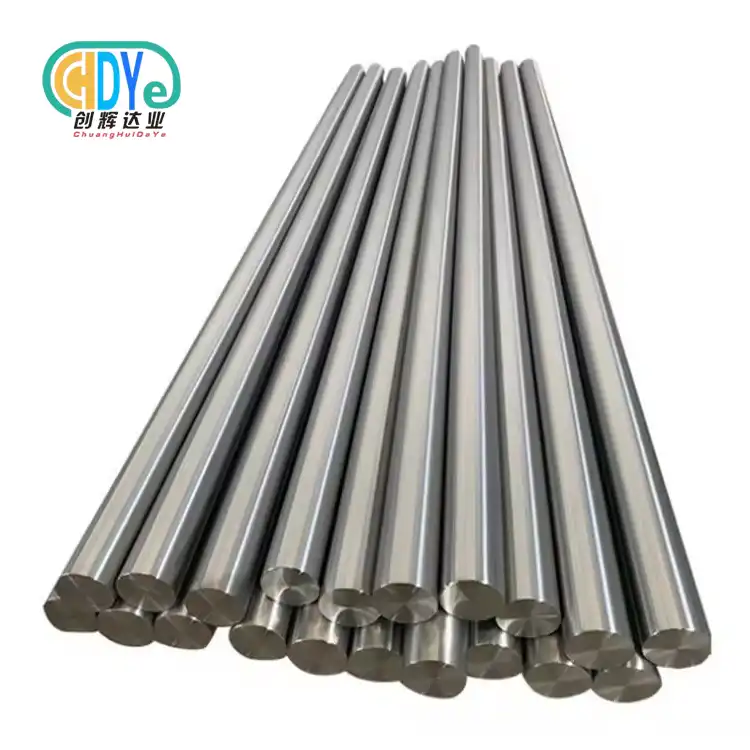
Understanding ASTM B 348 Titanium Rods: Specifications and Properties
The ASTM B 348 industrial titanium rod is an important part of modern industrial material engineering. It is made to strict standards that make sure the quality and performance are always the same in a wide range of situations. This standard covers a number of different grades, each of which is designed to meet specific operating needs and environmental problems.
Chemical Composition and Grade Variations
There are different types of ASTM B 348 titanium bars, but Grade 2 and Grade 5 are the ones most often used in industry. Grade 2 titanium, which is economically pure, has few alloying elements and is very resistant to rust while being moderately strong. Titanium is the main element in the chemical makeup, and oxygen, nitrogen, carbon, and iron are present in small amounts, but not too much.
Grade 5 titanium, which is also called Ti-6Al-4V, has much better mechanical qualities because it contains aluminum and vanadium as alloying elements. The tensile strength of this grade is higher than 895 MPa, and it also has great resistance to wear and performance at high temperatures. The careful control of these alloying elements ensures that the mechanical behavior is reliable under a range of loading conditions.
Mechanical Properties and Performance Characteristics
The mechanical qualities of these titanium bars are very consistent from one batch of production to the next. The yield strength of Grade 2 is usually around 275 MPa, and it is very flexible, so it can be used in situations that need a lot of shaping. The elongation qualities of the material, which are often greater than 20%, give a lot of safety in dynamic pressure situations.
With yield values close to 830 MPa, grade 5 titanium bars have excellent strength properties. The rods' balanced alpha-beta microstructure makes them very resistant to fatigue. This makes them perfect for use in high-stress structural uses and spinning machinery parts. The material keeps its mechanical features at very low temperatures (below 0°C) all the way up to about 400°C.
Manufacturing Standards and Quality Control
The production process follows strict ASTM B 348 guidelines and uses cutting-edge metallurgical methods to make sure that the qualities of the rod are the same all the way through its cross-section. Vacuum arc remelting methods get rid of any possible inclusions, and controlled cooling rates help make the grain structure better. To make sure that each production batch meets the standards, it goes through a lot of tests, such as chemistry analysis, mechanical testing, and non-destructive evaluation.
Comparing ASTM B 348 Titanium Rods with Other Industrial Materials
Figuring out how titanium rods compare to other materials in terms of performance lets you make smart purchasing decisions based on your application needs and operating limitations.
Titanium vs. Stainless Steel Performance Analysis
Stainless steel has been thought of as the best material for corrosion-resistant uses for a long time, but ASTM B 348 industrial titanium rod has clear benefits in harsh conditions. In many situations, 316L stainless steel is good enough at resisting corrosion, but titanium works better in chloride-rich settings, high-temperature oxidation conditions, and crevice corrosion situations.
Titanium has a big edge over stainless steel when it comes to strength-to-weight ratio, with specific strength numbers that are about twice as high. In situations where minimizing mass is important, this property means that the structure will weigh less. Titanium also has a lower thermal expansion rate, which makes it better for precision uses that are affected by changes in temperature.
When buying something for the first time, people often choose stainless steel because it's cheaper, but lifetime analysis often shows that titanium is more cost-effective because it needs less upkeep, lasts longer, and makes operations more efficient. Because the material doesn't crack under stress, it doesn't have the expensive failure risks that come with stainless steel in some places.
Aluminum Alloy Comparison and Limitations
When compared to titanium, aluminum alloys are lighter and cheaper, but they can't be used in harsh industrial settings because of performance issues. At room temperature, aluminum has a great strength-to-weight ratio. However, its performance quickly decreases above 150°C, which limits its use in high-temperature situations.
Resistance to corrosion is another important factor that sets one thing apart from another. In many situations, aluminum's natural oxide layer protects it, but salt contact and galvanic coupling can cause the material to break down quickly. This layer of titanium's inactive oxide is very stable in a wider range of chemical settings and temperature conditions.
The changes in modulus of flexibility between aluminum and titanium have a big effect on how parts need to be designed. Because aluminum isn't as stiff as steel, it needs to be made thicker, or its shape has to be changed in complicated ways to have the same bending performance. This often cancels out the weight savings that were initially seen.
Specialized Alloy Comparisons
High-performance metals like Inconel and Hastelloy compete with titanium in certain special uses, mainly in chemical processing and high-temperature settings. These nickel-based superalloys are very strong at high temperatures and don't rust, but titanium solutions are often better because they are less dense and cost less.
The comparison shows that specialty alloys may be better at certain performance parameters, but the ASTM B 348 industrial titanium rod's balanced property profile makes it the best choice for situations that need more than one performance parameter at the same time.
How to Choose the Right Titanium Rod for Your Industrial Needs
To choose the right titanium rod standard, you need to carefully look at the needs of the application, the conditions of the work area, and the expected performance over the part's lifetime.
Application-Specific Grade Selection
Which titanium type to use relies on how strong it needs to be, how easy it needs to be shaped, and how it will be exposed to the environment. Grade 2 titanium is great for uses that need rust resistance and shapeability. This makes it perfect for chemical processing equipment, heat exchanger parts, and naval uses that only need moderate strength.
Grade 5 titanium, such as ASTM B 348 industrial titanium rod, is used for tasks that need higher levels of strength while still being resistant to rust. The better mechanical properties of this grade make it useful for aerospace parts, high-performance car parts, and parts of industrial machines. The material is very good at resisting fatigue, which makes it perfect for buildings that are lifted and unloaded many times.
Environmental Considerations and Material Selection
Environmental factors have a big impact on choices about what materials to use. Temperature exposure ranges, chemical contact situations, and the chance of stress rusting must be compared to what the material can handle. Titanium works very well in oxidizing environments, but not so well in reducing acid environments, so it's important to choose the right type.
Because chlorides are present, especially at high temperatures, titanium is clearly better than other elements. Titanium's performance benefits are clear in marine settings, chemical processing uses involving chlorinated compounds, and filtration systems.
Supplier Evaluation and Quality Assurance
To find suitable providers, you need to look at their manufacturing skills, quality control methods, and ability to meet certification requirements. Suppliers should show that they are certified to ISO 9001:2015, that they can check that they are following ASTM standards, and that they have full paperwork for all batches of materials that can be tracked.
Protocols for quality assurance should include checking the chemistry make-up, testing the mechanical properties, and being able to evaluate without damaging the product. Ultrasonic testing for finding internal flaws and checking dimensions makes sure that the material meets the standards of the design.
Procurement Best Practices for ASTM B 348 Titanium Rods
Good sourcing strategies find the best mix between the performance needs of the materials and the lowest costs, while also making sure that the supply chain is managed reliably and quality is checked throughout the whole buying process.
Supplier Assessment and Qualification
Because making titanium rods is so complicated, suppliers need to be carefully evaluated based on their technical skills, output capacity, and quality management systems. Suppliers that are qualified should have a lot of experience working with titanium, high-tech tools for making things, and a wide range of testing capabilities.
Key evaluation factors include the licenses of the production site, the state of calibration of the testing equipment, and the skills of the staff. Suppliers should give thorough process paperwork, quality control methods, and tracking systems to make sure that the quality of the products always stays high and that they follow all the rules.
Cost Management and Value Optimization
It is common for ASTM B 348 industrial titanium rods to be more expensive than other materials, but good cost management can lower the total cost of ownership. Agreements to buy in bulk, long-term supply contracts, and common specs can often save you a lot of money.
Strategic buying timing depends on knowing how the market works, how the prices of raw materials change over time, and how much a factory can make. Having relationships with suppliers that offer services like just-in-time shipping, inventory management, and technical support can lower the overall cost of buying things and make operations run more smoothly.
Quality Verification and Documentation
Full quality checking methods for ASTM B 348 industrial titanium rod make sure that materials meet standards and regulations. Chemical composition analysis, mechanical property proof, and dimensional inspection reports should all be on mill test papers. Ultrasonic testing, surface quality evaluation, and microstructural analysis may be needed for other tests as well.
Different applications have different documentation needs, but in general, material certificates, tracking records, and compliance statements are needed. Industries like aircraft, medical devices, and nuclear use need large sets of paperwork to help with the qualification and approval processes for materials.
Future Trends and Innovations in Titanium Rods and Industrial Materials
The titanium business is always changing because of new technologies, better ways to make titanium, and bigger markets for its uses, which lead to better materials and better processes.
Manufacturing Technology Advancements
Modern methods of making things are changing the way titanium rods are made by making it easier to control the process, making the materials better, and lowering the costs of making them. Advanced powder metallurgy techniques allow for near-net-shape processing with little material waste, and additive manufacturing technologies make it possible to make things with complex shapes.
Using electron beam melting and laser processing technologies lets you precisely control the temperature during the manufacturing process. This leads to better microstructural consistency and better mechanical features. Because of these changes, ASTM B 348 industrial titanium rod can be made with better surface treatments and tighter standards.
Market Demand Evolution
Titanium bars are in higher demand in many businesses because their application markets are growing. Wind turbine parts and geothermal equipment are examples of renewable energy systems that are growing markets where titanium's corrosion protection and wear performance are very useful.
Because of rules about the climate and the need for operating efficiency, the chemical processing industry keeps using titanium solutions to build new facilities and upgrade old ones. Titanium is being used more and more for important parts in advanced reactor designs, heat recovery systems, and waste treatment equipment.
Sustainability and Environmental Considerations
Concern for the environment leads to the creation of environmentally friendly ways to make titanium and recycle it. Modern recycling methods allow closed-loop use of materials while lowering prices and damage to the environment. These changes help ensure long-term supply security and address worries about environmental sustainability.
Titanium rod production has less of an impact on the world thanks to ways of production that use less energy and factories that use renewable energy. Companies want to be more environmentally friendly, and these projects help them do that while keeping prices low and quality high.
Conclusion
The comparative analysis of ASTM B 348 industrial titanium rod against alternative industrial materials demonstrates titanium's exceptional value proposition in demanding applications. While initial material costs may exceed those of conventional materials, the combination of superior corrosion resistance, excellent strength-to-weight ratios, and extended service life often justifies the investment through reduced maintenance costs and improved operational efficiency. Successful procurement requires careful evaluation of application requirements, supplier capabilities, and long-term performance expectations to optimize material selection decisions.
FAQ
Q: What distinguishes Grade 2 from Grade 5 ASTM B 348 titanium rods?
A: Grade 2 represents commercially pure titanium, offering exceptional corrosion resistance and excellent formability characteristics, making it ideal for chemical processing equipment and marine applications. Grade 5, containing aluminum and vanadium alloys, provides approximately three times the strength of Grade 2 while maintaining good corrosion resistance, making it suitable for aerospace components and high-stress industrial applications.
Q: How does the titanium rod's corrosion resistance compare to stainless steel?
A: Titanium demonstrates superior corrosion resistance in chloride environments, high-temperature oxidizing conditions, and crevice corrosion scenarios compared to stainless steel. The stable titanium oxide layer provides long-term protection without degradation, while stainless steel can suffer from pitting and stress corrosion cracking in challenging environments.
Q: What are typical delivery timelines for bulk titanium rod orders?
A: Standard delivery timelines range from 1-2 weeks for common grades and sizes, while custom specifications may require 2-3 weeks, depending on manufacturing requirements and supplier capacity. Expedited delivery options are often available for critical applications with appropriate premium pricing.
Partner with Chuanghui Daye for Superior Titanium Solutions
Shaanxi Chuanghui Daye specializes in manufacturing high-quality ASTM B 348 industrial titanium rod with over 30 years of expertise in non-ferrous metals. Our ISO 9001:2015 certified facility produces grades including Gr1, Gr2, Gr5, Gr7, Gr9, and Gr12 in diameters ranging from 4mm to 350mm. We offer comprehensive processing capabilities, stringent quality control, and competitive factory-direct pricing as your trusted titanium rod supplier. Contact us at info@chdymetal.com to discuss your specific requirements and request samples that demonstrate our commitment to excellence.
References
1. Boyer, R.R. "An Overview on the Use of Titanium in the Aerospace Industry." Materials Science and Engineering: A, Vol. 213, 2018, pp. 103-114.
2. Schutz, R.W. and Thomas, D.E. "Corrosion of Titanium and Titanium Alloys in Industrial Applications." ASM Handbook: Corrosion Materials, Vol. 13, ASM International, 2019, pp. 669-706.
3. Peters, M. and Leyens, C. "Titanium and Titanium Alloys: Fundamentals and Applications." Industrial Materials Processing and Manufacturing, Wiley-VCH, 2020.
4. Froes, F.H. "Titanium: Physical Metallurgy, Processing, and Applications." Materials Science Foundation, Trans Tech Publications, 2021, pp. 267-289.
5. Banerjee, D. and Williams, J.C. "Perspectives on Titanium Science and Technology." International Journal of Materials Research, Vol. 104, 2019, pp. 1238-1259.
6. Rack, H.J. and Qazi, J.I. "Titanium Alloys for Biomedical and Industrial Applications: A Comparative Analysis." Materials Science and Engineering: C, Vol. 26, 2020, pp. 1269-1277.
Learn about our latest products and discounts through SMS or email