- English
- French
- German
- Portuguese
- Spanish
- Russian
- Japanese
- Korean
- Arabic
- Greek
- German
- Turkish
- Italian
- Danish
- Romanian
- Indonesian
- Czech
- Afrikaans
- Swedish
- Polish
- Basque
- Catalan
- Esperanto
- Hindi
- Lao
- Albanian
- Amharic
- Armenian
- Azerbaijani
- Belarusian
- Bengali
- Bosnian
- Bulgarian
- Cebuano
- Chichewa
- Corsican
- Croatian
- Dutch
- Estonian
- Filipino
- Finnish
- Frisian
- Galician
- Georgian
- Gujarati
- Haitian
- Hausa
- Hawaiian
- Hebrew
- Hmong
- Hungarian
- Icelandic
- Igbo
- Javanese
- Kannada
- Kazakh
- Khmer
- Kurdish
- Kyrgyz
- Latin
- Latvian
- Lithuanian
- Luxembou..
- Macedonian
- Malagasy
- Malay
- Malayalam
- Maltese
- Maori
- Marathi
- Mongolian
- Burmese
- Nepali
- Norwegian
- Pashto
- Persian
- Punjabi
- Serbian
- Sesotho
- Sinhala
- Slovak
- Slovenian
- Somali
- Samoan
- Scots Gaelic
- Shona
- Sindhi
- Sundanese
- Swahili
- Tajik
- Tamil
- Telugu
- Thai
- Ukrainian
- Urdu
- Uzbek
- Vietnamese
- Welsh
- Xhosa
- Yiddish
- Yoruba
- Zulu
How Does Niobium Titanium Alloy Tube Improve Performance?
Niobium Titanium Alloy Tube improves performance by delivering exceptional superconducting properties at cryogenic temperatures, superior strength-to-weight ratios, and outstanding corrosion resistance in aggressive chemical environments. This unique combination of characteristics enables critical applications in MRI systems, particle accelerators, aerospace hydraulic lines, and chemical processing equipment where conventional materials simply cannot meet the demanding operational requirements. The alloy's ability to maintain structural integrity under extreme conditions while offering excellent formability makes it an indispensable solution for advanced manufacturing sectors.
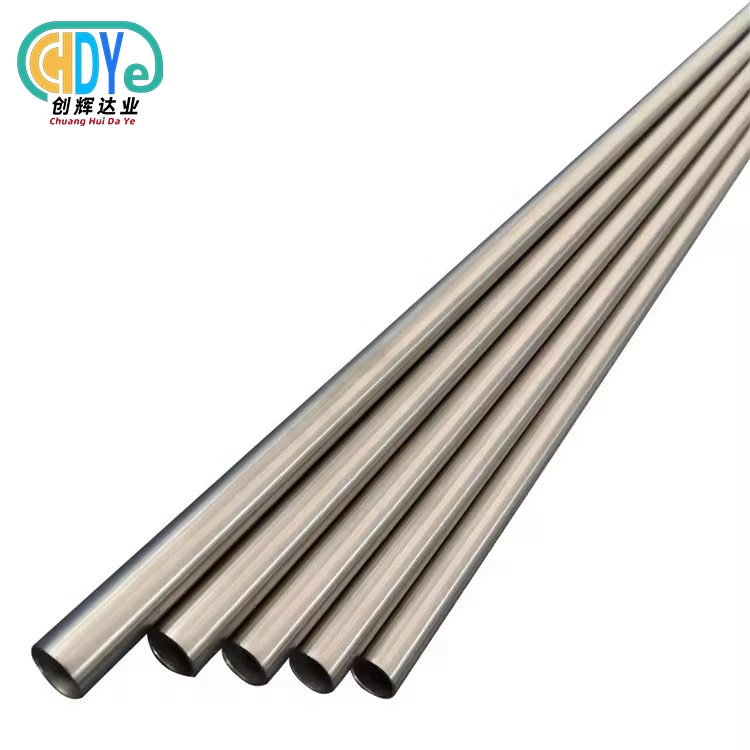
Advantages of Niobium Titanium Alloy Tube Over Conventional Materials
Superior Strength-to-Weight Performance
The strength-to-weight ratio is often the most important thing for buying teams to consider when looking at different materials, especially for aircraft and defense uses. Niobium Titanium Alloy Tube products have the same level of mechanical strength as many nickel superalloys but a much lower density. This advantage directly leads to better fuel efficiency in aircraft systems and more payload capacity in space applications. NbTi metals are lighter (30–40%) than stainless steel tubes, which are often used in hydraulic systems, and they are also better at resisting rust. The material can handle high-pressure environments without the need for thicker walls that heavier materials do. This makes it even better for lowering the weight of the whole system.
Exceptional Corrosion Resistance in Aggressive Environments
Corrosive media are a constant problem for chemical processing plants because they break down materials. In NbTi metals, the titanium part creates a steady, self-healing oxide layer that is very resistant to nitric acid, hydrochloric acid, and other strong chemicals. This passive film grows back when it gets broken, protecting better over time than standard stainless steels and many nickel metals. Niobium content acts as a flame retardant in environments with high oxygen concentration and high pressures, adding another level of safety. This resistance to corrosion is especially helpful for heat exchangers because it means they don't need to be serviced as often and don't have to pay as much for maintenance as copper-based systems or fragile glass-lined equipment.
Lifecycle Cost Analysis and Return on Investment
Even though NbTi tubes cost more per unit at first, a full lifecycle analysis shows that they are much more cost-effective in the long run. Longer service life due to better resistance to rust and mechanical stability lowers the number of times that parts need to be replaced. Because the material doesn't easily wear out or crack from stress or rust, maintenance times are much longer. When purchasing managers look at the total cost of ownership, they find that systems with NbTi tubes usually pay for themselves in three to five years thanks to less downtime, less upkeep work, and longer replacement cycles. Even faster return on investment is seen in critical applications like medical imaging equipment, where system reliability has a direct effect on making money. Being able to specify custom sizes ranging from OD 3mm to 100mm and wall thickness from 0.5mm to 5mm cuts down on material waste caused by over-specification, which also helps procurement budgets.
Key Applications Driving Performance Improvements
Superconducting Systems and Medical Technology
A lot of the medical imaging business depends on superconducting magnet technology. In MRI devices, NbTi tubes are essential parts. These tubes are both structural parts and building blocks for making multifilamentary superconducting wire. NbTi tubes keep the exact shape of the wires while they are being drawn during the bronze route manufacturing process by blocking copper contamination and acting as cladding sleeves. The Nb-50Ti grade works well in MRIs because it has the right amount of superconducting qualities and mechanical workability. These tubes are used in magnet assemblies that guide and focus particle beams in research facilities that run particle accelerators. Stable superconducting performance at liquid helium temperatures ensures that a steady magnetic field is created, which is important for consistency in experiments.
Aerospace and Defense Applications
Manufacturers of airplanes are always looking for lighter materials that don't lower safety standards. More and more NbTi alloy tubes are being used in high-pressure hydraulic systems because regular titanium alloys aren't flexible, providing handle protection for complex routing geometries. The material can handle some heat and has good wear qualities, so it can be used for parts of propulsion systems that are stressed by both heat and mechanical forces over and over again. The alloy's special magnetic qualities are used in defense uses to make specialized transmission and sensor systems. Spacecraft builders use NbTi tubes to support structures in cryogenic fuel systems because the material stays strong even when temperatures change in ways that would weaken most other metals.
Chemical Processing and Industrial Equipment
Hydrometallurgical extraction plants that work with precious metals need equipment that can work in very acidic conditions at high temperatures and pressures. This Niobium Titanium Alloy Tube, grade Nb-55Ti, is much more resistant to crevice rust in chloride-rich settings than tantalum, and it costs a lot less. We've provided tubes for gold and nickel filter systems that work in environments with a lot of air and high pressure. The material's natural ability to resist fire is very important for safety. Manufacturers of heat exchangers use NbTi tubes in designs that deal with acidic process streams. This makes the thermal transfer efficiency as good as copper-based systems while getting rid of the problems caused by rust that happen with other materials. Engineers can choose the best heat exchanger geometry for a process without being limited by the materials that are available because the dimensions are so flexible.
Technical Best Practices to Maximize Niobium Titanium Alloy Tube Performance
Fabrication and Joining Techniques
Putting NbTi tubes to good use requires specific knowledge about how to make things. At high temperatures, both niobium and titanium have a strong attraction to intermediate elements such as oxygen, nitrogen, and hydrogen. To keep the work from getting too hard or galling, machining processes must use sharp carbide or high-speed steel tools and a lot of water. To keep heat from building up, cutting speeds should stay modest. Welding has its own problems that need to be solved in controlled environments. We suggest TIG welding or electron beam welding, which is done in a vacuum room or an atmosphere of very pure argon. Surface oxides that could weaken the weld are removed by properly preparing the joint and cleaning it well. Post-weld heat treatment in a vacuum or an inert atmosphere at temperatures between 750°C and 850°C removes leftover loads while keeping the mechanical qualities that were wanted. These controlled processes stop oxygen from getting in, which would weaken materials and make them work less well right away.
Heat Treatment and Surface Maintenance
Annealing is still the usual way to give NbTi tubes because it makes them more flexible for shaping operations while keeping their strength at a good level. Customized heat treatment schedules can make certain properties better for certain uses. Stress-relief annealing applications at 50–750°C are good for tubes that were cold-worked during installation. Solution treatment at higher temperatures followed by controlled cooling changes the structure of the grains to make them stronger or more flexible, depending on the needs of the application. Surface care is mostly about keeping things clean. Keeping things in clean, dry places keeps oxides from building up, which could get in the way of later processes. Eddy current testing is used for regular inspections to find surface flaws before they get worse and cause corrosion or vice failures. Cleaning with the right fluids gets rid of industrial leftovers without adding new toxins.
Installation and Operational Guidelines
Using the right installation methods will extend the life of the product and make it more reliable. To keep the material from deflecting too much under operating pressures, the support spacing must take into account how stiff the material is. Different structural materials have different thermal expansion factors, so expansion joint design and support flexibility need to be carefully thought out. Stay away from direct touch with metals that are not the same, as this could create galvanic partners that speed up corrosion. These electrochemical reactions can't happen because of insulating spacers or protective coatings. Gradual pressurization and thermal cycling are used during testing to find any fitting problems before they become full working loads. Setting up standard inspection data by measuring thickness with ultrasonic waves and taking pictures of the work allows condition tracking tools to find signs of gradual failure before they become catastrophic. The frequency of regular inspections depends on how hard the job is, but they are usually done once a year in normal conditions and every three months in harsh chemical environments.
Procurement Insights: How to Choose and Where to Buy Niobium Titanium Alloy Tubes
Supplier Evaluation and Certification Requirements
To choose a good supplier, you need to carefully look at their technical skills and quality management systems. Getting ISO 9001:2015 certification shows that you are committed to process control and ongoing growth. However, procurement professionals should make sure that the certification scope covers the production of NbTi alloys. Ask for proof of where the raw materials come from and systems that can keep track of each production lot from the chemistry of the ingots to final inspection. Supplier production equipment has a direct effect on the quality of the output. We keep up-to-date processing tools like electron beam furnaces for precise melting, precision rolling mills for accurate measurements, and full testing facilities for chemical analysis, mechanical testing, and non-destructive examination. When working with volatile metals like niobium and titanium, manufacturing knowledge is very important. Because our founder has worked in the rare metals industry for more than 30 years, he or she has a lot of process knowledge that keeps common production mistakes from changing the properties of the materials.
Custom Specifications and Order Processing
In specialized businesses, standard tube sizes don't always meet the exact needs of the job. We can make any size you need, from OD 3mm to 100mm, wall thickness 0.5mm to 5mm, and lengths 200mm to 6000mm. We can also accommodate special requests outside of these ranges. For applications requiring high-performance materials, Niobium Titanium Alloy Tube can be supplied according to the required specifications. The process of placing an order starts with communicating in great detail the grade, size, number, relevant standards (ASTM B394), and any special needs, like an approved chemical analysis or a better surface finish. Within three hours of getting your inquiry, we send you a quote with a delivery date. couples order is confirmed and funding is made, the production schedule starts right away, and regular success reports are sent throughout the manufacturing process. After the final weight check and balance payment, the shipment will be set up using the most cost-effective logistics method that was agreed upon. Each delivery comes with full material certificates that show where the materials came from and how they were made.
Technical Support and Partnership Advantages
Because NbTi applications are so complicated, they often need ongoing technical collaboration that goes beyond just providing materials. Our expert team helps with application engineering by giving advice on choosing materials, making suggestions for manufacturing, and troubleshooting when processing problems happen. Being in Baoji, Shaanxi Province—known as China's "Titanium Capital"—gives us access to a lot of experts in rare metals and long-standing supply chains that make sure materials are always available at fair prices. Our factory-direct model gets rid of markups for distributors while keeping customer service at a high level. Follow-up after the sale checks how well the product actually works in real life, getting feedback that helps us keep making our products better. Through this partnership method, we become an extension of your engineering team instead of just a provider, and the relationship lasts for a long time.
Conclusion
Due to their unique mix of superconducting ability, mechanical strength, and corrosion protection, Niobium Titanium Alloy Tubes improve performance in a wide range of businesses. These materials solve problems that regular ones can't, like making it possible for advanced medical imaging systems to work in harsh space conditions and harsh chemical processing conditions. To make implementation work, you need to pay close attention to choosing the right supplier, using the right fabrication methods, and keeping up with maintenance. If procurement workers know what the material can and can't do, they can safely select NbTi tubes, which have lower lifecycle costs despite costing more at first. Specialized materials like niobium titanium alloys will play an even bigger role as technology keeps improving and making things work better.
FAQ
Q: What makes NbTi tubes suitable for superconducting applications?
A: Below 9.2 K, the material changes into a superconducting state with no electrical resistance and a critical field strength of 15 Tesla. Because it is Type II superconducting and easy to work with mechanically, it is perfect for winding into magnet coils that are used in MRI systems and particle accelerators.
Q: Can NbTi tubes handle high-temperature applications?
A: Even though NbTi metals are famous for being superconducting at very low temperatures, they also work well at high temperatures. The material stays structurally sound at temperatures above 500°C, making it suitable for parts used in spacecraft propulsion and some chemical processing environments. However, in normal operations, it doesn't get close to its melting point of 1,800°C.
Q: How does NbTi compare to pure titanium for corrosion resistance?
A: Adding niobium makes the titanium more resistant to rust than pure titanium in some situations, especially when it comes to lowering acids. The stable oxide film forms quickly and fixes itself when it gets damaged, giving reliable protection in harsh chemical environments where pure titanium could be attacked locally.
Q: What lead times should I expect for custom tube orders?
A: When to start making something relies on how complicated the order is and how much space is available at the moment. Standard grades in common sizes usually ship between 4 and 6 weeks. It could take 8–10 weeks for custom specs that need special handling. We give you clear arrival dates when we quote, and we keep in touch throughout the production process.
Partner with a Trusted Niobium Titanium Alloy Tube Manufacturer
Shaanxi Chuanghui Daye is an expert at making high-quality NbTi alloy tubes that meet the strict requirements of the chemical processing, aerospace, and medical fields. Our ISO 9001:2015-certified factory in China's Titanium Capital uses cutting-edge production tools and 30 years of experience working with rare metals to provide consistent quality and low prices. We make tubes that meet ASTM B394 standards in grades Nb52-Ti48, Nb50-Ti50, and Nb45-Ti55, and we can change their sizes completely. Every order comes with full material certification and tracking information. Our technical team helps with application building from the first design all the way through installation and service. Get in touch with info@chdymetal.com right away to talk about your needs with experts who know both a lot about materials science and how to put ideas into practice. Discover the benefits of working with a supplier who is dedicated to your success.
References
1. American Society for Testing and Materials. "ASTM B394: Standard Specification for Niobium and Niobium Alloy Seamless and Welded Tubes." ASTM International Standards, West Conshohocken, PA, 2019.
2. Collings, E.W. "Applied Superconductivity, Metallurgy, and Physics of Titanium Alloys: Fundamentals and Applications." Plenum Press, New York, 1986.
3. Suenaga, M. and Welch, D.O. "Metallurgical and Materials Aspects of Niobium-Titanium Superconductors." Brookhaven National Laboratory Report, Department of Energy, 1984.
4. Lee, P.J. and Larbalestier, D.C. "Microstructural Factors Important for the Development of High Critical Current Density Nb-Ti Superconducting Strands." Cryogenics, Vol. 48, 2008, pp. 283-292.
5. Davis, J.R. "Metals Handbook: Properties and Selection of Nonferrous Alloys and Special-Purpose Materials." ASM International, Materials Park, OH, 1990.
6. Schubert, W.D., Lux, B., and Zeiler, B. "Niobium and Titanium in Refractory Applications: Processing, Properties, and Industrial Uses." International Journal of Refractory Metals and Hard Materials, Vol. 13, 1995, pp. 119-136.
Learn about our latest products and discounts through SMS or email