- English
- French
- German
- Portuguese
- Spanish
- Russian
- Japanese
- Korean
- Arabic
- Greek
- German
- Turkish
- Italian
- Danish
- Romanian
- Indonesian
- Czech
- Afrikaans
- Swedish
- Polish
- Basque
- Catalan
- Esperanto
- Hindi
- Lao
- Albanian
- Amharic
- Armenian
- Azerbaijani
- Belarusian
- Bengali
- Bosnian
- Bulgarian
- Cebuano
- Chichewa
- Corsican
- Croatian
- Dutch
- Estonian
- Filipino
- Finnish
- Frisian
- Galician
- Georgian
- Gujarati
- Haitian
- Hausa
- Hawaiian
- Hebrew
- Hmong
- Hungarian
- Icelandic
- Igbo
- Javanese
- Kannada
- Kazakh
- Khmer
- Kurdish
- Kyrgyz
- Latin
- Latvian
- Lithuanian
- Luxembou..
- Macedonian
- Malagasy
- Malay
- Malayalam
- Maltese
- Maori
- Marathi
- Mongolian
- Burmese
- Nepali
- Norwegian
- Pashto
- Persian
- Punjabi
- Serbian
- Sesotho
- Sinhala
- Slovak
- Slovenian
- Somali
- Samoan
- Scots Gaelic
- Shona
- Sindhi
- Sundanese
- Swahili
- Tajik
- Tamil
- Telugu
- Thai
- Ukrainian
- Urdu
- Uzbek
- Vietnamese
- Welsh
- Xhosa
- Yiddish
- Yoruba
- Zulu
How Lightweight Is GR2 Titanium Sheet Plate in Structural Design?
When evaluating materials for structural design, engineers consistently seek the optimal balance between weight reduction and performance reliability. GR2 titanium sheet plate delivers exceptional lightweight characteristics with a density of just 4.51 g/cm³, representing approximately 45% weight reduction compared to steel alternatives while maintaining superior corrosion resistance and mechanical integrity. This commercially pure titanium grade offers structural engineers a proven solution for applications where weight optimization directly impacts operational efficiency, load capacity, and long-term durability in demanding industrial environments.
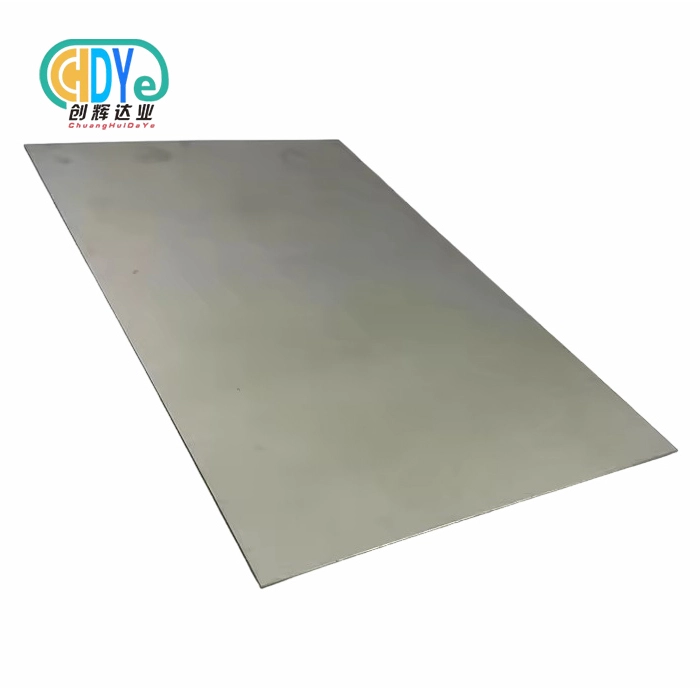
Understanding GR2 Titanium Sheet Plate and Its Lightweight Properties
Material Classification and Chemical Composition
In industrial settings, GR2 titanium is the most commonly used type of commercially pure titanium. This material meets the standards of ASTM B265 and ASME SB265. It has a single-phase alpha composition with carefully controlled intermediate elements. The chemical makeup has titanium as the main ingredient, and there are strict limits on nitrogen (≤0.03%), carbon (≤0.08%), hydrogen (≤0.015%), iron (≤0.30%), and oxygen (≤0.25%). These controlled amounts of impurities make sure that the mechanical properties stay the same while keeping the lightweight qualities that are important for structural design.
The amount of purity of the material makes it different from higher-strength titanium alloys. This gives engineers reliable properties for how the material will shape and weld. Unlike alloyed versions like Ti-6Al-4V, GR2 keeps its lightweight qualities without having to go through a complicated heat treatment process. This makes it perfect for making structural parts.
Density Comparison and Weight Advantages
When you look at the density numbers of different building materials, you can see that GR2 titanium is significantly lighter than most of them. GR2 titanium sheet plate is much lighter than stainless steel 316L (8.0 g/cm³) and carbon steel (7.85 g/cm³), weighing only 4.51 g/cm³. Titanium has a higher strength-to-weight ratio than aluminum alloys (2.7 g/cm³), which is often why it is chosen in acidic conditions where aluminum would fail.
These benefits of crowding directly translate into benefits for structure design. Engineers can ask for smaller cross-sections while keeping the same level of strength, or they can get higher safety limits without adding extra weight. Because the density of the material stays the same at different thicknesses (0.5 mm to 50 mm), it is easy to figure out how much it will weigh during the planning process.
Manufacturing Process and Quality Assurance
The melting, casting, and rolling processes used to make GR2 titanium sheet are very complex. These processes keep the material's lightweight qualities while making sure the dimensions are correct. In more advanced facilities, electron beam melting is used to make the chemicals uniform, and then controlled hot and cold rolling is used to give the metal the right mechanical qualities. During annealing processes, internal stresses are relieved without changing the material's naturally light properties.
To make sure that foreign standards are met, quality control methods include thorough tests of density, chemical makeup, and mechanical properties. Manufacturers who are ISO 9001:2015 certified use tracking systems to keep track of the properties of their products from the time they check the raw materials to the time they are packaged. This gives procurement workers faith in the stability of the materials they buy.
Advantages of Using GR2 Titanium Sheet Plate in Structural Design
Weight Reduction Impact on Design Efficiency
The fact that GR2 titanium is lightweight has many positive effects on structural design projects. Less heavy materials mean that support structures can be made more easily, foundations don't have to be as big, and building costs are lower. Engineering estimates show that weight reductions of 40–50% compared to steel alternatives can have a big effect on the total project economy. This is especially true for uses where weight directly affects running costs, like mobile tools or aerospace parts.
Because the material is very strong for its weight, engineers can make the best structural designs without sacrificing safety. The minimum tensile strength of 345 MPa and the low density make it possible to create in ways that standard materials can't. This benefit is especially useful in situations where high wear resistance is needed under cyclic loads.
Superior Corrosion Resistance and Durability
In addition to being light, the GR2 titanium sheet plate is very resistant to rust, which makes structures last longer while still being lightweight. The substance creates a solid layer of titanium dioxide that protects against pitting and crevice rust in chloride settings, which is where stainless steels break down too soon. Because it doesn't rust, there's no need for protective layers that would be heavy and need to be maintained.
When used in marine and chemical industry settings, the mix of being light and resistant to corrosion gives better total cost performance. Structures keep their original weight over their entire service life because they don't build up corrosion products or the need to repair parts that would change how the loads are distributed.
Fabrication Flexibility and Weldability
Because GR2 titanium is so easy to shape, it can be used to make complicated structures while still meeting the goals of lightweight design. Cold forming lets makers make lightweight structural parts with few processing steps. This is possible because deep drawing and press braking processes don't need to be heated up first. Because the material can be welded, standard methods can be used for fusion welding, which makes it easier to put together complex lightweight structures.
Surface treatments like bright finishing, polishing, pickling, and sanding improve the look and function of the metal without adding a lot of weight. It is possible to tailor these processes to meet the needs of a particular application while still retaining the basic lightweight benefits of the base material.
GR2 Titanium Sheet Plate vs Alternative Materials — Helping You Decide
Comparison with Higher-Grade Titanium Alloys
When choosing between GR2 and GR5 (Ti-6Al-4V) titanium for structural uses, the mix between strength and formability is often what makes the difference. At least 895 MPa of tensile strength, GR5 is stronger than GR2, but its mass of 4.43 g/cm³ doesn't make it much lighter than GR2. For structural uses that need modest strength and maximum formability, the widely pure grade is the best choice because it doesn't need to be heated and has better corrosion resistance.
Because GR2 is cheaper than titanium alloys, it is a good choice for big structural parts where the weight savings make up for the cost of the material. The lack of expensive alloying elements like vanadium and aluminum helps keep prices fixed and makes it easier to get for building projects.
Steel and Aluminum Alternatives Analysis
Even though stainless steel alternatives are cheaper at first, they are much heavier, which changes the total economics of the job. The GR2 titanium sheet plate weighs about 44% less than stainless steel parts that are the same size and shape. This is a big benefit in situations where weight directly affects performance or costs. Titanium's greater resistance to corrosion often removes the costs of replacing and maintaining steel parts over the course of their lifetime.
Aluminum alloys have a good weight, but they don't have the corrosion protection and temperature stability that are needed in many structural uses. Aluminum suffers from galvanic rust in chloride settings, which weakens its structure. Titanium, on the other hand, is the best lightweight material, even though it costs more at first.
Regulatory and Application-Specific Considerations
The biocompatibility and light weight of GR2 titanium make it useful for medical equipment, especially internal devices where weight directly affects patient comfort. Following the rules set by ASTM F67 and ISO 5832-2 makes sure that the material can be used for medical structure parts and gives wearable and implantable devices the weight benefits they need.
The mix of being light and being compatible with chemicals is useful in industrial chemical processes. Because it doesn't break down easily in chlorine, acids, or alkaline solutions, the material can be used in construction uses where other lightweight materials would break down quickly.
Procurement Insights — How to Source and Utilize GR2 Titanium Sheet Plate
Supplier Evaluation Criteria
To find GR2 titanium sources you can trust, you need to carefully look at their manufacturing skills and quality certifications. People who work in procurement should give more weight to suppliers who have ISO 9001:2015 quality management systems and ASTM B265/ASME SB265 certification. Modern factories with electron beam furnaces, controlled atmosphere rolling mills, and full testing labs make sure that the qualities and dimensions of the materials are always the same.
When evaluating a supplier, you should look at how they get their raw materials, how they keep track of them, and how many examples they have from customers who have used similar products. The supplier's ability to provide material test certificates, chemical analysis records, and paperwork on mechanical properties shows that they are dedicated to quality control and following the rules.
Custom Processing and Delivery Capabilities
These days, titanium providers offer extra services that make buying easier and cut down on project timelines. Custom cutting services make it possible to get sheets of exact measurements, which cuts down on trash and the cost of making things. Suppliers can send finished parts that are ready to be put together by treating the surfaces with things like pickling, sanding, and finishing.
Because titanium is so valuable and easily contaminated, it's important to know how to package and ship it properly. Suppliers you can trust use moisture-proof boxes with safe foam padding and wooden crates made for shipping goods across borders. Shipping choices like fast, air freight, and ocean transport give you the freedom to meet the needs of your project and your budget.
Pricing Dynamics and Negotiation Strategies
By understanding how titanium prices are set, you can negotiate better deals and make better budget plans. Material costs are usually based on the prices of raw materials like titanium sponge, how hard the process is, and changes in market demand. Long-term supply deals are good for ongoing building projects because they often allow for better prices because of promises to buy in bulk.
Lead times, which are usually between 2 and 4 weeks for normal sizes and 6 to 8 weeks for custom sizes, should be taken into account in procurement plans. Early planning and interaction with suppliers helps ensure material supply and may lead to volume discounts that balance out the higher costs of titanium materials.
Case Studies and Applications Highlighting Lightweight Benefits
Aerospace and Defense Applications
A lot of non-structural parts in the aircraft business are made from GR2 titanium sheet plate. Reducing weight has a direct effect on fuel economy and payload capacity. Titanium is light and fire-resistant, which makes it a good choice for kitchen structures, ducting systems, and internal brackets in airplanes. When compared to steel options, these parts are 45% lighter, which means they are better for the climate and the cost of running an airplane.
In defense, lightweight armor plates and car parts are used because they are more effective when combined with resistance to rust and weight reduction. It is better for mobile tools to be lighter while still being able to hold up in tough environments.
Chemical Processing and Marine Engineering
Chemical processing plants use GR2 titanium for structural purposes in the production of chlor-alkali. The material's resistance to chlorine weathering ensures that the structures stay strong over time. Getting rid of extra weight makes installation easier and lowers the need for support structures for process equipment. Because the material works well in high-velocity seawater, it is perfect for building structures for purification plants and parts of maritime platforms.
Titanium is exceptionally light, which makes it useful in condenser uses at power plants. Less weight makes maintenance easier and provides better corrosion protection compared to other materials.
Industrial Equipment and Automation
More and more, manufacturing equipment calls for GR2 titanium for lightweight structure parts that need to be resistant to rust and stable in their shape. Weight reduction in moving parts helps automated systems work better by using less power and lasting longer. The material is very resistant to fatigue, so it can be used in situations with cyclic loads while still having the weight benefits that are important for high-speed operations.
Conclusion
GR2 titanium sheet plate delivers exceptional lightweight performance for structural design applications, offering 45% weight reduction compared to steel while maintaining superior corrosion resistance and mechanical integrity. The material's density of 4.51 g/cm³ combines with excellent formability and weldability to enable innovative structural solutions across aerospace, chemical processing, and industrial applications. Procurement professionals benefit from understanding supplier evaluation criteria, pricing dynamics, and the long-term cost advantages associated with titanium's extended service life and reduced maintenance requirements.
FAQ
Q: How much weight can be saved using GR2 titanium instead of stainless steel?
A: GR2 titanium sheet plate typically provides 43-45% weight reduction compared to equivalent stainless steel 316L sections. This translates to approximately 3.5 kg weight savings per square meter for 10mm thick sheets, with proportional savings across different thicknesses.
Q: What surface treatments are available for structural applications?
A: Standard surface treatments include bright finishing, polished surfaces, acid pickling for optimal weld preparation, and sandblasting for enhanced adhesion. These treatments maintain the lightweight properties while providing functional and aesthetic benefits for structural applications.
Q: Can GR2 titanium be welded to create lightweight structures?
A: Yes, GR2 titanium offers excellent weldability using TIG welding processes with proper shielding gas protection. The material can be welded without post-weld heat treatment, simplifying fabrication of complex lightweight structures while maintaining corrosion resistance.
Q: What certifications should I look for when sourcing titanium sheets?
A: Essential certifications include ASTM B265/ASME SB265 for general applications, ASTM F67 for medical devices, and ISO 9001:2015 for quality management systems. Material test papers should list the chemical makeup, mechanical qualities, and allowed size variations of the material.
Partner with Chuanghui Daye for Premium GR2 Titanium Sheet Solutions
Shaanxi Chuanghui Daye, located in China's renowned "Titanium Capital" of Baoji, brings over 30 years of rare metal expertise to your structural design projects. Our ISO 9001:2015 certified facility produces GR2 titanium sheet plate with guaranteed lightweight properties and consistent quality. Advanced electron beam furnaces and precision rolling equipment ensure optimal density control and dimensional accuracy. Contact our technical team at info@chdymetal.com to discuss your lightweight structural requirements and receive custom quotes from a trusted Gr2 titanium sheet plate manufacturer.
References
1. Boyer, R.R. "An Overview on the Use of Titanium in the Aerospace Industry." Materials Science and Engineering: A, Vol. 213, No. 1-2, pp. 103-114.
2. Lutjering, G. and Williams, J.C. "Titanium: Engineering Materials and Processes." Manchester Materials Science Centre, 2nd Edition.
3. Schutz, R.W. and Thomas, D.E. "Corrosion of Titanium and Titanium Alloys in Marine Environments." Industrial Corrosion Prevention and Control, Vol. 45, pp. 1245-1252.
4. ASTM International. "Standard Specification for Titanium and Titanium Alloy Strip, Sheet, and Plate." ASTM B265-20a, Annual Book of ASTM Standards.
5. Peters, M. and Leyens, C. "Titanium and Titanium Alloys: Fundamentals and Applications." Chemical Engineering and Materials Science Research.
6. Donachie, M.J. "Titanium: A Technical Guide." ASM International Materials Engineering Database, 2nd Edition.
Learn about our latest products and discounts through SMS or email