- English
- French
- German
- Portuguese
- Spanish
- Russian
- Japanese
- Korean
- Arabic
- Greek
- German
- Turkish
- Italian
- Danish
- Romanian
- Indonesian
- Czech
- Afrikaans
- Swedish
- Polish
- Basque
- Catalan
- Esperanto
- Hindi
- Lao
- Albanian
- Amharic
- Armenian
- Azerbaijani
- Belarusian
- Bengali
- Bosnian
- Bulgarian
- Cebuano
- Chichewa
- Corsican
- Croatian
- Dutch
- Estonian
- Filipino
- Finnish
- Frisian
- Galician
- Georgian
- Gujarati
- Haitian
- Hausa
- Hawaiian
- Hebrew
- Hmong
- Hungarian
- Icelandic
- Igbo
- Javanese
- Kannada
- Kazakh
- Khmer
- Kurdish
- Kyrgyz
- Latin
- Latvian
- Lithuanian
- Luxembou..
- Macedonian
- Malagasy
- Malay
- Malayalam
- Maltese
- Maori
- Marathi
- Mongolian
- Burmese
- Nepali
- Norwegian
- Pashto
- Persian
- Punjabi
- Serbian
- Sesotho
- Sinhala
- Slovak
- Slovenian
- Somali
- Samoan
- Scots Gaelic
- Shona
- Sindhi
- Sundanese
- Swahili
- Tajik
- Tamil
- Telugu
- Thai
- Ukrainian
- Urdu
- Uzbek
- Vietnamese
- Welsh
- Xhosa
- Yiddish
- Yoruba
- Zulu
ASTM B863 Titanium Wire: Certified and Reliable Material
ASTM B863 titanium wire is the gold standard for titanium and titanium alloy wire made for general corrosion-resistant and industrial engineering uses. It is the material to choose for important industrial purposes. This standard covers more than 30 grades, ranging from commercially pure titanium to high-strength alloys. These materials are better at resisting corrosion and having a higher strength-to-weight ratio than other materials used in harsh settings.
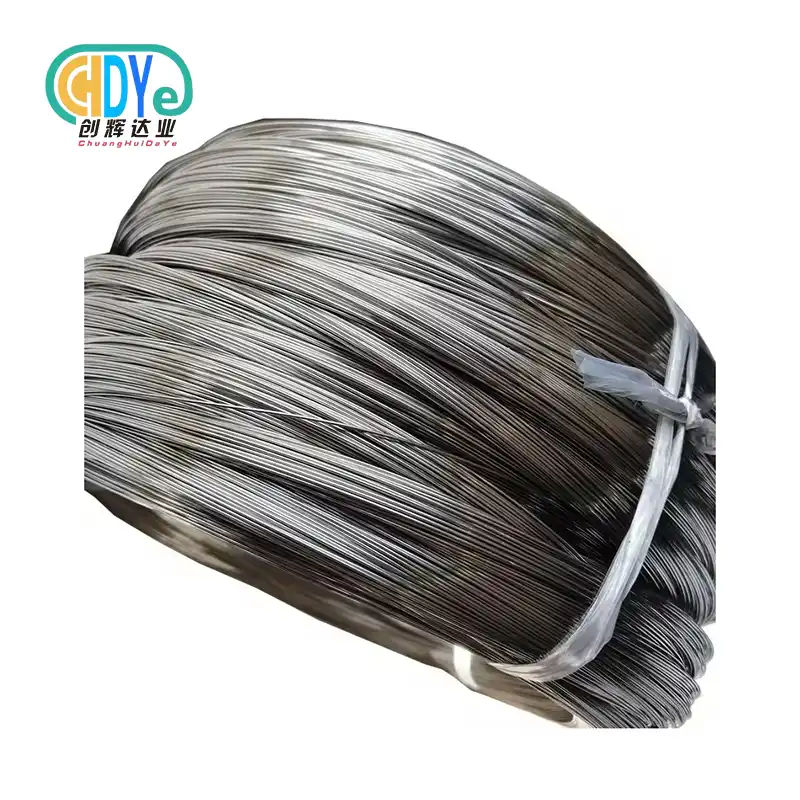
Understanding ASTM B863 Titanium Wire Specifications and Properties
To make titanium wire that you can trust, you need to first understand the detailed requirements that make up ASTM B863. This standard sets exact limits for chemical makeup, mechanical qualities, and size variations so that the product works the same way in all kinds of industrial settings.
Chemical Composition and Grade Classifications
ASTM B863 includes different types of titanium, each of which is designed to meet particular performance needs. Grades 1-4, which are commercially pure, have different amounts of oxygen, nitrogen, carbon, and iron, all of which have an effect on the mechanical qualities. Grade 1 is the most flexible, with a tensile strength of about 240 MPa. Grade 4 is the strongest, with a tensile strength of about 550 MPa. Alpha-beta alloys, such as Ti-6Al-4V (Grade 5), are very strong—they can handle more than 895 MPa of force—which makes them perfect for aircraft bolts and other high-stress uses.
The control over the chemical makeup goes beyond simple alloying elements. Interstitial elements like oxygen, nitrogen, and carbon need to be carefully managed to keep materials from becoming weak and to make sure they have the best rust protection. With this careful attention to detail, a solid titanium dioxide (TiO2) passive oxide film forms that protects better against salt conditions and oxidizing acids.
Mechanical Properties and Performance Characteristics
Titanium wire made according to ASTM B863 standards has amazing mechanical qualities that solve important problems in industry. The material stays very flexible in commercially pure grades, which lets it be used for difficult shaping tasks like knitting, cold heading, and weaving without breaking. The low elastic modulus—about 110 GPa compared to 200 GPa for steel—makes it useful in situations where flexibility and wear resistance are needed.
Another big benefit is that it works well at different temperatures. The high melting point of 1660°C of ASTM B863 titanium wire makes sure that its shape stays stable in high-temperature processing uses. It can withstand temperatures up to 300°C in acidic environments. Because the material isn't magnetic, it's necessary for electrical uses that need to keep magnetic disturbance to a minimum.
Comparative Analysis for Informed Procurement Decisions
Knowing how ASTM B863 stacks up against other products and standards in the same field helps you make smart purchasing choices that balance performance needs with budget concerns. This study shows why titanium wire often has better long-term value, even though it costs more at first.
ASTM B863 versus ASTM B348 and Related Standards
While ASTM B348 talks about titanium bars and billets, ASTM B863 is only about wire uses that need tighter size and surface finish standards. The wire standard allows diameter tolerances of up to ±0.002 inches for fine wires, which is necessary for automatic production processes to work consistently. ASTM B863 is also not the same as AWS A5.16 welding wire guidelines because it focuses on structural purposes instead of filler metal needs.
The fact that ASTM B863 and ASTM F136 (medical grade) are related shows how flexible titanium wire is. ASTM B863 offers a wider range of grades that can be used in workplace settings where biocompatibility may not be the main worry. F136, on the other hand, focuses on biocompatibility through its extra-low interstitial content. Because of this, procurement workers can choose the grade that is most cost-effective for each purpose.
Cost-Performance Analysis Against Alternative Materials
Stainless steel wire is cheaper at first, but it doesn't always fight corrosion well enough in chloride settings. This causes it to break down early and need expensive repairs. ASTM B863 titanium wire can be used for more than 10 to 20 years in naval and chemical processing settings, where stainless steel would break in just a few months. The better strength-to-weight ratio, which is about 56% the density of steel, makes it useful in aircraft uses by making fuel use more efficient.
When you compare this titanium metal to others, you can see that it has strategic benefits for certain uses. Even though Ti-6Al-4V is stronger, commercially pure types are better at resisting rust and making chemical processing equipment. This grade's freedom within the ASTM B863 standard lets it be optimized for different service situations and performance needs.
Manufacturing Excellence and Quality Assurance at Chuanghui Daye
Titanium wire's dependability depends a lot on how it is made and how it is checked for quality. The factory where Chuanghui Daye makes its products in Baoji, Shaanxi Province, uses its thirty years of experience with rare metals to make sure that the products it makes are always of high quality and meet international standards.
Advanced Production Processes
The first step in our manufacturing process is choosing the raw materials. We use high-purity titanium sponge and carefully controlled alloying additions. The vacuum melting method keeps the ingot's chemical makeup uniform and cleans it from air contamination. After that, the nanoscale is fine-tuned, and any remaining holes that could weaken the wire's stability are filled.
Precision dies and controlled reduction steps are used in the wire drawing process to get the diameter specs needed while keeping the quality of the surface finish. Intermediate annealing processes improve the mechanical qualities of the metal and stop work hardening, which can make it brittle. Our controlled atmosphere burners make sure that the heat treatment results are always the same and that the surface doesn't oxidize in a way that could affect how well it works afterward in processing or service.
Comprehensive Quality Management Systems
We make sure the quality of our products all the way through the production process. We are certified to ISO 9001:2015 and follow foreign standards like AMS 4951 and EN 10204 3.1. To check the quality and pedigree of raw materials, chemical analysis, mechanical testing, and ultrasound examination are used. At every step of production, in-process tracking makes sure that the dimensions are correct and the surface finish meets standards.
Tensile testing, hardness verification, and surface quality rating are all part of the final checking process. Our lab can do full chemistry analysis and metallographic study to make sure the microstructure is intact. Documentation packages make it possible to track everything from the raw materials to the final review. This helps meet both customer quality standards and legal requirements.
Diverse Applications Across Critical Industries
Because ASTM B863 titanium wire is so flexible, it can be used in many fields where efficiency, dependability, and durability are important. Knowing about these tools helps people who work in buying find ways to save money and improve performance.
Chemical Processing and Corrosion-Resistant Applications
Titanium wire is used in chemical handling because it is very resistant to chlorine, acids, and other harsh chemicals. To get rid of mist and deodorize, chlor-alkali plants, desalination facilities, and petroleum processing units use woven wire mesh made from available clean grades. Because the wire doesn't crack under stress, it can be used reliably in high-stress, acidic conditions where stainless steel would fail.
Anodizing and electroplating work better with titanium wire because it is both electrically conductive and resistant to acids. When the wire is formed into hooks and supporting devices, it can handle being exposed to sulfuric acid and caustic solutions over and over again without losing its shape. Because these fittings can be stripped down and used thousands of times, they are much cheaper than disposable metal ones.
Aerospace and Defense Manufacturing
High-strength titanium alloy wire is used as a material by aerospace makers for cold-heading processes that make fasteners, rivets, and precision parts that are light and strong. The material has consistent mechanical qualities that make forming processes predictable. Its high strength-to-weight ratio also helps make vehicles more fuel-efficient. Because it doesn't wear down easily, Grade 5 wire is necessary for dynamic loading uses in airplane structures.
Titanium wire's nonmagnetic and corrosion-resistant qualities are used in defense applications to make specialized equipment that works in marine settings. Extreme temperatures and corrosive conditions don't affect the material's performance, which guarantees mission-critical dependability while lowering the need for upkeep and lifetime costs.
Medical Device and Precision Applications
The biocompatibility and mechanical properties of certain ASTM B863 grades make them suitable for medical device applications, including surgical instruments, orthodontic appliances, and implantable components. The material's elastic stiffness is closer to that of human bone than steel. This makes it less effective at stress absorption while still giving it the strength it needs. Surface finish features make it possible for surfaces to be smooth and easy to clean, which is important for medical uses.
Streamlined Procurement Solutions
To buy ASTM B863 titanium wire successfully, you need to know about the supplier's skills, quality systems, and shipping options. Chuanghui Daye's all-around method meets these needs and gives customers the freedom they need for a wide range of uses.
Supplier Evaluation and Selection Criteria
When looking at titanium wire providers, you need to look at their technical skills, quality control methods, and how reliable their supply chains are. Some important factors are where to get the raw materials, how well the production equipment works, and the quality control systems in place. ISO 9001:2015 certification is a basic way to make sure of quality, but for aircraft use, you may need industry-specific certifications like AS9100.
Production ability and freedom are very important things to think about when making long-term supply agreements. The advanced machinery at our plant, such as electron beam furnaces, precision drawing machines, and controlled atmosphere annealing furnaces, lets us make a wide range of grades and specs. Through just-in-time delivery, inventory management systems make sure that goods are always available and keep customer handling costs as low as possible.
Technical Support and Application Engineering
For titanium wire to work well, they often need expert help choosing the right material, setting the right processing parameters, and improving the quality. Our engineering team gives advice based on service conditions, performance needs, and cost goals for each application. This help goes from choosing the materials at the beginning to putting them into production and keeping an eye on their performance all the way through.
Sample programs let customers see how well a material works before committing to large amounts. Our quality laboratory does a lot of testing and research to make sure that specifications are met and that processing factors are at their best. This joint method makes sure that the implementation goes well while keeping costs and development time to a minimum.
Conclusion
ASTM B863 titanium wire has been used for many years in tough industrial settings that need high rust protection, high strength-to-weight performance, and long-term dependability. The wide range of grade choices in this specification lets you get the best performance for each service situation, and the set manufacturing and quality standards make sure that everything stays the same. With 30 years of experience in making rare metals, along with advanced manufacturing skills and thorough quality systems, Chuanghui Daye provides the dependable supply chain support that is needed for important uses. Long-term relationships that work well in aircraft, chemical processing, medical devices, and other tough fields are built on our dedication to technical excellence and customer service.
FAQ
Q: What sizes and configurations are available for ASTM B863 titanium wire?
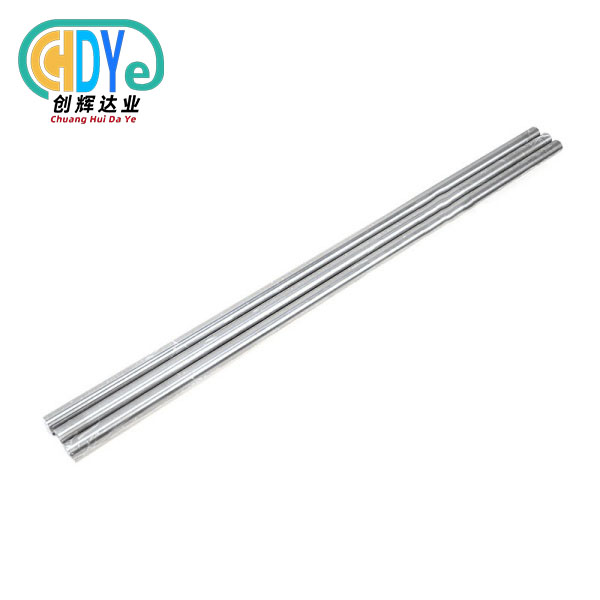
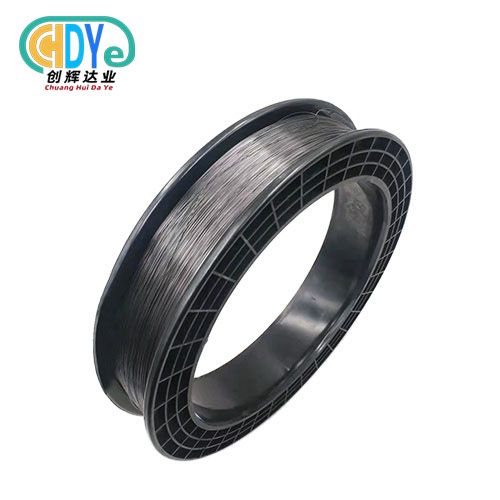
A: Our ASTM B863 titanium wire is available in diameters ranging from 0.15mm to 7mm and can be sent in straight lengths, coils, or rolls, depending on what the customer needs. This size range can be used for everything from making small electrical parts to making structural fasteners. It is possible to get setups that are made just for your application.
Q: What quality certifications and standards does Chuanghui Daye maintain?
A: Chuanghui Daye is still certified with ISO 9001:2015, and the titanium wire they make meets the standards set by ASTM B863, AWS A5.16, ASTM F136, AMS 4951, and EN 10204 3.1. Our quality management system makes sure that all of our goods can be fully tracked and have all the necessary paperwork. This meets both customer quality standards and legal requirements.
Q: How does ASTM B863 titanium wire compare to stainless steel for corrosion resistance?
A: Titanium wire is more resistant to rust than stainless steel, especially in chloride areas, coastal settings, and situations with oxidizing acids. The passive titanium dioxide film protects the metal for a long time, which means it can last 10–20 years longer than stainless steel options in harsh settings.
Q: What grades of ASTM B863 titanium wire are most commonly used?
A: For applications that need to be resistant to corrosion, Grade 1 and Grade 2 economically pure titanium are most often used. For high-strength aircraft and structural uses, Grade 5 (Ti-6Al-4V) is recommended. The grade chosen is based on the strength, ductility, and corrosion protection needs of the planned working area.
Q: What lead times and minimum order quantities should I expect?
A: Lead times are usually between 2 and 4 weeks, but they depend on the grade, size, and amount needed. Minimum order numbers depend on the diameter and grade, and trial and research uses can be flexible. Our inventory management system keeps popular configurations in stock so that we can meet urgent shipping needs.
Partner with Chuanghui Daye for Premium ASTM B863 Titanium Wire Solutions
Shaanxi Chuanghui Daye is ready to help you with your titanium wire needs. They have been working with rare metals for 30 years and can make a wide range of products. Our factory in Baoji, China's Titanium Capital, uses cutting-edge production tools and strict quality control systems to make sure that all of our goods are always of high quality and performance. Whether you need commercially pure grades for chemical processing or high-strength alloys for making aerospace parts, our expert team gives you the application support and supply chain stability you need to be successful. Email our knowledgeable staff at info@chdymetal.com to talk about your specific needs and find out why top producers around the world trust Chuanghui Daye as their reliable ASTM B863 titanium wire provider.
References
1. ASTM International. "ASTM B863-21 Standard Specification for Titanium and Titanium Alloy Wire." Annual Book of ASTM Standards, Volume 02.04.
2. Boyer, R., Welsch, G., and Collings, E.W. "Materials Properties Handbook: Titanium Alloys." ASM International Materials Park, Ohio.
3. Lutjering, G. and Williams, J.C. "Titanium: Engineering Materials and Processes." Springer-Verlag Berlin Heidelberg.
4. Schutz, R.W. and Thomas, D.E. "Corrosion of Titanium and Titanium Alloys." ASM Handbook Volume 13: Corrosion, ASM International.
5. Donachie, M.J. "Titanium: A Technical Guide, 2nd Edition." ASM International Materials Park, Ohio.
6. Peters, M., Kumpfert, J., Ward, C.H., and Leyens, C. "Titanium Alloys for Aerospace Applications." Advanced Engineering Materials, Volume 5, Issue 6.
Learn about our latest products and discounts through SMS or email