- English
- French
- German
- Portuguese
- Spanish
- Russian
- Japanese
- Korean
- Arabic
- Greek
- German
- Turkish
- Italian
- Danish
- Romanian
- Indonesian
- Czech
- Afrikaans
- Swedish
- Polish
- Basque
- Catalan
- Esperanto
- Hindi
- Lao
- Albanian
- Amharic
- Armenian
- Azerbaijani
- Belarusian
- Bengali
- Bosnian
- Bulgarian
- Cebuano
- Chichewa
- Corsican
- Croatian
- Dutch
- Estonian
- Filipino
- Finnish
- Frisian
- Galician
- Georgian
- Gujarati
- Haitian
- Hausa
- Hawaiian
- Hebrew
- Hmong
- Hungarian
- Icelandic
- Igbo
- Javanese
- Kannada
- Kazakh
- Khmer
- Kurdish
- Kyrgyz
- Latin
- Latvian
- Lithuanian
- Luxembou..
- Macedonian
- Malagasy
- Malay
- Malayalam
- Maltese
- Maori
- Marathi
- Mongolian
- Burmese
- Nepali
- Norwegian
- Pashto
- Persian
- Punjabi
- Serbian
- Sesotho
- Sinhala
- Slovak
- Slovenian
- Somali
- Samoan
- Scots Gaelic
- Shona
- Sindhi
- Sundanese
- Swahili
- Tajik
- Tamil
- Telugu
- Thai
- Ukrainian
- Urdu
- Uzbek
- Vietnamese
- Welsh
- Xhosa
- Yiddish
- Yoruba
- Zulu
How Strong Is Titanium Plate Compared to Steel?
When testing material strength for industrial uses, titanium plates always do better than traditional steel alternatives in terms of strength-to-weight. Teflon strengths for pure titanium that you can buy in stores range from 240 to 550 MPa. Grade 5 Ti-6Al-4V alloys can hold up to 1,170 MPa of force when they are stretched. For different kinds of steel, it's between 400 MPa and 2,000 MPa. Though it is 7.8 times lighter than steel (4.5 g/cm³ vs. 8.8 g/cm³), which makes it a good choice when you need to lose weight but keep the structure.
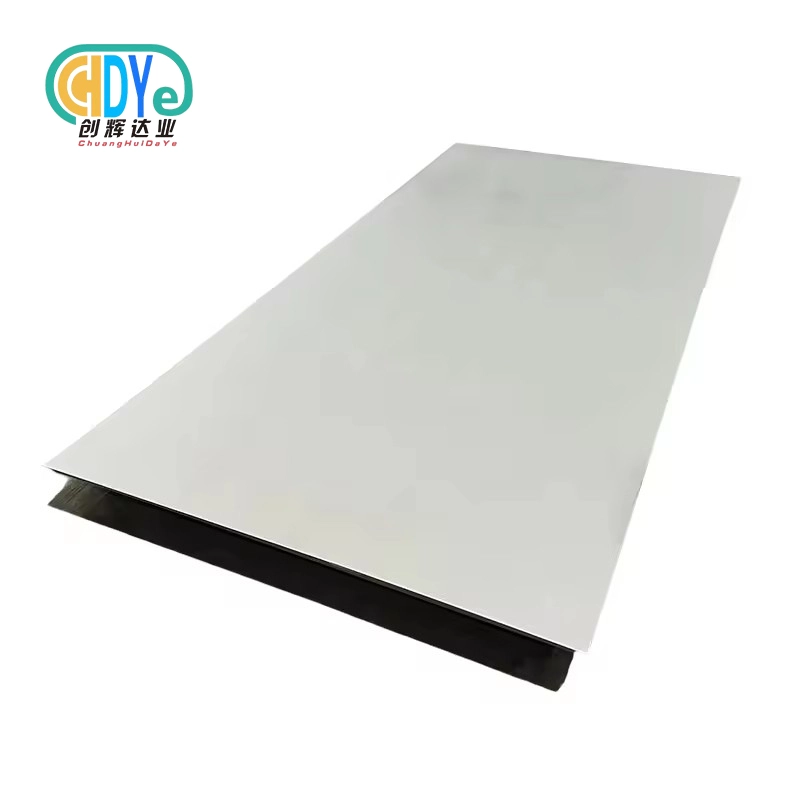
Understanding the Strength Properties of Titanium vs Steel
Mechanical Property Comparison Analysis
When it comes to strength, titanium and steel are not the same. However, titanium is normally better. Strengths of 345 to 483 MPa range for pure titanium grade 2. It is very flexible. It can be used in places that are corrosive as long as the strength isn't too high. It works a lot better with grade 5 titanium alloy. You can pull on it with 895 to 1,170 MPa of force, stretch it 10 to 15 percent, and it will yield 828 to 1,100 MPa of force. Not all kinds of steel are strong in the same way. A lot of carbon steels can be pulled apart with 400 to 600 MPa of force. On the other hand, high-strength low-alloy steels can be as strong as 700 to 800 MPa. Steels like 316L can keep their shape for 515 to 620 MPa and don't rust as quickly as carbon steel does.
Strength-to-Weight Ratio Advantages
It is important to think about how strong and heavy a material is when choosing it for boats, cars, and planes. Ti alloys are stronger than steel alloys in some ways, by more than 30% to 40%. This is great if you want to lower the amount of fuel you use, the weight you can carry, or the strength of something. In engineering, titanium is better than other metals because it can provide the same level of strength with a lot less material. There are many times when a 100-kilogram piece of titanium plate is just as strong as a 180-kilogram piece of steel.
Temperature Performance Characteristics
Steel doesn't work as well in rough places or hot temperatures as titanium does. Tin can get as hot as 600°C and is still very strong. It is also very easy to stretch. Steels of very different grades act in very different ways. But if they aren't mixed with alloys that can handle high temperatures, most structural steels lose some of their strength above 400°C.
Key Benefits of Titanium Plates Beyond Strength
Corrosion Resistance and Durability
Titanium doesn't rust easily because it forms an oxide layer on its own. This layer protects it better in places like the sea, chemical plants, and factories. As soon as this layer that isn't being used gets broken, it heals itself. This protects the steel from chlorides, acids, and oxidizing conditions that can quickly wear it down. Because it doesn't rust, the product will last a long time and save you a lot of money. Titanium costs more than steel at first, but it actually costs less after 15 to 20 years of use because it lasts longer, doesn't need as much maintenance, and doesn't need coatings to protect it. Titanium is used in fields like chemical processing, power generation, and remote platforms because it works well in places where steel needs to be replaced often or under strict maintenance plans. Getting rid of downtime caused by corrosion is good for the economy in more ways than one. For example, it lowers the cost of materials.
Weight Reduction Without Structural Compromise
More and more, manufacturers need to focus on making things lighter without losing their effectiveness. This needs to be done, and titanium is the best metal for it because it is strong and light. Parts for spacecraft often need titanium parts because they can hold the same amount of weight but are 40–50% lighter than steel parts. Losing weight has more benefits than just lowering body mass. There is less stress on the structures that hold up parts that are lighter. This makes movement better and lets mobile apps carry more. Titanium is often a good choice because of these extra benefits, even if the price seems too high at first.
Heat Resistance and Thermal Stability
Titanium stays very stable at a lot of different temperatures. Its mechanical properties don't change when it's very cold or when it's above 500°C. Because it can handle high temperatures well, it can be used in gas engines, exhaust systems, and heat exchanges where steel alternatives need complicated cooling systems or need to be replaced more often. Titanium's low rate of thermal expansion makes it less likely that it will crack when the temperature changes. This quality is very helpful for precise instruments, optical systems, and electrical assemblies that need to stay the same size over a wide temperature range.
Practical Applications and Use Cases of Titanium vs Steel Plates
Aerospace and Defense Applications
Titanium plates are often used by aerospace companies for structural parts, engine parts, and airframe assemblies. Titanium makes up about 15% of the weight of the Boeing 787. The goal is to get the strongest parts for the heaviest weight. This is mostly used in engine pylons, wing structures, and landing gear parts. Titanium is used to make armor plates, car structures, and military protective gear because it can withstand damage and not be broken. It provides better protection at a lower weight than standard steel armor systems because it can absorb impact energy while still maintaining its shape. Tin is strong and doesn't rust, so defense companies use it for the hulls of submarines, navy ships, and offshore platforms. It can handle rough marine environments. When it comes to rural or strategically important areas, the longer service life and lower maintenance needs are very helpful.
Medical and Biomedical Industries
Companies that make medical goods need biocompatible titanium grades for things like implants, surgical tools, and prosthetics. For surgical uses, our medical titanium products, like Grades 5, 5 ELI, and 23 ELI, are made to strict ASTM F67 and ASTM F136 standards. Because it is biocompatible, the material doesn't react badly with tissue, and it makes load-bearing devices stronger. Titanium's elastic modulus is very close to that of human bone. This makes it better for orthopedic uses than steel implants because it doesn't shield against stress as much. Titanium is used to make surgical instruments because it doesn't rust and can be sterilized. The material doesn't break down after being put through many autoclave cycles, so it keeps its sharp edges and tight tolerances that are necessary for surgical precision.
Chemical Processing and Industrial Equipment
In the chemical processing industry, titanium is used in hot plates, heat exchangers, and pipe systems that work with corrosive materials. That's because this material doesn't react with chlorides, organic acids, or oxidizing conditions, so it won't rust as stainless steel systems do. In many industrial settings, like desalination plants, pulp and paper mills, and drug factories, it's still very important that the tools and products are clean and work well. Two big practical benefits are getting rid of metal pollution and making tools last longer.
Procurement Considerations for Titanium and Steel Plates
Cost Analysis and Budget Planning
When you buy titanium, it's not enough to just compare prices; you also need to think about how much it will cost over its whole life. Titanium raw materials are usually 5–10 times more expensive than steel alternatives. However, the better performance, longer life, and lower maintenance needs often make the price tag worth it. Each titanium part can be bought for a lot less when you buy them in bulk. Long-term supply agreements with reliable manufacturers keep prices stable and make sure that important projects can get the materials they need. Our ISO 9001:2015-certified manufacturing processes make sure that the quality is always the same and that there is all the paperwork is needed for medical and aerospace uses. Planning for lead times is important when buying titanium because it has special processing and quality control needs that make delivery times longer than for regular steel products. Supply chain risks can be reduced by planning and managing inventory strategically.
Quality Standards and Certification Requirements
Reliable suppliers give full certifications of the materials they sell, which include information on the chemicals used, their mechanical properties, and how they were processed in the past. For titanium uses, it's often necessary to follow aerospace standards (AMS), medical device rules (ASTM F67/F136), or military standards (MIL-T). Having a third-party check and test important applications adds to the quality guarantee. For each titanium plate, we make sure it meets the requirements by measuring it, testing it with ultrasound, and making sure it has the right mechanical properties. Supply chain traceability is especially important in regulated industries where material pedigree records help with quality checks and ensure regulations are followed. Qualified suppliers keep careful records from the time they get the raw materials to the time they deliver the finished product.
Supplier Selection Criteria
If you want to find good titanium suppliers, you should check out their production skills, quality processes, and level of expertise. It is important to think about the quality certifications, the tools for melting and processing, and the experience with certain grades and uses. The manufacturing skills should include all stages of processing, from making the ingots to finishing and machining them. Modern tools, like vacuum arc remelting, electron beam melting, and precision machining centers, make sure that the material properties and dimensions are just right. Technical support and engineering help are very helpful when choosing materials, making designs better, and coming up with solutions that work for a specific application. It's easier to save money and pick the right grade if you work with suppliers who have been in the business for a long time.
Decision-Making Guide: Choosing Between Titanium and Steel Plates
Application-Specific Selection Criteria
It's important to think about how the materials will work, how they will be used, and how much they cost before you buy them. Strength requirements rarely determine the best material choice on their own. Things like how well it resists rust, how much weight it can hold, and how hot or cold it is can also affect its long-term performance. Titanium is often used in aerospace when lowering weight directly affects how much fuel it uses or how much it can carry. The more expensive material costs more at first, but it saves money and works better over time, which makes up for it. Titanium may be a good choice for industrial uses when corrosion resistance means that the metal doesn't need to be replaced or maintained as often. Titanium often has good economics in chemical processing, marine environments, and high-temperature applications, even though it costs more at first.
Long-Term Value Assessment
Total cost of ownership analysis provides the most accurate way to decide which materials to use. This evaluation should include initial material costs, processing and fabrication expenses, installation costs, maintenance requirements, and end-of-life considerations. Titanium's longer service life often means lower annual costs compared to steel alternatives that need to be replaced more often. Lifecycle economics is good because protective coatings aren't needed, upkeep tasks are cut down, and dependability is increased. Performance improvements, including weight reduction, enhanced corrosion resistance, and temperature stability, may enable design optimizations that provide additional value beyond simple material substitution. These system-level benefits often justify titanium selection even when direct material comparisons appear unfavorable.
Strategic Supplier Partnerships
When you work with reputable titanium manufacturers, you can get the best prices, technical help, and a stable supply chain. Long-term partnerships let people work together to create solutions that are tailored to specific needs and make processes better. Suppliers that are qualified, like Chuanghui Daye, can do a lot of things, like offer specialized grades, custom processing, and technical support during the whole product development cycle. Being in China's "Titanium Capital" gives us access to advanced manufacturing infrastructure and a lot of knowledge about the industry.
Conclusion
Titanium plate materials are much better than steel alternatives because they have higher strength-to-weight ratios, are very resistant to corrosion, and last longer in tough environments. Even though the initial cost of the materials is higher than that of steel, a full lifecycle analysis often shows that the economics are better for uses in aerospace, medicine, chemical processing, and the marine industry. Choosing between titanium and steel isn't just a matter of comparing prices; it's also important to think about the performance needs, the operating environment, and the total costs of ownership. Qualified suppliers are very important for the successful implementation of titanium because they offer technical knowledge, quality certifications, and the ability to make titanium products.
FAQ
Q: What is the actual strength difference between titanium and steel?
A: Grade 5 titanium alloy achieves tensile strengths up to 1,170 MPa, comparable to many high-strength steels. However, titanium's 4.5 g/cm³ density versus steel's 7.8 g/cm³ provides superior strength-to-weight performance, making titanium approximately 40% stronger per unit weight.
Q: Why choose titanium over steel for critical applications?
A: Titanium offers exceptional corrosion resistance, biocompatibility, and temperature stability that steel cannot match. These properties eliminate maintenance requirements and extend service life in aerospace, medical, and chemical processing applications where reliability remains paramount.
Q: How do processing costs compare between titanium and steel?
A: Titanium machining requires specialized tooling and techniques, typically increasing processing costs 2-3 times compared to steel. However, the elimination of protective coatings, reduced maintenance, and extended service life often offset higher initial processing expenses.
Partner with Chuanghui Daye for Premium Titanium Plate Solutions
Shaanxi Chuanghui Daye delivers superior titanium plate products backed by over 30 years of rare metal industry expertise and ISO 9001:2015 certification. Our comprehensive manufacturing capabilities include advanced melting, forging, and precision machining equipment, ensuring consistent quality and reliable delivery for aerospace, medical, and industrial applications. Located in China's renowned "Titanium Capital," we provide competitive factory-direct pricing, custom processing services, and full traceability documentation meeting international standards. Contact our technical team at info@chdymetal.com to discuss your specific requirements and discover how our titanium plate manufacturer's expertise can optimize your next project's performance and cost-effectiveness.
References
1. Boyer, R., Welsch, G., & Collings, E.W. "Materials Properties Handbook: Titanium Alloys." ASM International, 1994.
2. American Society for Testing and Materials. "ASTM B265-20: Standard Specification for Titanium and Titanium Alloy Strip, Sheet, and Plate." ASTM International, 2020.
3. Lütjering, G. & Williams, J.C. "Titanium: Engineering Materials and Processes." Springer-Verlag Berlin Heidelberg, 2007.
4. Peters, M., Kumpfert, J., Ward, C.H., & Leyens, C. "Titanium Alloys for Aerospace Applications." Advanced Engineering Materials, 2003.
5. Donachie Jr., M.J. "Titanium: A Technical Guide, 2nd Edition." ASM International, 2000.
6. Froes, F.H. "Titanium: Physical Metallurgy, Processing, and Applications." ASM International, 2015.
Learn about our latest products and discounts through SMS or email