- English
- French
- German
- Portuguese
- Spanish
- Russian
- Japanese
- Korean
- Arabic
- Greek
- German
- Turkish
- Italian
- Danish
- Romanian
- Indonesian
- Czech
- Afrikaans
- Swedish
- Polish
- Basque
- Catalan
- Esperanto
- Hindi
- Lao
- Albanian
- Amharic
- Armenian
- Azerbaijani
- Belarusian
- Bengali
- Bosnian
- Bulgarian
- Cebuano
- Chichewa
- Corsican
- Croatian
- Dutch
- Estonian
- Filipino
- Finnish
- Frisian
- Galician
- Georgian
- Gujarati
- Haitian
- Hausa
- Hawaiian
- Hebrew
- Hmong
- Hungarian
- Icelandic
- Igbo
- Javanese
- Kannada
- Kazakh
- Khmer
- Kurdish
- Kyrgyz
- Latin
- Latvian
- Lithuanian
- Luxembou..
- Macedonian
- Malagasy
- Malay
- Malayalam
- Maltese
- Maori
- Marathi
- Mongolian
- Burmese
- Nepali
- Norwegian
- Pashto
- Persian
- Punjabi
- Serbian
- Sesotho
- Sinhala
- Slovak
- Slovenian
- Somali
- Samoan
- Scots Gaelic
- Shona
- Sindhi
- Sundanese
- Swahili
- Tajik
- Tamil
- Telugu
- Thai
- Ukrainian
- Urdu
- Uzbek
- Vietnamese
- Welsh
- Xhosa
- Yiddish
- Yoruba
- Zulu
Titanium Welding Wire with Consistent Mechanical Properties
Titanium welding wire with uniform mechanical qualities is a special kind of filler material made for fields that need high strength, flexibility, and resistance to corrosion. This high-quality titanium welding wire works reliably in uses like aircraft, medical devices, chemical processing, and defense manufacturing. It is essential for important applications where failure is not a choice because the mechanical properties stay the same. This protects the weld and the structure. Advanced manufacturing methods and strict quality control measures make sure that the makeup and performance of each wire stay the same throughout production.
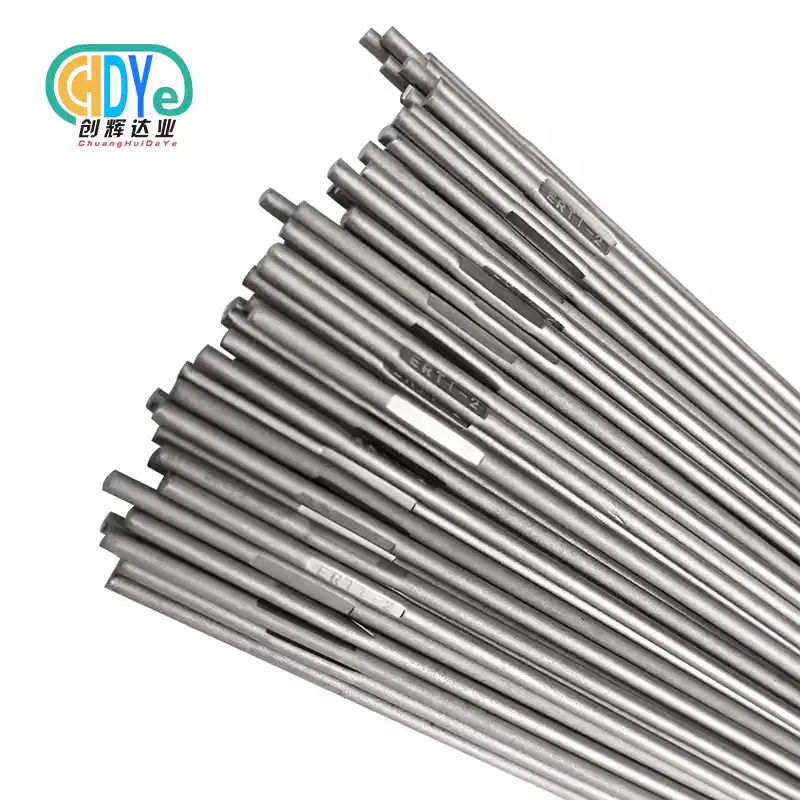
Understanding Titanium Welding Wire and Its Mechanical Properties
Titanium filling materials are essential for high-performance welding in fields where regular materials don't work well. These special wires are mostly made of pure titanium or carefully balanced titanium alloys. Each type of wire is designed to have certain mechanical properties that make it good for tough jobs.
Superior Mechanical Strength and Durability
Titanium filler wire is different from other welding materials because of how it is made mechanically. These wires can hold a lot of weight. Their tensile strengths range from 240 MPa for commercially pure types to over 895 MPa for Ti-6Al-4V alloys. The material is very resistant to wear, which is important for parts that are stressed over and over again in medical implants and spacecraft engines. With a mass of about 4.43 g/cm³, it has a great strength-to-weight ratio, which makes it perfect for uses that need to be light. This trait is especially useful in the aerospace industry, where every gram counts for fuel economy and payload capability.
Corrosion Resistance and Environmental Stability
Titanium's natural oxide layer makes it very resistant to rust in a wide range of settings. The material stays strong even when it's exposed to acidic environments, saltwater, and high-temperature oxidation atmospheres. This resistance goes all the way to the weld zone, making sure that the structure stays strong for a long time without breaking down. Titanium welds stay strong at high temperatures where other materials would break because their melting point is about 1668°C. Because it is stable at high temperatures, it is used in jet engine parts and chemical processing equipment that have to work in harsh circumstances.
Types and Grades of Titanium Welding Wire: Comparison and Selection
Understanding the unique features and uses of each grade option is necessary to make the right choice. The labeling system helps people who buy things match the qualities of materials with the performance needs of those needs.
Commercial Purity Grades (Gr1-Gr4)
Commercial purity types are great at resisting rust and being able to be shaped, which makes them useful for chemical processing and naval uses. Here are some of the most important things about these basic grades:
- Grade 1 (ERTi-1): It has the most flexibility and formability and a tensile strength of about 240 MPa. It is perfect for deep drawing and complex shapes.
- Grade 2 (ERTi-2): At 345 MPa tensile strength, it has a good balance of strength and corrosion protection and is commonly used in chemical handling equipment.
- Grade 3 (ERTi-3): This is a medium-strength choice that has better mechanical qualities while still having great corrosion protection.
- Grade 4 (ERTi-4): With 550 MPa, it has the highest strength of all the CP grades and is good for structural uses that need reasonable strength.
These types are great for welding, and they're especially useful in places where resistance to corrosion is more important than final strength.
High-Performance Alloy Grades
Advancements in titanium metals give them better mechanical qualities for tough jobs that need extra strength and performance.
Grade 5 (Ti-6Al-4V) represents the most common titanium metal, which has compressive strengths of more than 895 MPa. This type of titanium welding wire keeps its strength well at high temperatures and doesn't wear down easily, so it's the standard choice for aerospace uses. Grade 23 (Ti-6Al-4V ELI) has extra-low interstitials that make it harder to break and less likely to wear down over time. It is perfect for medical devices and cryogenic uses, where material clarity is very important because it has less oxygen and iron in it.
Wire Specifications and Supply Options
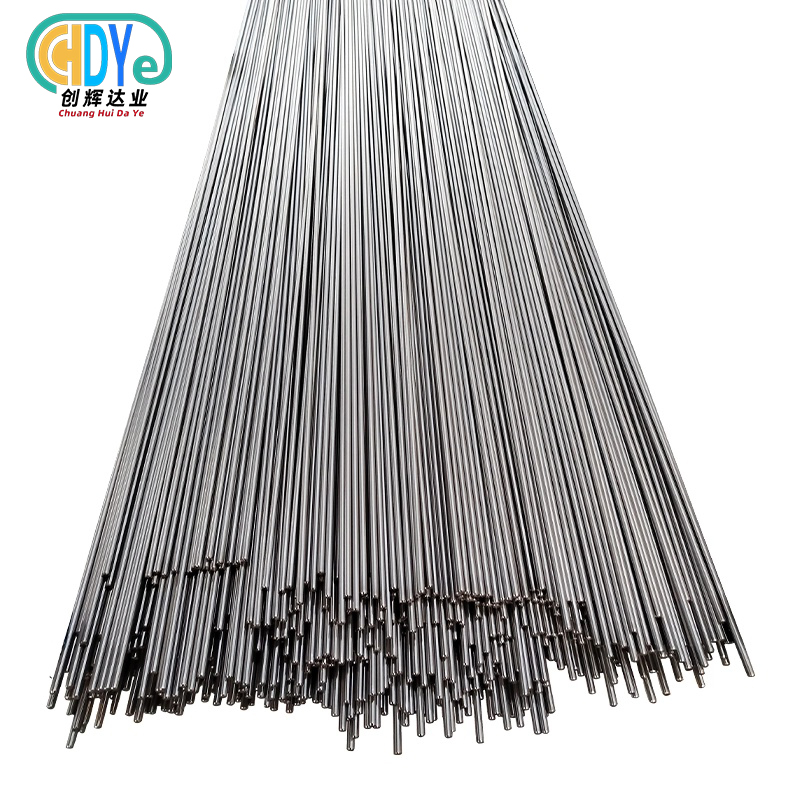
From 0.4 mm to 6 mm in diameter, Chuanghui Daye has a wide range of products that can be used for a wide range of welding methods and joint designs. To meet the needs of different production processes, the types that are available are straight wire, natural coil, and spooled (D100/D300). Pickled and bright finishes are two types of surface processes, and each one works best in a certain welding setting. Any rust that is on the surface is removed by the pickling process, and the bright surface treatment makes the arc start and stay stable better.
Welding Techniques and Best Practices for Titanium Welding Wire
To get titanium welds with uniform mechanical qualities, the welding factors and the environment must be carefully managed. When you use the right method, your joints will be as strong and reliable as they can be.
TIG Welding Optimization
Gas Tungsten Arc Welding (GTAW) is still the best way to join titanium parts precisely. For proper atmosphere protection, the process needs pure argon shielding gas with flow rates that are usually between 15 and 25 CFH. Choosing the right tungsten electrode is very important. Pure or 2% thoriated tungsten electrodes give stable spark qualities. Controlling the amount of heat input stops grains from growing too much and keeps the fine-grained structure that is needed for good mechanical qualities. To keep flexibility and stop alpha case development, interpass temperatures should stay below 150°C.
MIG and Laser Welding Applications
With Gas Metal Arc Welding (GMAW), you can get bigger pieces with higher deposition rates that still have great mechanical qualities. When you use the right wire feeding devices, the arc length and depth stay the same. Laser welding lets you precisely control the amount of heat that goes in and leaves behind very little heat-affected area. This makes it very useful for thin-section uses in aircraft and medical device manufacturing. The focused heat source keeps the fine-grained structure and keeps precise parts from warping.
Contamination Prevention Strategies
Controlling the environment while welding is very important for keeping the mechanical qualities constant. The best weld quality is achieved by taking the following steps to avoid contamination: Protection from the atmosphere goes beyond the weld pool and includes back purging and following gas covering. Oxygen pollution above 0.2% can make materials much less flexible and tough, so they need to be properly shielded. Preparing the surface gets rid of any impurities that could cause problems. Cleaning chemically with the right liquids and then preparing mechanically makes sure that the fusing is clean and doesn't have any holes or inclusions.
Procurement Guide: How to Buy Titanium Welding Wire with Confidence
When buying titanium filler materials strategically, you need to carefully look at the skills of the suppliers, their quality certifications, and how reliable their supply chains are. Knowing about important buying factors can help make sure that a project turns out well.
Quality Certification and Standards Compliance
Reliable providers make sure they follow international rules like ASTM B863 and AWS A5.16. The limits for chemical makeup, the necessary mechanical properties, and the testing methods that make sure quality is always the same are set out in these standards. If a company has ISO 9001:2015 approval, it means they have strong quality control systems that cover every part of the production process, from checking the raw materials to packaging them up at the end. This license gives you faith in the supplier's skills and the control of the process. Each package comes with a Material Test Report (MTR) that lists the chemical breakdown and mechanical qualities so that everything can be tracked. These reports make it possible to keep track of lots and make sure that specifications are being followed for important uses.
Supply Chain Considerations
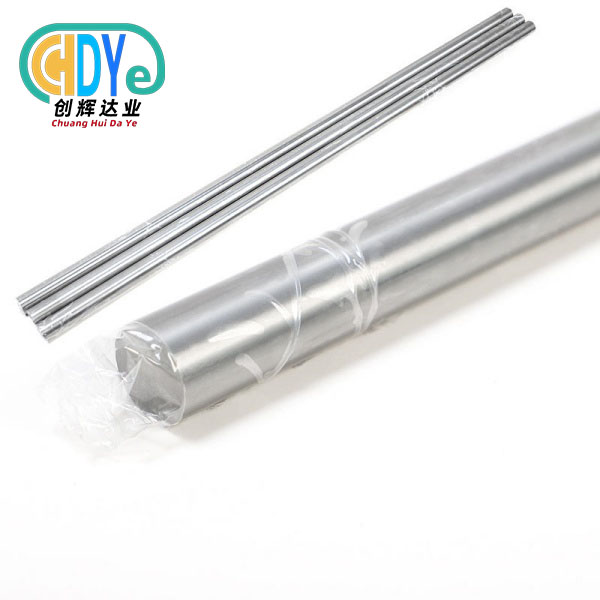
Lead times for titanium welding wire vary depending on the grade, thickness, and amount needed. They are usually between 2 and 6 weeks. Planning when to buy things around these dates keeps production from being held up and makes sure that materials are available. Buying in bulk can save you money and make sure you have enough goods on hand. If you buy more than 1000 pounds a year, you can get big savings. This means that negotiating with suppliers is worth it for big users. Custom packing choices can be used in a variety of production settings and storage conditions. Vacuum-sealed packaging keeps food from going bad while it's being stored, and moisture barrier bags keep food from getting contaminated by humidity.
Trustworthy Titanium Welding Wire Brands and Supplier Selection
By forming relationships with dependable suppliers, you can always get high-quality materials and expert help. When choosing a supplier, you should look at their manufacturing skills, quality processes, and how quickly they can respond to customer needs.
Manufacturing Excellence and Technical Capabilities
Leading makers have state-of-the-art factories that can do vacuum arc remelting and electron beam processing. These steps get rid of impurities and make sure that the alloy makeup is the same across the whole line. Multiple passes of the drawing tool with fine thickness control get rid of feeding problems that happen during welding. For constant arc features, continuous measurement devices keep tolerance ranges within ±0.025mm. Comprehensive material evaluation is possible in quality control labs that have spectrometers, tensile testing tools, and the ability to do metallographic analysis. This testing system makes sure that the specifications are followed and finds any differences in the way the product is made before it is shipped.
Service and Support Advantages
Technical support services help improve the way welds are done and fix any problems that come up with the application. Expert metallurgists can help you choose the right grade, set the right conditions for welding, and make sure the quality is right. Quick price turnaround and order handling are made possible by responsive customer service. Having dedicated account management makes it easier to talk to each other and make sure that supply times work with production needs. Warranty coverage guards against material flaws and gives you faith in what the provider says they will do. Clear guarantee terms spell out what is covered and how to repair any materials that don't meet the standards. Chuanghui Daye exemplifies these traits as a top manufacturer based in Baoji, China's "Titanium Capital." With more than 30 years of industry experience and ISO 9001:2015 certification, we offer titanium welding wire that meets the strictest requirements at a reasonable price and on time.
Conclusion
High-performance welding processes in many important businesses are based on titanium welding wire that has consistent mechanical qualities. Because they are very strong for their weight, don't rust, and don't change shape when heated or cooled, these materials are essential for use in aircraft, medicine, chemicals, and defense. The best results and long-term success come from choosing the right grade, using the right welding method, and building relationships with suppliers. Knowing about the technical features and buying factors gives producers the power to make smart choices that improve both performance and cost-effectiveness in their welding processes.
FAQ
Q: What makes titanium welding wire different from stainless steel wire?
A: When compared to stainless steel options, titanium filler materials are stronger, lighter, and less likely to rust. While stainless steel is generally good at resisting rust, titanium stays strong in harsher conditions like hot chlorides and reducing acids, where stainless steel would break.
Q: How can buyers verify consistent mechanical properties in titanium welding wire?
A: Material Test Reports (MTRs) are written records that confirm the chemistry make-up and mechanical qualities of each production lot. Independent tests or quality checks of the provider can be used to make sure that consistency is maintained across multiple shipments.
Q: What are typical lead times for bulk titanium welding wire orders?
A: Lead times are usually between 1-2 weeks, but they depend on the grade, thickness, and amount needed. Lead times of 2-3weeks may be needed for custom specs or alloys that aren't used very often. Planning when to buy things around these dates keeps work from being held up.
Q: Which titanium welding wire grades work best for aerospace applications?
A: For aircraft welding, the main options are Grade 5 (Ti-6Al-4V) and Grade 23 (Ti-6Al-4V ELI). Grade 5 has great qualities for a wide range of uses, while Grade 23 has better fracture toughness for high-stakes safety purposes.
Q: How should titanium welding wire be stored to maintain quality?
A: For proper keeping, vacuum-sealed or moisture barrier packaging must be used to keep out moisture and dirt. The temperature and humidity in storage places should stay steady, and oils, grease, and other contaminants that could affect the quality of the weld should not be allowed to get in.
Start Your Precision Welding Journey with Shaanxi Chuanghui Daye
Shaanxi Chuanghui Daye can meet all of your needs for titanium welding wire by offering a wide range of grades, reasonable manufacturer prices, and dependable delivery times. Our production center in China's Titanium Capital is ISO 9001:2015 approved to make sure that the quality and specifications for your most important uses are always met. Email our technical team at info@chdymetal.com to talk about your unique needs, get samples of materials, or get thorough quotes for jobs you have coming up. Working directly with a reliable titanium welding wire source who wants you to succeed is a big plus.
References
1. Boyer, R., Welsch, G., & Collings, E.W. "Materials Properties Handbook: Titanium Alloys." ASM International, Materials Park, OH, 2007.
2. Donachie, M.J. "Titanium: A Technical Guide, Second Edition." ASM International, Materials Park, OH, 2000.
3. American Welding Society. "Specification for Titanium and Titanium Alloy Welding Electrodes and Rods (AWS A5.16/A5.16M)." Miami, FL, 2018.
4. Lutjering, G. & Williams, J.C. "Titanium: Engineering Materials and Processes, Second Edition." Springer-Verlag, Berlin, 2007.
5. American Society for Testing and Materials. "Standard Specification for Titanium and Titanium Alloy Wire (ASTM B863)." West Conshohocken, PA, 2019.
6. Campbell, F.C. "Manufacturing Technology for Aerospace Structural Materials: Titanium Welding and Joining Processes." Elsevier Science, Oxford, 2006.
Learn about our latest products and discounts through SMS or email