- English
- French
- German
- Portuguese
- Spanish
- Russian
- Japanese
- Korean
- Arabic
- Greek
- German
- Turkish
- Italian
- Danish
- Romanian
- Indonesian
- Czech
- Afrikaans
- Swedish
- Polish
- Basque
- Catalan
- Esperanto
- Hindi
- Lao
- Albanian
- Amharic
- Armenian
- Azerbaijani
- Belarusian
- Bengali
- Bosnian
- Bulgarian
- Cebuano
- Chichewa
- Corsican
- Croatian
- Dutch
- Estonian
- Filipino
- Finnish
- Frisian
- Galician
- Georgian
- Gujarati
- Haitian
- Hausa
- Hawaiian
- Hebrew
- Hmong
- Hungarian
- Icelandic
- Igbo
- Javanese
- Kannada
- Kazakh
- Khmer
- Kurdish
- Kyrgyz
- Latin
- Latvian
- Lithuanian
- Luxembou..
- Macedonian
- Malagasy
- Malay
- Malayalam
- Maltese
- Maori
- Marathi
- Mongolian
- Burmese
- Nepali
- Norwegian
- Pashto
- Persian
- Punjabi
- Serbian
- Sesotho
- Sinhala
- Slovak
- Slovenian
- Somali
- Samoan
- Scots Gaelic
- Shona
- Sindhi
- Sundanese
- Swahili
- Tajik
- Tamil
- Telugu
- Thai
- Ukrainian
- Urdu
- Uzbek
- Vietnamese
- Welsh
- Xhosa
- Yiddish
- Yoruba
- Zulu
How to Choose a Mmo Titanium Anode Plate Supplier?
Selecting a trustworthy supplier for MMO titanium anode plates demands careful evaluation of technical expertise, manufacturing capabilities, and long-term service commitment. The ideal partner combines proven electrochemical engineering knowledge with ISO-certified quality systems and transparent material traceability. Buyers should prioritize manufacturers offering customizable oxide coating formulations—such as IrO₂-RuO₂ blends—alongside comprehensive documentation covering substrate purity, coating thickness verification, and accelerated life testing data. Additionally, assessing the supplier's experience in your specific application sector, whether cathodic protection or electrowinning, ensures the delivered product meets operational demands while maintaining competitive pricing through factory-direct sourcing models.
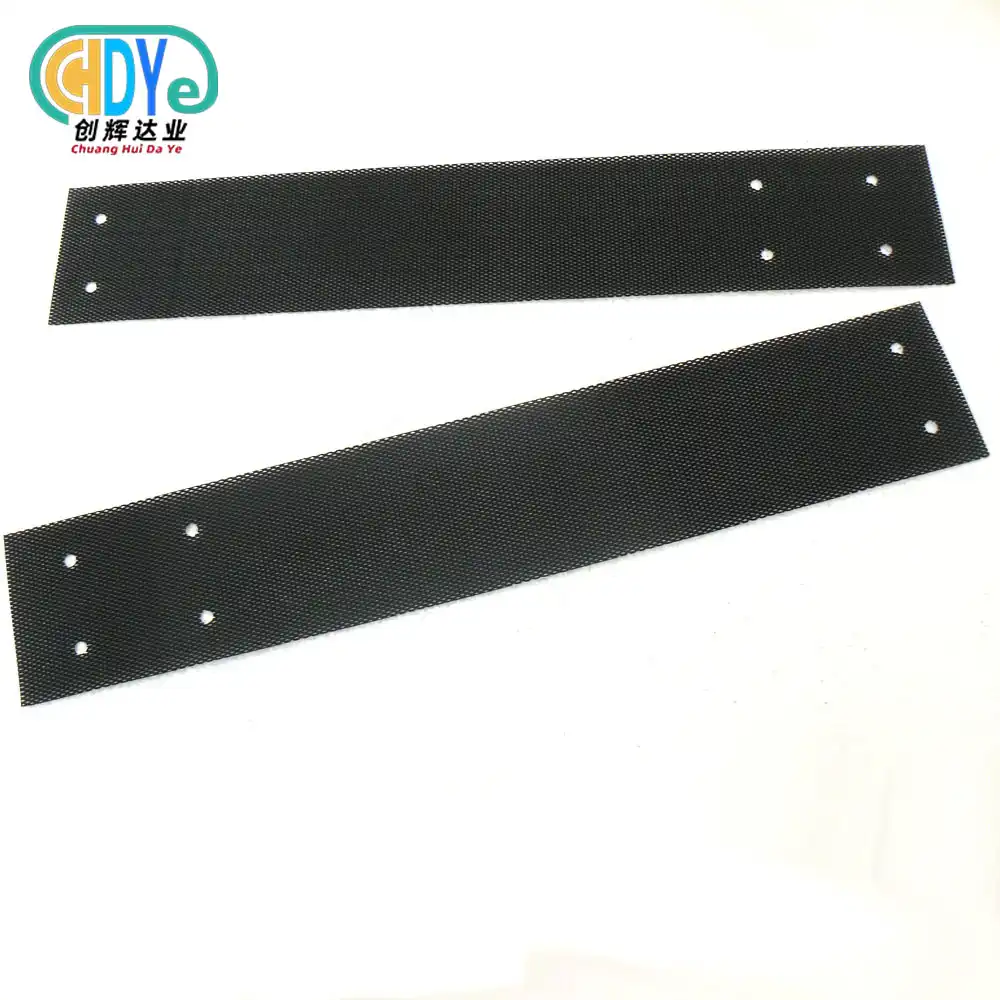
Understanding MMO Titanium Anode Plates and Their Market Needs
Mixed metal oxide anodes are a big step forward in electrochemical technology. They combine pure titanium substrates with catalytic oxide layers to make electron transfer work well in harsh conditions. The titanium base keeps the structure strong and protects it from corrosion. The MMO coating, which usually includes iridium oxide, ruthenium oxide, and tantalum oxide compounds, causes the electrochemical reactions that are wanted with little energy loss.
Different industrial methods use these specific parts. In wastewater treatment plants, chlorine or hypochlorite is made so that germs can be killed without having to store dangerous chemicals. They are needed for electroplating processes to make sure that metal is deposited evenly across complicated shapes. A chemical processing company uses them to make chlor-alkali and chlorine dioxide. These anodes are used in the cathodic protection sector to protect steel structures in dirt and seawater, which makes assets last decades longer.
Several technical factors are used to judge performance. The coating composition decides whether the anode works best for oxygen evolution reactions (great for acidic electrowinning) or chlorine evolution reactions (great for brine electrolysis). Under controlled conditions, the current density tolerance ranges up to 2000 A/m², but lower thresholds may be needed for some applications. Service life estimates depend on the coating's load, the operating conditions, and the frequency of maintenance. Well-designed systems can run continuously for 10 to 20 years.
There are constant problems for procurement pros in this niche field. Different coating application methods and sintering processes cause quality differences that have a direct effect on how long an electrode lasts. Verification of certification is harder when suppliers give incomplete mill test reports or none at all from a third party. Because these are technical products, buyers need to be able to tell the difference between marketing claims that aren't backed up by evidence and performance data that is backed up by field testing and customer references.
Core Criteria for Selecting an MMO Titanium Anode Plate Supplier (Criteria Screening Approach)
Certification and standing in the business are the first steps in building trust in a company. ISO 9001:2015 approval means that quality is controlled in a planned way at all stages of production, from checking the raw materials to packing them up at the end. When companies work in well-known material districts, like Baoji, which is known as China's titanium production hub, they can take advantage of centralized technical knowledge and integrated supply lines. Because of its location, this company has faster lead times and better access to high-purity titanium sources. With factory-direct sourcing, there are no markups added by middlemen, and you can talk directly to engineering teams that can answer your technical questions.
Coating technology tells the difference between good suppliers and great ones. There is a big difference in how well an Mmo Titanium Anode Plate works between Ru-Ir formulations that are best for chlorine evolution and Ir-Ta systems that are best for oxygen evolution environments. The way the coating is applied is just as important as the coating itself. Brush coating followed by controlled sintering processes creates even oxide layers that don't separate during heat cycling. Preparing the substrate with sandblasting and acid etching makes sure that the coating sticks well and stops passivation from causing the coating to fail too soon. Buyers should ask for thorough process paperwork that includes measures of the coating's thickness, profiles of the sintering temperature, and inspection methods after treatment.
Pricing structures take into account both the cost of materials and the difficulty of customization. Large orders of standard sizes usually have better unit economics. However, custom configurations—whether they are non-standard sizes or coating compositions that aren't standard—need tooling adjustments and process validation, which raise the cost per unit. Lead times include more than just the time it takes to make something; they also include the time it takes to get the substrate, the coating to cure, and the quality control steps. Standard orders can be completed faster when suppliers keep common substrate sizes in stock, but custom projects may take up to 8 weeks to finish. Shipping costs and delivery reliability are affected by how close two places are to each other, especially for time-sensitive projects that need to be completed quickly.
Support after the sale is what sets transactional sellers apart from strategic partners. The full service includes installation instructions that cover things like checking the polarity, electrode spacing, and electrolyte compatibility. Operational tracking suggestions, like voltage trend analysis to find coating decline before it fails catastrophically, should be part of maintenance support. Most warranties cover problems with the way the product was made, but they need proof that it was used correctly. Buyers should make sure that the warranty covers things like too much current, contaminated electrolyte, and mechanical damage. Progressive sellers give substrate repair services, in which old coatings are stripped off and restored for 40–60% of the cost of a new anode. This greatly increases the value of the asset.
MMO Titanium Anode Plate vs. Competitor Options: What to Consider? (Rational Choice Approach)
When choosing a material, you have to weigh the costs, performance, and durability of the material. Graphite anodes have low initial costs, but they wear out quickly in strong electrolytes and need to be replaced often, which raises costs over their lifetime and causes working disruptions. Platinum-clad anodes have great catalytic activity and resistance to corrosion, but they are very expensive and should only be used in specific situations where there are no other options. Lead-based anodes have special uses in some fluids, but they are bad for the environment and don't work as well as other anodes.
In many ways, MMO-coated titanium electrodes are better than other types of electrodes. They are more resistant to rust than graphite in acidic, alkaline, and chloride conditions, and they don't cost as much as platinum. With proper maintenance, the service life usually lasts between 10,000 and 20,000 hours, which is five to ten times longer than graphite. This means that they don't need to be replaced as often, which saves money on downtime costs. Due to low overpotential, energy efficiency stays high, which means less power is used compared to materials that aren't as catalytically active. RoHS-compliant materials don't contain any lead or mercury, so they are safe for the environment.
Decision frameworks should make sure that the choice of electrodes is in line with certain operational parameters. MMO options work better in places with a lot of chloride than graphite alternatives, which break down quickly in those situations. When protecting capital is more important than lowering lifecycle costs, projects with limited funds may choose graphite's shorter lifespan. Platinum is very expensive, but it may be needed for applications that need very high current densities or special electrolyte compositions. To find a provider that meets these needs, you need to look at their range of coating formulations, how easy it is to make changes, and how much application engineering help they offer.
How to Verify and Validate Your MMO Titanium Anode Plate Supplier
The first step in source checking is to look over the documentation. Ask for ISO 9001 certificates that have current expiration dates and scope statements that show they cover the methods used to make electrodes. As per ASTM B265, material certifications should include mill test reports for titanium substrates that say what grade they are (Grade 1 or Grade 2) and a chemical composition analysis that says the levels of purity are correct. RoHS compliance certificates prove that environmental standards are being followed. On coating specification sheets, you need to list the oxide composition ratios, the coating's weight per unit area, and the performance parameters you expect it to have under certain operating conditions. For an Mmo Titanium Anode Plate, these documents should clearly define the substrate, coating composition, and expected performance.
Supplier checks, whether they are done virtually or in person, show how skilled a manufacturer is by observing them directly. Ask specific questions about important steps in the process, like "How do you make sure that the coating thickness is the same across large plate surfaces?" What factors in the sintering atmosphere keep the base from oxidizing? How often do you check the accuracy of the tools you use to measure coating thickness? Ask for proof of the steps used to control the process, like statistical process control charts that show how the coating weight stays the same across production runs. Check the quality hold points where inspectors make sure the surface is properly prepared before applying the coating and look for flaws in the coating after it has been sintered.
Sample testing protocols give real-world proof of performance. Get samples that are representative of what you want and put them through rapid life testing in settings that are similar to what they would be exposed to in real service. Cycling the current density, exposing the electrolyte, and checking the voltage show that the layer is stable and the substrate is whole. Electrochemical impedance spectroscopy is a way to check the quality of a coating without damaging it. Work with independent testing labs to get rid of any bias that might be in test results supplied by suppliers. Compare the results to what the manufacturer says to find discrepancies that need to be looked into further or ruled out.
Testimonials from clients and reviews written by outside sources give you more real-world information about performance than controlled tests. Ask people in your business to give you references and talk about their operational experiences, such as the length of time a service lasts, how quickly technical help responds, and how well problems are resolved. Online sites that host supplier ratings collect feedback and show it all in one place, but it's still important to make sure that reviews are real. Third-party industry groups sometimes keep supplier directories with scores of success based on polls of their members. This adds another level of trustworthiness.
Best Practices for Managing Your MMO Titanium Anode Plate Procurement Process
Accurately predicting demand and making specifications are the first steps in strategic procurement planning. When you buy in bulk of standard configurations, you can take advantage of volume discounts and make sure you have enough inventory for regular replacement cycles. For custom orders, you need detailed technical drawings that show the sizes, tolerances, mounting options, and electrical connection needs. Minimum order numbers depend on the seller and the complexity of the product. For example, you may only need to buy one normal plate, but for specialized coatings, you may need to buy a lot to cover the costs of setting up the tools. Expected turnaround times should include multiple sintering processes for finishing applications. Custom projects could take up to 10 weeks from the time an order is placed until they are shipped.
Logistics coordination weighs the costs of shipping against the time it takes to deliver and the risks of handling. Titanium doesn't have as much mass as some other metals, which lowers the cost of shipping. However, because the coating is so fragile, it needs to be protected in order to avoid scratches that could damage the anode. When sending goods across international borders, they need to be properly labeled using unified tariff numbers and follow any export control rules that apply. Setting up deliveries to happen at times that work with installation windows cuts down on storage time and the risks that come with it. Set clear criteria for acceptance and inspection processes for when the goods arrive so that damage from transportation can be found before they are installed.
Support after the sale includes more than just fixing problems when they happen. Set up maintenance schedules that keep an eye on key performance indicators like cell voltage trends, which go up as coatings wear down, letting you know that it's time to replace them. Keep lines of communication open with your suppliers so you can talk about practical notes that could point to ways to improve the process or make changes to the application. Write down operational parameters and performance data to help with future purchasing decisions and warranty claims if things break down before they should.
Strategic relationships with qualified providers have benefits that go beyond the benefits of a single transaction. As coating formulations change and production methods get better, long-term ties give you access to new technologies. If a customer is a preferred customer, they may be able to get more stable prices through forward contracts that protect against changes in the cost of raw materials. Suppliers get useful application feedback that helps them make new products, and customers get custom solutions that solve new operational problems. In competitive industrial markets, this way of working together helps everyone succeed.
Conclusion
To find the best Mmo Titanium Anode Plate supplier, you need to carefully look at their professional skills, quality control methods, and service infrastructure. When you do a good job of procurement, you balance the instant cost concerns with the long-term benefits that come from longer service life, operating reliability, and full support. Verification of certifications, openness about the manufacturing process, and tests to prove success build trust in the supplier's skills. Strategic partnerships based on open communication and mutual benefit set both parties up for long-term success in electrochemical applications that are very demanding. Procurement professionals can easily find high-performance anodes that support important industrial processes by using the evaluation methods described here.
FAQ
Q: What determines the service life of an MMO titanium anode plate?
A: Service life relies on how much the coating is loaded, how dense the working current is, what the electrolyte is made of, and how well it is maintained. Coatings that have more oxide per unit area last longer before they wear down. When you run below 2000 A/m², the lifespan is longer than when you run at higher current densities, which speed up consumption. Staying away from fluoride and cyanide ions stops substrate corrosion that leads to failure too soon. Regular monitoring and keeping the right distance between electrodes maximize the performance duration.
Q: Can MMO titanium anode plates be customized for specific applications?
A: Customization choices include substrate size, coating type (Ru-Ir for chlorine evolution or Ir-Ta for oxygen evolution), mounting hole patterns, and ways to join electrically. Suppliers who have their own cutting facilities can work with odd sizes and complicated shapes. Changing the coating thickness strikes a balance between the starting cost and the desired service life, depending on how often you want to change the coating and how intensively you use it.
Q: How do MMO anodes compare economically to graphite alternatives?
A: Even though MMO anodes cost more at first, they last 5 to 10 times longer, which means they don't need to be replaced as often and save money on work costs. Total cost of ownership goes down even more because of less upkeep needed and better energy efficiency from less overpotential. Graphite is good for low-cost applications that can handle replacements often, while MMO is better for continuous operations that put reliability first and want as little downtime as possible.
Partner with Chuanghui Daye for Superior MMO Titanium Anode Plate Solutions
Shaanxi Chuanghui Daye sells high-purity Mmo Titanium Anode Plates directly from the plant at low prices. These plates are designed to work in harsh electrochemical conditions. Our ISO 9001:2015-certified facilities are in Baoji's well-known titanium area. They blend 30 years of experience with rare metals and cutting-edge coating technologies to make long-lasting, high-efficiency electrodes. We can completely customize everything for you, from choosing the Gr1 substrate to making IrO₂-RuO₂-Ta₂O coatings that work best for your needs. All of this comes with full material certifications and proof of accelerated life tests. Our engineering team offers technical support for installation parameters, operational optimization, and substrate refurbishment services that increase the value of an asset. Get in touch with info@chdymetal.com right away to talk about your needs with a reliable MMO Titanium Anode Plate maker that is dedicated to quality, dependability, and low prices.
References
1. Chen, Y., & Wang, L. (2021). Electrochemical Performance of Mixed Metal Oxide-Coated Titanium Anodes in Industrial Applications. Journal of Applied Electrochemistry, 51(3), 445-461.
2. International Titanium Association. (2020). Titanium for Industrial Electrochemical Systems: Material Selection and Performance Guidelines. Denver: ITA Publications.
3. Morrison, R. T., & Steele, K. M. (2019). Corrosion-Resistant Materials in Hydrometallurgy: A Comparative Analysis. Minerals Engineering, 138, 201-215.
4. Schmitt, G. (2022). Impressed Current Cathodic Protection: Design Principles and Anode Selection. Materials Performance, 61(8), 34-42.
5. Zhang, H., Liu, Q., & Tang, J. (2020). Manufacturing Processes for MMO-Coated Titanium Electrodes: Quality Control and Performance Optimization. Surface and Coatings Technology, 394, 125-139.
6. United States Environmental Protection Agency. (2018). Electrochemical Treatment Technologies for Water and Wastewater: Technical Guidance Document. Washington, DC: EPA Office of Water.
Learn about our latest products and discounts through SMS or email