- English
- French
- German
- Portuguese
- Spanish
- Russian
- Japanese
- Korean
- Arabic
- Greek
- German
- Turkish
- Italian
- Danish
- Romanian
- Indonesian
- Czech
- Afrikaans
- Swedish
- Polish
- Basque
- Catalan
- Esperanto
- Hindi
- Lao
- Albanian
- Amharic
- Armenian
- Azerbaijani
- Belarusian
- Bengali
- Bosnian
- Bulgarian
- Cebuano
- Chichewa
- Corsican
- Croatian
- Dutch
- Estonian
- Filipino
- Finnish
- Frisian
- Galician
- Georgian
- Gujarati
- Haitian
- Hausa
- Hawaiian
- Hebrew
- Hmong
- Hungarian
- Icelandic
- Igbo
- Javanese
- Kannada
- Kazakh
- Khmer
- Kurdish
- Kyrgyz
- Latin
- Latvian
- Lithuanian
- Luxembou..
- Macedonian
- Malagasy
- Malay
- Malayalam
- Maltese
- Maori
- Marathi
- Mongolian
- Burmese
- Nepali
- Norwegian
- Pashto
- Persian
- Punjabi
- Serbian
- Sesotho
- Sinhala
- Slovak
- Slovenian
- Somali
- Samoan
- Scots Gaelic
- Shona
- Sindhi
- Sundanese
- Swahili
- Tajik
- Tamil
- Telugu
- Thai
- Ukrainian
- Urdu
- Uzbek
- Vietnamese
- Welsh
- Xhosa
- Yiddish
- Yoruba
- Zulu
How to Choose the Best Niobium Alloy Rod Supplier
The selection of a suitable provider for the niobium alloy rods involves the consideration of many variables such as purity of the material, adherence to certification, production capacity and delivery dependability. To source these specialty materials, look for vendors of ASTM B392 compliant items with clear quality documentation and flexible customisation possibilities. The top niobium suppliers also have quality control, ISO 9001:2015 certification, and provide technical assistance throughout the whole duration of your project to ensure you have materials that fulfill the demanding requirements for aerospace, chemical processing, and electronics applications.Industries now rely on niobium alloy rods in situations where harsh working conditions make traditional materials unsuitable. For a procurement expert or engineer, knowing how to choose a reliable source might be the difference between success and expensive mistakes. This article takes you through the major factors to consider when choosing a source of niobium alloy rods that will offer quality and dependability.
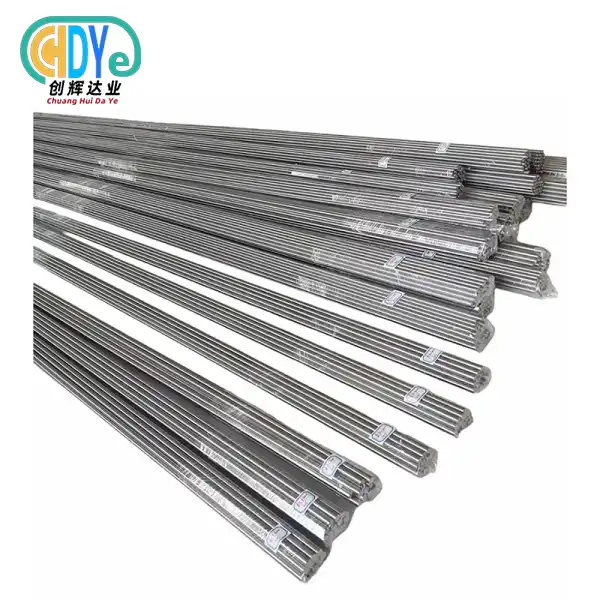
Understanding Niobium Alloy Rods and Their Key Properties
Niobium-based goods are unique compared to other metals, they are better than most metals. Most often they are built of pure niobium (grades R04200, R04210) or alloys such as Nb-1Zr (R04251, R04261), niobium-titanium, niobium-tungsten and the C-103 alloy. There are advantages to each blend depending on your application demands.
Material Characteristics That Matter
Niobium alloys are used in many different sectors due to their unique physical features. High purity niobium is exceedingly ductile and enables fabricators to work these materials into precise shapes and forms. The low thermal expansion coefficient keeps the dimensions steady with the change of temperature and the high density helps to maintain the strength of the construction. These rods are ideal for chemical processing equipment since they do not corrode in alkaline or acidic conditions. They also have low resistivity, and are hence excellent for electrical purposes .
Critical Applications Across Industries
Aerospace firms manufacture rocket blades and other items that move objects around using niobium metals. These pieces are heated to almost 1,800 degrees Celsius. These materials find use in chemical plants for heat exchangers and reactor vessels exposed to severe chemicals. In the electronics sector, vacuum furnace parts and superconducting parts need high purity niobium. Niobium metals are biocompatible and can be utilized to build surgical equipment, therefore medical device manufacturers enjoy that too. Knowing how they are used allows providers to demonstrate their expertise and helps you choose the proper materials.
Performance Standards and Specifications
The niobium rods are supplied by recognized providers in accordance with ASTM B392 specifications that specify the maximum composition, mechanical qualities, and size variations. For aeronautical applications additional standards such as AMS are required and for nuclear uses criteria for reactor grade purity are utilized. Your supplier should tell you what requirements their items fulfill and provide you documentation that proves compliance. This level of technical clarity is the difference between professional manufacturers and less trusted suppliers.
Defining Your Procurement Needs and Decision Scenarios
Making a clear list of your technical needs and practical limitations is the first step to successful buying. Different projects need different ways of evaluating suppliers, whether you are sourcing a Niobium Alloy Rod or another specialized material. Knowing your goals will make the choosing process go more quickly.
Identifying Your Material Requirements
First, you need to know exactly what grade you need. Niobium rods that are pure are good for chemical resistance and electronic uses. Niobium rods that are alloyed, like Nb-1Zr, are better for structural parts because they are stronger. List the sizes you need, including the diameter, length, and any acceptable deviations. The amount needed also matters—handling small amounts for study is different from handling large amounts for factories. For some projects, extra steps like precision machining, surface finishing, or heat treatment are needed.
Balancing Quality, Cost, and Delivery
When making a procurement decision, there are always trade-offs between different priorities. If you need to finish your job quickly, the faster delivery time might be worth the small cost difference. When people work on research and development projects, they often put price over material purity and the ability to make small batches. Volume discounts and steady supply agreements are good for big manufacturing projects. Before evaluating suppliers, make a clear list of your priorities, and make sure that these expectations are clear during the first meetings to make sure everyone is on the same page.
Certification and Compliance Needs
Different industries have different certification needs for suppliers and materials. In addition to ISO 9001:2015, aerospace and military companies often need AS9100 certification as well. For nuclear uses, it is important to be able to track materials back to their sources and show proof of their purity. Biocompatibility testing protocols and FDA guidelines are used to make medical devices. By knowing your compliance environment, you can ask the right questions and get rid of providers who can't meet the standards you need them to meet.
Comparing Niobium Alloy Rod Suppliers: What Sets the Best Apart?
There are many companies on the global market that say they sell high-quality niobium products, but there are big differences in what they can do and how reliable they are. Several important factors must be looked at to tell the difference between truly skilled makers and average providers.
Manufacturing Capabilities and Technology
Better suppliers spend money on new tools for making things, like electron beam ovens for melting things that are very pure, precision casting systems, and controlled atmosphere processing. Businesses in established industrial zones benefit from having access to skilled workers and equipment that helps them do their jobs. This benefit is shown by Shaanxi Chuanghui Daye Metal Material Co., Ltd., which is located in Baoji, China's Titanium Capital and has easy access to specialized metalworking resources and transportation networks. Their building has annealing furnaces, rolling machines, and precision machining tools that allow them to control the whole production process.
Customization and Technical Support
Standard products can be used for many things, but solutions that are made just for those specific projects are often needed. The best providers let you make changes that aren't standard, like changing the size or surface treatment, and they also do small batches for testing. Technical support is just as important—knowledgeable staff should be able to answer questions about choosing the right material, setting up the right processing parameters, and making sure the product is right for the job. This knowledge is very helpful when you run into problems you didn't expect or look into new uses.
Quality Management Systems
Professional makers must have ISO 9001:2015 approval, which shows that they control quality in a planned way throughout production. Leading providers use thorough inspection procedures that include checking the raw materials, keeping an eye on the production process, and testing the finished product. They keep thorough records that let them fully track everything from where the raw materials come from to where they are delivered. Chemical composition analysis, mechanical property testing, dimensional inspection reports, and heat treatment records for Niobium Alloy Rod should all be part of quality documentation. Suppliers who are happy to share this information show that they are sure of their products and processes.
Global Distribution and Delivery Reliability
Delivery on time affects both project schedules and the management of inventory. Check out suppliers based on their shipping infrastructure, experience with international logistics, and history of on-time deliveries. Companies that sell goods all over the world know what paperwork is needed for exports, how to package goods safely for shipping, and how to go through customs. Find out how long the lead times are for standard goods versus special orders, and find out if they can speed up production for projects that need to be done quickly.
Best Practices for Evaluating and Verifying Supplier Claims
Claims don't mean much if they can't be proven. To protect your buying investment, you need to carefully check the skills and quality of suppliers before placing large orders.
Documentation Review and Analysis
Ask for full certificates of materials that show chemical composition analyzes done by certified labs. These papers should have a list of all the alloying elements and levels of impurities, showing that they meet the required grades. The tensile strength, yield strength, and elongation values are shown on mechanical property certificates. Heat treatment records show the right temperatures and lengths of time for processing. Dimensional inspection records make sure that finished goods meet the margin requirements. Legitimate sellers usually give this paperwork, while vague answers could mean there are problems.
Sample Testing and Validation
Ordering samples lets you test them out directly before making big purchases. Send examples to independent testing labs to make sure they are what they say they are, especially for important uses. If you can, do fit-and-function tests in the real setting where you will be using the product. This realistic proof shows performance traits in the real world that specs alone can't show. Sample testing is a cheap way to avoid making mistakes that will cost you a lot of money.
Facility Audits and Supplier Visits
There is no better way to learn about how something is made than to see it for yourself. If you can, go to the facilities of your suppliers to check out the condition of their equipment, how they control the process, and how they handle quality management. Keep an eye on standards for cleanliness, how to handle materials, and the level of training given to employees. Meet the expert team to find out how knowledgeable and helpful they are. These visits help people get to know each other and give them information they couldn't get from a distance.
Contract Terms and Legal Protections
Clear contracts protect both sides and make sure that everyone is responsible. List the types of materials that are used, their sizes, the inspection standards, and the factors for acceptance. Set dates for shipping, details for packing, and payment terms. Include rules for things that don't meet the requirements, warranty support, and ways to settle disagreements. Good contracts clear up any confusion and give you a way to get your money back if something goes wrong.
Leveraging Trusted Niobium Alloy Rod Suppliers for Long-Term Success
Buying things can be a pain if you only think about the short term, but building strategic relationships with your suppliers will help you get consistent results and keep getting better. Forming partnerships with skilled manufacturers creates value that lasts beyond a single transaction, especially when sourcing specialized products such as Niobium Alloy Rod.
Strategic Partnership Benefits
Suppliers can better understand your needs, tastes, and quality standards when you work with them for a long time. Customers who have been with the business for a while usually get priority scheduling during busy times and better prices on repeat orders. Suppliers you can trust will let you know about any problems that might come up, like when raw materials won't be available or there are problems with the production schedule, so you can make plans ahead of time. This way of working together lowers risks and speeds up processes.
Innovation and Material Development
Big companies spend money on research to improve the properties of materials, make new alloys, and find better ways to process them. When you work with unique providers, you can get new materials faster, which can give you an edge over your competitors. Companies like Chuanghui Daye, which was started by a rare metal expert with more than 30 years of experience, have both a lot of technical knowledge and the ability to make things. This means they can meet both standard needs and the needs of cutting edge applications.
Sustainability and Environmental Responsibility
As companies look for sustainable supply chains, caring about the environment has a bigger impact on the purchases they make. Check out suppliers based on how well they take care of the environment, how much waste they produce, and how much energy they use. Being able to recycle niobium is important for both the environment and keeping costs down. When suppliers show they care about the environment, it helps your company's social responsibility goals and protects your supply chain from future rules that get stricter.
Conclusion
Finding the best Niobium Alloy Rod supplier means finding a balance between technical needs, quality assurance, cost, and delivery reliability. For procurement to go well, you need to be clear about what you need, carefully consider what the supplier can do, and make sure that claims are true by reviewing and testing documentation. Advanced machinery, ISO 9001:2015 certification, and thorough quality control are some of the ways that the most trusted providers show that they are great at making things. They offer the freedom to customize, professional know-how, and open communication. Strategic partnerships with skilled manufacturers create long-term value through consistent quality, access to new ideas, and efficient operations.
FAQ
Q: What certifications should a niobium alloy rod supplier have?
A: For skilled suppliers, ISO 9001:2015 certification is the most important quality control standard. For aerospace applications, you need AS9100 certification, and for nuclear applications, you need more documentation about reactor-grade purity. Make sure that the suppliers' certifications are up-to-date and that they can give you copies if you ask. Genuine manufacturers are proud to show off their credentials and provide thorough quality documentation.
Q: How do niobium alloys compare to titanium and stainless steel?
A: Titanium and stainless steel lose their strength at high temperatures, but niobium alloys do not. In some chemical conditions, especially those with a lot of acid, they keep their better corrosion protection. Above 800°C, niobium works better than stainless steel and costs less than tantalum while having the same qualities. The material you choose will depend on how it will be used, the temperature range, and the chemicals it will be exposed to.
Q: What are typical lead times for niobium alloy rod orders?
A: Standard items from a well-stocked warehouse usually ship within two to three weeks. Depending on how complicated they are, making something with custom dimensions or special alloys can take anywhere from four to eight weeks. Suppliers who can do a lot of different kinds of production can speed up urgent orders, but this might change the price. Talk about your deadline needs early on to make sure they work with production schedules.
Partner with Chuanghui Daye for Premium Niobium Alloy Rod Solutions
The Niobium Alloy Rod you need can be made by Shaanxi Chuanghui Daye Metal Material Co., Ltd., which has state-of-the-art production facilities and 30 years of experience working with rare metals. Pure niobium rods (R04200, R04210) and alloyed versions (Nb-1Zr, niobium-titanium, C-103) are all in our large product line. They are made to ASTM B392 standards and have full ISO 9001:2015 certification. Through our advanced melting, forging, and precision machining skills, we can create unique solutions for uses in aircraft, chemical processing, electronics, and medical devices. Because we are in Baoji's specialized metallurgical zone, we can get you the materials you need and give you expert technical help throughout the whole job. Contact us today at info@chdymetal.com to talk about your specific needs and get full information about the Niobium Alloy Rod products we sell.
References
1. Davis, J.R. (2000). Nickel, Cobalt, and Their Alloys. ASM International Handbook Committee, Materials Park, Ohio.
2. Schultz, H. & Münzer, H. (1995). "Niobium as Construction Material in Chemical Plants." Materials and Corrosion, 46(6), 311-319.
3. American Society for Testing and Materials (2019). ASTM B392-19: Standard Specification for Niobium and Niobium Alloy Ingots. West Conshohocken, Pennsylvania.
4. Buckman, R.W. (2000). "New Applications for Niobium." Materials Science Forum, Vols. 331-337, pp. 113-122.
5. Boyer, R., Welsch, G. & Collings, E.W. (1994). Materials Properties Handbook: Titanium Alloys. ASM International, Materials Park, Ohio.
6. Loria, E.A. (2001). "Quo Vadis Niobium and Tantalum." International Journal of Refractory Metals and Hard Materials, 19(1), 13-22.
Learn about our latest products and discounts through SMS or email