- English
- French
- German
- Portuguese
- Spanish
- Russian
- Japanese
- Korean
- Arabic
- Greek
- German
- Turkish
- Italian
- Danish
- Romanian
- Indonesian
- Czech
- Afrikaans
- Swedish
- Polish
- Basque
- Catalan
- Esperanto
- Hindi
- Lao
- Albanian
- Amharic
- Armenian
- Azerbaijani
- Belarusian
- Bengali
- Bosnian
- Bulgarian
- Cebuano
- Chichewa
- Corsican
- Croatian
- Dutch
- Estonian
- Filipino
- Finnish
- Frisian
- Galician
- Georgian
- Gujarati
- Haitian
- Hausa
- Hawaiian
- Hebrew
- Hmong
- Hungarian
- Icelandic
- Igbo
- Javanese
- Kannada
- Kazakh
- Khmer
- Kurdish
- Kyrgyz
- Latin
- Latvian
- Lithuanian
- Luxembou..
- Macedonian
- Malagasy
- Malay
- Malayalam
- Maltese
- Maori
- Marathi
- Mongolian
- Burmese
- Nepali
- Norwegian
- Pashto
- Persian
- Punjabi
- Serbian
- Sesotho
- Sinhala
- Slovak
- Slovenian
- Somali
- Samoan
- Scots Gaelic
- Shona
- Sindhi
- Sundanese
- Swahili
- Tajik
- Tamil
- Telugu
- Thai
- Ukrainian
- Urdu
- Uzbek
- Vietnamese
- Welsh
- Xhosa
- Yiddish
- Yoruba
- Zulu
Best Titanium Alloy Plate for Aerospace OEM Projects
Aerospace OEM projects requiring materials that won't compromise under intense circumstances choose titanium alloy plate as the preferred option. These plates provide the best of both worlds – an excellent strength-to-weight ratio together with excellent corrosion resistance and thermal stability – making them ideal for mission-critical applications where failure is not an option. Aerospace manufacturers extensively employ grades such as Ti-6Al-4V (Grade 5) and commercially pure types to produce fuselage components, engine parts and structural assemblies that must work under demanding conditions while avoiding weight penalties.
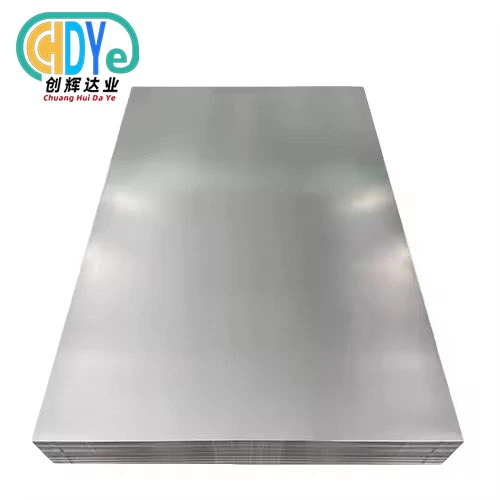
Comparing Titanium Alloy Plates with Other Aerospace Metals
Choosing the right materials for an aircraft project has a huge effect on everything from how much fuel it uses to how often it needs to be maintained. Procurement teams can make data-driven choices when they know how titanium alloy plate compares to other options.
Strength-to-Weight Performance Analysis
Titanium alloys are stronger than most other materials when it comes to weight. Even though 7075 aluminum alloy is easier to work with and costs less than Ti-6Al-4V, its specific strength (strength divided by density) is about 20% lower. Grades of stainless steel like 17-4PH have about the same tensile strength as titanium, but they are much denser. This disadvantage in weight directly leads to less payload capability and higher fuel use over the lifetime of an airplane. Nickel-based superalloys are just as good at withstanding high temperatures as titanium, but they are much heavier, which means they can't be used in places with very high temperatures, like turbine sections.
Corrosion Resistance and Environmental Durability
Aerospace parts are constantly being attacked by the environment, from saltwater in marine activities to chemicals in de-icing fluids. Titanium naturally creates a protective oxide layer that heals itself when it gets damaged. This makes it very resistant to pitting and crevice corrosion, which are what destroy stainless steel in marine environments. Carbon steel needs complex coating systems that make it heavier and harder to keep up, but titanium plates work well with little surface treatment. This natural resistance to rust makes parts last 3–5 times longer than coated metal in coastal activities.
Lifecycle Cost Considerations
Titanium is a high-end material that usually costs 5 to 8 times more per pound than aerospace-grade aluminum because of its initial costs. What lifetime economics says, though, is not so clear. Higher initial costs are balanced out by fewer upkeep tasks, longer inspection periods, and no longer having to repair parts because of corrosion. When aerospace companies use titanium instead of aluminum in places where rust is likely to happen, the total cost of ownership goes down by 20 to 30 percent. Saving weight leads to long-term fuel economy benefits that build up over decades of service life, making appealing return-on-investment scenarios for OEM projects that put long-term value over initial purchase costs.
How Titanium Alloy Plates Are Manufactured and Treated for Aerospace Use
To make aerospace-grade titanium plates, you need to use precise methods and strict quality control rules. Understanding these production methods helps procurement teams do a good job of judging the skills of suppliers.
Advanced Melting and Forming Processes
Using vacuum arc remelting (VAR) or electron beam cold hearth melting (EBCHM) to get rid of flaws and make sure chemicals are evenly distributed is the first step in making high-integrity titanium plates. Chuanghui Daye uses cutting-edge electron beam furnaces to make ultra-pure melts that don't have any high-density particles that could cause stress cracks. The molten metal cools and forms ingots. These ingots are then forged several times at exact temperatures ranging from 1650°F to 1850°F, which breaks down the cast structure into fine grains. Forged slabs are rolled hot to make plates with final thicknesses ranging from 0.5 mm to 50 mm while keeping the microstructures uniform. For uses that need a very good surface finish and rigidity in dimensions, cold rolling and solution heat processes come next.
Quality Certifications and Industry Standards
Material standards must be strictly followed for aerospace uses. ASTM B265 and ASME SB265 say what the titanium alloy plate can and can't contain chemically, what its mechanical properties must be, and what kind of surface conditions are allowed. ASTM F67 and F136 set the rules for materials that will be used in medical and aerospace settings where biocompatibility is very important. AMS specifications include more and more rules about things like grain size, alpha case depth, and levels of cleanliness. The ISO-5832-2(3) standards cover aerospace markets around the world. Chuanghui Daye keeps its ISO 9001:2015 certification, which makes sure that quality management is done in a planned way throughout the whole production process. Every package comes with a full Mill Test Report that shows everything from the chemical makeup of the raw materials to the final mechanical tests.
Surface Treatment and Inspection Protocols
The state of the surface has a direct effect on how well aircraft parts survive fatigue and corrosion. Pickling methods get rid of alpha case, a layer of oxygen-rich material that forms when something is heated and isn't flexible. Chemical grinding removes material in a controlled way to get the best weight without putting stress buildup in the wrong places. Electropolishing improves the surface finish to values below 5 microinches, which is useful for uses that need very little drag or touch with sensitive fluids. Some non-destructive testing methods are ultrasound inspection for internal cracks, liquid penetrant inspection for flaws that break the surface, and measurement verification to make sure that the tolerances for thickness meet the requirements of the drawing. Tensile properties, yield strength, and elongation values are checked by mechanical testing before the material is released.
Procurement Strategies for Aerospace Titanium Alloy Plates
Strategic methods to sourcing improve both the performance of materials and the costs of a project. Aerospace procurement managers should know how the market works and how to evaluate suppliers.
Market Pricing Drivers and Volume Economics
Titanium plate prices change depending on a number of factors that are all connected. The price of raw materials shows how much titanium sponge is available. The world's supply is affected by the production of large amounts of sponge in Russia, Japan, and China. The price of an alloy depends on how complicated it is. For example, commercially pure Grade 2 Ti-6Al-4V costs about 15 to 20 percent less than Grade 5 Ti-6Al-4V because it is easier to melt. Specifications for heat treatment, testing needs, and licensing paperwork all add to the cost. Thickness factors have a big effect on prices—plates thicker than 25 mm cost more because they take longer to make and waste more material. Prices are better when you commit to buying a lot of something. When you buy in bulk, the cost per unit drops by 12–18% compared to when you buy one item at a time.
Supplier Evaluation and Selection Criteria
To find trustworthy titanium plate providers, you need to carefully look at a lot of different factors. Certifications are the building blocks. Check for ISO 9001:2015 registration and, if necessary, aerospace-specific approvals like AS9100. Production skills are very important; suppliers must show that they have the right melting equipment, forging capacity, and inspection technology to make sure that quality is always maintained. Lead times and transportation prices are affected by where something is located. The "Titanium Capital" area in China around Baoji has a lot of knowledge and infrastructure. When projects need non-standard sizes or special testing, customization becomes very important. Established providers like Chuanghui Daye have worked in the rare metals business for decades and have solved many technical problems in medical, chemical processing, and aircraft fields.
Lead Times and Order Flexibility Considerations
Scheduling production has a big effect on project timelines. Standard grade plates in common sizes (2–10 mm) usually ship 4 to 6 weeks after an order is approved. Custom compositions, specialty heat treatments, or odd sizes can make lead times 10 to 14 weeks long while suppliers plan how to get the raw materials and when to start production campaigns. Minimum order numbers depend on the seller and the type of product. For example, smaller producers may need at least 500–1000 kg, while bigger companies can handle prototype quantities of 50–100 kg for development projects. You can place a rush order, but it will cost you more. Usually, an extra 25 to 35 percent is added to the normal rate to speed up the production process.
Why Choose Titanium Alloy Plates for Aerospace OEM Projects
Titanium has a special set of properties that make titanium alloy plate useful in demanding aerospace applications that other materials can't match.
Unmatched Performance in Extreme Environments
When it comes to performance, aerospace parts work at levels where regular materials fail. Titanium plates keep their shape at temperatures that are too high for aluminum metals and in conditions that are too acidic to break down stainless steel. The material has a low thermal expansion rate (8.6 × 10⁻⁶/°F), which means that its size doesn't change much when it's heated and cooled. This keeps stress levels in joints and parts low. Titanium is very tough at low temperatures, which is useful in cryogenic applications. Unlike carbon steel, which breaks down below -40°F, titanium types stay flexible down to -320°F, which makes them perfect for rocket systems that use liquid oxygen and hydrogen. Here are the main benefits that aircraft companies see when they choose titanium plates:
- Weight Reduction: Titanium density (0.16 lb/in³) is approximately 40% lighter than steel and 70% heavier than aluminum, but superior specific strength enables thinner sections that often result in net weight savings of 20-30% versus aluminum designs when strength requirements drive sizing.
- Maintenance Cost Reduction: Corrosion immunity eliminates expensive coating reapplication cycles and extends inspection intervals by factors of 2-3 compared to treated aluminum structures in harsh environments.
- Design Flexibility: Higher allowable stresses permit optimized geometries that reduce part counts, simplify assemblies, and create manufacturing efficiencies that offset premium material costs.
- Operational Safety Margins: Conservative design practices in aerospace demand safety factors that titanium satisfies with reduced structural mass, creating virtuous cycles of weight savings throughout aircraft structures.
These performance traits solve long-standing problems in aircraft manufacturing, especially when limited design choices are caused by weight concerns and higher lifecycle costs, which support choosing high-end materials.
Real-World Implementation Success Stories
Titanium plates are being used a lot in next-generation aircraft programs for commercial aviation. Titanium makes up about 15% of the structural weight of the Boeing 787 Dreamliner. Plates made of titanium are used in wing attachment parts and fuselage areas where aluminum can't meet strength standards without adding too much weight. For military fighter projects, Ti-6Al-4V is used for wing skins that fly at high speeds, where thermal heating is higher than what aluminum can handle. Applications in space travel push the limits of what materials can do. For example, SpaceX Dragon ships use titanium pressure vessel parts that can handle the high temperatures of cryogenic propellants while still keeping their structural integrity during the heating of atmospheric reentry.
Future Trends in Aerospace Material Selection
Industry patterns indicate there will be more titanium in use as aerospace firms attempt to satisfy difficult weight-reduction targets. Processing of titanium in ways not before imaginable is now possible using additive manufacturing methods. This allows for new design alternatives for building higher-performing buildings. Newer alloys, such as Ti-5553 (Ti-5Al-5V-5Mo-3Cr), are stronger than Ti-6Al-4V. This implies that considerably more weight may be saved on landing gear and structural applications. Titanium’s weight advantages are becoming increasingly important as environmental rules demand higher fuel efficiency. This is particularly true if the cost of the material remains constant owing to improved extraction processes and higher manufacturing capacity.
Conclusion
Performance, reliability and long-term value – that’s what aerospace OEMs get when they invest in titanium alloy plate for their projects. Its high strength-to-weight ratio, resistance to corrosion, and thermal stability are critical demands of aircraft that cannot be addressed by other metals. Titanium may be more expensive initially than other materials, but it is cheaper in the long term since it requires less maintenance, lasts longer, and is more efficient. For procurement to be effective, it is important to work with experienced suppliers who know the quality standards applied to aeroplanes and have excellent production capabilities. Thoughtful consideration of the grade selected, size specifications, and certification criteria will ensure that the material will function in a manner that satisfies the project objectives.
FAQ
Q: What advantages do titanium plates offer over aluminum in aerospace applications?
A: Titanium has a higher specific density than other materials, but its thinner parts mean that buildings are often the same weight or lighter. Corrosion resistance gets rid of protective coatings and makes inspections less frequent. Temperature ranges higher than metal by 200 to 300°F, allowing use in areas close to engines. In high-cycle applications, fatigue performance is better than that of aluminum alloys.
Q: How long does custom titanium plate production typically require?
A: After an order is confirmed, standard grades in common sizes are shipped within 2 to 3 weeks. Custom mixes, special heat treatments, or unusual thicknesses make delivery times 10 to 14 weeks longer. Rush handling cuts wait times to two to three weeks, but it costs 25 to 35 percent more. Suppliers can give more accurate delivery schedules when they are given clear specifications during the quotation stage.
Q: Which certifications validate aerospace-grade titanium plate quality?
A: Material Test Reports that follow EN 10204 3.1 give information about the chemistry and mechanical properties of a substance. Compliance with ASTM B265 and ASME SB265 provides quality and size standards. AMS standards, such as AMS 4911 for Ti-6Al-4V, add conditions that are specific to aerospace. Getting ISO 9001:2015 approval shows that you handle quality in a systematic way. For heat treatment and NDT processes, aerospace suppliers should keep their NADCAP accreditation.
Partner with a Trusted Titanium Alloy Plate Manufacturer
Shaanxi Chuanghui Daye Metal Material Co., Ltd. offers aerospace-grade titanium products and has been in the rare metals business for over 30 years. Our facility is in Baoji, which is known as China's "Titanium Capital." It has advanced electron beam melting, precise forging, and full testing capabilities to make plates that meet the strictest requirements. Grade 2, Grade 5 (Ti-6Al-4V), Grade 7, Grade 12, and TC20 are the grades we offer. The widths range from 0.5mm to 50mm, and they are all fully approved to meet ASTM B265, ASTM F67, ASTM F136, and ISO-5832-2(3) standards. Our ISO 9001:2015 certification makes sure that the quality is always the same, from checking the raw materials to doing the final inspection. Every shipment comes with a full Mill Test Report. Whether your aircraft OEM project needs a few prototypes or a lot of them, our team can help with technical questions and come up with unique solutions. Contact info@chdymetal.com right away to talk about your titanium plate needs and get a detailed quote that fits your needs.
References
1. Boyer, R., Welsch, G., & Collings, E.W. (1994). Materials Properties Handbook: Titanium Alloys. ASM International, Materials Park, Ohio.
2. Donachie, M.J. (2000). Titanium: A Technical Guide, 2nd Edition. ASM International.
3. Peters, M., Kumpfert, J., Ward, C.H., & Leyens, C. (2003). Titanium Alloys for Aerospace Applications. Advanced Engineering Materials, Volume 5, Issue 6.
4. Lutjering, G. & Williams, J.C. (2007). Titanium, 2nd Edition. Springer-Verlag, Berlin Heidelberg.
5. ASTM International (2021). ASTM B265-20a: Standard Specification for Titanium and Titanium Alloy Strip, Sheet, and Plate. West Conshohocken, Pennsylvania.
6. Froes, F.H. (2015). Titanium: Physical Metallurgy, Processing, and Applications. ASM International, Materials Park, Ohio.

Learn about our latest products and discounts through SMS or email