- English
- French
- German
- Portuguese
- Spanish
- Russian
- Japanese
- Korean
- Arabic
- Greek
- German
- Turkish
- Italian
- Danish
- Romanian
- Indonesian
- Czech
- Afrikaans
- Swedish
- Polish
- Basque
- Catalan
- Esperanto
- Hindi
- Lao
- Albanian
- Amharic
- Armenian
- Azerbaijani
- Belarusian
- Bengali
- Bosnian
- Bulgarian
- Cebuano
- Chichewa
- Corsican
- Croatian
- Dutch
- Estonian
- Filipino
- Finnish
- Frisian
- Galician
- Georgian
- Gujarati
- Haitian
- Hausa
- Hawaiian
- Hebrew
- Hmong
- Hungarian
- Icelandic
- Igbo
- Javanese
- Kannada
- Kazakh
- Khmer
- Kurdish
- Kyrgyz
- Latin
- Latvian
- Lithuanian
- Luxembou..
- Macedonian
- Malagasy
- Malay
- Malayalam
- Maltese
- Maori
- Marathi
- Mongolian
- Burmese
- Nepali
- Norwegian
- Pashto
- Persian
- Punjabi
- Serbian
- Sesotho
- Sinhala
- Slovak
- Slovenian
- Somali
- Samoan
- Scots Gaelic
- Shona
- Sindhi
- Sundanese
- Swahili
- Tajik
- Tamil
- Telugu
- Thai
- Ukrainian
- Urdu
- Uzbek
- Vietnamese
- Welsh
- Xhosa
- Yiddish
- Yoruba
- Zulu
How to choose the right Titanium Anode Basket for your tank?
Choosing the right electrolytic process tools can have a big effect on how well it works, how well it produces, and how much it costs to run. When looking at different anode basket choices for your electroplating or electrolysis tank, it's important to know the technical needs and qualities of the materials. A Titanium Anode Basket is a special hanging tool that holds dissolvable anode materials safely while sending electricity through your electrochemical cell. Picking the right basket design, mesh arrangement, and material grade has a direct effect on how evenly current flows, how much the anode is used, and how stable the whole process is in nickel plating, copper electroforming, anodizing, and many other industry uses.
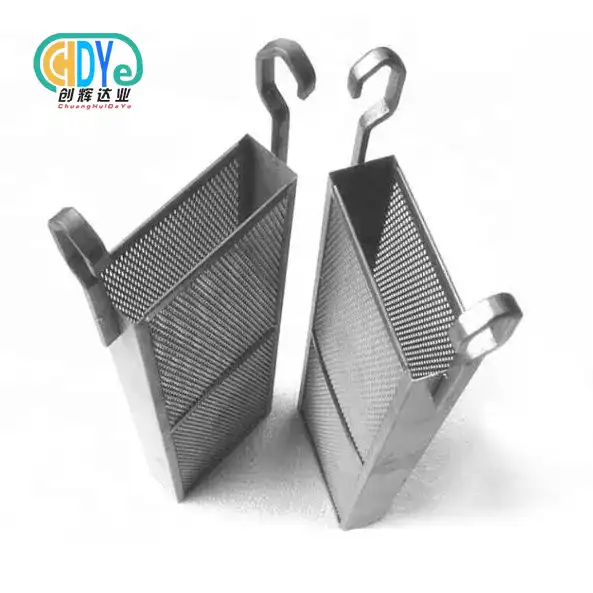
Understanding Titanium Anode Baskets and Their Benefits
What Makes Titanium Ideal for Anode Basket Applications
Titanium Anode Baskets hold anode materials like nickel balls, copper bits, or zinc slugs and don't dissolve in electrochemical tanks. They also give the materials structure. These baskets are made from commercially pure titanium, usually Grade 1 or Grade 2, with a purity level above 99.5%. They are very resistant to rust in harsh fluids like sulfuric acid, chromic acid, and most halide-free solutions. The substance naturally creates a thin, secure layer of titanium dioxide (TiO₂) on its surface. This layer keeps the basket from dissolving while letting electrons move easily to the anode material inside.
Core Performance Advantages
Titanium has a special mix of qualities that make it useful for solving important problems in current surface finishing. Since titanium is very light (about 45% lighter than steel), it makes tank frames and busbar systems less stressed. Its high strength-to-weight ratio ensures that the structure stays strong even when it's holding heavy anode loads for long production cycles. Mesh-style titanium baskets have a constant surface area throughout their service life, unlike standard solid slab anodes that change shape as they dissolve. This makes sure that all workpieces have the same current density distribution and layer thickness.
The expanded mesh or pierced plate design lets the electrolyte flow freely around each anode particle, stopping concentration differences that could lead to uneven plating or anode passivation. This design gets almost 100% of the anode material to work by getting rid of the expensive end waste that comes with regular solid anodes. This directly improves material efficiency and lowers the number of times that anode refills need to be bought.
Key Considerations When Choosing a Titanium Anode Basket for Your Tank
Electrochemical Parameters and Operating Conditions
To choose the right basket, you need to know about the specific electrical environment of your tank. The required current density tells us what kind of conductivity and cross-sectional area the hook needs to keep the voltage from dropping and the resistive heating from happening at the busbar contact points. Titanium-clad copper hooks are very helpful for tanks that work at more than 2000 amperes because they combine the 98% IACS conductivity of copper cores with the rust protection of titanium outer layers. Solid titanium hooks can get too hot because their electrical resistance is about five times that of steel. This mixed design keeps them from getting too hot.
Another important factor is the operating power. When used with normal electrolytes, titanium stays electrochemically stable at anodic voltage bands below 10 to 12 volts. If you go over these limits, the protected oxide film could break down, which would cause passivation, which means the basket stops conducting current well. The chemical makeup of your electrolyte is also important. Baths that contain fluoride are very harsh on titanium's protective layer, so they need to be replaced with zirconium for those specific uses.
Physical Dimensions and Customization Options
Matching the shape of the basket to the size of the tank makes the best use of the room and makes sure that the anode and cathode are spaced correctly throughout the plating cell. Titanium Anode Baskets can be made in both cylinder and rectangular shapes, and they can be made to fit your specific tank designs or process needs by following your CAD or PDF plans. This adaptability is very helpful for OEM clients who want to add tools to current production lines or create their own electrochemical systems.
When choosing a mesh opening, you need to give careful thought to the particle size of your anode material. To keep material from leaking out of the basket walls as the anode dissolves, the mesh hole should be about 2 mm smaller than the smallest width of your anode nuggets or balls. Standard mesh patterns have diamond shapes that are 10x5 mm, but finer designs can fit particles that are smaller. Finding the right balance between containment and electrolyte leakage keeps ion exchange rates at their best and stops bridging, which happens when solid material blocks current flow.
Material Grade and Structural Specifications
Although both Grade 1 and Grade 2 titanium work well for anode basket uses, Grade 1 is a little more flexible, which is helpful for complicated shaping tasks, while Grade 2 is a little stronger. Our production method uses TIG (Tungsten Inert Gas) welding with argon shielding to stop oxidation during joint formation. This makes sure that the weld's strength matches the strength of the parent material and that it stays vacuum-tight even when electrochemical stress is applied continuously.
Plates are usually between 0.8 mm and 2.0 mm thick, but this can change based on the size of the basket and how much weight it needs to hold. For high-volume production or working with dense anode materials, thicker materials last longer mechanically, while thinner sizes are fine for smaller lab or pilot-scale operations where weight reduction is the main goal.
Comparing Titanium Anode Baskets with Other Anode Materials
Performance Advantages Over Traditional Alternatives
The choice of materials has a big effect on the long-term prices of operations and the dependability of the process. Ironically, graphite anodes are cheap at first, but they are fragile and easily broken when handled. Because they wear out so quickly in strong electrolytes, they need to be replaced more often, which increases the cost of materials and the time that production is stopped. Stainless steel substitutes rust quickly in acidic plating baths, adding iron and chromium ions to the electrolytes that lower the quality of the covering and require a lot of cleaning.
Platinum-coated titanium is the best option because it has better catalytic qualities for certain uses, such as chlor-alkali electrolysis. The valuable metal coating makes the electrochemical process more efficient, but it costs a lot more to buy—often 10–15 times as much as titanium baskets that aren't covered. For normal electroplating tasks that use nickel, copper, zinc, or chrome deposition, pure Titanium Anode Baskets offer the best mix of cost and performance without the extra cost of platinum content.
Lifespan and Total Cost of Ownership
A study of durability shows that titanium is a very good choice. Uncoated titanium baskets usually last between 5 and 10 years of continued use in nickel or copper electroplating conditions, as long as they are well taken care of. The main ways they break are mechanical damage from rough handling or hook rust at the electrolyte surface contacts, not chemical breakdown of the basket body itself. This makes replacements much less frequent than with consumable options, which lowers overall ownership costs even though the original investment is higher.
To figure out the return on investment, you have to look at both the direct costs of materials and the secondary costs of changeout processes. When a basket needs to be replaced, production must stop, the tank must be drained, and electrolytes may be lost. These are all things that have high hidden costs over the life of a facility. Titanium's long service life keeps process factors stable, which improves quality control and lowers the amount of scrap that is made.
How to Procure the Best Titanium Anode Basket
Evaluating Supplier Credentials and Quality Assurance
Assessing suppliers carefully is the first step to successful procurement. Make sure that any possible partners have the ISO 9001:2015 Quality Management System Certification. This shows that they are committed to strict process controls throughout the manufacturing process. At Chuanghui Daye, our approval makes sure that every step of the production process—from inspecting the raw materials to packaging them up at the end—follows written quality processes. For every shipment, there is full traceability documentation to back it up.
Ask the provider for specific details about the products they can make and the tools they have available. For working with titanium, advanced facilities should have special heating equipment, precision machining centers for accurate measurements, and the right TIG welding stations with settings for an inert atmosphere. We are in the Baoji High-tech Development Zone in Shaanxi Province, which is known as China's "Titanium Capital." This gives us access to well-established industry infrastructure and a lot of skill in making things out of rare metals that has been built up over decades of specialized production.
Customization Services and Technical Support
In modern electroplating processes, custom solutions are needed more and more instead of standard stock items. Give more weight to providers that offer full customization services and tech support that can turn your process needs into optimal basket designs. We can work with CAD or PDF files that you send us, and we'll turn your instructions into precisely manufactured baskets with hook designs that are tailored to your power needs and busbar setups.
Technical advice should go beyond the initial planning phase and include help with installation and ongoing support for operations. Expert suppliers, like our father, who has worked with rare metals for more than 30 years, can help you figure out what's wrong when problems arise in the process. They can also help you get the most out of your equipment by using it correctly and for as long as possible.
Pricing Structures and Lead Time Management
Understanding the parts of prices lets you make more accurate budget projections and compare prices from different sources. When you buy from a factory directly, you don't have to pay markups to a wholesaler. You can also see exactly how much materials, processing, and tailoring cost. When you buy in bulk, you can often get big deals that make the cost per unit much lower. This is especially helpful for companies that have more than one plating line or want to standardize their tools across all of their production sites.
When thinking about lead time, you have to weigh the need for speed against the need for quality assurance. In order to meet schedules, rush orders may make it harder to do proper quality checks or force the use of less-than-ideal products. Building partnerships with dependable Titanium Anode Basket makers lets you make plans ahead of time that work with standard production schedules. These schedules usually include getting materials, making the baskets, testing for quality, and shipping them across international borders. But you don't have to give up the high standards that are needed for long-term performance.
Practical Tips for Installation, Use, and Maintenance
Proper Installation Procedures
The right placement sets the stage for the basket to work at its best for as long as it is used. First, look at the inside of the tank for any sharp edges or protrusions that could damage the basket when it is being put in or taken out. Make sure that the position of the busbar allows the hook to be securely engaged without using too much force, which could damage the connection points. Surfaces that come into contact with electricity should be cleaned well to get rid of any rust or dirt that could increase the resistance and cause heat while the device is working.
When you put the basket, make sure there is enough space between it and the tank walls and cathode devices to keep the current flowing properly. Not enough space between the layers makes shielded places where the thickness of the plating doesn't match the specs, which raises the rejection rate. Positioning baskets helps keep the flow of electrolyte going in a way that keeps sediment from building up in the corners, where dissolved anode particles settle as metallic sludge.
Routine Maintenance and Cleaning Protocols
Regular repair keeps the electrical efficiency and increases the service life of the basket. Schedule regular removal for cleaning and inspection based on the amount of output and the chemistry of the electrolyte. For ongoing operations, this is usually done every 3 to 6 months. Rinse the baskets well with deionized water to get rid of any leftover electrolyte. Next, check the mesh for any mechanical damage or strange wear patterns that could mean there are problems with the machine that need to be fixed.
Getting rid of the anode sludge that builds up on the bottoms of the baskets stops bridging, which happens when tiny metal bits make electrical paths that go around the anode material. This lowers the efficiency of plating and makes the current flow uneven. When you gently brush off layers with non-metallic tools, you don't hurt the titanium's surface or its protective oxide layer. Do not use rough cleaning methods or steel brushes, as they can introduce dirt and weaken rust protection.
Monitoring and Replacement Indicators
By putting in place regular tracking methods, choices can be made to replace Titanium Anode Baskets before they break and stop production. Keep an eye out for darkening, pitting, or localized heating during operation that could mean the electrical contact at the hook surfaces is breaking down. These signs usually mean that the hook surfaces need to be cleaned or that titanium-clad copper hybrid structures need to be replaced because the covering has come off or the copper core has corroded.
A structural review should find any mesh tears, weld failures, or deformations that make the basket less stable. Mesh bodies can often be fixed by re-welding by skilled titanium makers, which means they can be used past their original failure points. Having extra baskets on hand stops emergency shutdowns when main units need to be serviced. This lets maintenance happen during planned breaks in production instead of having to rush to fix problems when they happen.
Conclusion
To choose the right Titanium Anode Basket, you have to weigh a lot of scientific, economic, and practical factors that are unique to your electrochemical processes. The electrochemical parameters, output rate, and quality standards of your tank must be taken into account when choosing the material grade, mesh configuration, hook design, and size specs. Titanium has many advantages over other materials, including better corrosion protection, longer service life, and structural stability. These benefits are especially important when the total cost of ownership and process accuracy are taken into account. Working with skilled manufacturers that offer customization options, quality certifications, and quick technical support will make sure that your basket investment improves operating efficiency while minimizing long-term upkeep needs and replacement frequency.
FAQ
Q: What mesh size should I specify for my anode basket?
A: The particle size of your anode material directly affects the mesh opening you choose. To keep from losing material as the dissolving process goes on, the hole should be about 2 mm smaller than your smallest anode nuggets or balls. Standard 10x5mm diamond patterns work with most nickel and copper anode goods on the market. Finer mesh patterns are better for specific uses that need smaller particles.
Q: Can titanium anode baskets work in fluoride-containing electrolytes?
A: Can Titanium Anode Baskets work in fluids that have fluoride in them? Titanium doesn't work well in baths that contain fluoride because the fluoride ions attack the protected titanium dioxide layer very strongly, breaking down the material very quickly. Zirconium and other alternative materials are resistant to weathering in these chemical conditions without affecting the safety of the structure or operations.
Q: How do I prevent basket passivation during operation?
A: Passivation happens when the working voltage is higher than the breaking point of titanium's oxide film or when the solution does not contain enough chloride ions to maintain conductivity. In normal baths, keep the working voltages below 10 to 12 volts and make sure the electrolyte has the right make-up. MMO (Mixed Metal Oxide) or platinum coats can help in some situations because they stop passivation in tough electrical conditions.
Q: What determines the appropriate hook design for my application?
A: The type of hook you choose will depend on the current capacity and busbar layout of your finishing line. Solid titanium hooks usually work fine for operations below 100 amps, but higher-amperage systems need titanium-clad copper hybrid hooks that reduce resistance heating. When compared to round shapes, rectangular or square bar designs have a larger contact area, which lowers voltage drop at the connection points.
Partner with Chuanghui Daye for Premium Titanium Anode Basket Solutions
Shaanxi Chuanghui Daye is an ISO 9001:2015-certified company with over 30 years of experience working with rare metals that makes high-quality Titanium Anode Baskets that are made to your exact specs. Our factory in China's Titanium Capital uses cutting-edge TIG welding technology and precise machine tools to make unique solutions for chemical processing, electroplating, and anodizing. Our engineering team can take your CAD or PDF plans and turn them into precision-fabricated baskets with hook designs that are optimized for your amperage needs. These baskets can have circular shapes for round tanks or rectangular shapes for specialized cells. As a reliable Titanium Anode Basket provider, we offer low factory-direct prices, flexible small-batch production for R&D projects, and dependable global shipping to help you meet your production plans. Get in touch with our technical experts right away at info@chdymetal.com today to discuss your needs and get a full quote.
References
1."Electroplating: Basic Principles, Processes and Practice," Schlesinger, M. and Paunovic, M., Modern Electroplating, 5th Edition, John Wiley & Sons, 2010.
2."Titanium: A Technical Guide," Donachie, M.J., ASM International, Materials Park, 2nd Edition, 2000.
3."Corrosion Resistance of Titanium in Chemical Processing Industries," Journal of The Electrochemical Society, Volume 156, Issue 8, 2009.
4."Design and Application of Anode Systems in Electroplating," Surface Finishing Technology Symposium Proceedings, American Electroplaters and Surface Finishers Society, 2015.
5."Material Selection for Electrochemical Equipment: Engineering Considerations," Chemical Engineering Progress, Volume 112, Number 3, 2016.
6."Advanced Titanium Fabrication Techniques for Industrial Applications," Rare Metal Materials and Engineering, Volume 45, Issue 6, 2018.
Learn about our latest products and discounts through SMS or email