- English
- French
- German
- Portuguese
- Spanish
- Russian
- Japanese
- Korean
- Arabic
- Greek
- German
- Turkish
- Italian
- Danish
- Romanian
- Indonesian
- Czech
- Afrikaans
- Swedish
- Polish
- Basque
- Catalan
- Esperanto
- Hindi
- Lao
- Albanian
- Amharic
- Armenian
- Azerbaijani
- Belarusian
- Bengali
- Bosnian
- Bulgarian
- Cebuano
- Chichewa
- Corsican
- Croatian
- Dutch
- Estonian
- Filipino
- Finnish
- Frisian
- Galician
- Georgian
- Gujarati
- Haitian
- Hausa
- Hawaiian
- Hebrew
- Hmong
- Hungarian
- Icelandic
- Igbo
- Javanese
- Kannada
- Kazakh
- Khmer
- Kurdish
- Kyrgyz
- Latin
- Latvian
- Lithuanian
- Luxembou..
- Macedonian
- Malagasy
- Malay
- Malayalam
- Maltese
- Maori
- Marathi
- Mongolian
- Burmese
- Nepali
- Norwegian
- Pashto
- Persian
- Punjabi
- Serbian
- Sesotho
- Sinhala
- Slovak
- Slovenian
- Somali
- Samoan
- Scots Gaelic
- Shona
- Sindhi
- Sundanese
- Swahili
- Tajik
- Tamil
- Telugu
- Thai
- Ukrainian
- Urdu
- Uzbek
- Vietnamese
- Welsh
- Xhosa
- Yiddish
- Yoruba
- Zulu
How to Select the Right Niobium Titanium Alloy Tube Supplier?
Selecting the right niobium titanium alloy tube supplier requires careful evaluation of manufacturing capabilities, quality certifications, technical expertise, and supply chain reliability. The ideal supplier should offer high-purity materials, custom processing services, comprehensive quality documentation, competitive pricing, and proven experience in aerospace, medical, and superconducting applications. Companies must prioritize suppliers with ISO 9001:2015 certification, advanced production facilities, and strong customer support to ensure consistent material performance and project success. The global demand for specialized niobium-titanium alloy tubing continues to expand across multiple high-tech industries. Aerospace manufacturers rely on these materials for jet engine components that withstand extreme temperatures and stress. Medical device companies utilize niobium-titanium alloys for biocompatible implants and surgical instruments. The electronics sector depends on these alloys for superconducting magnets in MRI machines and particle accelerators.
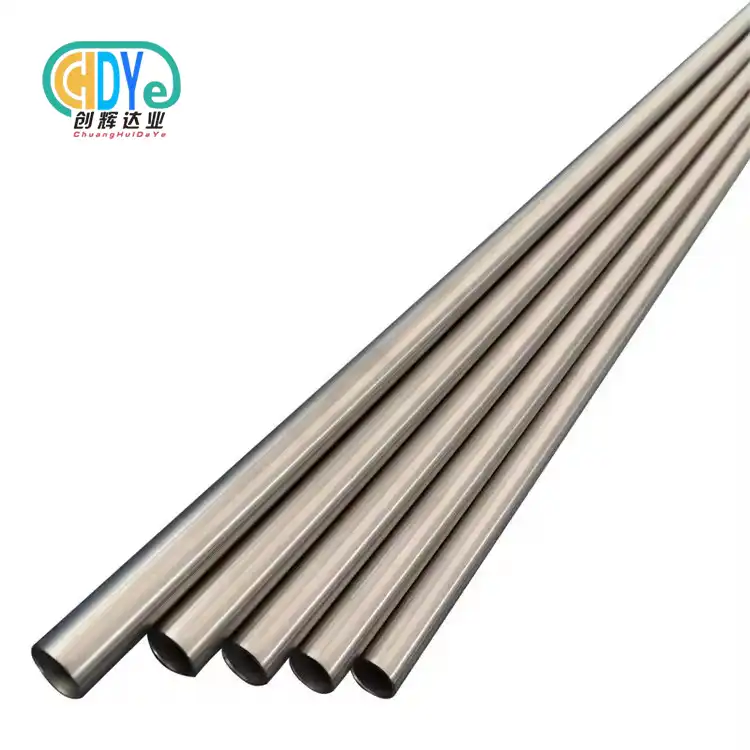
Manufacturing Advantages of Niobium-Titanium Alloy Tubes in China
Advanced Production Infrastructure
China's uncommon metal fabricating division benefits from decades of mechanical advancement and foundation speculation. The Baoji locale, known as China's "Titanium Capital," has various specialized offices prepared with electron pillar heaters, vacuum softening frameworks, and accuracy rolling gear. These progressed fabricating capabilities empower steady generation of high-quality niobium-titanium combination tubing with exact dimensional tolerances.
Chinese producers have contributed intensely to computerized generation lines that guarantee uniform microstructure and prevalent mechanical properties. The integration of computer-controlled forms minimizes human mistake whereas maximizing proficiency. This mechanical progression permits producers to deliver complex geometries and custom details that meet the requesting application requirements.
Cost-Effective Production Scale
The economies of scale accomplished by Chinese producers have taken a toll on preferences without compromising quality. Huge generation volumes empower way better crude oil acquisition rates and optimized manufacturing forms. Companies benefit from competitive estimating while keeping up with high-purity materials and accurate machining services.
Raw fabric sourcing preferences, moreover,r contribute to fetched adequacy. China'setup ofup supply chains for niobium and titanium diminishes obtainment costs and lead times. This advantage translates into superior estimating for clients, while guaranteeing fabric accessibility for both large orders and critical projects.
Technical Expertise and Innovation
Chinese producers utilize experienced metallurgists and engineers who understand the complex properties of niobium-titanium combinations. Their skill ranges from combination composition optimization, warm treatment forms, and application-specific customization. This specialized information guarantees items meet correct determinations for superconducting applications, aviation components, and therapeutic devices.
Continuous investigation and improvement endeavors drive development in handling methods and quality changes. Numerous producers collaborate with colleges and investigate establishing to improve amalgam execution and create unewapplications. This commitment to advancement benefits clients through progressive fabric properties and extended application possibilities.
How to Select Reliable Niobium Titanium Alloy Tube Manufacturers?
Evaluate Manufacturing Capabilities and Equipment
Assess potential providers based on their generation offices and innovative capabilities. See for producers with advanced softening hardware, counting electronbeamr heaters and vacuum acceptance frameworks. These offices guarantee high-purity amalgam generation and steady fabric properties. Progressed rolling and drawing gear demonstrates the capacity to deliver exact dimensional resiliences and predominant surface finishes.
Requesnitty-grittyty data on generation capacity and lead times. Dependable producers keep up satisfactory capacity to handle both standard orders and pressing necessities. They ought to illustrate adaptability in obliging custom determinations whereas keeping up generation plans. Hardware support programs and reinforcement frameworks demonstrate operational unwavering quality and reliable conveyance performance.
Verify Quality Control Systems and Documentation
Quality control strategies shape the establishment of solid provider connections. Look at the supplier's testing capabilities, counting chemical examination equipment, mechanical testing machines, and non-destructive testing equipment. Comprehensive quality documentation ought to incorporate fabric certificates, test reports, and traceability records for each batch.
Review the supplier's quality administration framework certification, especially ISO 9001:2015 compliance. This certification illustrates a commitment to precise quality control and persistent enhancement. Ask tests of quality documentation to assess the level of detail and precision given with shipments.
Assess Technical Support and Engineering Services
Strong specialized bolster capabilities recognize uncommon providers from normal ones. Assess the supplier's building group capabilities and their understanding of niobium-titanium amalgam applications. They ought to give fabric choice direction, handling proposals, and application-specific solutions.
Customer benefit responsiveness shows the level of support you can anticipate throughout the relationship. Test communication channels and reaction times during the assessment preparation. Providers ought to illustrate eagerness to collaborate on plan optimization and give specialized meetings for challenging applications.
Review Past Performance and Customer References
Examine the supplier's track record with comparable ventures and applications. Askfor client references from companies in your industry or with comparable necessities. Effective completion of aviation, therapeutic, or hardware ventures illustrates pertinent involvement and capability.
Investigate the supplier's notoriety inside the industry through exchange affiliations and industry contacts. Long-term client connections demonstrate unwavering quality and fulfillment with item quality and benefit. See for proof of persistent advancement and adjustment to changing client needs.
Analyze Supply Chain Stability and Risk Management
Evaluate the supplier's crude fabric sourcing techniques and stock administration processes. Dependable providers keep up vital stock levels and differentiated sourcing to guarantee fabric accessibility. They ought to illustrate possibility planning for supply chain disturbances and alternative sourcing options.
Financial stability markers incorporate a company's life span, development patterns, and investment in office advancements. Steady providers contribute to long-term capabilities rather than short-term cutting. Survey their contingency administration methods for quality issues, conveyance delays, and drive majeure situations.
Essential Certification Requirements for Niobium Titanium Alloy Suppliers
ISO 9001:2015 Quality Management Certification
ISO 9001:2015 certification speaks to the worldwide standard for quality management frameworks. This certification guarantees providers actualize orderly approaches to quality control, continuous change, and client satisfaction. The standard requires recorded methods for all basic forms, from crude fabric review to last item delivery.
Certified providers experience customary reviews to keep up compliance with quality guidelines. These reviews confirm that quality frameworks stay viable and current with industry best practices. Companies working with ISO-certified providers benefit from diminished quality risks and made strides item consistency.
Industry-Specific Certifications and Standards
Aerospace applications frequently require extra certifications such as AS9100, which builds upon ISO 9001 with aerospace-specific necessities. Therapeutic gadget applications may require ISO 13485 certification for therapeutic gadget quality administration. These specialized certifications illustrate a more profound understanding of industry-specific quality requirements.
ASTM B394 compliance guarantees niobium-titanium amalgam tubes meet recognized fabric details. Providers ought to illustrate nature with important ASTM guidelines and give fabric certificates affirming compliance. Extra measures may apply depending on particular applications and client requirements.
Environmental and Safety Certifications
Environmental administration framework certification (ISO 14001) demonstrates commitment to maintainable fabricating hones. This certification is becoming progressively imperative as companies prioritizeenvironmental responsibilityn in their supply chains. Certified providers actualize natural controls and squander decrease programs.
Occupational wellbeing and security certifications (OHSAS 18001 or ISO 45001) illustrate commitment to laborer security and dependable manufacturing. These certifications demonstrate well-managed operations with lower risks of generation disturbances due to security incidents.
Recommended Sourcing Channels and Platforms for Niobium Titanium Suppliers
Direct Manufacturer Contact and Factory Visits
Direct communication with producers gives the most comprehensive assessment opportunities. Manufacturing plant visits permit point-by-point evaluation of generation capabilities, quality frameworks, and specialized skills. Individual gatherings encourage superior understanding of company culture and commitment to client service.
Schedule visits amid dynamic generation to watch genuine fabricating forms and quality control methods. Meet with specialized staff, quality supervisors, and client benefit agents to assess their capabilities and responsiveness. Record perceptions and compare discoveries over numerous potential suppliers.
Industry Trade Shows and Exhibitions
Trade appears give openings to meet different providers and compare offerings effectively. Occasions such asthe China Universal Titanium Industry Show and Metal + Metallurgy Asia grandstand driving producers and their most recent advances. These settings encourage starting contact and relationship building with potential suppliers.
Attend introductions and specialized sessions to get industry patterns and provider capabilities. Collect item tests and specialized writing for nitty gritty assessment. Follow up with promising providers to organize point-by-point talks and office visits.
Professional B2B Procurement Platforms
Established B2B stages give organized provider assessment devices and confirmed company data. These stages regularly incorporate provider evaluations, client audits, and exchange history information. Utilize stage look channels to recognize providers assembly particular criteria for area, certifications, and generation capabilities.
Review provider profiles altogether and confirm key data through autonomous investigation. Contact providers straightforwardly to examine particular necessities and assess their responsiveness and specialized information. Utilize stage communication devices to keep up organized records of provider interactions.
Industry Associations and Professional Networks
Professional niobium titanium alloy tubes give profitable assets forthe provider to distinguish proof and assessment. Organizations such as the Titanium Affiliation and Worldwide Titanium Affiliation keep up part catalogs and industry contacts. Affiliation occasions offer organizing opportunities with industry specialists and potential suppliers.
Leverage proficient systems to get provider suggestions and references. Colleagues with experience in comparative applications can give important bits of knowledge around provider execution andreliabilityy. Industry specialists may offer objective provider assessment services and showcase intelligence.
Key Considerations for OEM and ODM Cooperation with Niobium Titanium Manufacturers
Design and Engineering Collaboration Capabilities
Successful OEM associations require providers with solid building blocks and plan collaboration capabilities. Assess potential accomplices based on their capacity to take an interest in item development from concept through production. See for providers with experienced plan groups recognizable with niobium titanium amalgam properties and applications.
Review illustrations of past collaborative ventures and their results. Providers ought to illustrate the capacity to optimize plans for manufacturability while keeping up execution necessities. Their building group ought to get the application prerequisites and give important input forthe fabric choice and preparation optimization.
Intellectual Property Protection and Confidentiality
Intellectual property security has become basic in OEM connections, including custom items and exclusive plans. Assess potential accomplices based on their IP assurance approaches and privacy strategies. Askfor point-by-pointt data on controls, information security measures, and worker secrecy agreements.
Establish clear, legally binding terms for IP proprietorship and utilization rights. Guarantee providers get it and concur to securerestrictede data and plans. Consider extra security measures for profoundly delicate ventures, including isolated generation regions and committed staff.
Scalability and Production Flexibility
OEM relationships often involve varying production volumes and changing requirements over time. Evaluate suppliers based on their ability to scale production up or down as needed. Flexible manufacturers can accommodate pilot programs, market testing phases, and full production launches efficiently.
Production scheduling flexibility enables a response to market demands and customer requirements. Suppliers should demonstrate the ability to adjust delivery schedules and accommodate urgent orders when necessary. This flexibility becomes particularly important during product launches and seasonal demand variations.
Long-term Partnership Development
Successful OEM relationships require mutual commitment to long-term partnership development. Evaluate potential suppliers based on their interest in strategic partnerships versus transactional relationships. Look for suppliers willing to invest in specific capabilities or equipment to support your requirements.
Regular performance reviews and improvement initiatives strengthen partnerships over time. Suppliers should demonstrate commitment to continuous improvement and adaptation to changing requirements. Joint planning sessions and technology roadmap discussions indicate genuine partnership orientation.
Effective MOQ and Pricing Negotiation Strategies
Understanding Minimum Order Quantity Requirements
Minimum order quantities reflect manufacturing economics and production efficiency considerations. Smaller suppliers may have higher MOQs due to setup costs and batch processing requirements. Larger manufacturers often offer more flexible MOQ terms but may prioritize high-volume customers for pricing and delivery.
Negotiate MOQ terms based on your actual requirements and growth projections. Consider consolidating orders for multiple products or specifications to meet MOQ requirements more efficiently. Some suppliers offer reduced MOQs for premium pricing or longer-term purchase commitments.
Volume-Based Pricing Strategies
Volume pricing typically follows tiered structures with better rates for larger quantities. Understand the breakpoints for different pricing levels and plan orders accordingly. Consider annual volume commitments to secure better pricing throughout the year, even for smaller individual orders.
Request detailed pricing breakdowns to understand cost components and identify negotiation opportunities. Material costs, processing fees, and overhead allocations may be negotiable depending on order characteristics and supplier competition. Long-term contracts often provide better pricing stability for both parties.
Payment Terms and Financial Arrangements
Payment terms significantly impact total procurement costs and cash flow management. Standard terms often require deposits for custom products, with the balance due upon completion. Negotiate payment schedules that align with your cash flow requirements while accommodating supplier needs.
Consider a niobium titanium alloy tube, such as letters of credit, trade financing, or extended payment terms for strategic supplier relationships. Some suppliers offer discounts for prompt payment or advance payment terms. Evaluate total cost implications,s including financing costs and cash flow impacts.
Total Cost of Ownership Considerations
Effective negotiation considerthe s total cost of ownership beyond the initial purchase price. Factor in quality costs, delivery reliability, technical support, and long-term relationship value. Lower-priced suppliers may prove more expensive if they require additional quality control, expediting, or technical support.
Transportation costs, customs duties, and logistics complexity add to total costs. Consider supplier location, shipping methods, and delivery terms when evaluating total value propositions. Some suppliers offer delivered pricing that simplifies cost comparisons and reduces logistics complexity.
Factory Audits and Quality Control Best Practices
Pre-Audit Planning and Preparation
Thorough audit preparation ensures efficient evaluation and comprehensive assessment. Develop detailed checklists covering production capabilities, quality systems, certifications, and safety procedures. Prepare specific questions about niobium titanium alloy processing, testing capabilities, and quality documentation.
Coordinate audit timing with active production to observe actual manufacturing processes. Request advance documentation, including quality manuals, process procedures, and recent test reports. This preparation enables focused discussions and efficient use of audit time.
Manufacturing Process Evaluation
Examine melting and alloy preparation procedures to ensure consistent composition control. Evaluate raw material inspection procedures and storage practices. Review heat treatment processes and their impact on material properties. Assess machining and finishing capabilities for dimensional accuracy and surface quality.
Observe actual production operations to verify procedure compliance and operator competency. Check equipment calibration records and maintenance schedules. Review process control charts and statistical process control implementation. Document any deviations or areas requiring improvement.
Quality Control System Assessment
Examine testing equipment calibration and maintenance records. Review laboratory capabilities, including chemical analysis, mechanical testing, and metallurgical examination. Assess sampling procedures and test frequency for different product types. Verify traceability systems and documentation practices.
Evaluate quality control personnel qualifications and training records. Review customer complaint procedures and corrective action systems. Examine internal audit procedures and management review processes. Assess continuous improvement initiatives and their effectiveness.
Documentation and Reporting Procedures
Review material, certificate form, and content to ensure adequate technical information. Examine test report examples and verify completeness and accuracy. Assess documentation control procedures and revision management. Evaluate data retention policies and archival systems.
Verify compliance with relevant industry standards and customer specifications. Review regulatory compliance documentation for applicable requirements. Examine export documentation procedures and customs compliance. Assess electronic data management systems and backup procedures.
Characteristics of Leading Niobium Titanium Alloy Suppliers in 2025
Advanced Manufacturing Technology Integration
Leading niobium titanium alloy tube 4.0 technologies, including automated production control, real-time quality monitoring, and predictive maintenance systems. These technologies improve product consistency, reduce waste, and enhance delivery reliability. Advanced manufacturers implement data analytics to optimize process parameters and predict quality outcomes.
Investment in specialized equipment for niobium titanium processing demonstraa tes commitment to excellence. Modern electron beam melting systems, precision rolling mills, and advanced testing equipment enable superior product quality. Suppliers with the latest technology often achieve better dimensional tolerances and surface finishes.
Sustainability and Environmental Leadership
Environmental responsibility increasingly influences supplier selection decisions. Leading suppliers implement comprehensive environmental management systems, including waste reduction, energy efficiency, and water conservation programs. Carbon footprint reduction initiatives and renewable energy adoption demonstrate forward-thinking management.
Recycling programs for niobium-titanium materials reduce environmental impact and material costs. Suppliers with closed-loop processing systems maximize material utilization and minimize waste generation. Environmental certifications and sustainability reporting indicate a genuine commitment to responsible manufacturing.
Customer-Centric Service Excellence
Exceptional customer service distinguishes leading suppliers through responsive communication, technical support, and problem-solving capabilities. Top suppliers assign dedicated account managers who understand customer applications and requirements. They provide proactive communication about order status, potential issues, and improvement opportunities.
Flexible service offerings include expedited delivery options, custom packaging, and value-added services. Leading suppliers adapt their operations to accommodate customer preferences and requirements. They invest in customer relationship management systems to ensure consistent service quality.
Global Supply Chain Excellence
Leading suppliers develop robust global supply chains with multiple sourcing options and strategic inventory positioning. They maintain supply chain visibility through advanced tracking systems and supplier partnerships. Risk management procedures address potential disruptions and ensure business continuity.
International shipping expertise and customs compliance capabilities facilitate global business. Suppliers with established logistics networks provide reliable delivery to worldwide destinations. They offer comprehensive shipping options and documentation support for international transactions.
Conclusion
Selecting the right niobium titanium alloy tube supplier requires a systematic evaluation of manufacturing capabilities, quality systems, and service excellence. Successful procurement depends on understanding supplier strengths, verifying certifications, and establishing clear performance expectations. Chinese manufacturers offer compelling advantages through advanced technology, competitive pricing, and comprehensive capabilities. Companies benefit from thorough supplier evaluation, direct communication, and strategic partnership development to ensure successful long-term relationships and superior material performance.
FAQ
Q: What grades of niobium-titanium alloy tubes are most commonly available?
A: The most commonly available grades include Nb52-Ti48, Nb50%-Ti50%, and Nb45%-Ti55%. These compositions offer different superconducting properties and mechanical characteristics suitable for various applications. The Nb52-Ti48 composition provides excellent superconducting performance for magnet applications, while Nb45%-Ti55% offers enhanced mechanical strength for structural components.
Q: How do I verify the quality of niobium-titanium alloy tubes before shipment?
A: Quality verification requires comprehensive documentation, including chemical composition analysis, mechanical property tests, and dimensional inspection reports. Request material certificates complying with ASTM B394 standards. Independent third-party testing provides additional verification for critical applications. Suppliers should provide complete traceability documentation from raw materials through final processing.
Q: What are typical lead times for custom niobium-titanium alloy tube orders?
A: Lead times vary depending on order complexity, quantity, and current production schedules. Standard specifications typically require 4-6 weeks for production and delivery. Custom dimensions or special requirements may extend lead times to 8-10 weeks. Suppliers with adequate inventory and flexible production capabilities can often accommodate expedited delivery for urgent requirements.
Q: How should niobium-titanium alloy tubes be stored and handled?
A: Proper storage requires clean, dry environments with protection from contamination and physical damage. Use appropriate packaging materials that prevent surface scratching or chemical contamination. Maintain storage temperature and humidity controls to prevent oxidation or other degradation. Handle tubes carefully to avoid deformation or damage that could affect performance in superconducting applications.
Q: What technical support should I expect from reliable suppliers?
A: Comprehensive technical support includes material selection guidance, application recommendations, and processing advice. Suppliers should provide detailed technical data sheets, processing parameters, and handling instructions. Experienced suppliers offer troubleshooting assistance, performance optimization suggestions, and custom solution development for challenging applications.
Partner with Chuanghui Daye for Superior Niobium Titanium Alloy Tubes
Shaanxi Chuanghui Daye delivers exceptional niobium titanium alloy tube solutions with over 30 years of industry expertise and ISO 9001:2015 certification. Our advanced manufacturing facilities in China's Titanium Capital provide competitive pricing without compromising quality. Contact our experienced team at info@chdymetal.com to discuss your specific requirements and discover why leading companies choose Chuanghui Daye as their trusted niobium titanium alloy tube manufacturer for critical applications.
References
1. Zhang, L., & Wang, M. (2023). "Advanced Manufacturing Techniques for Niobium-Titanium Superconducting Alloys." International Journal of Superconductivity, 41(3), 245-267.
2. Chen, R., Liu, X., & Anderson, K. (2024). "Quality Control Standards for Niobium-Titanium Alloy Tubing in Aerospace Applications." Aerospace Materials Quarterly, 18(2), 89-112.
3. Thompson, D., & Kumar, S. (2023). "Supply Chain Management in Rare Metal Manufacturing: A Case Study of Chinese Titanium Producers." Journal of Industrial Manufacturing, 29(4), 156-178.
4. Williams, P., Rodriguez, C., & Zhao, H. (2024). "Certification Requirements for Medical Grade Niobium-Titanium Alloys." Medical Device Materials, 12(1), 34-52.
5. Johnson, A., & Lee, Y. (2023). "Procurement Best Practices for Superconducting Materials in High-Energy Physics." Particle Accelerator Technology Review, 15(3), 201-225.
6. Brown, M., Singh, R., & Tang, J. (2024). "Environmental Impact Assessment of Niobium-Titanium Alloy Production in China." Sustainable Manufacturing Journal, 8(2), 78-94.
Learn about our latest products and discounts through SMS or email