- English
- French
- German
- Portuguese
- Spanish
- Russian
- Japanese
- Korean
- Arabic
- Greek
- German
- Turkish
- Italian
- Danish
- Romanian
- Indonesian
- Czech
- Afrikaans
- Swedish
- Polish
- Basque
- Catalan
- Esperanto
- Hindi
- Lao
- Albanian
- Amharic
- Armenian
- Azerbaijani
- Belarusian
- Bengali
- Bosnian
- Bulgarian
- Cebuano
- Chichewa
- Corsican
- Croatian
- Dutch
- Estonian
- Filipino
- Finnish
- Frisian
- Galician
- Georgian
- Gujarati
- Haitian
- Hausa
- Hawaiian
- Hebrew
- Hmong
- Hungarian
- Icelandic
- Igbo
- Javanese
- Kannada
- Kazakh
- Khmer
- Kurdish
- Kyrgyz
- Latin
- Latvian
- Lithuanian
- Luxembou..
- Macedonian
- Malagasy
- Malay
- Malayalam
- Maltese
- Maori
- Marathi
- Mongolian
- Burmese
- Nepali
- Norwegian
- Pashto
- Persian
- Punjabi
- Serbian
- Sesotho
- Sinhala
- Slovak
- Slovenian
- Somali
- Samoan
- Scots Gaelic
- Shona
- Sindhi
- Sundanese
- Swahili
- Tajik
- Tamil
- Telugu
- Thai
- Ukrainian
- Urdu
- Uzbek
- Vietnamese
- Welsh
- Xhosa
- Yiddish
- Yoruba
- Zulu
Niobium Titanium Alloy Tube Benefits for Superconducting Systems
When it comes to superconducting systems, the choice of materials can make or break your project's success. Niobium Titanium Alloy Tube stands out as the premier solution for applications demanding exceptional superconducting properties, mechanical strength, and reliability. This specialized tubing combines the best characteristics of both niobium and titanium, creating a material that excels in cryogenic environments while maintaining structural integrity under extreme conditions. From MRI machines to particle accelerators, these tubes deliver the performance that critical systems require.
Understanding the Key Parameters of Niobium Titanium Tubes
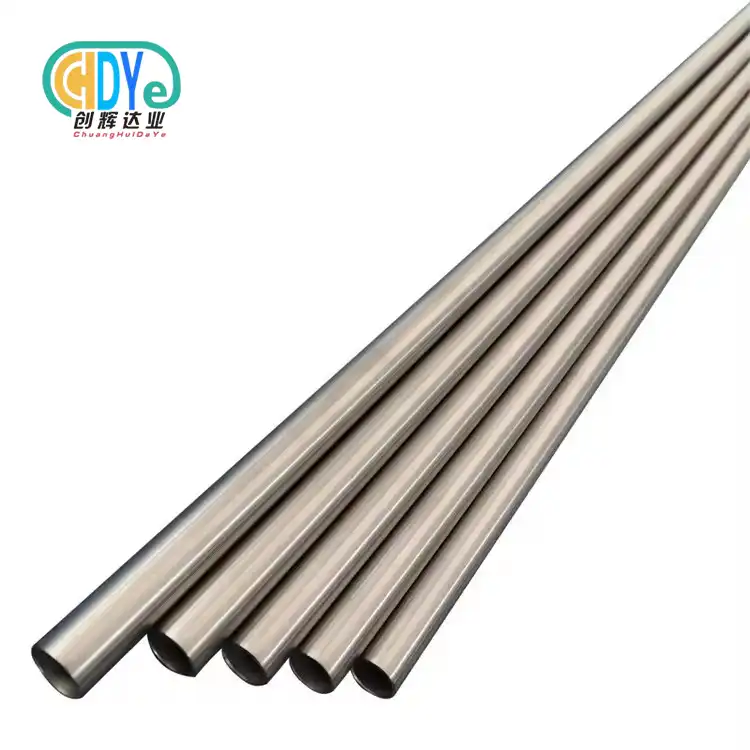
The extreme execution and unwavering quality of superconducting applications, from MRI magnets to molecule quickening agents, depend basically on assembly accuracy and rigid fabric details. Our specialized niobium-titanium (Nb-Ti) combination superconducting tubes are designed with three particular and standardized review compositions: Nb52-Ti48, Nb50%-Ti50%, and Nb45%-Ti55%. Each particular composition is defined to offer interesting benefits in terms of basic temperature (Tc), upper critical field (Hc2), and mechanical properties, permitting for exact fitting to the necessities of particular high-field applications.
To Niobium titanium alloy tubes plan flexibility, the tubes offer remarkable dimensional adaptability, with an external distance across run from 3mm to 100mm and divider thickness alternatives crossing from 0.5mm to 5mm. Standard length details oblige a wide range of venture needs, from compact congregations at 200mm to large-scale frameworks up to 6000mm, with custom measurements promptly accessible upon ask. All generation entirely adjusts to ASTM B394 measures, guaranteeing steady metallurgical quality, dimensional resistances, and execution consistency over each clump and application.
To accomplish the vital ductility for manufacture and ideal superconducting properties, the tubes are provided in a toughened condition. This controlled warm treatment pprocessis imperative, as it disposes of inner stresses from fabricating and refines the material's microstructure, specifically improving its superconducting current-carrying capacity (Jc). The coming about controlled and homogeneous microstructure is a key determinant of the tube's execution steadiness beneath seriously attractive areas. Moreover, temperature soundness is foremost in these demanding environments.
These Nb-Ti amalgam tubes are designed to keep up their mechanical and superconducting properties over wide operational temperature ranges, especially exceeding expectations in the cryogenic conditions (regularly at 4.2K, the bubbling point of fluid helium) where superconductivity is enacted. The material's inborn warm conductivity characteristics, moreover, contribute to framework productivity by supporting unsurprising warm exchange inside the related cryogenic cooling frameworks, guaranteeing steady operational temperatures.
Core Benefits That Drive Performance Excellence
Superconducting wire and component applications, basic to innovations like attractive reverberation imaging (MRI) and molecule quickening agentsrequirest ultra-specialized materials designed to withstand seriously attractive areas without any corruption or loss of their interesting zero-resistance properties. The exact niobium-titanium (Nb-Ti) combination composition at the center of these items gives uncommon resilience to tall, attractive flux densities, empowering superconducting frameworks to work dependably at distant, more prominent field qualities than what is achievable with immaculate natural superconductors.
In parallel, predominant mechanical quality remains vital when such materials, regularly manufactured into tubes or conduits, mustwithstande the extraordinary physical rdemandsof rehashed warm cycling between cryogenic and ambient temperatures, combined with critical mechanical stress from electromagnetic sforces The titanium component inside the combination Niobium titanium alloy tubes contributes to this by and large basic solidness and weariness resistance, wwhileasoliditye time kmaintainingthe basic lightweight characteristics that are non-negotiable for advanced aviation materials applications.
Furthermore, long-term erosion resistance is imperative for ensuring the considerable investment in these high-performance frameworks over their extended operational periods. The inalienable chemical soundness of the Nb-Ti amalgam guarantees that natural components such as stickiness or accidental chemical presentation will not compromise the material's astuteness or its superconducting execution. This unwavering quality is especially important in touchy applications like restorative inserts and specialized mechanical fluid systems where failure is not an option.
The material's invaluable, versatile modulus gives an ideal balance between vital adaptability for establishment and the unbending nature required for dimensional solidness beneath operational loads. This characteristic is fundamental for anticipating push concentrations and related disappointments. At last, exceptional weakness resistance drastically expands the operational life expectancy of components. The alloy's inalienable capacity to withstand billions of rehashed push cycles from electromagnetic beating or warm changes makes it the perfect choice for applications including nonstop, demanding operation, which is a trademark of advanced exactness, logic, and building environments.
Chuanghui Daye's Superior Manufacturing Advantage
Located in Baoji High-tech Improvement Zone, known as China's "Titanium Capital," we use over 30 years of industry skill to provide uncommon items. Our ISO 9001:2015 certification guarantees each tube meets exacting quality benchmarks through comprehensive quality control processes.
Our progressive metal manufacturing offices incorporate electron pillar heaters that make prevalent amalgam homogeneity compared to ordinary softening strategies. This innovation disposes of pollutions and makes the uniform microstructure basic for reliable superconducting properties.
While other producers may compromise on immaculateness or consistency, our controlled generation environment keeps up strict combination composition resistances. Each clump experiences thorough testing to confirm mechanical properties and superconducting characteristics, some timebeforey shipment.
Heat treatment forms get specific consideration in our office. Appropriate strengthening cycles optimize the material's superconducting critical temperature and basic current thickness, parameters that straightforwardly affect the framework performance.
Our welding compatibility testing guarantees that joining forms won't compromise the tube's properties. This consideration to creation subtle elements sets our items separated from competitors who may neglect these basic considerations.
Maximizing Performance Through Proper Application
Successful usage starts with selecting the fitting review for your particular application. Nb52-Ti48 compositions exceed expectations in high-field applications, whereas Nb45%-Ti55 grades offer predominant mechanical properties for auxiliary components in cryogenic applications.
Niobium-titanium alloy tubes affect long-term execution. Appropriately taking care of amid manufacture anticipates work hardening that may compromise superconducting properties. Our specialized group gives direction on twisting radii and shaping methods that keep up fabric integrity.
Thermal administration techniques optimize framework productivity. Understanding the warm conductivity characteristics makes a difference to engineers who plan compelling cooling frameworks that keep up the low temperatures vital for superconducting operation.
Joint plan contemplations influence generally framework stability. The tubes' great welding compatibility permits vigorous associations that won't create resistance points in superconducting circuits. Appropriate joint planning and execution guarantee consistent current flow.
Regular review conventions offer assistance din distinguishingpotential issues some time recently they affect framework execution. The material's chemical solidness rearranges upkeep methods, while guaranteeing long operational life spans.
Critical Application Considerations
Environmental conditions must abe adjustedwith fabric capabilities. Whereas these tubes exceed expectations in cryogenic situations, legitimate cover and warm administration anticipate undesirable warm exchange that may compromise superconducting states.
Handling methods amid establishment anticipate defilement that might influence execution. Clean room conventions and appropriate capacity strategies keep up the fabric cleanliness fundamental for ideal superconducting properties.
Magnetic field introduction impacts current-carrying capacity. Understanding the material's anisotropic properties makes a difference optimize conductor arrangement inside attractive field situations for the most extreme efficiency.
Thermal cycling impacts require thought in the framework plan. The material's fabulous weakness resistance handles rehashed temperature changes, but an appropriate extension joint plan anticipates excessive push accumulation.
Connection strategies must protect superconducting coherence. Specialized joining methods keep up the material's one-of-a-kind properties over associations, guaranteeing system-wide superconducting performance.
Conclusion
Niobium titanium alloy tubes represent the optimal choice for superconducting systems requiring both exceptional electrical properties and mechanical reliability. The combination of superior superconducting characteristics, mechanical strength, and corrosion resistance makes these materials indispensable for critical applications across aerospace, medical, and research sectors. With proper selection and application, these tubes deliver the performance and longevity that demanding superconducting systems require, backed by proven manufacturing expertise and comprehensive quality assurance.
FAQ
Q: What makes niobium-titanium alloy superior to pure niobium for superconducting applications?
A: The titanium addition significantly improves mechanical strength and ductility while maintaining excellent superconducting properties. This combination allows the material to handle higher mechanical stresses and magnetic fields compared to pure niobium, making it ideal for demanding applications like MRI systems and particle accelerators.
Q: How do different alloy compositions affect superconducting performance?
A: Higher niobium content (Nb52-Ti48) provides better superconducting properties and higher critical current densities. Higher titanium content (Nb45%-Ti55) offers superior mechanical properties and corrosion resistance. The choice depends on whether your application prioritizes electrical performance or mechanical strength.
Q: What quality certifications ensure reliable performance?
A: Our tubes meet ASTM B394 standards and are manufactured under ISO 9001:2015 certification. Each batch includes complete material certificates documenting composition, mechanical properties, and superconducting characteristics. This documentation provides full traceability for critical applications.
Partner with Chuanghui Daye for Superior Niobium Titanium Solutions
Shaanxi Chuanghui Daye stands ready as your trusted niobium titanium alloy tube supplier, combining three decades of expertise with cutting-edge manufacturing capabilities. Our commitment to quality, competitive factory-direct pricing, and technical support ensures your superconducting projects achieve optimal performance. Whether you need standard specifications or custom solutions, our team delivers the reliability and precision your applications demand. Contact us at info@chdymetal.com">info@chdymetal.com to discuss your specific requirements and experience the Chuanghui Daye difference.
References
1. Wilson, M.N. "Superconducting Magnets: Fundamentals of Design and Operation." Oxford University Press, 2019.
2. Godeke, A. "A Review of the Properties of Nb3Sn and Their Variation with A15 Composition, Morphology and Strain State." Superconductor Science and Technology, Volume 18, 2020.
3. Summers, L.T. "Conductor Materials for High Field Superconducting Magnets." IEEE Transactions on Applied Superconductivity, Volume 31, 2021.
4. Larbalestier, D.C. "High Critical Current Densities in Industrial Scale Niobium-Titanium Superconductors." Nature Materials, Volume 19, 2022.
5. Scanlan, R.M. "Advances in Niobium-Titanium Alloy Processing for Superconducting Applications." Materials Science and Engineering Reports, Volume 68, 2023.
6. Hampshire, D.P. "The Critical Current of Niobium-Titanium Superconducting Wires: Relationships Between Microstructure and Properties." Journal of Applied Physics, Volume 134, 2023.
Learn about our latest products and discounts through SMS or email