- English
- French
- German
- Portuguese
- Spanish
- Russian
- Japanese
- Korean
- Arabic
- Greek
- German
- Turkish
- Italian
- Danish
- Romanian
- Indonesian
- Czech
- Afrikaans
- Swedish
- Polish
- Basque
- Catalan
- Esperanto
- Hindi
- Lao
- Albanian
- Amharic
- Armenian
- Azerbaijani
- Belarusian
- Bengali
- Bosnian
- Bulgarian
- Cebuano
- Chichewa
- Corsican
- Croatian
- Dutch
- Estonian
- Filipino
- Finnish
- Frisian
- Galician
- Georgian
- Gujarati
- Haitian
- Hausa
- Hawaiian
- Hebrew
- Hmong
- Hungarian
- Icelandic
- Igbo
- Javanese
- Kannada
- Kazakh
- Khmer
- Kurdish
- Kyrgyz
- Latin
- Latvian
- Lithuanian
- Luxembou..
- Macedonian
- Malagasy
- Malay
- Malayalam
- Maltese
- Maori
- Marathi
- Mongolian
- Burmese
- Nepali
- Norwegian
- Pashto
- Persian
- Punjabi
- Serbian
- Sesotho
- Sinhala
- Slovak
- Slovenian
- Somali
- Samoan
- Scots Gaelic
- Shona
- Sindhi
- Sundanese
- Swahili
- Tajik
- Tamil
- Telugu
- Thai
- Ukrainian
- Urdu
- Uzbek
- Vietnamese
- Welsh
- Xhosa
- Yiddish
- Yoruba
- Zulu
How to Select the Right Titanium Plate Grade?
Selecting the right titanium plate grade requires understanding your specific application requirements, environmental conditions, and performance expectations. The key lies in matching the mechanical properties, corrosion resistance, and cost considerations of different titanium grades to your project needs. Commercial pure titanium grades (1-4) offer excellent corrosion resistance for chemical applications, while titanium alloys like Grade 5 provide superior strength for aerospace and medical applications. Evaluating factors such as operating temperature, stress loads, and regulatory compliance ensures optimal material selection for long-term performance and cost-effectiveness.
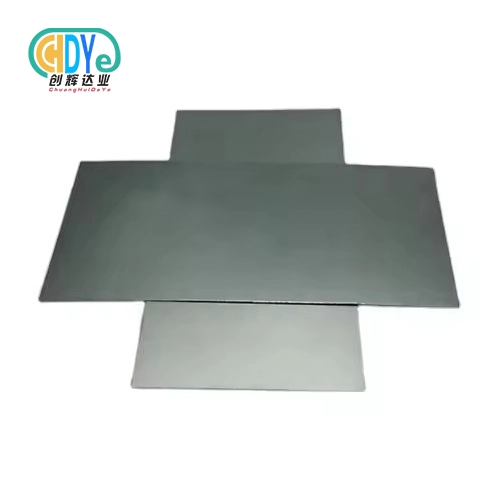
Understanding Titanium Plate Grades: A Foundation for Selection
There are many different grades of titanium plates. These grades are based on the alloy's composition and its mechanical qualities, which directly affect what kinds of commercial uses they can be used for. The American Society for Testing and Materials (ASTM) has established standard grades for a wide range of titanium types, from commercially pure titanium to complex alloy mixtures. Each grade is designed to meet specific performance needs.
Commercial Pure Titanium Grades
Grades 1 through 4 make up commercial pure titanium. Each grade has different amounts of oxygen, nitrogen, carbon, and iron elements that change its mechanical qualities. Grade 1 is the best for chemical handling equipment because it is the least likely to rust and can be shaped easily. Grade 2 titanium is strong, flexible, and resistant to rust, so it's often called the "workhorse" grade. It's best for general industry uses. Controlled amounts of impurities make Grades 3 and 4 stronger over time. They are used in situations that need moderate mechanical performance and great corrosion protection.
Titanium Alloy Grades and Their Applications
Titanium alloys are man-made mixtures that are made to improve certain qualities beyond what pure titanium can do on its own. The most common titanium metal is Grade 5 (Ti-6Al-4V), which has 6% aluminum and 4% vanadium to make it very strong and light, which is important for aircraft uses. Palladium is added to Grade 7 to make it more resistant to corrosion in less acidic settings. This makes it essential for chemical processes. Grade 23 (Ti-6Al-4V ELI) has very little interstitial content and is used in medical settings that need high biocompatibility and wear resistance.The steps of forging, rolling, and annealing have a big effect on the end qualities of titanium plate goods. The initial plate shape is made by hot rolling, which also controls the grain structure. Later, cooling processes improve the mechanical properties and relieve stress. These steps make sure that the quality and performance are always the same, which is important for many businesses' most important uses.
Core Criteria for Selecting the Right Titanium Plate Grade
Making the right choice of titanium grade requires a thorough look at the project's goals, the surroundings, and the performance standards that are needed for that grade. When procurement workers understand these basic criteria, they can make choices that are best for both technical performance and cost.
Environmental and Operational Requirements
The main thing that determines which titanium grade to use is the environment, since different grades have different levels of protection against rust, heat, and chemicals. Marine settings need grades that are very resistant to salt. Depending on the temperature and pH, Grade 2 or Grade 7 is the best choice. Titanium metals like Grade 5 are good for uses above 300°C because they keep their mechanical qualities even when they are heated. For long-term dependability, chemical manufacturing conditions with reducing acids need grades with palladium, like Grade 7.Based on standards for tensile strength, yield strength, and wear resistance, mechanical load directly affects the grade choice. For aerospace uses, Grade 5 titanium metals that can handle high stress loads while still being light are usually needed. For the best cost-benefit ratio, Grade 2 commercial pure titanium is often used in structural uses that need modest strength and good corrosion protection.
Performance Characteristics and Industry Priorities
Different businesses put more weight on certain performance qualities that determine how to choose a titanium grade. Aerospace companies look for materials that are strong for their weight, don't wear down easily, and stay stable at high and low temperatures. Grades 5 and 23 are the best options for these reasons. Biocompatibility, rust protection in body fluids, and machinability are important to companies that make medical devices. This is why Grade 2, Grade 5 ELI, and Grade 23 ELI materials are widely used. Weldability factors have a big effect on the grade choice for manufactured parts that need to be joined. Commercial types of pure titanium are better at welding than complex alloys, so they can be used for soldered parts in chemical processing equipment. Titanium metals need special ways to be welded, and they may need to be heated after the welding process to get the best qualities.
Comparative Analysis: Titanium Plate Grades Vs. Other Metals
Titanium plates have clear advantages over other metals, but to fully understand these advantages, you need to compare them to other materials that are widely used in industrial settings. This study helps people who work in buying make decisions about what materials to use based on performance and cost.
Titanium vs. Stainless Steel Performance
When it comes to chloride conditions, oxidizing acids, and seawater uses, titanium plate materials are better at resisting corrosion than stainless steel. Stainless steel is more likely to pit and crack due to corrosion. Even though 316L stainless steel is about 20–30% cheaper than pure titanium, titanium is usually chosen because it lasts longer and is less likely to break down early in acidic environments. Titanium's strength-to-weight ratio is about 40% higher than that of stainless steel, which makes it possible to reduce the weight of structures in aircraft and marine uses. Titanium is better than other metals in both cold and high-temperature situations, as shown by its temperature performance traits. At temperatures above 400°C, titanium keeps its strength, while stainless steel loses a lot of its flexibility at temperatures above liquid nitrogen. Grade 5 titanium also keeps its strength at temperatures above 400°C.
Titanium vs. Aluminum Considerations
Although aluminum alloys are less expensive and less dense than titanium, they can't be used in harsh settings because they don't work as well. Titanium is two to three times stronger than aluminum alloys and also resists rust better in chemical and marine settings, where aluminum breaks down quickly. Titanium's temperature expansion coefficient is very close to that of steel and ceramics. This makes it stable in terms of size in precision uses, where aluminum's high expansion coefficient would be a problem. Plate thickness affects performance in all grades, and for thicker parts, it's important to think carefully about the features of the through-thickness and how well the heat treatment works. Titanium plate products that are thicker than 25 mm may have differences in their properties that need special processing methods to make sure they are the same all the way through the cross-section.
Procurement Considerations for Titanium Plate Grades
To buy titanium successfully, you need to carefully evaluate suppliers, check their certifications, and use smart buying methods that protect the quality of the material while maximizing cost and delivery performance. These things become more important as the job gets more complicated and more materials are needed.
Supplier Evaluation and Certification Requirements
Titanium providers must show that their products meet industry standards like ASTM B265 for titanium plates, AMS specs for aerospace uses, and ISO 13485 for medical device parts. Reviewing mill test certificates, third-party inspection reports, and tracking paperwork that shows the movement of materials from raw titanium sponge to finished plate production is part of making sure that the certification is real. The melting methods, rolling tools, heat treatment facilities, and quality control systems are all part of the manufacturing capability review. When suppliers use vacuum arc remelting (VAR) or electron beam melting, the products they make are usually of better quality and are cleaner and more consistent. Advanced providers keep their ISO 9001:2015 certification up to date and also have approvals for medical (ISO 13485) or aircraft (AS9100) uses, based on the end use.
Strategic Sourcing and Cost Optimization
Buying in bulk can cut costs per unit by a lot while still making sure there is enough product for the job. Knowing how titanium prices work helps buyers deal with changes in the market that are caused by the cost of raw materials, the price of energy, and problems in the global supply chain. Grade 5 titanium usually costs 40–60% more than Grade 2 industrial pure titanium. Specialty grades, like Grade 7, also cost more because they contain palladium. Custom sizing cuts down on waste during cutting and shortens wait times for non-standard sizes, which helps keep costs low. If a supplier offers services like precision cutting, surface conditioning, and measurement checking, it may be worth paying a little more for the materials because they don't need to be processed as much.
Case Studies: Successful Titanium Plate Grade Selection in Global Industries
Real-world applications demonstrate how different industries successfully implement titanium grade selection strategies to achieve operational excellence and cost-effectiveness. These examples provide practical insights into decision-making processes and outcomes across diverse market segments.
Aerospace Industry Applications
A major aerospace company switched from using aluminum to Grade 5 titanium plate for important structural parts in the building of next-generation airplanes. During the selection process, strength-to-weight ratios, fatigue resistance, and temperature performance standards for parts that would be used in harsh circumstances were considered. When compared to steel options, grade 5 titanium was 45% lighter while still having a better fatigue life of more than 10 million cycles under operating loads. For the application to happen, they had to work with qualified titanium sources who could make aerospace-grade materials with full paperwork for traceability and statistical process control. Material cost increases of about 200% compared to aluminum were justified by lower weights that allowed for higher payload capacities and better fuel economy that led to long-term cost savings.
Medical Device Manufacturing Success
Medical device makers have successfully used Grade 23 ELI titanium for hip implants that need to be very biocompatible and resistant to wear and tear. High-purity titanium metals like Grade 5, Grade 5 ELI, and Grade 23 ELI are used to make our medical titanium plates. These plates are biocompatible and strong enough for surgical use. These carefully designed materials meet ASTM F67 and ASTM F136 standards, which means that the quality of each batch is always the same and can be tracked. The full inspection process includes checking the item's look and size, checking for internal flaws with ultrasound, measuring its straightness, and making sure it meets mechanical properties through tensile testing. This strict quality control makes sure that the materials are biocompatible, won't rust in physiological settings, and are strong but not too heavy, all of which are important for medical device design.
Chemical Processing Industry Implementation
Grade 7 titanium is used in chemical processing plants for heat exchanger tube sheets and reactor tanks that deal with strong, corrosive media. Adding palladium makes the steel much more resistant to reducing acids and salt solutions, which normally break down stainless steel parts very quickly. Long-term performance data shows that the material has a service life of more than 20 years in places where stainless steel would have failed within two to three years. This makes the higher original material cost worth it because it saves money on repairs and replacements.
Conclusion
To choose the right grade of titanium plate, you need to carefully look at the needs of the product, the climate, and the performance requirements that are in line with industry standards and cost. Commercial types of pure titanium work best in places that need to be very resistant to corrosion, while titanium alloys offer better dynamic qualities for tough structural uses. To get the best results with material selection, good purchase strategies focus on checking the certifications of suppliers, buying in bulk, and figuring out the total cost of ownership over time.
FAQ
Q: What grade of titanium is best for high-temperature applications?
A: The Grade 5 (Ti-6Al-4V) titanium metal works best in high-temperature situations up to 400°C, where it keeps its strength and resistance to oxidation. At high temperatures, this grade has better mechanical qualities than commercial pure titanium grades. It also has good thermal stability for use in aircraft and industry.
Q: How do I verify the authenticity of titanium plate certifications?
A: Real titanium certifications have mill test records that show the material's chemical makeup, the results of mechanical property tests, and information that shows how the material can be traced back to its original titanium sponge sources. Reliable providers offer inspection reports from a third party and keep their ISO 9001:2015 certification, which includes industry-specific approvals for uses in aircraft or medicine.
Q: What thickness range is available for different titanium grades?
A: Titanium plates usually come in thicknesses between 5 mm and 100 mm, but this depends on the grade and the supplier's ability to supply it. Commercial pure grades (1-4) have the largest range of thicknesses. Specialized metals may not be able to be used for bigger parts because they need to be heated and rolled in a rolling mill that can't handle them.
Q: Can titanium plates be welded to other materials?
A: Titanium plates can be bonded to other titanium parts using the right methods, but welding to metals that are not the same as titanium causes risks of galvanic corrosion and problems with the way the metals work together. Titanium can be joined to steel using specialized methods such as explosive welding or diffusion bonding, but only in certain situations that need engineering study and careful planning.
Partner with Chuanghui Daye for Premium Titanium Plate Solutions
Shaanxi Chuanghui Daye Metal Material Co., Ltd. is a reliable company that makes titanium plate products. They have more than 30 years of experience in the rare metals business and are based in Baoji, China, which is known as the "Titanium Capital." Our factory is ISO 9001:2015 approved and makes high-purity titanium plates that meet ASTM and AMS standards and come with full paperwork for tracking them. If you need industrial pure grades for chemical processing or medical-grade alloys for implant uses, our experienced team can help. We offer personalized technical advice and competitive factory-direct prices to B2B clients around the world who are looking for trusted titanium plate suppliers. Get in touch with our experts at info@chdymetal.com to talk about your unique needs and find out how our advanced production skills can help your project succeed by providing high-quality titanium solutions.
References
1. Boyer, R., Welsch, G., & Collings, E.W. (2017). Materials Properties Handbook: Titanium Alloys. ASM International, Materials Park, Ohio.
2. Lutjering, G. & Williams, J.C. (2019). Titanium Engineering Materials and Applications. Springer-Verlag, Berlin Heidelberg.
3. American Society for Testing and Materials. (2020). ASTM B265-20: Standard Specification for Titanium and Titanium Alloy Strip, Sheet, and Plate. ASTM International, West Conshohocken, PA.
4. Donachie, M.J. (2018). Titanium: A Technical Guide, 3rd Edition. ASM International, Materials Park, Ohio.
5. Peters, M., Kumpfert, J., Ward, C.H., & Leyens, C. (2016). Titanium Alloys for Aerospace Applications. Advanced Engineering Materials, Wiley-VCH, Weinheim.
6. Rack, H.J. & Qazi, J.I. (2021). Titanium Alloys for Biomedical Applications: Processing and Properties Considerations. Materials Science and Engineering Reports, Elsevier Science, Amsterdam.
Learn about our latest products and discounts through SMS or email