- English
- French
- German
- Portuguese
- Spanish
- Russian
- Japanese
- Korean
- Arabic
- Greek
- German
- Turkish
- Italian
- Danish
- Romanian
- Indonesian
- Czech
- Afrikaans
- Swedish
- Polish
- Basque
- Catalan
- Esperanto
- Hindi
- Lao
- Albanian
- Amharic
- Armenian
- Azerbaijani
- Belarusian
- Bengali
- Bosnian
- Bulgarian
- Cebuano
- Chichewa
- Corsican
- Croatian
- Dutch
- Estonian
- Filipino
- Finnish
- Frisian
- Galician
- Georgian
- Gujarati
- Haitian
- Hausa
- Hawaiian
- Hebrew
- Hmong
- Hungarian
- Icelandic
- Igbo
- Javanese
- Kannada
- Kazakh
- Khmer
- Kurdish
- Kyrgyz
- Latin
- Latvian
- Lithuanian
- Luxembou..
- Macedonian
- Malagasy
- Malay
- Malayalam
- Maltese
- Maori
- Marathi
- Mongolian
- Burmese
- Nepali
- Norwegian
- Pashto
- Persian
- Punjabi
- Serbian
- Sesotho
- Sinhala
- Slovak
- Slovenian
- Somali
- Samoan
- Scots Gaelic
- Shona
- Sindhi
- Sundanese
- Swahili
- Tajik
- Tamil
- Telugu
- Thai
- Ukrainian
- Urdu
- Uzbek
- Vietnamese
- Welsh
- Xhosa
- Yiddish
- Yoruba
- Zulu
Can Titanium Welding Wire Improve Weld Strength?
Titanium welding wire can significantly improve weld strength compared to conventional welding materials. The superior metallurgical properties of titanium, including its exceptional strength-to-weight ratio, corrosion resistance, and fatigue performance, directly translate to stronger, more durable weld joints. When properly matched to base materials and applied using appropriate welding techniques, titanium filler metals create joints that often exceed the mechanical properties of the base metal itself, making them indispensable for critical applications in aerospace, chemical processing, and high-performance manufacturing environments.
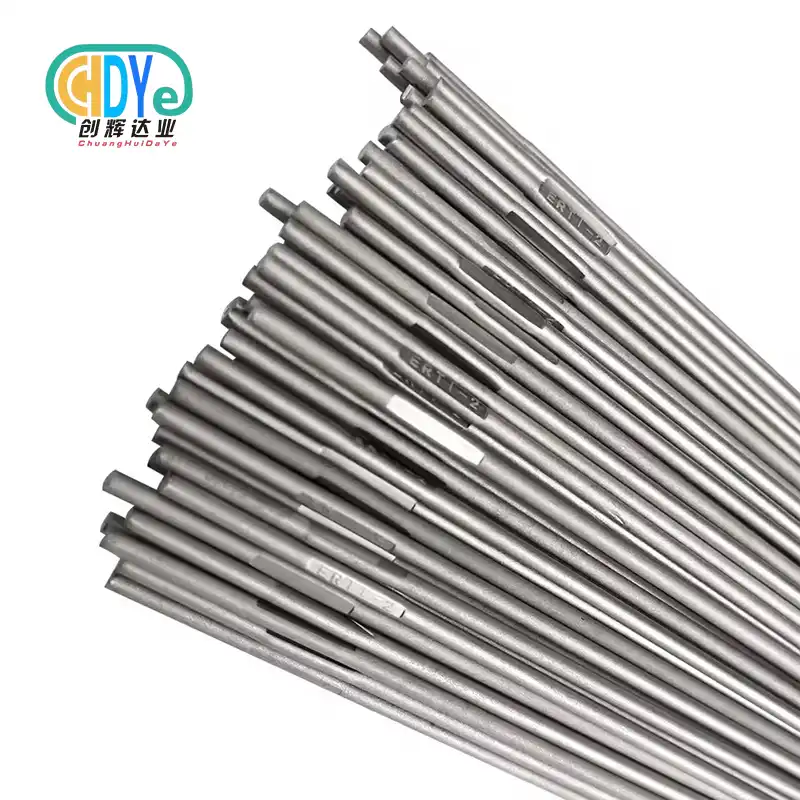
Understanding Titanium Welding Wire and Its Impact on Weld Strength
Titanium filling metals are a different type of welding tool that is designed to join titanium and titanium alloy parts together. These very pure materials are made according to strict rules set out in AWS A5.16 and ASTM B863 standards. This makes sure that the chemical makeup and mechanical performance are the same for all grades and uses. Titanium welding tools are usually stronger than other materials because of the way they are made. Titanium is much more resistant to weather damage than steel or metal alternatives because it keeps its shape even at very high or very low temperatures. The hexagonal close-packed crystal structure of the material makes it very strong. Its yield strengths range from 240 MPa for commercially pure grades to over 895 MPa for aerospace-grade Ti-6Al-4V mixtures.
Available Grades and Their Strength Characteristics
These days, titanium welding wire products come in different types to meet the needs of different applications. Commercially pure grades (Gr1–Gr4, ERTi-1–ERTi-4) are very flexible and don't rust, which makes them perfect for chemical processing equipment where the weld needs to be strong enough to handle harsh media. Alloy types like Gr5 (ERTi-5) and Gr23 (ERTi-23) offer higher levels of strength that are needed to make aircraft and medical devices. Choosing the right grade has a direct effect on the strength of the end weld. For instance, Grade 5 titanium wire makes weld layers with tensile strengths higher than 895 MPa and great wear resistance even when loaded and unloaded many times. This level of performance is better than most common materials, which is why aircraft makers choose titanium consumables for important structural parts.
Metallurgical Advantages Over Conventional Materials
Titanium filler metals have a number of important benefits over stainless steel or aluminum options that have a direct effect on the strength of the weld. Titanium has a very low density (4.43 g/cm³) and is very strong. This gives it an amazing strength-to-weight ratio, which lets engineers make strong joints without adding too much mass to systems. Titanium's resistance to strength loss caused by rust is another important benefit. Steel welds may lose strength over time due to oxidation or chemical attack, but titanium parts keep their mechanical qualities even after a long time of use. When long-term dependability is very important, this trait comes in handy in marine settings, chemical processing plants, and medical implant uses.
Welding Process and Best Practices for Titanium Welding Wire
To get the strongest weld possible with titanium consumables, you have to follow certain welding methods and keep the surroundings safe. Titanium is volatile at high temperatures, so it needs thorough protection to keep it from getting contaminated in a way that could weaken the joint. Gas Tungsten Arc Welding (GTAW/TIG) is the most common way to use titanium welding wire because it allows for precise control of the heat and very stable arcs. High-purity argon shielding gas with very little moisture (usually less than 10 ppm) is needed for the process so that hydrogen doesn't get absorbed and cause cavities or weakening. Proper gas coverage goes beyond the immediate arc zone. Trailing screens and backing gas systems keep the metal that is cooling from getting contaminated by air.
Critical Process Parameters for Maximum Strength
Keeping the best welding settings affects the end strength of the joint directly. Carefully controlling the arc voltage and trip speed is needed to make sure that the material goes all the way through without adding too much heat, which could make the grains bigger or form an alpha-case. Temperatures between passes should stay 150 °C below to keep heat stress from building up and lowering fatigue performance. The choice of wire thickness affects both how well it penetrates and how strong it is. Different joint setups and thickness needs can be met with diameters ranging from 0.4mm to 6.0mm. For precise tasks, smaller diameters are easier to control, while larger diameters allow for faster deposition in production welding situations.
Contamination Prevention and Quality Control
In order to successfully weld titanium, the whole process must be kept very clean. To get rid of oils, oxides, and other contaminants, base materials and filler wire must be cleaned thoroughly with the right chemicals and mechanical methods. Even small amounts of surface pollution can cause holes, inclusions, or less flexibility in the final bond. Environmental control includes more than just keeping gases out. It also includes keeping the work area clean and storing supplies properly. Titanium welding wire should be kept somewhere dry and should only be handled with clean clothes to keep germs from spreading. These steps make sure that the better qualities of the filler metal directly lead to better weld strength performance.
Comparison and Decision-Making: Selecting the Best Titanium Welding Wire for Your Needs
When choosing the right titanium filler materials, you need to think carefully about the qualities of the base metal, the service area, and the performance needs. Choosing the right grade is very important for getting the best weld strength features because each grade has its own benefits that are best suited for a certain purpose. Commercially pure grades work best in places where chemical protection is more important than maximum strength, like corrosive settings. For chemical processing equipment, heat exchangers, and marine parts, ERTi-2 (Grade 2) is a great choice because it has a good mix of strength, ductility, and corrosion protection. The material has a yield strength of about 345 MPa and great elongation qualities. These make parts that are reliable and can handle both mechanical and chemical pressures.
Aerospace and High-Performance Applications
Ti-6Al-4V alloys (ERTi-5 and ERTi-23) are the standard in the business for uses that need the most strength. These alpha-beta metals have better mechanical qualities and can still be welded very well because they contain both aluminum and vanadium. ERTi-23 (Grade 23) has higher amounts of purity and is best for making medical devices and using it in cold environments where toughness against breaking is important. Titanium welding wire is being used more and more in the car industry for exhaust systems, suspension parts, and engine parts, where longevity and weight reduction are important. For racing purposes, titanium's ability to stay strong at high temperatures while saving a lot of weight compared to steel options is especially useful.
Cost-Performance Optimization
Titanium filler metals are more expensive than other materials, but when you look at things like service life, upkeep needs, and performance benefits, the total cost of ownership often works out better for titanium options. Titanium joints often pay for themselves over and over again in longer operational life, especially in critical uses where failure costs are higher than material savings. People who work in procurement should judge sellers based on how well they follow certification rules, how consistent their quality is, and how well they can help with technical issues. ISO 9001:2015 certification makes sure that quality control systems are strong, and AWS A5.16 compliance makes sure that all output lots have the same chemical makeup and mechanical properties.
Procurement Considerations for Titanium Welding Wire in B2B Environments
To buy titanium filler materials strategically, you need to know how the market works, what suppliers can do, and the quality standards that are specific to titanium welding. Because these materials are so specialized, they need to be sourced from sources with strong technical knowledge and thorough certification processes. Titanium welding wire production requires special ways of making things, which is usually reflected in the minimum order amounts. To get the levels of purity needed for medical and aircraft uses, vacuum arc remelting and electron beam processing are used. These methods have high setup costs that suppliers have to spread out over many production runs. Knowing about these economics helps procurement teams plan how much inventory to keep on hand and negotiate better price models.
Supplier Qualification and Certification Requirements
Suppliers of titanium wire with a good reputation have complete quality control systems that cover everything from getting the raw materials to final testing. Shaanxi Chuanghui Daye Metal Material Co., Ltd., which is in Baoji's "Titanium Capital," is a good example of this method because it is ISO 9001:2015 certified and follows foreign rules like AWS A5.16 and EN ISO 18274. The fact that most titanium is made in a few specific areas, like Baoji, has benefits for scientific know-how, cost-effectiveness, and supply chain integration. Because of economies of scale and specialized infrastructure, suppliers in these well-established industrial clusters can usually provide better expert support, shorter wait times, and more affordable prices.
Quality Documentation and Traceability
When buying titanium welding wire from another business, you need to keep a lot of paperwork to prove that the material can be tracked and that the rules are being followed. Material Test Certificates (MTCs) should have full chemical analysis, mechanical property data, and procedure information to make sure that each lot is the same. This paperwork is very important for industries like aircraft, medical devices, and nuclear power plants that need to follow strict rules about material origin. Digital documentation systems from advanced suppliers give you real-time access to quality data, shipping information, and expert help resources. These features make it easier to buy things and make sure that stricter traceability rules are followed in businesses that are controlled.
Case Studies and Real-World Applications Demonstrating Enhanced Weld Strength
There is strong proof that titanium welding wire can improve the performance and reliability of structures in the aerospace industry. Titanium filler metals are often used by commercial aircraft makers in engine parts, landing gear assemblies, and structural joints where reducing weight and keeping strength under repeated loads are very important. When a big airplane engine maker switched from nickel-based to titanium-based welding methods for turbine blade parts, the weight went down by 40%, and the fatigue life went up by 25%. The higher strength-to-weight ratio made it possible to make design changes that saved fuel while still meeting the safety standards needed for business flight.
Chemical Processing Industry Success Stories
Chemical processing plants that use aggressive media show that titanium can keep its weld quality in tough working settings. A chlor-alkali plant that used titanium heat exchangers soldered with ERTi-2 filler wire had equipment that lasted over 15 years without corroding significantly, while older stainless steel equipment had to be replaced every 5 to 7 years. Titanium's ability to prevent stress corrosion cracking and crevice corrosion in saltwater settings is shown in the naval business. Submarine makers say that titanium pressure hull parts have had no weld breakdowns in 20 years or more of service. This shows that long-term reliability is possible with the right material choice and welding techniques.
Medical Device Manufacturing Excellence
Titanium's biocompatibility and mechanical qualities are used by medical device makers to make implants that need to permanently connect with human flesh. When Grade 23 titanium welding wire is used to join orthopedic implants, the welds show great failure resistance under physiological loading conditions while still being fully biocompatible over an extended service life. Strong, resistant to rust, and biocompatible, titanium is the best material for heart devices, orthopedic implants, and surgery tools that need to be safe for patients and work well for a long time. When manufacturers switch from stainless steel to titanium welding options, they say that product reliability and patient results get a lot better.
Conclusion
The evidence overwhelmingly supports titanium welding wire's ability to improve weld strength across diverse industrial applications. The material's unique combination of high strength-to-weight ratio, corrosion resistance, and fatigue performance creates joints that consistently outperform conventional alternatives. From aerospace applications demanding maximum reliability to chemical processing environments requiring long-term corrosion resistance, titanium filler metals deliver measurable improvements in structural integrity and operational lifespan. Procurement professionals seeking to enhance product performance while reducing lifecycle costs should seriously consider titanium welding solutions, particularly when working with qualified suppliers offering comprehensive technical support and certified quality systems.
FAQ
Q: What diameter titanium welding wire is optimal for aerospace applications?
A: Diameters used in aerospace applications usually range from 0.8mm to 2.4mm, based on the type of joint and the required thickness. For precise welding of thin sections, smaller diameters (0.8–1.2mm) are better, while bigger diameters (1.6–2.4mm) make it easier to make solid parts. The choice should match the width of the base material and the welding position needed while keeping the heat input under control.
Q: How does the titanium wire's corrosion resistance compare to stainless steel alternatives?
A: Titanium is better at resisting rust than stainless steel in most situations. This is especially true in chloride-containing settings, where stainless steel can pit and crack from stress corrosion. Titanium's passive oxide layer stays in place even in harsh chemical conditions. This means that it can be used in situations where stainless steel would need to be replaced or maintained often.
Q: What storage practices preserve titanium welding wire quality during extended periods?
A: For storage to work properly, the temperature must be controlled to keep mist from forming, and the relative humidity must be less than 50%. Until it is used, the wire should stay in its original packaging. Once it has been opened, packages should be resealed with desiccants. Do not touch different metals or surfaces that are dirty, and only use clean gloves to avoid spreading contamination that could lower the quality of the weld.
Q: Can titanium filler metals be used with automated welding systems?
A: Yes, titanium wire can be used with automatic TIG, MIG, and laser welding systems as long as the right feeding methods and environmental controls are put in place. Most of the time, automated systems offer more consistent gas protection and parameter control, which leads to better weld quality. However, special wire feeding tools might be required to avoid contamination during the feeding process.
Q: What minimum order quantities should procurement teams expect for titanium welding wire?
A: Minimum order quantities typically range from 10-50 kg depending on grade, diameter, and packaging requirements. Specialized grades or custom diameters may require higher minimums due to production setup costs. Planning procurement volumes allows suppliers to optimize production scheduling and provide more competitive pricing for larger quantities.
Partner with Chuanghui Daye for Superior Titanium Welding Wire Solutions
Elevate your welding applications with Shaanxi Chuanghui Daye's premium titanium welding wire manufactured in China's renowned "Titanium Capital." Our comprehensive range of grades (Gr1-Gr23, ERTi-1 through ERTi-12) ensures optimal material selection for your specific strength and performance requirements. With ISO 9001:2015 certification, AWS A5.16 compliance, and over 30 years of rare metal expertise, we deliver consistent quality and competitive factory-direct pricing for global manufacturers. Contact our technical team at info@chdymetal.com to discuss your titanium welding wire supplier requirements and receive customized solutions backed by complete certification documentation and reliable supply chain management.
References
1. American Welding Society. "Specification for Titanium and Titanium Alloy Welding Electrodes and Rods." AWS A5.16/A5.16M:2018.
2. Boyer, R., Welsch, G., and Collings, E.W. "Materials Properties Handbook: Titanium Alloys." ASM International, Materials Park, OH, 1994.
3. Donachie, Matthew J. "Titanium: A Technical Guide, Second Edition." ASM International, Materials Park, OH, 2000.
4. Lutjering, Gerd and Williams, James C. "Titanium: Engineering Materials and Processes." Springer-Verlag Berlin Heidelberg, 2003.
5. Peters, M., Kumpfert, J., Ward, C.H., and Leyens, C. "Titanium Alloys for Aerospace Applications." Advanced Engineering Materials, Vol. 5, No. 6, 2003.
6. Welding Technology Institute of Australia. "Welding of Titanium and Titanium Alloys: Best Practice Guidelines." WTIA Technical Note 15, 2019.
Learn about our latest products and discounts through SMS or email