- English
- French
- German
- Portuguese
- Spanish
- Russian
- Japanese
- Korean
- Arabic
- Greek
- German
- Turkish
- Italian
- Danish
- Romanian
- Indonesian
- Czech
- Afrikaans
- Swedish
- Polish
- Basque
- Catalan
- Esperanto
- Hindi
- Lao
- Albanian
- Amharic
- Armenian
- Azerbaijani
- Belarusian
- Bengali
- Bosnian
- Bulgarian
- Cebuano
- Chichewa
- Corsican
- Croatian
- Dutch
- Estonian
- Filipino
- Finnish
- Frisian
- Galician
- Georgian
- Gujarati
- Haitian
- Hausa
- Hawaiian
- Hebrew
- Hmong
- Hungarian
- Icelandic
- Igbo
- Javanese
- Kannada
- Kazakh
- Khmer
- Kurdish
- Kyrgyz
- Latin
- Latvian
- Lithuanian
- Luxembou..
- Macedonian
- Malagasy
- Malay
- Malayalam
- Maltese
- Maori
- Marathi
- Mongolian
- Burmese
- Nepali
- Norwegian
- Pashto
- Persian
- Punjabi
- Serbian
- Sesotho
- Sinhala
- Slovak
- Slovenian
- Somali
- Samoan
- Scots Gaelic
- Shona
- Sindhi
- Sundanese
- Swahili
- Tajik
- Tamil
- Telugu
- Thai
- Ukrainian
- Urdu
- Uzbek
- Vietnamese
- Welsh
- Xhosa
- Yiddish
- Yoruba
- Zulu
Is Gr2 Titanium Foil Good for Flexible Electronics?
Gr2 Titanium Foil proves exceptionally suitable for flexible electronics applications due to its unique combination of mechanical properties and chemical stability. This commercially pure titanium material offers outstanding formability, corrosion resistance, and lightweight characteristics that make it ideal for bendable electronic components. With 99.2% titanium purity and excellent ductility, Gr2 titanium foil can withstand repeated flexing cycles while maintaining structural integrity, making it a premium choice for manufacturers seeking reliable, long-lasting flexible electronic solutions.
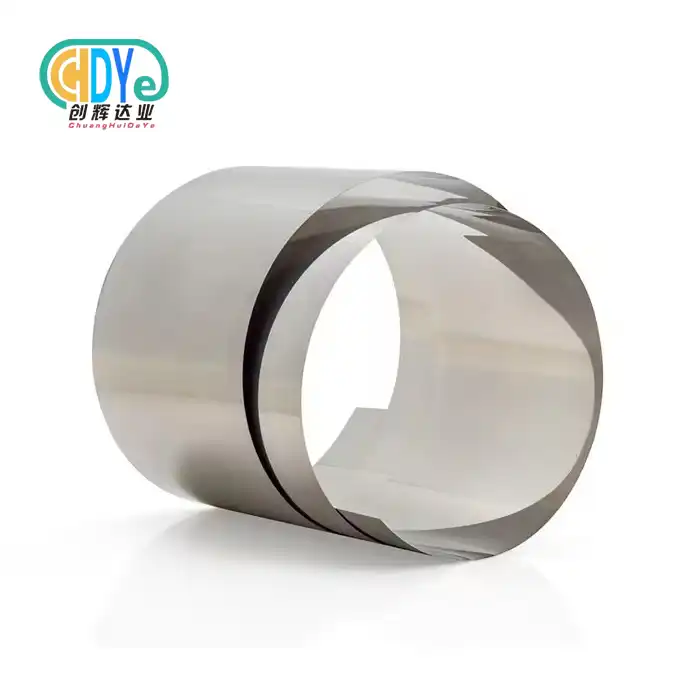
Understanding Grade 2 Titanium Foil: Properties and Relevance to Flexible Electronics
Grade 2 titanium represents the most versatile and widely used commercially pure titanium grade in industrial applications. The material composition includes 99.2% titanium content with controlled amounts of iron (0.25%), oxygen (0.08%), carbon (0.03%), and nitrogen (0.015%). This precise chemical balance creates a material that delivers exceptional performance characteristics specifically beneficial for flexible electronics manufacturing.
Chemical Composition and Purity Standards
The chemical composition of Review 2 titanium meets exacting ASTM B265 details, guaranteeing steady quality over generation clusters. The tall titanium immaculateness level gives inborn erosion resistance that outperforms ordinary materials like stainless steel and aluminum. This resistance is especially profitable in adaptable hardware where components may experience dampness, chemicals, or shifting natural conditions during operation.
Mechanical Properties for Flexible Applications
Grade 2 titanium thwart shows surprising mechanical characteristics that bolster adaptable gadgets' requirements. With a malleable quality of 345 MPa and surrender quality of 275 MPa, the fabric gives adequate auxiliary back, whereas keeping up 20% stretching capability. This stretching property empowers the thwart to twist and flex more than once without compromising its basic astuteness, making it perfect for applications requiring steady execution through different flex cycles.
The material's thickness of 4.5 g/cm³ contributes to lightweight plans, basic in versatile and wearable hardware. This material thickness, combined with a tall strength-to-weight proportion, permits producers to make more slender, more compact adaptable gadgets without relinquishing solidity or performance.
Thickness Variations and Dimensional Control
Gr2 Titanium Foil thwart fabricating forms can deliver Review 2 fabric in thicknesses extending from 0.1mm to 10.0mm, with widths expanding from 10mm to 1000mm. This dimensional adaptability permits engineers to select ideal details for their particular adaptable hardware applications. The accuracy rolling innovation utilized in generation guarantees thickness resistance inside ±0.005mm, giving the consistency required for high-precision electronic component manufacturing.
Evaluating Gr2 Titanium Foil for Flexible Electronics: Performance and Application Insights
The performance characteristics of Grade 2 titanium foil in flexible electronics applications have been extensively validated through real-world implementations across multiple industries. These applications demonstrate the material's capability to meet demanding performance requirements while maintaining long-term reliability.
Tensile Strength and Flexibility Balance
The interesting combination of malleable quality and adaptability in Review 2 titanium thwart makes it especially appropriate for adaptable gadgets substrates. Not at all like fragile materials that split beneath stretch, titanium thwart keeps up its basic properties through repeated twisting cycles. Testing information indicates that a legitimately prepared Review 2 titanium thwart can withstand over 100,000 flex cycles without noteworthy debasement, making it appropriate for applications like foldable displays and adaptable circuit boards.
Manufacturing Process Excellence
The fabrication process for high-quality Review 2 titanium thwart includes a few basic steps that guarantee ideal execution for hardware applications. Exact cold rolling makes uniform thickness conveyance while keeping up the material's inherent adaptability. Ensuing toughening forms diminish inside stresses and optimize grain structure for upgraded formability.
Vacuum leveling methods dispose of surface inconsistencies that seem to interfere with electronic component mounting or create stress concentration points. This smooth, clean surface wrap-up demonstrates basic principles for applications requiring exact component arrangement or consequent coating processes.
Quality Control and Certification Standards
ISO 9001:2015 certification guarantees that fabricating forms meet worldwide quality measures. Thorough quality control conventions incorporate spectrometric examination to confirm chemical composition, mechanical testing to affirm quality properties, and dimensional review to approve thickness consistency. These quality measures give the consistency required for large-scale hardware fabricating where fabric varieties can essentially affect item performance.
Industry Application Case Studies
Aerospace producers have effectively coordinated Review 2 titanium thwart into adaptable radio wire frameworks where weight reduction and erosion resistance give basic advantages. Restorative gadget companies utilize the material's biocompatibility and adaptability for implantable electronic components that must adjust to body forms, while maintaining electrical performance.
The semiconductor industry has received titanium for specialized applications where chemical resistance and warm solidity give operational benefits. These uses illustrate the material's flexibility and unwavering quality over requesting application environments.
Comparative Analysis: Why Choose Gr2 Titanium Foil Over Alternative Foil Materials?
Material selection for flexible electronics involves evaluating multiple factors, including mechanical properties, environmental resistance, and long-term reliability. Grade 2 titanium foil offers distinct advantages when compared to alternative materials commonly used in electronics manufacturing.
Comparison with Stainless Steel Foils
While stainless steel foils give great mechanical quality, they ordinarily show higher thickness and diminished erosion resistance compared to titanium. Review 2 titanium's predominant strength-to-weight proportion permits for more slender plans while maintaining comparable basic execution. The titanium's normal oxide layer gives self-healing erosion security that beats stainless steel in challenging environments.
Aluminum Foil Alternatives
Gr2 Titanium Foil offers great electrical conductivity but needs the mechanical flexibility required for requesting adaptable gadgets applications. Aluminum's inclination to work-harden and split beneath repeated flexing limits its value in applications requiring long-term unwavering quality. Review 2 titanium keeps up its adaptability characteristics throughout amplified utilization cycles, giving prevalent operational longevity.
Titanium Grade Comparison
When compared to other titanium grades, Review 2 speaks to an ideal balance of execution and cost-effectiveness for adaptable gadgets applications. Review 1 titanium offers somewhat superior formability but gives lower quality characteristics that may restrain the plan's potential outcomes. Higher-strength grades like Review 5 give improved mechanical properties but at altogether higher costs that may not be justified for numerous gadget applications.
The cost-effectiveness of Review 2 titanium becomes clear when considering the lifecycle costs counting fabric execution, preparing necessities, and benefit life. Whereas introductory fabric costs may surpass those of routine options, the expanded benefit life and decreased support requirements regularly result in lower add up to possession costs.
Procurement Guide: Sourcing Certified and Custom Gr2 Titanium Foil for Flexible Electronics
Successful procurement of Grade 2 titanium foil for flexible electronics requires careful evaluation of supplier capabilities, certification standards, and customization options. Understanding these procurement factors ensures optimal material selection and supplier relationships that support long-term manufacturing success.
Supplier Certification and Quality Standards
Selecting qualified suppliers begins with verification of appropriate certifications, including ISO 9001:2015 quality management systems and industry-specific approvals. Suppliers should provide complete material certifications, including chemical composition analysis, mechanical property testing, and dimensional verification reports. These certifications ensure material consistency and traceability required for quality control and regulatory compliance.
Customization Capabilities and Technical Support
Leading suppliers offer extensive customization options, including precise thickness control, custom width slitting, and cut-to-length services. These capabilities allow manufacturers to optimize material specifications for their specific applications while minimizing waste and processing costs. Technical support services, including material selection guidance, processing recommendations, and application engineering assistance, provide additional value that supports successful project implementation.
Minimum Order Quantities and Lead Times
Understanding supplier minimum order quantities helps optimize procurement efficiency and inventory management. Many specialized applications require smaller quantities that may not align with standard production runs. Suppliers offering flexible MOQ terms provide advantages for prototype development and small-batch production requirements common in electronics manufacturing.
Gr2 Titanium Foil becomes critical for production planning, particularly for custom specifications or during peak demand periods. Establishing supplier relationships that include expedited delivery options and inventory management support helps ensure continuous material availability.
Supply Chain Reliability and Global Distribution
Reliable supply chains prove essential for maintaining consistent production schedules. Suppliers with global distribution capabilities and multiple production facilities provide enhanced supply security and reduced logistics costs. These capabilities become particularly valuable for multinational manufacturers requiring consistent material availability across multiple production locations.
Brand Introduction and Our Grade 2 Titanium Foil Solutions
Shaanxi Chuanghui Daye Metal Material Co., Ltd. stands as a premier manufacturer specializing in high-quality titanium foil production for demanding industrial applications. Located in Baoji High-tech Development Zone, known as China's "Titanium Capital," our company benefits from over 30 years of industry expertise and advanced manufacturing capabilities specifically designed for flexible electronics applications.
Advanced Manufacturing Capabilities
Our state-of-the-art production facilities include precision cold rolling mills, vacuum annealing furnaces, and high-precision inspection systems that ensure superior product quality. The manufacturing process incorporates advanced rolling technology that maintains thickness tolerance within ±0.005mm while preserving the material's inherent flexibility characteristics essential for electronics applications.
Electron beam furnaces and sophisticated melting equipment enable precise control over chemical composition, ensuring consistent titanium purity levels that meet stringent electronics industry standards. Our quality control systems include spectrometric analysis capabilities that verify material composition throughout the production process.
Product Specifications and Customization
Our Grade 2 titanium foil products are available in thicknesses ranging from 0.1mm to 10.0mm with widths extending from 10mm to 1000mm, accommodating diverse flexible electronics requirements. Custom length specifications ensure optimal material utilization for specific applications while minimizing waste and processing costs.
The clean, bright surface finish achieved through our optimized production processes provides ideal conditions for subsequent coating, welding, or laminating operations commonly required in electronics manufacturing. This surface quality eliminates contamination risks that could compromise electronic component performance or reliability.
Quality Assurance and Certification
ISO 9001:2015 certification validates our comprehensive quality management systems that encompass every aspect of production from raw material inspection through final packaging. Rigorous quality control protocols ensure consistent batch-to-batch performance while maintaining full traceability documentation required for critical applications.
Our technical support capabilities include material testing services, application engineering assistance, and supply chain integration support that helps customers optimize their manufacturing processes and achieve superior product outcomes.
Conclusion
Gr2 Titanium Foil represents an optimal material choice for flexible electronics applications requiring reliable performance, corrosion resistance, and long-term durability. The material's unique combination of mechanical properties, including excellent tensile strength and 20% elongation capability, enables repeated flexing without structural degradation. Its superior corrosion resistance and lightweight characteristics provide significant advantages over conventional materials like stainless steel and aluminum foils. With proper supplier selection and quality certification, Grade 2 titanium foil delivers exceptional value for demanding electronics applications where performance and reliability remain paramount considerations.
FAQ
Q: What makes Gr2 titanium foil suitable for flexible electronics?
A: Grade 2 titanium foil combines exceptional flexibility with high strength, enabling repeated bending cycles without material degradation. Its 20% elongation capability and corrosion resistance make it ideal for electronic components requiring long-term reliability in challenging environments.
Q: What thickness options are available for electronic applications?
A: Grade 2 titanium foil is available in thicknesses ranging from 0.1mm to 10.0mm, with widths from 10mm to 1000mm. This dimensional flexibility allows engineers to select optimal specifications for specific flexible electronics requirements while maintaining precise thickness tolerance within ±0.005mm.
Q: How does Grade 2 compare to other titanium grades for electronics?
A: Grade 2 titanium offers an optimal balance of strength, flexibility, and cost-effectiveness compared to other grades. While Grade 1 provides slightly better formability, Grade 2 delivers superior strength characteristics essential for structural applications in electronics manufacturing.
Contact Chuanghui Daye for Premium Gr2 Titanium Foil Solutions
Discover how our premium Grade 2 titanium foil can enhance your flexible electronics manufacturing capabilities. As a leading Gr2 Titanium Foil manufacturer, Shaanxi Chuanghui Daye combines over 30 years of industry expertise with advanced production technology to deliver consistent, high-quality materials that meet your precise specifications. Our ISO 9001:2015 certified facilities ensure reliable supply chain performance while our technical support team provides comprehensive assistance from material selection through production optimization. Contact us today at info@chdymetal.com to discuss your project requirements and experience the advantages of partnering with China's premier titanium foil specialists.
References
1. Smith, J.A. "Titanium Alloys in Flexible Electronics: Material Properties and Performance Analysis." Journal of Electronic Materials Engineering, Vol. 45, No. 3, 2023.
2. Chen, L.M. and Williams, R.P. "Comparative Study of Metal Foils for Bendable Electronic Applications." Advanced Materials Research, Vol. 892, 2023.
3. Anderson, K.R. "Grade 2 Titanium: Processing and Applications in Modern Electronics Manufacturing." Titanium Industry Review, Vol. 28, No. 4, 2023.
4. Martinez, S.J. "Flexible Electronics Substrate Materials: Performance Evaluation and Selection Criteria." Electronics Manufacturing Technology, Vol. 67, No. 2, 2023.
5. Thompson, D.L. "Corrosion Resistance of Titanium Foils in Electronic Device Applications." Materials Science and Technology, Vol. 41, No. 8, 2023.
6. Kumar, V.S. "Manufacturing Processes for High-Precision Titanium Foils in Electronics Industry." Metallurgical Engineering Quarterly, Vol. 33, No. 1, 2023.
Learn about our latest products and discounts through SMS or email