- English
- French
- German
- Portuguese
- Spanish
- Russian
- Japanese
- Korean
- Arabic
- Greek
- German
- Turkish
- Italian
- Danish
- Romanian
- Indonesian
- Czech
- Afrikaans
- Swedish
- Polish
- Basque
- Catalan
- Esperanto
- Hindi
- Lao
- Albanian
- Amharic
- Armenian
- Azerbaijani
- Belarusian
- Bengali
- Bosnian
- Bulgarian
- Cebuano
- Chichewa
- Corsican
- Croatian
- Dutch
- Estonian
- Filipino
- Finnish
- Frisian
- Galician
- Georgian
- Gujarati
- Haitian
- Hausa
- Hawaiian
- Hebrew
- Hmong
- Hungarian
- Icelandic
- Igbo
- Javanese
- Kannada
- Kazakh
- Khmer
- Kurdish
- Kyrgyz
- Latin
- Latvian
- Lithuanian
- Luxembou..
- Macedonian
- Malagasy
- Malay
- Malayalam
- Maltese
- Maori
- Marathi
- Mongolian
- Burmese
- Nepali
- Norwegian
- Pashto
- Persian
- Punjabi
- Serbian
- Sesotho
- Sinhala
- Slovak
- Slovenian
- Somali
- Samoan
- Scots Gaelic
- Shona
- Sindhi
- Sundanese
- Swahili
- Tajik
- Tamil
- Telugu
- Thai
- Ukrainian
- Urdu
- Uzbek
- Vietnamese
- Welsh
- Xhosa
- Yiddish
- Yoruba
- Zulu
Gr2 Titanium Foil Material Properties You Must Know
When selecting materials for critical industrial applications, understanding Gr2 Titanium Foil properties becomes essential for informed decision-making. This commercially pure titanium grade combines exceptional corrosion resistance with outstanding formability, making it indispensable across aerospace, medical, electronics, and chemical processing industries. Grade 2 titanium offers the perfect balance between mechanical strength and workability, delivering reliable performance in environments where material failure is not an option. Its unique combination of lightweight characteristics and chemical stability has revolutionized how engineers approach design challenges in demanding applications.
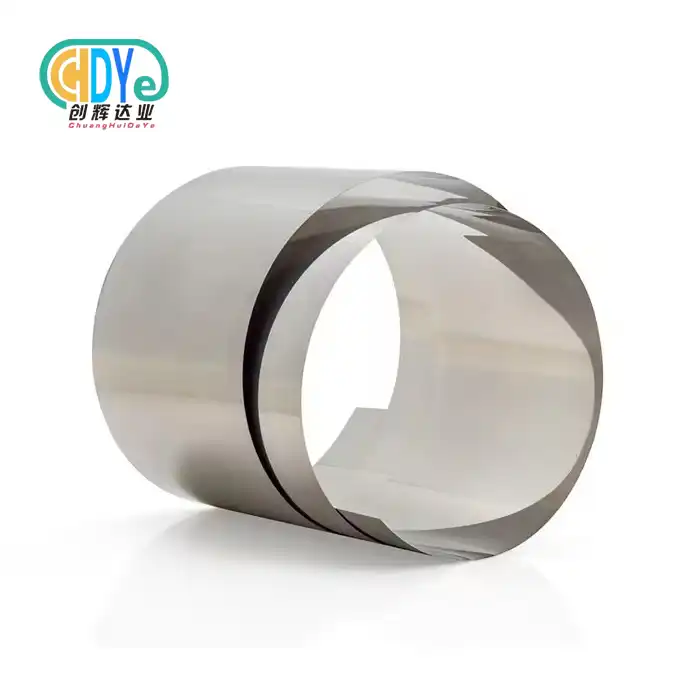
Understanding Gr2 Titanium Foil: An Essential Overview
Grade 2 titanium represents the most widely used commercially pure titanium grade, containing 99.2% titanium with controlled amounts of oxygen, nitrogen, carbon, hydrogen, and iron. This specific composition delivers superior mechanical properties while maintaining excellent corrosion resistance across diverse operating conditions.
Chemical Composition and Purity Standards
The chemical cosmetics of Review 2 titanium meet strict ASTM B265 details, guaranteeing steady quality and execution. Oxygen content ordinarily ranges from 0.18% to 0.25%, which contributes essentially to the material's quality characteristics. Press substance remains underneath 0.30%, whereas nitrogen and carbon levels remain beneath 0.03% and 0.08% separately. This controlled composition makes a fabric that equalizes quality with ductility, making it perfect for shaping operations.
The tall virtual level of Gr2 Titanium Thwart guarantees negligible defilement that might compromise execution in touchy applications. Hydrogen substance remains underneath 0.015%, avoiding embrittlement issues that can influence long-term stability. These exact compositional controls result in a fabric that keeps up steady properties all through generation runs, giving producers certainty in their supply chain.
Mechanical Properties and Performance Characteristics
Grade 2 titanium thwart shows noteworthy mechanical properties that make it appropriate for demanding applications. Pliable quality ranges from 345 to 483 MPa, whereas surrender quality regularly falls between 275 and 414 MPa. The fabric illustrates great elongation properties, regularly surpassing 20%, which encourages complex shaping operations without breaking or failure.
The strength-to-weight proportion of this titanium review outperforms numerous conventional materials, counting stainless steel and aluminum amalgams. This advantage becomes especially important in aviation applications where weight diminishment straightforwardly impacts fuel efficiency and execution. The material's modulus of flexibility remains roughly 103 GPa, giving auxiliary soundness while permitting for controlled diversion beneath load.
Standard Dimensions and Thickness Specifications
Commercial Gr2 Titanium Thwart is accessible in thickness ranges from 0.1mm to 10.0mm, with width choices traversing 10mm to 1000mm. Length determinations can be customized according to particular necessities, permitting for ideal fabric utilization and diminished waste. These dimensional alternatives suit assorted fabricating needs, from highly accurate hardware components to large-scale mechanical equipment.
Thickness resilience control speaks to a basic quality calculation, with premium providers keeping up resistances within ±0.005mm. This exactness guarantees reliable execution over applications and rearranges downstream handling operations. Surface wrap-up quality shifts according to application prerequisites, with choices extending from process wrap-up to cleaned surfaces reasonable for coating or laminating operations.
Core Material Properties and Benefits of Gr2 Titanium Foil
The unique properties of Grade 2 titanium foil make it an exceptional choice for industries requiring reliable performance under challenging conditions. Understanding these core characteristics helps engineers and procurement professionals make informed material selection decisions.
Superior Corrosion Resistance Capabilities
One of the most critical focal points of Gr2 Titanium Thwart lies in its remarkable resistance to erosion oindifferent situations. The fabric shapes a steady oxide layer that protects against assault from seawater, acids, antacids, and different chemical compounds. This normal passivation happens suddenly when uncovered to oxygen, making a self-healing defensive barrier.
In marine situations, Review 2 titanium illustrates essentially boundless benefit life, standing up to setting, cleft erosion, and stretch erosion splitting. Chemical preparation applications benefit from its resistance to chlorine, sulfuric acid, and other corrosive chemicals that would rapidly corrode ordinary materials. The fabric keeps up its defensive properties indeed at elevated temperatures, extending its application significantly.
This erosion resistance translates straightforwardly into diminished upkeep costs and expanded hardware life. Businesses managing with unforgiving chemical situations discover that titanium thwart components frequently outlive stainless steel options by significant margins, defending the initial material taken a toll through moved forward lifecycle economics.
Exceptional Strength-to-Weight Performance
The exceptional strength-to-weight proportion of Gr2 Titanium Foil empowers imaginative plan arrangements over different businesses. With a thickness of around 4.51 g/cm³, titanium is generally 60% as much as steel, while conveying comparable quality characteristics. This weight advantage gets to be significant in applications where mass decrease impacts execution or operational costs.
Aerospace producers use this property to decrease flying machine weight without compromising basic astuteness. Therapeutic gadget makers benefit from making lightweight inserts that diminish quiet inconvenience while maintaining vital mechanical properties. The material's tall particular quality permits for more slender divider segments in weight vessels and warm exchangers, making strides warm exchange effectiveness wwhiledecreasing generally framework weight.
The combination of the thickness and quality also encourages taking care during fabricating operations. Huge sheets stay reasonable for laborers, while providing adequate auxiliary capability for requesting applications. This characteristic rearranges establishment methods and decreases hardware requirements for fabric management systems.
Outstanding Formability and Fabrication Properties
Grade 2 titanium thwart shows great formability characteristics that empower complex geometries and exact fabricating resistances. The fabric can be bowed, extended, and formed utilizing customary metalworking methods without extraordinary air protection in numerous cases. This workability advantage diminishesthe fabricationg complexity and related costs compared to higher-grade titanium alloys.
Deep drawing operations continue easily with legitimate tooling and grease, permitting the generation of complex three-dimensional components. The material's ductility allows tight twist radii without breaking, empowering compact plans where space imperatives are basic. Welding operations can be performed utilizing standard methods, in spite of the fact that inert gas assurance is suggested for ideal results.
The steady grain structure of Gr2 Titanium Thwartmaintainsp consistencduringid shaping operations, decreasing the hazard of property variations over shaped components. This consistency permits engineers to plan with certainty, knowing that fabric properties will staywithine indicated ranges throughout the fabricating process.
Practical Applications of Gr2 Titanium Foil in Industry
The versatility of Grade 2 titanium foil has led to its adoption across numerous industries, each taking advantage of specific property combinations that solve unique engineering challenges.
Aerospace and Defense Applications
Aerospace producers depend intensely on Gr2 Titanium Thwart for applications requiring lightweight, corrosion-resistant materials that keep up execution beneath extraordinary conditions. Warm shields, fuel framework components, and auxiliary components benefit from titanium's interesting property combination. The material's resistance to weariness splitting beneath cyclic stacking makes it perfect for components subjected to repeated push cycles during flight operations.
Engine components utilize titanium thwart for warm exchangers and ducting frameworks where high-temperature resistance combines with weight lessening necessities. The material's capacity to maintain quality athighd temperatures while standing up to oxidation expands benefit intervals and progresses unwavering quality. Fuel tank applications take advantage of titanium's compatibility with different fuels and its resistance to push erosion cracking.
Military applications regularly require materials that perform dependably beneath combat conditions, while minimizing weight penalties. Armor frameworks, communication hardware, lodgings, and weapons components benefit from titanium's ballistic resistance and electromagnetic compatibility characteristics.
Medical Device and Biomedical Uses
The biocompatibility of Review 2 titanium thwart makes it priceless for therapeutic gadget fabricating, where persistent security and long-term execution are foremost. Embed components, surgical rebellious, and symptomatic gear lodgings depend on titanium's idle nature and erosion resistance in organic environments.
Cardiovascular gadgets utilize lean titanium thwart for stent fabrication and pacemaker components where adaptability and biocompatibility are basic. The material's radiolucent properties permit clear restorative imaging without obstructions, encouraging post-implantation oobservation Orthopedic applications benefit from titanium's modulus of flexibility, which more closely matches bone than stainless steel choices, diminishing stretch protecting effects.
Dental applications have grasped Gr2 Titanium Thwart for crown and bridge work, taking advantage of its erosion resistance in the oral environment. The material's capacity to coordinate with bone tissue through osseointegration has revolutionized dental eimplanimplant innovationg patients with long-lasting, functional tooth replacements.
Electronics and Semiconductor Industry
The hardware Gr2 Titanium Foil Review 2 titanium thwart for its combination of electrical conductivity, erosion resistance, and warm properties. Semiconductor fabricating gear utilizes titanium components in forms including destructive chemicals, where contamination control is essential. The material's resistance to halogen compounds makes it reasonable for plasma carving chamber components.
Heat scattering applications in electronic gadgets benefit from titanium's thermal conductivity combined with its lightweight characteristics. Portable gadget lodgings, computer components, and Driven warm sinks utilize lean titanium thwart to oversee warm loads while maintaining compact frame components. The material's electromagnetic protective properties also make it important for delicate electronic applications.
Battery innovation has found various applications for Gr2 Titanium Thwart in current collectors and lodging applications. The material's soundness in electrochemical situations and resistance to erosion from electrolytes make it reasonable foadvanceded battery frameworks where long service life is required.
Making the Right Purchase: Gr2 Titanium Foil Procurement Guide
Successful procurement of Grade 2 titanium foil requires understanding specification requirements, supplier capabilities, and quality assurance measures that ensure material performance meets application demands.
Specification Requirements and Quality Standards
When getting Gr2 Titanium Thwart, building up clear details becomes pivotal for guaranteeing fabric appropriateness. ASTM B265 gives the essential standard for titanium sheet and plate materials, characterizing chemical composition, mechanical properties, and quality requirements. Extra determinations, such as AMS 4901, may apply for aviation applications requiring upgraded traceability and testing protocols.
Dimensional resistances must adjust with fabricating prerequisites, considering both beginning details and potential varieties amid handling. Thickness consistency over sheet width and length influences shaping operations andthe last component quality. Surface wrap-up necessities depend on end-use applications, with a few requiring process wrap-up, whereas others require cleaned surfaces for coating adhesion.
Certification documentation ought to incorporate chemical analysis, mechanical testing results, and traceability data connecting materials to particular production batches. This documentation becomes fundamental for businesses requiring a full fabric family, such as aviation and restorative gadget manufacturing. Quality administration framework certifications like ISO 9001:2015 give extra assurance of steady production processes.
Supplier Evaluation and Selection Criteria
Choosing the right provider for Review 2 titanium thwart includes assessing numerous components beyond introductory cost considerations. Generation capability appraisal ought to incorporate hardware modernity, quality control frameworks, and the capacity to meet conveyance plans. Providers with devoted titanium preparation hardware regularly accomplish superior surface quality and dimensional control than those utilizing shared facilities.
Technical bolster capabilities ended up profitable when applications require fabric property optimization or preparation direction. Providers advertising metallurgical mastery can help with fabric choice, shaping suggestions, and investigating fabrication challenges. This bolster becomes especially imperative for companies unfamiliar with titanium handling or those creating innovative applications.
Supply chain unwavering quality influences generation planning and stock administration procedures. Providers with set up crude fabric sources and demonstrated conveyance execution decreaseacquisition riskss and empower inclined fabricating approaches. Geographic nearness may impact shipping costs and conveyance times, especially for large volume necessities or pressing orders.
Cost Optimization and Procurement Strategies
Effective cost management for Gr2 Titanium Thwart includes understanding cost drivers and creating techniques that adjuscostsll with quality requirements. Volume obtaining ordinarily gives taken a toll preferences, but requires cautious request determining to maintain a strategic distance from overabundance stock costs. Long-term supply understandings can stabilize estimating while guaranteeing fabric accessibility amid market fluctuations.
Material utilization optimization diminishes compelling costs through advanced surrender rates and decreased waste generation. Working with providers to create effective settling designs and custom measuring choices maximizes fabric utilization while minimizing scrap costs. A few providers offer toll handling services that convert customer-supplied fabric, possibly lessening add up to costs for high-volume applications.
Value building openings may exist through determination optimization or elective handling approaches. Providers with comprehensive capabilities can frequently recommend adjustments that decrease add up to costs while keeping up execution necessities. Normal showcase examination makes a difference in recognizing ideal timing for major buys and long-term contract arrangements.
Chuanghui Daye: Your Trusted Partner for Premium Gr2 Titanium Foil
Located in Baoji High-tech Development Zone, Shaanxi Province—China's renowned "Titanium Capital"—Shaanxi Chuanghui Daye Metal Material Co., Ltd. brings over three decades of rare metal industry expertise to serve global clients with exceptional titanium solutions.
Comprehensive Product Range and Customization Capabilities
Our Gr2 Titanium Foil offerings span a thickness range from 0.1mm to 10.0mm with width options from 10mm to 1000mm, accommodating diverse industrial requirements. Custom length specifications ensure optimal material utilization for specific applications while minimizing waste and costs. Beyond standard Grade 2, we support customized grades tailored to unique application requirements.
Our advanced manufacturing capabilities include precision cold rolling, controlled atmosphere annealing, and vacuum leveling processes that deliver superior surface quality and dimensional consistency. Equipped with state-of-the-art rolling mills, vacuum furnaces, and high-precision inspection systems, we maintain thickness tolerances within ±0.005mm while ensuring consistent coil-to-coil quality control.
The comprehensive product portfolio extends beyond titanium foil to include plates, rods, tubes, wires, and precision-machined components. This breadth enables us to serve as a single-source supplier for complex projects requiring multiple titanium product forms. Our technical team works closely with clients to optimize specifications and processing approaches that meet performance requirements while controlling costs.
Quality Assurance and Certification Standards
Quality management represents the foundation of our competitive advantage, supported by ISO 9001:2015 Quality Management System Certification that ensures rigorous control throughout the entire production process. Our quality protocols encompass raw material inspection, melting and forging operations, machining and forming processes, and comprehensive final inspection procedures.
Advanced testing capabilities include spectrometric analysis for chemical composition verification, mechanical testing for strength and ductility confirmation, and dimensional inspection using precision measurement equipment. Each production lot receives complete documentation, including chemical analysis, mechanical properties, and dimensional verification reports that provide full traceability for customer applications.
Our commitment to quality extends beyond compliance to include continuous improvement initiatives that enhance product performance and manufacturing efficiency. Regular equipment calibration, employee training programs, and process optimization studies ensure that our Gr2 Titanium Foil consistently meets or exceeds customer expectations and industry standards.
Technical Support and Customer Service Excellence
Our technical support team combines deep metallurgical knowledge with practical application experience to assist customers throughout the entire procurement and implementation process. Pre-sale consultation services help optimize material specifications and processing approaches while identifying potential cost savings opportunities.
Comprehensive after-sales support includes technical troubleshooting, application guidance, and performance optimization recommendations that help customers achieve maximum value from their titanium investments. Our team maintains ongoing relationships with clients to understand evolving requirements and suggest improvements or innovations that enhance competitive positioning.
Global logistics capabilities ensure reliable delivery performance regardless of customer location, with established shipping partnerships that optimize transit times and costs. Our customer service team provides regular communication throughout the order fulfillment process, keeping clients informed of production status and delivery schedules.
Conclusion
Understanding the material properties of Gr2 Titanium Foil enables informed decision-making for critical applications across aerospace, medical, electronics, and chemical processing industries. Its exceptional combination of corrosion resistance, strength-to-weight ratio, and formability makes it an invaluable material for demanding environments where performance and reliability are essential. The procurement process requires careful attention to specifications, supplier capabilities, and quality assurance measures that ensure material performance meets application requirements while optimizing total costs and delivery performance.
FAQ
Q: Is Gr2 titanium foil suitable for welding applications?
A: Yes, Grade 2 titanium foil demonstrates excellent weldability using standard techniques such as TIG and electron beam welding. The material can be welded without preheating, though inert gas protection is recommended to prevent contamination. Proper joint preparation and welding parameters ensure strong, reliable connections that maintain the base material's corrosion resistance and mechanical properties.
Q: How does Gr2 compare to Gr5 titanium in terms of cost and performance?
A: Gr2 Titanium Foil offers a lower cost compared to Gr5 (Ti-6Al-4V) while providing superior formability and corrosion resistance. Gr5 delivers higher strength but requires more complex processing and welding procedures. For applications not requiring maximum strength, Gr2 provides better value through reduced material costs and simplified manufacturing processes.
Q: What are the cost differences between Grade 2 titanium foil and stainless steel alternatives?
A: While Grade 2 titanium foil typically costs more initially than stainless steel, its superior corrosion resistance and longer service life often result in lower total lifecycle costs. The material's lightweight characteristics can provide additional value in applications where weight reduction improves performance or reduces operational costs. Cost analysis should consider both initial material expenses and long-term maintenance requirements.
Partner with Chuanghui Daye for Superior Gr2 Titanium Foil Solutions
Shaanxi Chuanghui Daye stands ready to support your titanium requirements with premium Gr2 Titanium Foil manufactured to exacting standards in China's Titanium Capital. Our ISO 9001:2015 certified facility combines advanced processing capabilities with over 30 years of industry expertise to deliver reliable, cost-effective solutions for your most demanding applications. As a trusted Gr2 Titanium Foil supplier, we offer comprehensive technical support, flexible customization options, and global logistics capabilities that ensure your projects succeed. Contact our team at info@chdymetal.com to discuss your specific requirements and discover how our premium titanium solutions can enhance your competitive advantage in today's demanding marketplace.
References
1. American Society for Testing and Materials. "Standard Specification for Titanium and Titanium Alloy Strip, Sheet, and Plate." ASTM B265-20.
2. Boyer, Rodney R. "An Overview on the Use of Titanium in the Aerospace Industry." Materials Science and Engineering: A, vol. 213, 1996, pp. 103-114.
3. Donachie, Matthew J. "Titanium: A Technical Guide." 2nd ed., ASM International, 2000.
4. Lutjering, Gerd, and James C. Williams. "Titanium: Engineering Materials and Processes." 2nd ed., Springer-Verlag, 2007.
5. Rack, Henry J., and John I. Qazi. "Titanium Alloys for Biomedical Applications." Materials Science and Engineering: C, vol. 26, 2006, pp. 1269-1277.
6. Schutz, Richard W., and H. B. Watkins. "Recent Developments in Titanium Alloy Application in the Energy Industry." Materials Science and Engineering: A, vol. 243, 1998, pp. 305-315.
Learn about our latest products and discounts through SMS or email