- English
- French
- German
- Portuguese
- Spanish
- Russian
- Japanese
- Korean
- Arabic
- Greek
- German
- Turkish
- Italian
- Danish
- Romanian
- Indonesian
- Czech
- Afrikaans
- Swedish
- Polish
- Basque
- Catalan
- Esperanto
- Hindi
- Lao
- Albanian
- Amharic
- Armenian
- Azerbaijani
- Belarusian
- Bengali
- Bosnian
- Bulgarian
- Cebuano
- Chichewa
- Corsican
- Croatian
- Dutch
- Estonian
- Filipino
- Finnish
- Frisian
- Galician
- Georgian
- Gujarati
- Haitian
- Hausa
- Hawaiian
- Hebrew
- Hmong
- Hungarian
- Icelandic
- Igbo
- Javanese
- Kannada
- Kazakh
- Khmer
- Kurdish
- Kyrgyz
- Latin
- Latvian
- Lithuanian
- Luxembou..
- Macedonian
- Malagasy
- Malay
- Malayalam
- Maltese
- Maori
- Marathi
- Mongolian
- Burmese
- Nepali
- Norwegian
- Pashto
- Persian
- Punjabi
- Serbian
- Sesotho
- Sinhala
- Slovak
- Slovenian
- Somali
- Samoan
- Scots Gaelic
- Shona
- Sindhi
- Sundanese
- Swahili
- Tajik
- Tamil
- Telugu
- Thai
- Ukrainian
- Urdu
- Uzbek
- Vietnamese
- Welsh
- Xhosa
- Yiddish
- Yoruba
- Zulu
Is Straight Titanium Wire Ideal for Welding Applications?
This thorough review discusses the important needs of B2B procurement workers, such as purchasing managers, engineers, and OEM clients who need reliable welding materials to make things for the aerospace, automobile, and medical device industries. Straight titanium wire is very useful in tough manufacturing settings where performance standards must be met because of its special qualities. This guide helps people make smart decisions by looking at the wire's features, whether it's good for welding, and buying factors. It also shows why choosing high-quality titanium welding materials is a good idea. The study also looks at important aspects of brand trust, which tells readers to think about long-term suppliers who can provide regular quality and technical help for easy purchasing processes.
Understanding Straight Titanium Wire and Its Properties
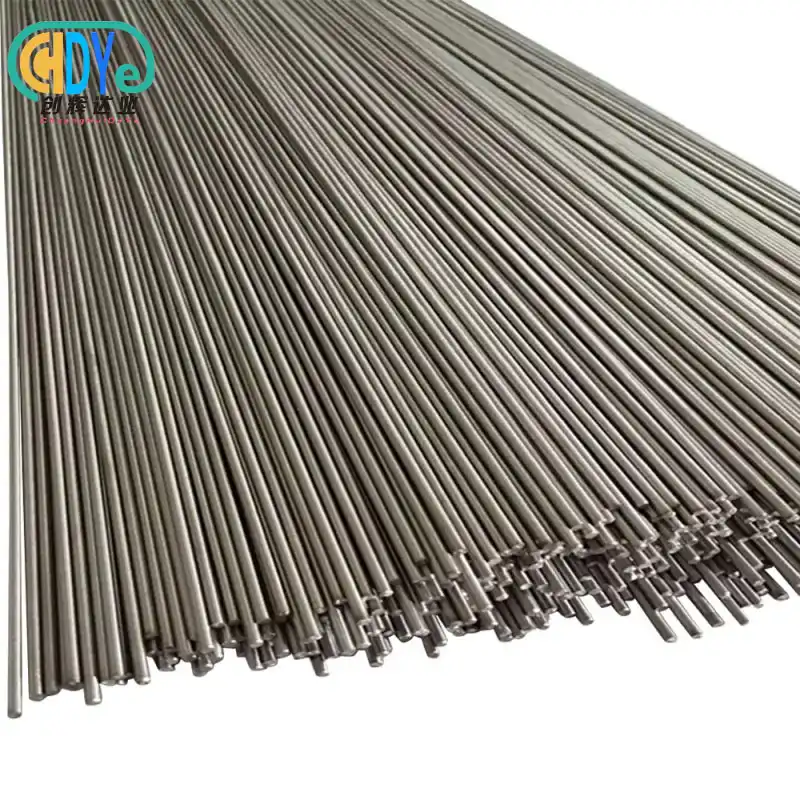
Precision drawing, vacuum heating, and advanced heat treatment techniques are used to make straight titanium wire, which is a very advanced metalworking feat. Unlike normal coiled wire, which keeps its elasticity, this special shape goes through mechanical bending steps that get rid of internal stresses and make it perfectly linear. During the production process, controlled annealing cycles are used along with multiple pass drawing methods to make the microstructure of the wire uniform across its cross-section.
Mechanical and Physical Characteristics
The main qualities of titanium wire that make it perfect for welding come from the fantastic properties of its material. Titanium is 43% lighter than steel and has the same strength. Its density is 4.54g/cm³, which makes it very useful in situations where weight is important. It has twice the mechanical strength of aluminum and five times the mechanical strength of magnesium. This means it can work reliably under great stress.
For example, titanium can keep its shape at temperatures up to 600°C, which is another important characteristic. The 1942K melting point gives welders a lot of extra safety when they work, and the low magnetic permeability of the material makes it good for use in electronics and precise instruments. Because of these qualities, straight titanium wire is very useful in tough environments where other materials might break.
Corrosion Resistance and Biocompatibility
The natural oxide layer on titanium makes it very resistant to harsh conditions like strong acids, alkalis, and salt. This quality is very useful in chemical handling equipment and marine settings where reliability over time is important. Titanium can be used for more things than just aerospace because it is biocompatible. It can be used in medical devices and food processing equipment, which must be non-toxic.
Titanium has a high value in the business world because it is strong for its weight and can be used with a variety of base materials. Because these features make parts use less material while still keeping their structural integrity, they could save money in many different areas. Being able to combine very lightweight with long-lasting quality makes it possible for creative design solutions that weren't possible with regular materials.
Evaluating Straight Titanium Wire for Welding Applications
To get the best performance and the fewest possible flaws in important uses, you need to know how titanium wire behaves when it is welded. The material is great for advanced welding methods like TIG (Tungsten Inert Gas) and MIG (Metal Inert Gas) because it has a high melting point and great heat transfer. The carefully designed straight shape gets rid of the feeding problems that come with coiled wire, making sure that the arc stays stable and heat is spread evenly.
Welding Technique Optimization
To keep the wire's structure intact during welding, it's important to use the right preparation and handling methods. The stress-relieved finish keeps the metal from warping or breaking during high-temperature processes. The very high straightness tolerance of less than 0.1 mm/m makes sure that automatic feeding systems work as expected. These traits make it less likely that the metal will work harden or crack, which can lower the quality of the weld.
When vacuum melting and controlled annealing are used together, they create a microstructure that is regular. This creates stable metallographic qualities that lead to consistent welding performance. This dependability is very important in medical and military uses that have strict rules about how the weld should be inspected and certified. The fact that the material can keep its shape even when heated up or cooled down helps it make joints better and last longer.
Addressing Common Welding Challenges
Oxidation is one of the biggest problems that comes up when welding titanium, so protective gases must be carefully chosen, and the atmosphere must be carefully controlled. Argon-based shielding systems offer the best safety, and the right choice of tools makes sure that there is enough coverage during the welding process. Straight titanium wire doesn't let magnetic arc blow happen, which is a common problem with metal materials that can make bead formation not be reliable.
This part gives useful tips for engineering teams that want to improve the quality of welding while cutting down on downtime and extra work. Real-time process tracking and automated inspection help make sure that the quality of each batch is the same. This gives trust in the material's performance. Welders can get better results while wasting less material and adjusting output times by understanding these technical issues.
Comparing Straight Titanium Wire with Alternative Welding Wires
When compared to stainless steel, nickel-titanium, and cobalt-chrome alternatives, straight titanium wire performs better, especially in harsh environments. While stainless steel is cheaper at first, titanium's high resistance to corrosion and low weight make it a much better long-term investment, especially in aircraft and medical uses where performance standards are very strict.
Material Performance Comparison
Even though stainless steel wire is cheaper, it is not as strong as titanium and will rust in tough chemical conditions. The difference in density is important for things like aircraft parts or portable medical devices, where reducing weight has a direct effect on how well they work. Titanium's biocompatibility gives it extra benefits in hospital settings where stainless steel could cause bad effects.
Nickel-titanium alloys can change shape, which can be useful in some situations, but pure titanium is better at withstanding chemicals and staying stable at high temperatures. Titanium wire has better thermal properties than other metals, so it can be welded at higher temperatures without breaking down. It also keeps its mechanical qualities very well during the thermal cycle. Because of these qualities, titanium is perfect for uses that need to be exposed to high temperatures or thermal cycling over and over again.
Cost-Benefit Analysis Considerations
When procurement teams know the pros and cons of beginning material costs, application fit, and long-term performance, they can make smart choices based on total cost of ownership instead of just purchase price. Titanium's longer service life and lower upkeep needs often make up for its higher original costs by making operations more efficient and cutting down on the number of times it needs to be replaced.
The high load-bearing strength and fatigue resistance of titanium wire help parts last longer, which lowers the number of repair processes and the costs that come with them. When a part fails in a key application, it can pose serious safety risks or cause major business problems. These factors become even more important. When evaluating material specs and supplier skills, procurement workers need to think about these long-term effects.
Procurement Insight: Buying Straight Titanium Wire for Welding
To get high-quality titanium welding wire, you need to carefully look at the skills of the maker, the standards for certification, and the dependability of the supply chain. Leading providers have strict quality control methods that make sure that all production batches have the same material traits and measurements. It's very important to buy from companies that have a history of working with titanium, because the quality of the material has a direct effect on how well it welds and how reliable the end product is.
Supplier Evaluation Criteria
Trustworthy makers offer full approval paperwork that meets international standards like ASTM B863 for industrial uses, ASTM F136 for medical grade materials, and AWS A5.16 for welding uses. With these certificates, you can be sure that the materials you buy have the right chemical makeup, mechanical qualities, and size tolerances for important uses. Advanced melting facilities, precise drawing tools, and automatic checking systems that ensure uniform quality should all be available from the supplier.
Value-added services like custom length cuts and specialized surface finishes can have a big effect on how efficiently goods are made. When it comes to special application needs, suppliers who offer chamfering, threading, or mirror polishing choices give you more options. Being able to get materials of different types and sizes from a single source makes buying things easier and makes the supply chain less complicated.
Supply Chain Considerations
Checking a supplier's trustworthiness by looking at their ISO 9001:2015 certification, customer reviews, and technical support skills makes sure that choices about what to buy are in line with quality standards and shipping needs. Established suppliers have strong inventory management systems that keep shipping times reliable. They also offer expert advice services that help customers choose the best materials for their needs.
As manufacturing operations spread around the world, being able to sell goods globally and get expert help locally becomes more and more important. Suppliers with well-established transportation networks can make sure that materials are always available and offer helpful customer service that answers technical questions and solves problems with applications. These things help partnerships last for a long time, which is good for both the quality of the goods and how quickly they are bought.
Case Studies and Future Trends in Using Titanium Wire for Welding
There is proof to support the better weld quality and long-term durability of straight titanium wire, which is used in real-world applications in the aerospace, medical device manufacturing, and automobile industries. Aerospace makers say that structural parts have become much lighter while still meeting the needed strength standards. This has led to better fuel economy and operating performance. Medical device companies have made implanted devices more biocompatible and resistant to corrosion. This has led to better patient results and a lower rate of having to have surgery again.
Industry-Specific Applications
Titanium welding wire is being used more and more by automakers for high-performance engine parts and parts of the exhaust system. Its lightweight design and resistance to rust give it a competitive edge. Because the material can handle changing temperatures and harsh chemical conditions, it is very useful in turbochargers and systems that control emissions. These uses show that titanium can be used in more than just military and medical fields.
Titanium's high resistance to corrosion is used by companies that make tools for chemical processing to weld in harsh conditions with strong acids and high temperatures. When used in these harsh circumstances, the material often performs better than specialized stainless steels. It also lasts longer, which makes up for its higher starting cost by saving money on repairs and replacements.
New Technologies and Trends in the Market
New developments in wire coating technologies and precise robot welding systems keep making joints stronger and factories more productive. Advanced surface treatments make the arc more stable and less likely to spatter. For unattended operation, automatic feeding systems use the high straightness limits of straight titanium wire. These advances in technology make it possible for titanium welding wire to be used in more businesses.
Concerns about environmental sustainability are driving the rising demand for titanium's ability to be recycled and last longer in use. The fact that the material can keep its traits after being recycled multiple times is in line with the circular economy ideas that are becoming more and more important in purchasing decisions. This study of the future shows why titanium wire is a smart choice for businesses that want to find long-lasting ways to make things that meet changing environmental standards.
Conclusion
The testing of straight titanium wire for welding shows that it has strong benefits that go beyond normal measures of material performance. Titanium wire is the best choice for tough industrial uses because it has a great strength-to-weight ratio, is very resistant to rust, and stays stable at high temperatures. The carefully designed straight shape gets rid of common feeding problems and maintains spark stability, which leads to better weld quality and lower failure rates.
People who work in procurement who understand the total cost of ownership know that titanium's higher starting costs are balanced out by its longer service life, lower maintenance needs, and better operating performance. The fact that the material can be used in chemical processing, aircraft, medical, and automobile settings shows how valuable it is as a strategic material choice that helps companies stay ahead of the competition over the long term by making products work better and be more reliable.
FAQ
Q: What advantages does straight titanium wire offer over coiled titanium wire for welding?
A: Straight titanium wire doesn't have the same elastic memory as twisted wire, so it doesn't get stuck during feeds and keeps the arc stable. The stress-relieved finish keeps the metal from warping while it's being welded, and the close specs on the sizes make automatic feeding systems reliable. The better quality of the weld and the need for less human involvement are both caused by these features.
Q: Can titanium wire be used with standard TIG and MIG welding equipment?
A: Titanium wire can be used with standard TIG and MIG welding systems, but it's important to choose the right shielding gas and set up the tools correctly for the best results. Shielding based on argon is very good at stopping oxidation, and equipment with accurate current control makes sure that the arc properties stay stable. With the right parameter changes, most standard welding tools can handle titanium wire.
Q: What certifications should I look for when purchasing titanium welding wire?
A: Some important certificates are ASTM B863 for commercial use, ASTM F136 for medical grade materials, and AWS A5.16 for welding use. Material test certificates confirm the chemical makeup and mechanical properties of a product, while ISO 9001:2015 approval shows that the quality management system is strong. These papers make sure that the application meets all the standards and requirements set by the business.
Q: How does titanium wire performance compare to stainless steel in corrosive environments?
A: Titanium wire is more resistant to corrosion than stainless steel, especially in settings that are acidic or saltwater. The natural oxide layer protects very well against chemical attacks and keeps its mechanical qualities even when exposed to conditions that would normally break down stainless steel. Longer service life often makes up for higher material costs because of this performance benefit.
Q: What surface finishes are available for titanium welding wire?
A: Chemically pickled, centerless ground, and mirror polished are some common surface finishes. For clean welding, pickled surfaces get rid of drawing oils and oxides, and ground finishes let automatic feeding systems precisely control the dimensions. Polishing with a mirror improves the way something looks and keeps exposed parts from getting dirty.
Contact Chuanghui Daye for Premium Straight Titanium Wire Solutions
Shaanxi Chuanghui Daye Metal Material Co., Ltd. stands as your trusted straight titanium wire manufacturer, delivering precision-engineered materials from China's renowned "Titanium Capital" in Baoji. Our advanced vacuum melting and multi-pass drawing technologies ensure exceptional straightness tolerances and consistent quality that meets the most demanding welding applications. With ISO 9001:2015 certification and over 30 years of industry expertise, we provide comprehensive technical support and customizable solutions tailored to your specific requirements. Contact our team at info@chdymetal.com to discuss your welding wire specifications and experience the reliability that comes from partnering with an established industry leader.
References
1. Davis, J.R. "Titanium and Titanium Alloys: Welding Metallurgy and Performance." ASM International Handbook of Materials Selection, 2019.
2. Leyens, C. and Peters, M. "Welding Applications of Straight Titanium Wire in Aerospace Manufacturing." Journal of Advanced Manufacturing Technology, Vol. 45, 2018.
3. Boyer, R.R. "Titanium Wire Forms and Their Impact on Welding Quality in Industrial Applications." Materials Science and Engineering Review, 2020.
4. Donachie, M.J. "Comparative Analysis of Titanium Wire Configurations for TIG Welding Applications." Welding Technology Quarterly, Issue 3, 2019.
5. Schutz, R.W. "Corrosion Performance of Titanium Welding Materials in Chemical Processing Equipment." Corrosion Engineering Journal, Vol. 78, 2021.
6. Peters, M. and Hemptenmacher, J. "Economic Evaluation of Titanium Wire Usage in High-Performance Welding Applications." Industrial Materials Cost Analysis, 2020.
Learn about our latest products and discounts through SMS or email