- English
- French
- German
- Portuguese
- Spanish
- Russian
- Japanese
- Korean
- Arabic
- Greek
- German
- Turkish
- Italian
- Danish
- Romanian
- Indonesian
- Czech
- Afrikaans
- Swedish
- Polish
- Basque
- Catalan
- Esperanto
- Hindi
- Lao
- Albanian
- Amharic
- Armenian
- Azerbaijani
- Belarusian
- Bengali
- Bosnian
- Bulgarian
- Cebuano
- Chichewa
- Corsican
- Croatian
- Dutch
- Estonian
- Filipino
- Finnish
- Frisian
- Galician
- Georgian
- Gujarati
- Haitian
- Hausa
- Hawaiian
- Hebrew
- Hmong
- Hungarian
- Icelandic
- Igbo
- Javanese
- Kannada
- Kazakh
- Khmer
- Kurdish
- Kyrgyz
- Latin
- Latvian
- Lithuanian
- Luxembou..
- Macedonian
- Malagasy
- Malay
- Malayalam
- Maltese
- Maori
- Marathi
- Mongolian
- Burmese
- Nepali
- Norwegian
- Pashto
- Persian
- Punjabi
- Serbian
- Sesotho
- Sinhala
- Slovak
- Slovenian
- Somali
- Samoan
- Scots Gaelic
- Shona
- Sindhi
- Sundanese
- Swahili
- Tajik
- Tamil
- Telugu
- Thai
- Ukrainian
- Urdu
- Uzbek
- Vietnamese
- Welsh
- Xhosa
- Yiddish
- Yoruba
- Zulu
Best Titanium Wire Suppliers Online – Request a Quote Today
Finding the right titanium wire for sale means working with sellers who know how important it is for modern factories to meet certain needs. Choosing a trustworthy titanium wire provider can have a big effect on the success of your project, whether you're looking for materials for airplane parts, medical devices, or chemical processing equipment. The global market for titanium wire has changed a lot. New technologies in production have made it possible to make perfectly engineered goods and meet strict industry standards. It will walk you through the important things you need to think about in order to choose reliable sources, understand the properties of materials, and make smart purchasing decisions that meet your practical needs.
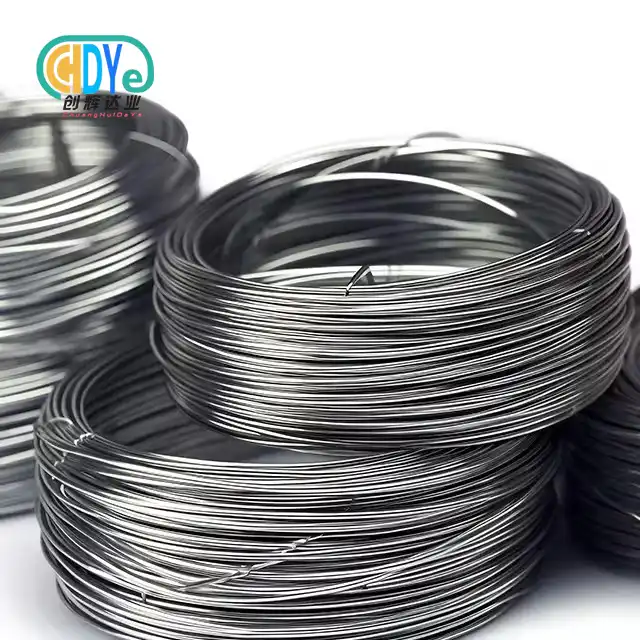
Understanding Titanium Wire – Properties and Types
Titanium wire is one of the most useful materials in modern industry because it is strong, doesn't rust, and is safe for living things. Because of these unique qualities, it is essential in high-demand areas where regular materials don't work well enough.
Exceptional Material Properties
Titanium wire's basic qualities come from its solid structure and the chemicals that are on its surface. Titanium wire has a great strength-to-weight ratio because it is about 45% lighter than steel but still has the same level of strength. Aerospace engineers have used it for decades. The material doesn't rust because it has an oxide layer that forms naturally and protects it from the ocean, acidic surroundings, and alkaline conditions.
Another important benefit is that titanium wire is biocompatible. This is especially important in medical settings where it is used as dental archwires, surgical staples, and parts of implantable devices. Unlike many metals, titanium is very compatible with flesh and causes little immune reaction. This makes it the best metal for long-term implants.
Common Titanium Wire Grades and Classifications
Knowing how to classify titanium grades helps people who work in buying choose the right materials for each job. Grade 1 titanium is the most flexible and easiest to shape, so it can be used for complicated shaping tasks and situations where rust protection is very important. Grade 2, which is often called the "workhorse" of available pure titanium, has the best mix of strength and ductility and can be welded very well.
Grade 5 (Ti-6Al-4V) is the most common titanium metal. It is stronger because it has more aluminum and vanadium added to it. This grade works great in aerospace uses that need to reduce weight and prevent wear and tear. Palladium is added to Grade 7 to make it more resistant to rust in reducing acidic conditions. This is especially useful in chemical processing.
Specialized grades, such as Grade 9 (Ti-3Al-2.5V), have average strengths and are easy to shape. Grade 12, on the other hand, has molybdenum and nickel added to it to make it more resistant to crevice rust. Each grade meets a different set of performance standards, which lets engineers choose the best material for each application.
How to Choose the Best Titanium Wire Supplier Online
To find the right titanium wire provider, you need to look at a number of factors that have an immediate effect on the quality of the product, the dependability of delivery, and the success of the long-term relationship. These days, buying things needs a methodical way of evaluating suppliers that goes beyond price.
Quality Certifications and Standards Compliance
Reliable providers have full quality management systems that are approved to ISO 9001:2015 standards. This makes sure that the manufacturing process is controlled consistently. Look for providers who can give you thorough certifications about the material's chemical makeup, mechanical qualities, and size requirements. Compliance with ASTM B863 for titanium wire applications and AWS A5.16 approval for welding applications are important standards that make sure materials are suitable for their intended uses.
Certifications for manufacturing should include tracking paperwork that shows how materials were used from the raw titanium sponge all the way through to the finished product. This paperwork is especially important for medical and aircraft uses that need to follow rules that require a full material history.
Manufacturing Capabilities and Technical Expertise
Some of the more advanced manufacturing methods used by advanced providers are vacuum melting, precise drawing, and controlled atmosphere heat treatment. These steps make sure that the dimensions, surface quality, and mechanical precision are all met, even for very specific uses. Suppliers who have their own testing facilities can fully describe a material by performing tension tests, measuring its strength, and analyzing its microstructure.
The ability to provide technical help sets exceptional sellers apart from commodity providers. Look for businesses that give engineering help, suggestions based on specific applications, and unique processing services. Suppliers who know a lot about metals can suggest changes to grades, working factors, and handling methods that will get the best results for certain uses.
Supply Chain Reliability and Global Reach
Reliable providers keep enough goods on hand and can change their production schedules to meet changing demand trends. Being close to factories can cut down on wait times and shipping costs, and global distribution networks make sure that products are always available, no matter where they are located. Suppliers who have long-term ties with makers of raw materials can usually offer more stable prices and more reliable delivery times.
Check the suppliers' financial health and business continuity plans to make sure the relationship will work in the long run. Companies that have a wide range of customers and more than one place of production usually have more supply security than companies that count on just one market or site of production.
Comparing Titanium Wire with Other Metals – Rational Choice Approach
By knowing how titanium wire stacks up against other materials, you can make smart choices that balance performance needs with budget concerns. Each material has its own benefits that depend on the needs of the product and the area in which it will be used.
Performance Comparison with Stainless Steel
Even though titanium wire is much more expensive than stainless steel wire, titanium is often the better choice for difficult uses because it has a lower total cost of ownership. Titanium's better corrosion resistance gets rid of the need for costly upkeep that comes with stainless steel's tendency to pit and crack when exposed to chloride. In naval settings, rust damage to stainless steel means that it needs to be replaced often, but titanium wire for sale stays strong over a longer period of time.
The benefit of strength-to-weight is especially important in aerospace uses, where reducing weight has a direct effect on fuel economy and payload capability. Titanium wire lets designers lower the total weight of a system while still meeting standards for structural integrity.
Advantages Over Aluminum and Copper Alternatives
Aluminum wire is very light and conducts electricity well, but it's not strong enough or resistant to rust enough for demanding industrial uses. Titanium is better at resisting wear and keeping its mechanical qualities at high temperatures, where aluminum breaks down quickly.
Copper wire is great for electrical uses because it conducts electricity well, but it rusts in many industrial settings. Titanium is good for certain electrical uses where copper's reaction is a problem because it is not magnetic and is chemically stable.
Cost-Effectiveness Analysis
It costs more to buy titanium wire at first than other materials, but the lifetime cost study usually shows that it is worth it. In many situations, the higher cost of materials is balanced out by lower upkeep needs, longer service life, and no need for replacement. Higher strength lets you use smaller wire sizes, which can cut down on even more material use and system weight.
How to Purchase Titanium Wire Online – Practical Guide
For effective procurement, navigating the online titanium wire market means knowing your buying choices, how to check the quality of the wire, and the right way to handle it.
Sourcing and Quote Evaluation Process
For buying to work well, technical details like wire diameter, length needs, surface finish, and relevant standards must be clearly defined. Give suppliers clear, thorough drawings or instructions that make it clear what quality standards and limits you expect. If you can, ask for samples to make sure you like the way the material feels and looks on the surface before you place a bigger order.
When comparing prices, you should look at the total cost of delivery, which should include packaging, shipping, and any customs fees for foreign providers. Some sellers offer volume discounts or "preferred customer pricing" that can help regular buyers save a lot of money. Check the payment terms and shipping plans to make sure they work with the project's schedule and your cash flow needs.
Quality Verification and Documentation
Reliable sellers give full material certificates with results from chemical tests, mechanical tests, and data checking for dimensions. Carefully read these papers to make sure they meet the standards. For some uses, the material qualities may need to be tested more or checked by a third party.
Check the quality of the package and the accuracy of the labels as soon as you get the goods to make sure they are properly identified and handled. For applications that need to be able to be tracked or follow regulations, proper paperwork is especially important.
Handling and Storage Best Practices
Titanium wire for sale needs to be handled carefully to keep the quality of the surface and stop contamination that could affect processes further down the line. Materials should be kept in dry, clean places that are away from iron-containing sources that could weaken them during later heat treatment or welding. To keep the surface from getting damaged or deformed, make sure you use the right lifting tools and safe materials when touching it.
Make sure you rotate your collection properly so that materials are used up within the time frames that are suggested. Depending on how the surface is treated or how it is packaged, some types may need to be stored in a certain way or have a short shelf life.
Top Titanium Wire Suppliers and Brands in the Market
There are a number of well-known companies in the global titanium wire market that are known for making high-quality goods and providing reliable service. When procurement workers know what their competitors are doing, they can find sources who can meet their needs.
Leading Global Manufacturers
Shaanxi Chuanghui Daye Metal Material Co., Ltd. is a well-known supplier based in Baoji, which is known as China's "Titanium Valley." The company has been in the rare metals business for over 30 years, and it offers high-quality titanium wire for sale in grades such as Gr1, Gr2, Gr5, Gr7, Gr9, and Gr12. Their manufacturing facility utilizes advanced melting, drawing, and annealing technologies to ensure superior dimensional accuracy and mechanical integrity.
Some other well-known providers are well-known companies that have global distribution networks and specific skills for different market groups. Most of the time, these businesses have ISO approval and offer full technical support services that help customers choose the right materials and make the best use of their applications.
Regional Distribution and Service Networks
North American and European providers often offer benefits to customers in the area, such as shorter wait times, better technical support, and easier transportation. Asian manufacturers, on the other hand, often have low prices and unique skills that area suppliers might not have.
When evaluating providers, look at how well they can provide reliable service no matter where they are located. Companies with more than one factory and service centers in different regions are usually better at meeting customer needs and being flexible.
Value-Added Services and Customization
Advanced providers offer more than just supplying materials. They also offer unique processing, special packing, and help with application engineering. Some businesses offer "just-in-time" delivery services that lower the costs of keeping supplies and make sure that materials are available when they are needed.
Look for suppliers that put time and money into their partnerships with customers by offering technical training, helping with application development, and programs for ongoing growth. These services that add value usually explain higher prices by making operations more efficient and lowering the total cost of ownership.
Conclusion
To find the best provider of titanium wire for sale, you need to carefully look at their quality standards, manufacturing skills, and service levels to make sure they meet your needs. Investing in high-quality titanium wire materials usually pays off in better performance and longer life span compared to cheaper options. This is especially true in difficult situations where strength, resistance to rust, and dependability are very important. Modern providers like Shaanxi Chuanghui Daye offer complete solutions that blend cutting-edge manufacturing methods with a lot of technical know-how to help customers succeed in a wide range of industrial settings.
FAQ
Q: What certifications should I look for when purchasing titanium wire?
A: ISO 9001:2015 is needed for quality control systems, ASTM B863 is needed for general titanium wire specifications, and AWS A5.16 is needed for welding uses. Medical uses need to meet ASTM F136 or F67 standards, while aircraft uses usually need to meet AMS standards. These approvals make sure that materials meet strict standards for quality and performance in tough situations.
Q: How does titanium wire perform compared to stainless steel in high-temperature applications?
A: Up to 600°C, titanium wire keeps its mechanical qualities, but at lower temperatures, stainless steel starts to break down. Titanium is better at keeping its strength and resisting rust, so it is the best material for high-temperature uses where stainless steel would need to be replaced more often or made bigger to make up for strength loss.
Q: Are custom diameters and special processing options readily available?
A: Most trustworthy providers let you choose your own diameter through special drawing methods and can also meet your needs for special surface treatments, cutting lengths, and packing. Titanium wire for sale can usually be made with tight specs in sizes from 0.1mm to 6mm to fit the needs of a given application.
Partner with Chuanghui Daye for Premium Titanium Wire Solutions
Shaanxi Chuanghui Daye Metal Material Co., Ltd. has been working with rare metals for 30 years and has advanced production skills that allow it to make high-quality titanium wire for sale that meets the strictest industry standards. Our factory in Baoji's Titanium Valley is ISO 9001:2015 approved and makes precision-engineered wire goods in all major grades. They are backed by rigorous testing and quality assurance programs. Get in touch with our expert team at info@chdymetal.com to talk about your specific needs and get prices for large orders, specialized processing, or custom specs that make your applications run better.
References
1. American Society for Testing and Materials. "Standard Specification for Titanium and Titanium Alloy Wire." ASTM B863-22, 2022.
2. American Welding Society. "Specification for Titanium and Titanium Alloy Welding Electrodes and Rods." AWS A5.16/A5.16M-2018.
3. Boyer, Rodney R., et al. "Materials Properties Handbook: Titanium Alloys." ASM International Materials Park, Ohio, 2021.
4. International Organization for Standardization. "Quality Management Systems Requirements for Aviation, Space and Defense Organizations." ISO 9001:2015 Standards.
5. Lutjering, Gerd and James C. Williams. "Titanium: Engineering Materials and Processes." Second Edition, Springer-Verlag Berlin Heidelberg, 2020.
6. Titanium Development Association. "Guidelines for Design with Titanium: A Manual for Engineers and Designers." Third Edition, TDA Publications, 2019.

Learn about our latest products and discounts through SMS or email