- English
- French
- German
- Portuguese
- Spanish
- Russian
- Japanese
- Korean
- Arabic
- Greek
- German
- Turkish
- Italian
- Danish
- Romanian
- Indonesian
- Czech
- Afrikaans
- Swedish
- Polish
- Basque
- Catalan
- Esperanto
- Hindi
- Lao
- Albanian
- Amharic
- Armenian
- Azerbaijani
- Belarusian
- Bengali
- Bosnian
- Bulgarian
- Cebuano
- Chichewa
- Corsican
- Croatian
- Dutch
- Estonian
- Filipino
- Finnish
- Frisian
- Galician
- Georgian
- Gujarati
- Haitian
- Hausa
- Hawaiian
- Hebrew
- Hmong
- Hungarian
- Icelandic
- Igbo
- Javanese
- Kannada
- Kazakh
- Khmer
- Kurdish
- Kyrgyz
- Latin
- Latvian
- Lithuanian
- Luxembou..
- Macedonian
- Malagasy
- Malay
- Malayalam
- Maltese
- Maori
- Marathi
- Mongolian
- Burmese
- Nepali
- Norwegian
- Pashto
- Persian
- Punjabi
- Serbian
- Sesotho
- Sinhala
- Slovak
- Slovenian
- Somali
- Samoan
- Scots Gaelic
- Shona
- Sindhi
- Sundanese
- Swahili
- Tajik
- Tamil
- Telugu
- Thai
- Ukrainian
- Urdu
- Uzbek
- Vietnamese
- Welsh
- Xhosa
- Yiddish
- Yoruba
- Zulu
Is Titanium Filler Wire Better Than Stainless Steel Wire?
Titanium filler wire is generally better than stainless steel wire when it comes to not rusting, being strong while being light, and being biocompatible. Titanium does its best work in places where it can't fail, like in medicine, ships, and airplanes. It's easier to work with and costs less than steel. Your choice will depend on what your job requires, the setting, and how much money you have. Titanium costs more than steel because it works better, but they are both used for different things in industrial welding.
Understanding Titanium and Stainless Steel Filler Wires
Chemical Composition and Material Properties
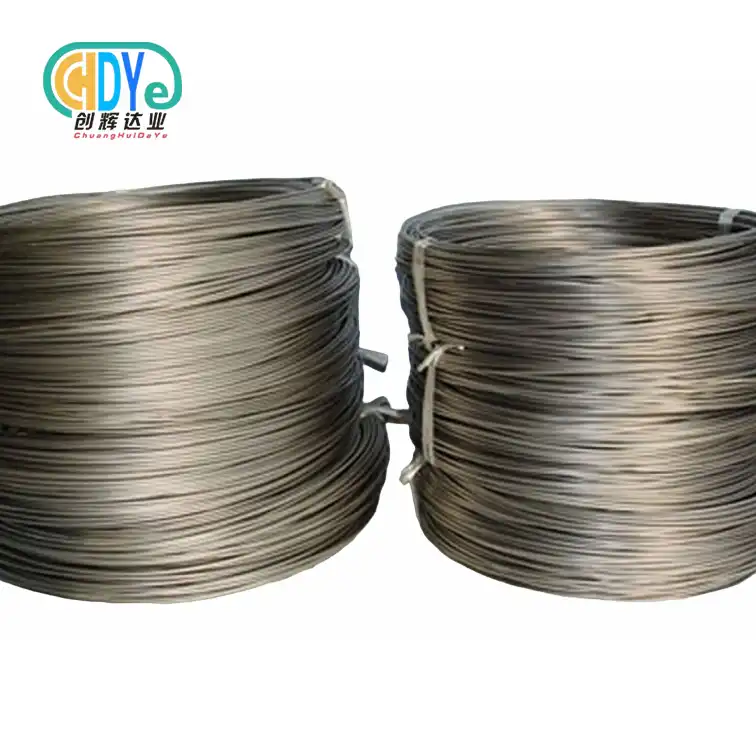
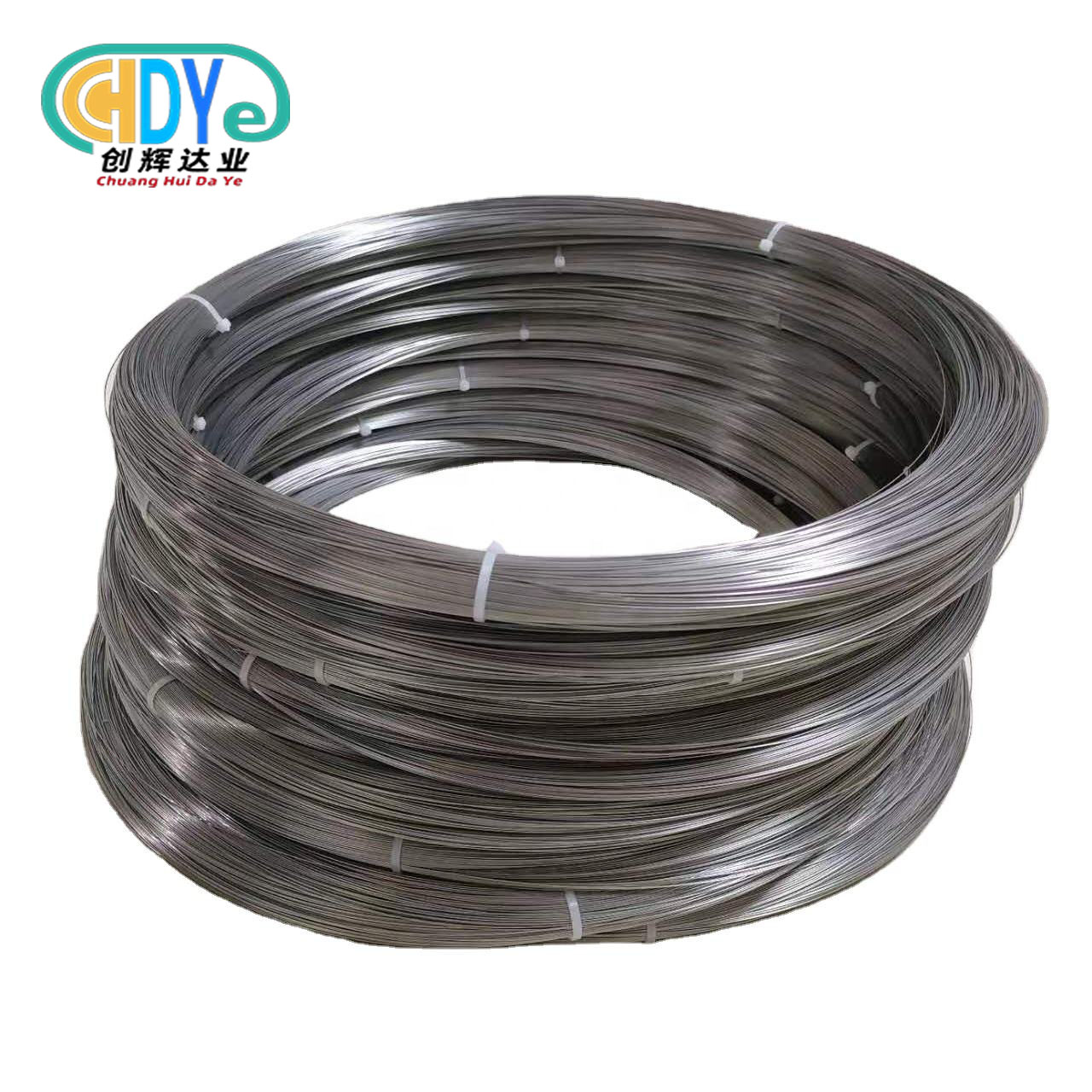
Ti filler wires and stainless steel filler wires are made of different chemicals and have very different mechanical properties. Titanium filler wires, which are generally made of commercially pure grades or alloys, are very valuable because they don't rust, are strong for their weight, and don't harm living things. All of these traits are important in the areas of medicine and airplanes.
Titanium has a melting point of 1660°C, which means that welding has to be done very carefully to avoid melting it. It is very strong for how light it is at 4.51 g/cm³. Acid cleaning or vacuum annealing is used on high-quality titanium wires to get a smooth, oxide-free surface that makes it easier to pass the wires and keeps the arc stable.
There are different types of stainless steel filler wire, such as 304 and 316. Because they are tough, won't rust, and can be joined, they are used a lot in construction, cars, and factories. There is chromium in these lines that makes them different from other lines because it protects them from rust by forming a silent film.
Industry Standards and Classifications
These facts about the materials and how they are generally used can help people who buy things make sure that the filler wire they pick meets all legal and useful requirements. The rules for making titanium filler wires are based on AWS A5.16/ASME SFA-5.16, AMS 4951 (Aerospace), and ASTM B863. This makes sure that the material is easy to follow and has the same grain structure all over.
Key Differences Between Titanium and Stainless Steel Filler Wires
Mechanical Properties and Environmental Performance
Titanium and stainless steel filler wires are compared based on how well they can be bonded together, how well they work in difficult conditions, and how well they are made. Titanium is great because it is strong for its weight and doesn't rust. This makes it perfect for tough environments like ships and planes. But it needs to be carefully joined so that it doesn't rust.
Ti filler wire can stand up to chlorides, reaction acids, and salt spray, which is why it is used at sea and in chemical processing equipment. It is very strict about how much hydrogen is in the material; it is usually kept between 0.005% and 0.015%. This keeps the cold from setting in too long, which could weaken the weld.
Welding Techniques and Process Requirements
Filling wires made of stainless steel are harder and easier to connect, but they might not work well in places that are very acidic or which are heavy. TIG is best for titanium, but both MIG and TIG can be used on stainless steel. The type of welding used affects how the metal is handled and kept, as well as the quality of the work that is made.
Gas Tungsten Arc Welding (GTAW/TIG) is still the best way to put titanium parts together, but it needs a screen of inert gas to keep the air clean. This method is harder than stainless steel welding because it needs skilled workers and special places to work.
Advantages and Disadvantages of Titanium Filler Wire vs Stainless Steel Wire
Titanium Filler Wire Benefits and Limitations
Titanium filler wire is useful because it doesn't rust, is harder, and is better for living things. Because of these benefits, it is an important material in many fields, such as the production of airplanes and medical devices. The material solves big problems in the business by having few interstitial elements, which lowers the risk of interstitial embrittlement.
The problems that come with these great traits are something that buying teams need to give some thought to. The more expensive costs come from the complicated ways that the material has to be made to keep its purity and the quality of the surface high. There needs to be tighter weather control in the welding area so that it doesn't rust and get flaws that could hurt the finished product.
Stainless Steel Wire Advantages and Trade-offs
People like stainless steel filling wire because it is cheap, simple to find, and easy to weld. It works great for general industrial uses and in cars. The metal doesn't need as much special care as titanium choices and can be welded in a lot of different ways.
But stainless steel can only be used so much when weight savings and rust protection are the most important things. In places like the sea or chemical processing, titanium would never rust, but stainless steel might get pitting or fissure corrosion.
Purchasing Considerations for Titanium vs Stainless Steel Filler Wire
Quality Standards and Certification Requirements
Quality standards like ASTM and ISO certifications make sure that filler wires meet the strict needs of the business. If you want to buy well, you should know about these standards. How well it welds and how long it lasts depend on the type of titanium or stainless steel wire you are using.
When you get ISO 9001:2015 Quality Management System Certification, the whole process of making something is closely watched, from checking the raw materials to melting, casting, cutting, and finally packing them. Companies that make planes and medical gadgets need this license to show that their goods can be inspected.
Cost Analysis and Supply Chain Factors
When you think about costs, you should think about things like the price per kilogram, the benefits of buying in bulk, and how reliable the supply chain is. These are all very important if you want to stay within your budget and cut down on production delays as much as possible. This is because titanium filler wire is harder to work with and has more complicated properties, so it costs more than stainless steel wire.
Shopping and making projects can save you even more time and money if you work with certified makers or approved wholesalers who offer fast shipping and the ability to make changes. This is mainly true for large or specialized business-to-business clients. How long it takes to ship and how much it costs to own something can be affected by how close you are to a production area.
Making the Right Choice for Your Business Needs
Application-Specific Selection Criteria
There are product specs, environmental dangers, and end-use industry standards that you need to look at in order to find the right filler wire for the job. Biomedical devices, purification equipment, and parts of jet engines are all great places to use titanium filler wire because it is light and doesn't rust.
Titanium is important to the airplane business because it doesn't break when it's subjected to high-cycle loads or big changes in temperature. It is used to make heat exchangers and reactor tanks that can handle strong chemicals like hot nitric acid or wet chlorine gas by processing chemicals.
Cost-Performance Balance and Risk Assessment
Wires made of stainless steel can be used for general welding in places where moderate rust protection is enough, such as on car exhaust systems, buildings, and food processing equipment. Using the cost-performance balance and supply risk projection, procurement managers can choose the best things to buy.
Case studies from real life help you figure out what to do in real life. Titanium is great for offshore oil platforms because it doesn't rust in the water, and stainless steel is a cheap material that can be used to make car exhaust systems.
Conclusion
If the product calls for it, the environment, and your budget allow it, you can use either titanium or stainless steel filler wire. Titanium filler wire is great for tough environments that need corrosion resistance, light weight, and compatibility with living things. Its longer work life and lower maintenance needs make up for its higher price. Stainless steel can be used in general industry settings where only mild rust protection and low cost are important. It is important to carefully compare the performance needs with the total cost of ownership in order to pick the right materials.
FAQ
Q: Which filler wire provides better corrosion resistance?
A: Titanium filling wire doesn't rust as easily as stainless steel, which is useful in places like the navy, where chemicals are used, and places where chlorides are present. Titanium doesn't get pitting or cavity rust, which can happen to stainless steel in hard conditions.
Q: Why is titanium filler wire more expensive than stainless steel?
A: Because of the complicated ways it is made, the way it is melted, and the strict quality control measures needed to keep it clean, the price is higher. It's important to be careful when working with titanium because it can change shape. The raw materials are also much more expensive than those for stainless steel.
Q: Can I substitute stainless steel wire for titanium in welding applications?
A: It is up to the needs of the program to decide who to substitute. It may be fine to use stainless steel in most situations, but titanium has unique properties that are needed for safety and performance in important medical, naval, or flight applications.
Partner with Chuanghui Daye for Premium Titanium Filler Wire Supply
We are a trustworthy company that makes titanium filler wire, and our goods are sent from our plant in China's "Titanium Capital." They are approved by ISO 9001:2015. We can promise steady quality and low factory-direct prices because we've been in the rare metals business for more than 30 years. We can fully customize your order, make quick samples, and have reliable global supply chains that can meet your tight project deadlines. Email us at info@chdymetal.com to talk about your needs for titanium filler wire and find out how our expert knowledge can help you make your welding better.
References
1. American Welding Society. "Specification for Titanium and Titanium Alloy Welding Electrodes and Rods." AWS A5.16/A5.16M, 2018.
2. ASTM International. "Standard Specification for Titanium and Titanium Alloy Wire." ASTM B863-21, 2021.
3. Davis, J.R. "Titanium: A Technical Guide." ASM International Materials Properties Handbook, 2nd Edition, 2006.
4. Kou, S. "Welding Metallurgy and Weldability of Titanium Alloys." Welding Research Council Bulletin No. 458, 2001.
5. Lütjering, G. and Williams, J.C. "Titanium Engineering Materials and Processes." Springer-Verlag Berlin Heidelberg, 2nd Edition, 2007.
6. Schutz, R.W. and Watkins, H.B. "Recent Developments in Titanium Alloy Application in the Energy Industry." Materials Science and Engineering A, Volume 243, 1998.
Learn about our latest products and discounts through SMS or email